
Technical Guide
Leak Testing Cold Plates & CDUs for AI Data Centers: Methods, Fixturing & Reject Limits
Published October 21, 2026 · Trace Gas Leak Testing · Zaxis
A practical framework for selecting air and trace-gas methods around the liquid-cooling component, fixture and production decision.
Cold plates, coolant distribution units and rack manifolds place liquid beside high-value compute hardware. Build the leak-test sequence around the sealed boundary, expected volume, target and production handoff.
Why liquid-cooled racks are leak-tested twice
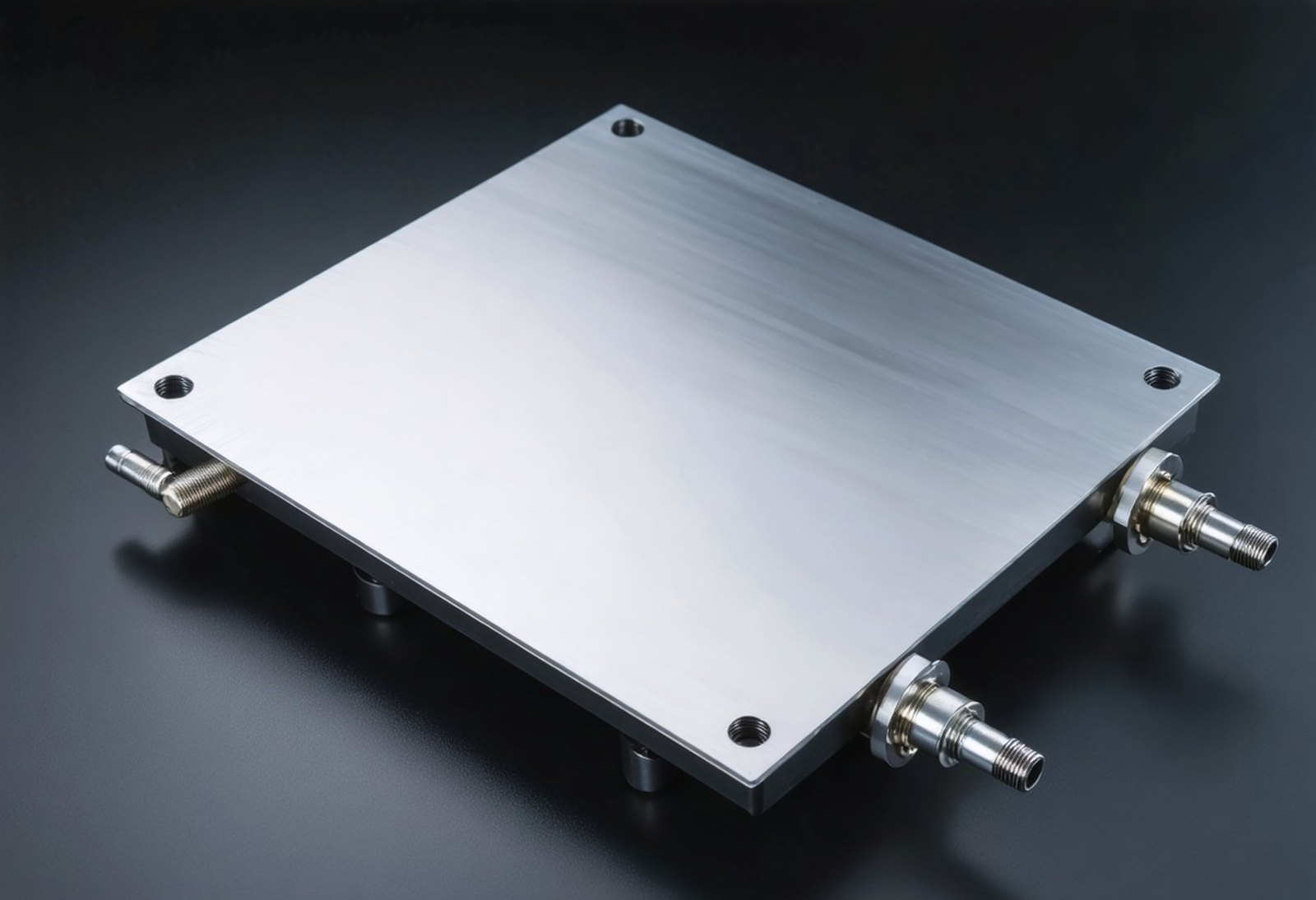
A cold plate maker can verify its own sealed fluid path before the part leaves the factory. Later, a rack integrator may verify the incoming part, connected hoses, quick-disconnects, manifolds or a completed coolant loop. These are different test boundaries, so a result from one stage does not automatically establish the result at the next stage.
This sequence supports containment: a component-level test can find a defect before it enters a larger assembly, while an assembly-stage test can evaluate connections added later. The required acceptance decision belongs to the manufacturer’s validation plan.
Failure modes to plan around
Braze joints and weld seams can create a boundary that needs a repeatable connection and stable measurement. O-ring faces and quick-disconnect seals add interfaces that must be seated consistently in the fixture or assembly. Hose crimps and tubing joints bring their own connection geometry.
A useful test plan identifies the sealed volume, each opening that must be closed, and the accessible areas if a later localization step is needed. Test tooling should not hide the seam that an operator may need to sniff.
The leak-rate conversation
A leak rate expresses gas escaping over time under stated conditions. Teams may encounter cc/min, sccm, mbar·L/s or Pa·m³/s; these are not interchangeable without the relevant pressure, temperature and reference conditions. Use the leak-rate calculator to convert units and retain the stated conditions.
“Bubble-tight” describes an observation, not a complete quantitative production specification. A measurable production target needs a unit, test pressure or vacuum condition, test volume and cycle definition. The leak-testing glossary explains common terms.
Setting a reject limit for a cold plate or CDU
Liquid-cooling reject limits are set by the manufacturer and its customer, not by a test method. The useful inputs are the coolant (water-glycol or a dielectric), the operating pressure and temperature of the loop, the service life over which no visible or measurable loss is tolerated, and whether the part will be tested again after integration. A limit written as a leak rate at a stated test pressure — in sccm or mbar·L/s — can be verified by any of the methods below; a limit written as “no leaks” cannot.
Two consequences follow for test design. First, the tighter the target, the more the result depends on internal volume, temperature stability and test time for a pressure-based method, which is why the fine-leak stage often moves to a tracer method. Second, the leak standard used to prove the station must be sized to the written limit at the written pressure, so the acceptance target should be fixed before the fixture and tester are specified. Zaxis engineers size the test for the part during an application review; the leak-rate calculator gives a first estimate of the pressure change a given leak rate produces in a given volume and test time.
Choosing a gross-leak test
Pressure decay pressurizes a sealed part, isolates the supply and evaluates pressure change during a defined interval. Vacuum decay applies the inverse condition and watches the vacuum change. Mass flow measures gas moving through a connected path and can be appropriate when the product geometry and intended flow path support it.
Connected volume affects how quickly a pressure-based signal develops. Gas and part temperature can change after fill or evacuation, so settle time matters. Cycle time must accommodate filling, stabilization and measurement rather than treating a fast decision as proof of a stable measurement. See the pressure-decay guide and method chooser.
Choosing a fine-leak test
Trace gas makes the escaping material measurable. Helium and hydrogen forming gas are options selected with the detection method, production environment and required target. Sniffing samples accessible seams and can help localize a leak. Accumulation measures tracer collected around a part over time. Hard vacuum is a trace-gas method for the smallest leak paths.
The trace-gas guide compares gases and methods. Air and trace-gas methods are peer choices: a production line may use air for gross screening and trace gas when a fine target or localization task calls for a tracer.
Test sequencing in production
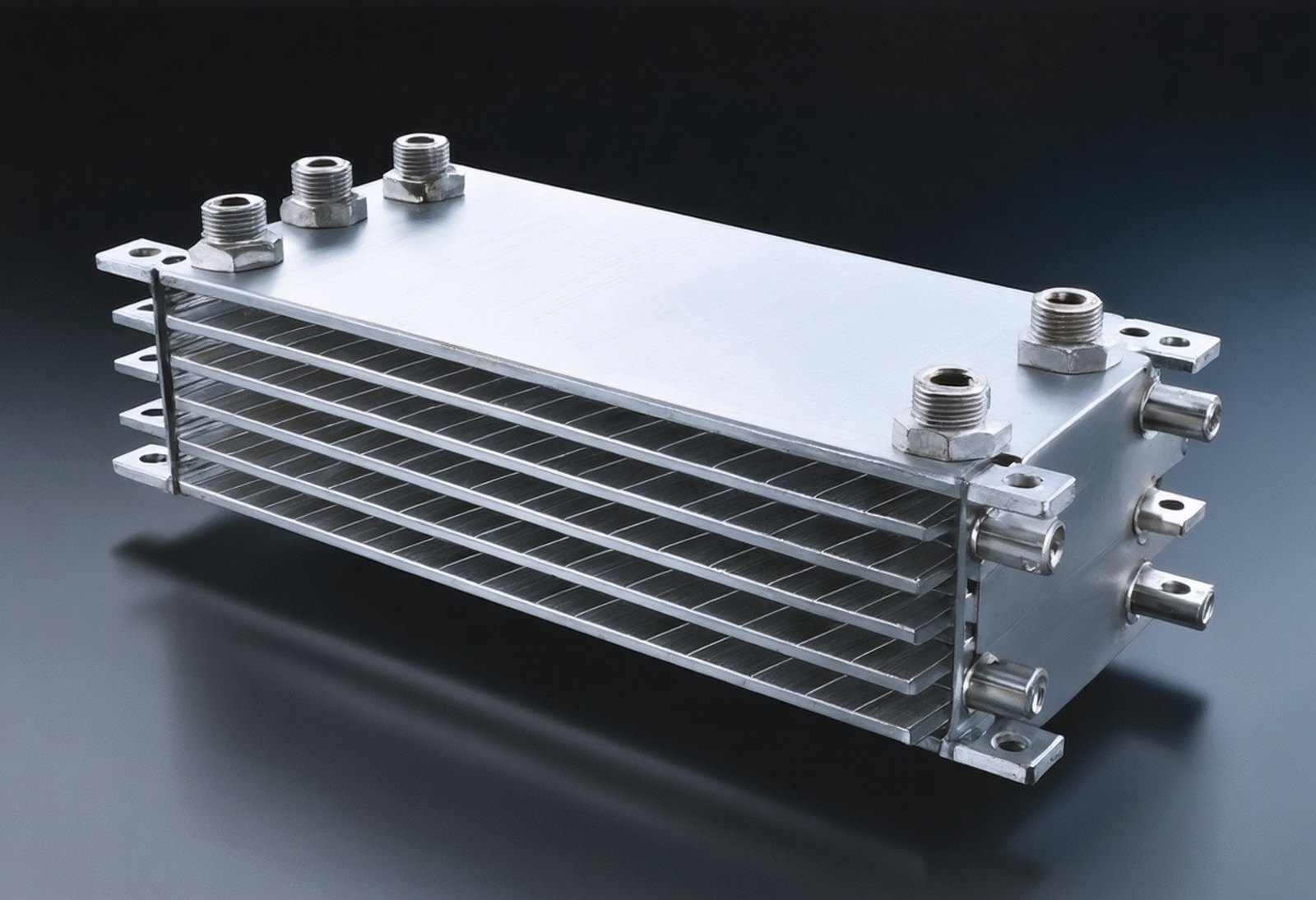
At the component maker, a cold plate, brazed heat exchanger, pump, hose or fitting can be tested before shipment. At the rack integrator, the incoming component or assembled fluid path can be tested after the added connections are in place. Define what each station is intended to prove, then preserve that boundary in work instructions and records.
A high-volume manifold or quick-disconnect station may begin with a dry air test. When the test plan requires a finer measurement, trace-gas testing can be a second station or a diagnostic path. The method follows the part and target, not a marketing hierarchy.
Fixturing, sealing and automation
A fixture locates the part, seals the necessary openings and presents a clean connection to the tester. Added adapters, hoses and dead volume become part of the measurement volume. Stable seals, controlled clamps and access for a trace-gas probe help distinguish a part defect from a station issue. Read the fixture design guide.
For an automated station, define the programmed sequence, interlocks, result handling and the handoff to the production control system. The automation integration guide describes planning considerations without replacing an application-specific design review.
FAQ
Why are liquid-cooled racks tested twice?
Component and assembly tests can evaluate different sealed boundaries before shipment and after integration.
Which gross-leak method fits a cold plate?
Pressure decay, vacuum decay or mass flow can be selected around the part, fixture, volume and production target.
When does trace gas help?
Trace gas can provide fine-leak detection or localization when the test plan calls for a measurable tracer.
What does bubble-tight mean?
A bubble observation is qualitative; a production leak rate should state its unit and test conditions.
What is important in a fixture?
The fixture should locate, seal and connect the part repeatably while controlling added volume.