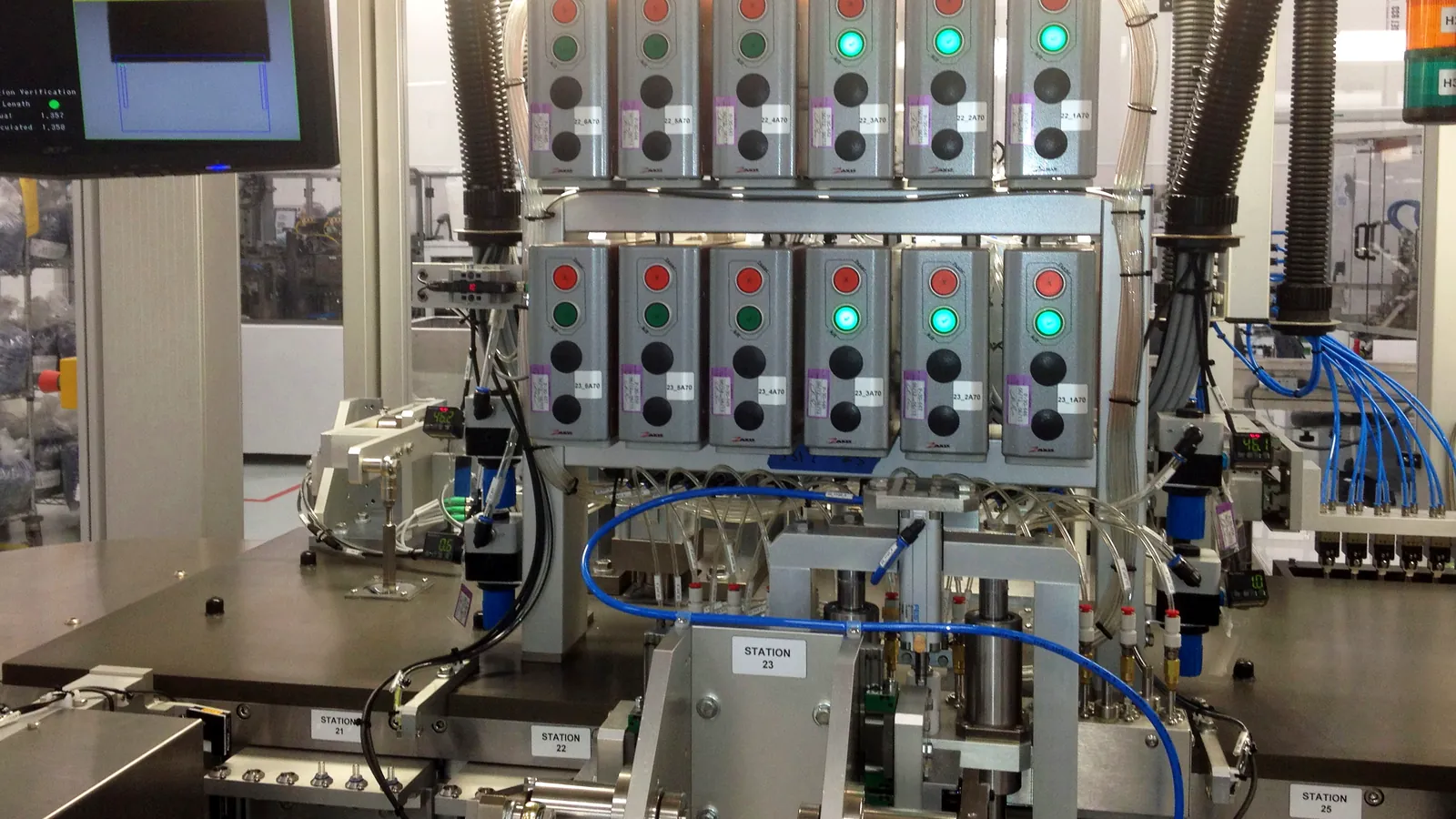
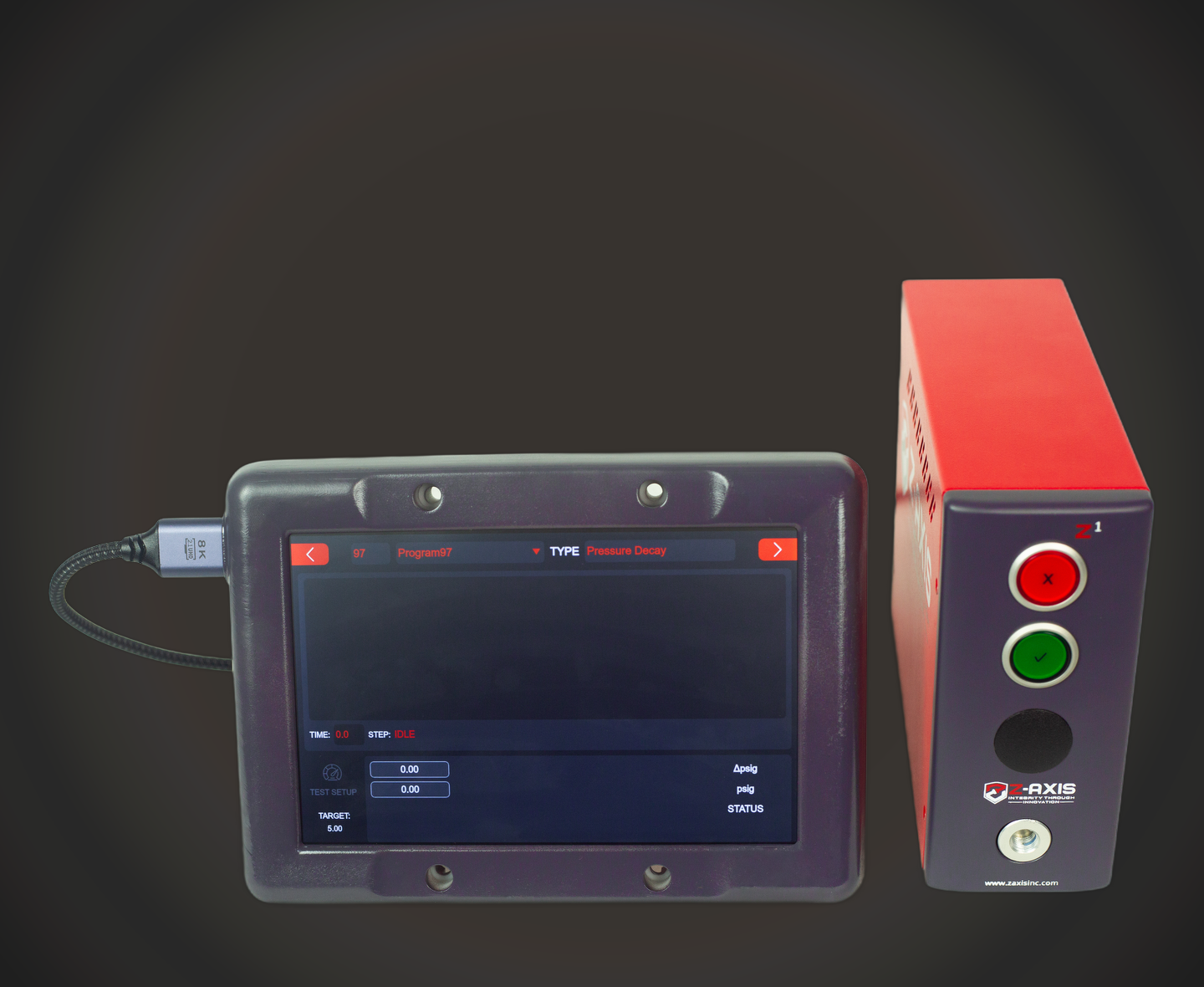
Automated production line with Zaxis leak test stations

Industry Solutions

Battery & EV Leak Testing

Battery & EV leak testing verifies the sealed components that protect energy storage, cooling and high-voltage systems in production.

Battery and EV manufacturing uses leak testing to evaluate battery pack enclosures and trays, cooling plates and coolant loops, cell and module housings, connectors and sensors, charging components, and high-voltage electronics housings.

The appropriate method depends on the component, its internal volume, the manufacturer’s acceptance target and the production station. Zaxis supports both peer leak-testing lines: air methods for production testing and trace-gas methods when a lower leak-rate requirement calls for a measurable tracer.

Request for QuoteRequest a Demo

What gets tested

Battery and EV assemblies combine sealed energy storage, cooling and high-voltage components. A production test must address the specific component rather than treating the complete vehicle as one test volume.

Battery pack enclosures and trays, cooling plates and coolant loops, cell and module housings, connectors and sensors, charging components, and high-voltage electronics housings each need a method and fixture appropriate to their purpose.

•Battery pack enclosures and trays•Cooling plates and coolant loops•Cell and module housings•Connectors and sensors•Charging components•High-voltage electronics housings

Methods used

Choosing the method

Air leak testing and trace-gas leak testing are peer options. The test plan starts with the manufacturer’s target and the component’s fluid, volume and production requirements.

Pressure decay and vacuum decay

Pressure decay pressurizes a sealed component, isolates the air source, then measures pressure loss over a defined interval. Vacuum decay evacuates a sealed part and measures movement back toward atmospheric pressure.

Both non-destructive air methods can support repeatable production decisions when the part, fixture, settle time and reject target are defined.

Compare pressure and vacuum decay →

Mass flow

Mass flow measures air moving through a connected component against programmed minimum and maximum flow values. It is a useful option when the product has an intentional flow path or when flow-based testing suits a larger-volume component.

Read about mass-flow testing →

Trace gas

A trace-gas test fills a sealed part with a gas the detector can measure, then measures the escaping tracer. Helium, hydrogen forming gas and argon selection follows the reject limit, production environment and detection method.

Z-Charge prepares a part and can coordinate gross leak, pressure-decay and vacuum-decay checks before Z-Ion performs helium detection.

Explore trace-gas testing →

Test methods by component

The table is a starting point for application engineering, not a universal specification. Final method, fixture and acceptance target are set for the manufacturer’s part and validation plan.

ComponentRecommended methodWhyZaxis product
Battery pack enclosure, tray or high-voltage housingPressure decay or vacuum decay; mass flow for large volumesSealed enclosure testing can use a controlled pressure or vacuum cycle; larger internal volumes need appropriate stabilization time.Z8, Z5, Z5L, Z1 or Z8N air leak testers
Cooling plate and coolant loopPressure decay, vacuum decay or mass flowA connected fluid path can be evaluated with a repeatable air-based pressure, vacuum or flow test selected around the circuit and target.Z8, Z5, Z5L, Z1 or Z8N air leak testers
Cell or module housingVacuum decay; trace gas helium or hydrogen for very low leak ratesA sealed housing may suit a non-destructive vacuum cycle; trace gas provides a measurable tracer where the required leak target is lower.Z5L or Z-Charge + Z-Ion
Connector, sensor, charging component or compact electronics housingPressure decay or vacuum decay; trace gas for very low leak ratesThe part’s sealing access and required leak target determine whether an air cycle or tracer-gas measurement is appropriate.Z1, Z5, Z8N or Z-Charge + Z-Ion

Standards & test targets

SAE J3277/1, Liquid Leak-Tightness Standards for Propulsion Battery Packs Recommended Practice, describes nondestructive in-line production testing correlated to IPX7-class ingress for propulsion battery packs. IEC 60529 is the standard associated with IP codes, including IP67 and IPX7 context.

These references explain scope; they do not make a production tester certified to or compliant with a standard. Acceptance criteria are set by the manufacturer’s validation. Zaxis helps correlate production air tests to those criteria through the application, fixture and programmed test sequence.

IP67 and IPX7 describe ingress-protection context, while an in-line pneumatic test is a controlled manufacturing measurement. The manufacturer must define the relationship between its product-level validation, production target and acceptance decision.

✓SAE J3277/1 scope explainer✓IEC 60529 IP-code context✓Manufacturer-defined acceptance criteria

In depth: battery and EV components

Fixturing & automation for battery lines

Battery packs and trays can have large internal volumes, so the fixture, added test volume and stabilization time should be considered together. A large-volume enclosure needs a repeatable sequence that allows the measurement to settle before the decision is made.

A custom leak-test fixture can seal large enclosures, close multiple openings and present a clean connection to the tester. Multi-port testing can isolate or test more than one location when the part and production process require it.

For automated lines, Zaxis connectivity options include 24 VDC I/O, Ethernet TCP/IP, EtherNet/IP, RS232, RS485 and USB on compatible platforms. The station can use programmed results and line communication for PLC integration and production traceability.

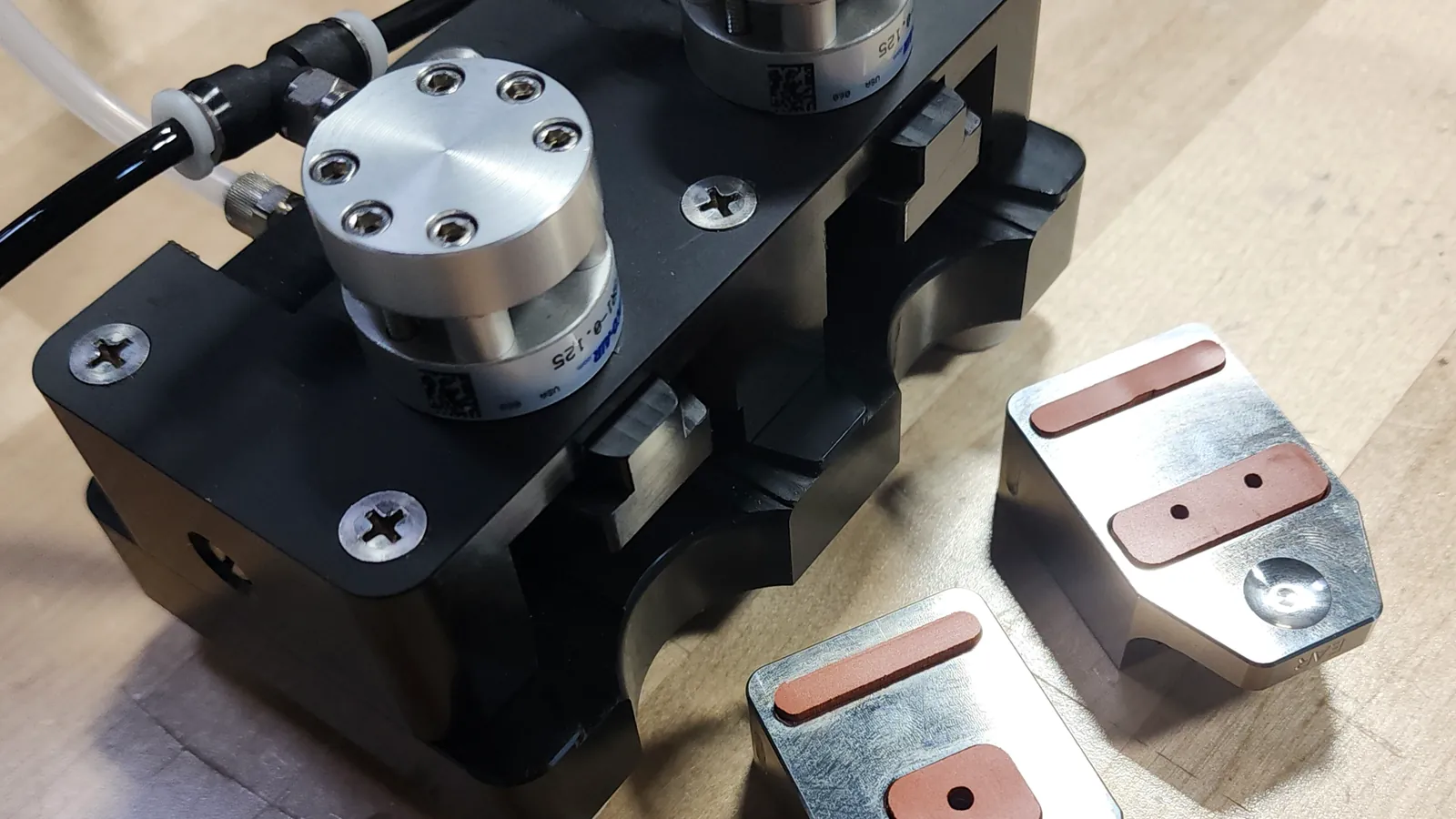
Zaxis leak tester connected to a custom production fixture

Precision dispensing in battery production

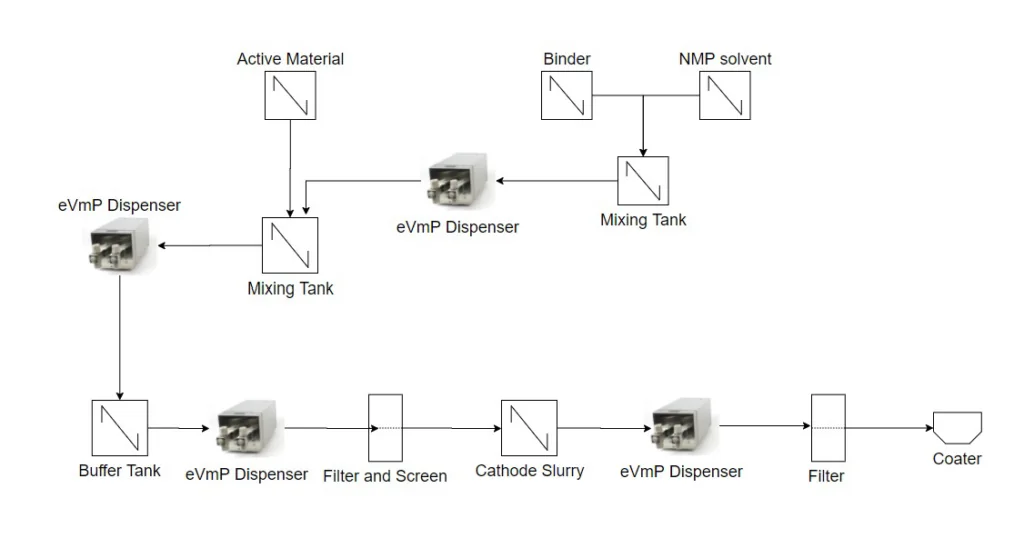
Leak testing protects sealed battery and EV assemblies; precision dispensing addresses a separate battery-production need. Zaxis eVmP metering pumps are used for controlled dosing of battery-production fluids, including electrolyte and thermal-interface materials where the manufacturing process calls for repeatable volume control.

Read the battery-production metering-pump overview and the electrolyte battery dosing project to see the production context for eVmP configurations. These dispensing applications are distinct from air and trace-gas leak testing, but can be planned alongside battery-line automation.

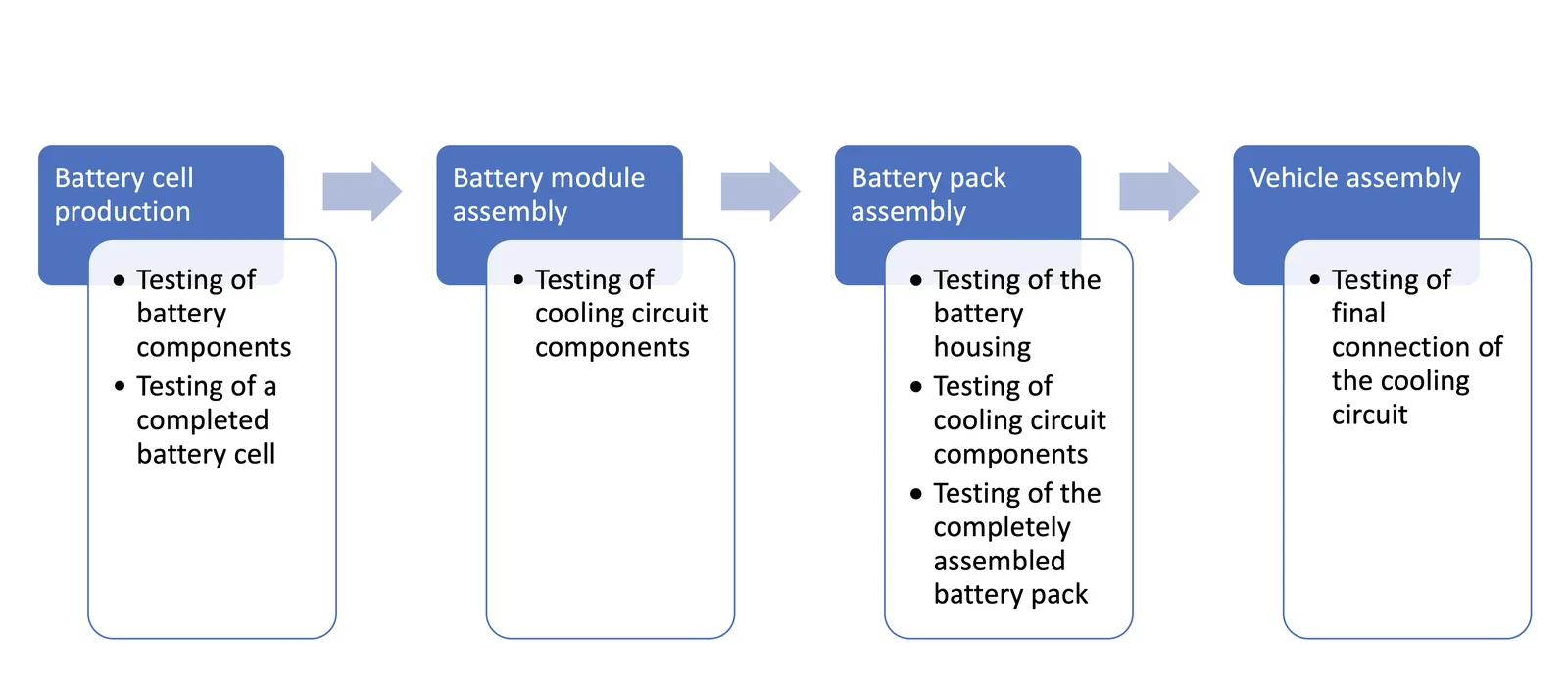
Battery production stages with a precision metering pump

Applications in this industry

EV battery pack components for production leak testing

Battery pack enclosures and trays

Test plans can evaluate sealed pack enclosures and trays before they continue through assembly, using a fixture and air method selected for the volume and target.

Zaxis leak tester connected to a sealed production fixture

Cooling plates and loops

Cooling plates and coolant loops can use a configured pressure, vacuum or flow approach around the circuit, connection and production requirement.

Zaxis Z1 tester for an automated EV-component station

Charging and high-voltage housings

Connectors, sensors, charging components and high-voltage electronics housings can be evaluated with an air or trace-gas method chosen around access, sealing and target leak rate.

Battery & EV Leak Testing FAQ

What is battery and EV leak testing?

Battery and EV leak testing evaluates sealed battery pack enclosures and trays, cooling plates and coolant loops, cell and module housings, connectors and sensors, charging components, and high-voltage electronics housings during manufacturing.

Which leak-test method is used for a battery pack enclosure?

Pressure decay or vacuum decay can be used for a sealed battery pack enclosure. For a large internal volume, stabilization time and fixture volume are important; mass flow can also be considered where a flow-based approach suits the component.

How do SAE J3277/1 and IPX7 relate to battery production testing?

SAE J3277/1 is a recommended practice for liquid leak-tightness of propulsion battery packs and describes nondestructive in-line production testing correlated to IPX7-class ingress. IEC 60529 provides IP-code context. Your validation team sets the acceptance criteria; Zaxis helps correlate production air or trace-gas tests to those criteria. Standards define requirements for the product under test, not certification of the test equipment.

When is trace-gas leak testing considered for an EV component?

Trace gas can be considered when the required leak target is lower than the air-based method can support or when a measurable tracer and the selected detection method fit the application. Zaxis offers helium, hydrogen and argon trace-gas guidance plus Z-Charge and Z-Ion systems.

Why does a battery leak-test fixture matter?

A fixture seals the part, controls added test volume and provides repeatable connections. For battery enclosures or multi-port parts, it can close multiple openings and support a defined automated sequence.

Can Zaxis connect a battery leak-test station to automation?

Compatible Zaxis platforms provide connectivity options including 24 VDC I/O, Ethernet TCP/IP, EtherNet/IP, RS232, RS485 and USB. The required interface and traceability approach should be confirmed for the specific platform and line.

Plan your battery or EV leak-test station

Request for Quote
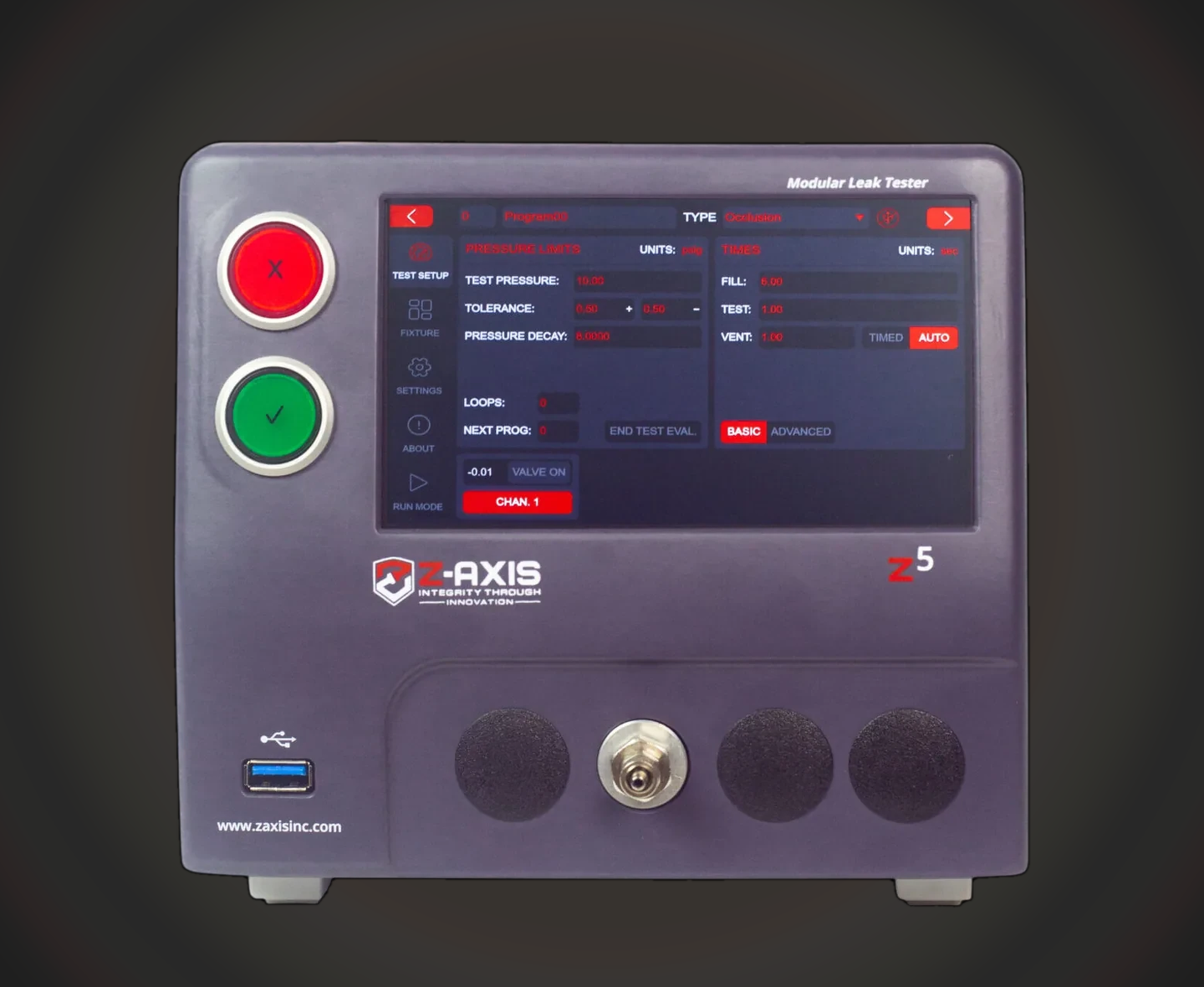
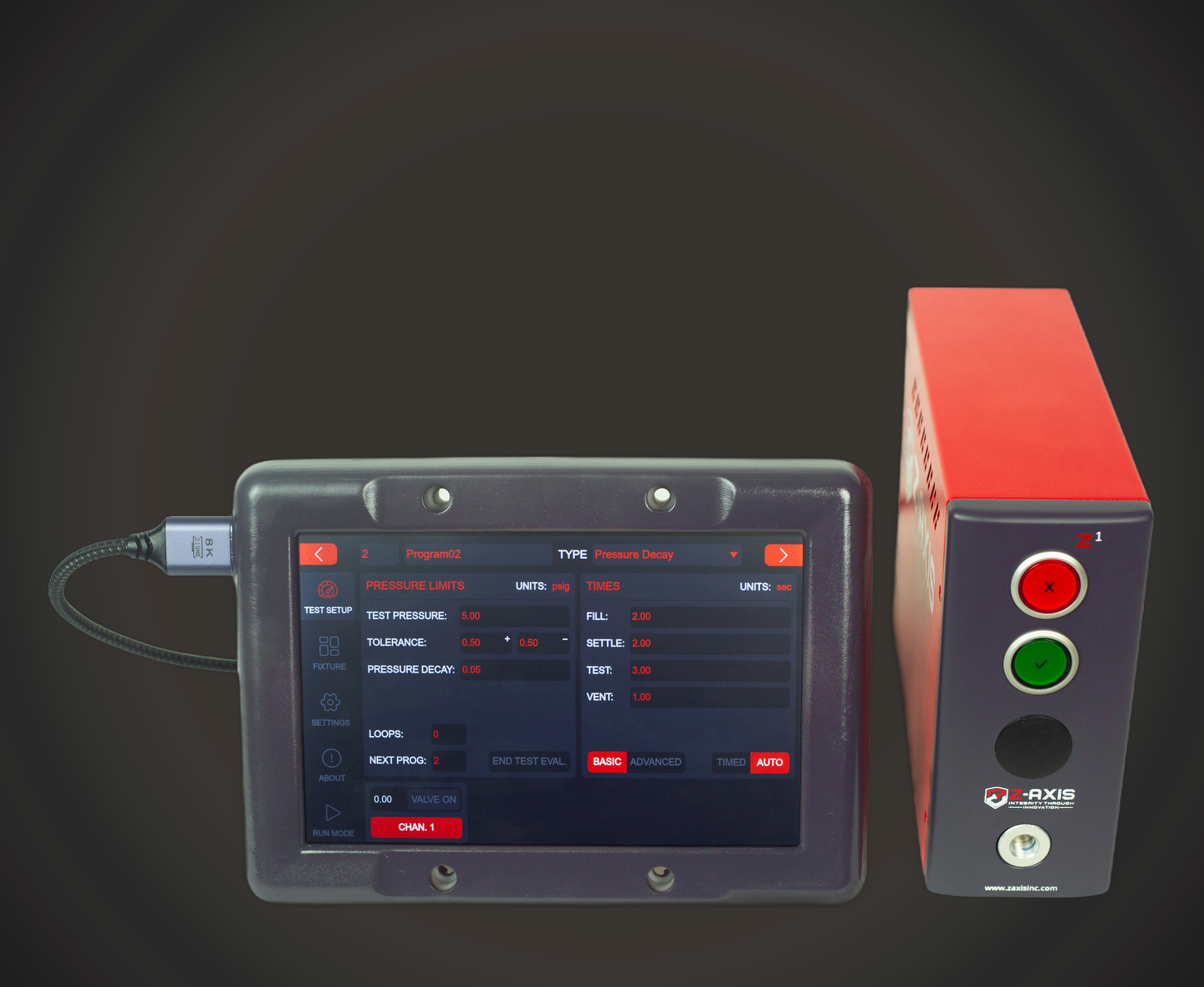
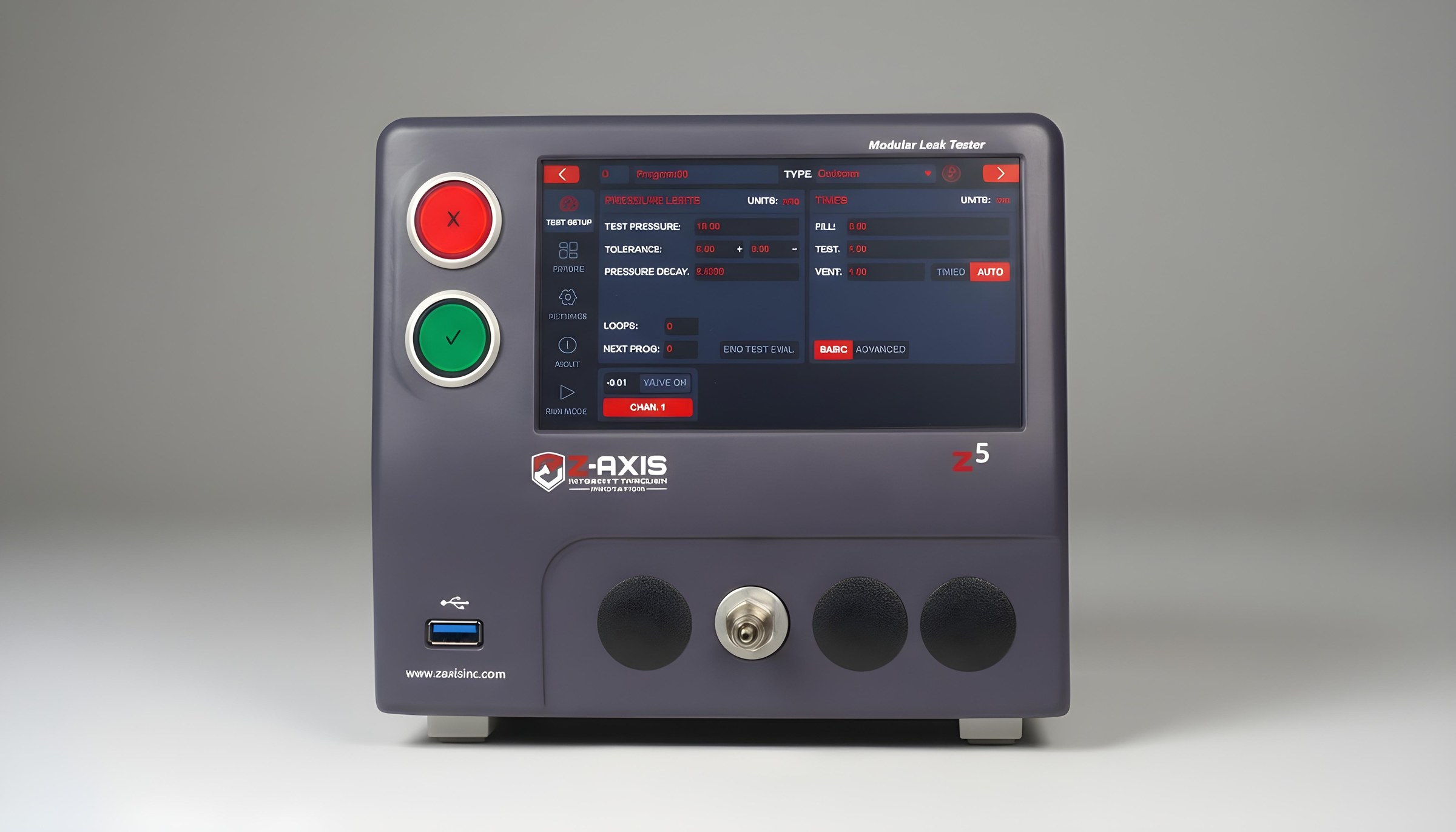
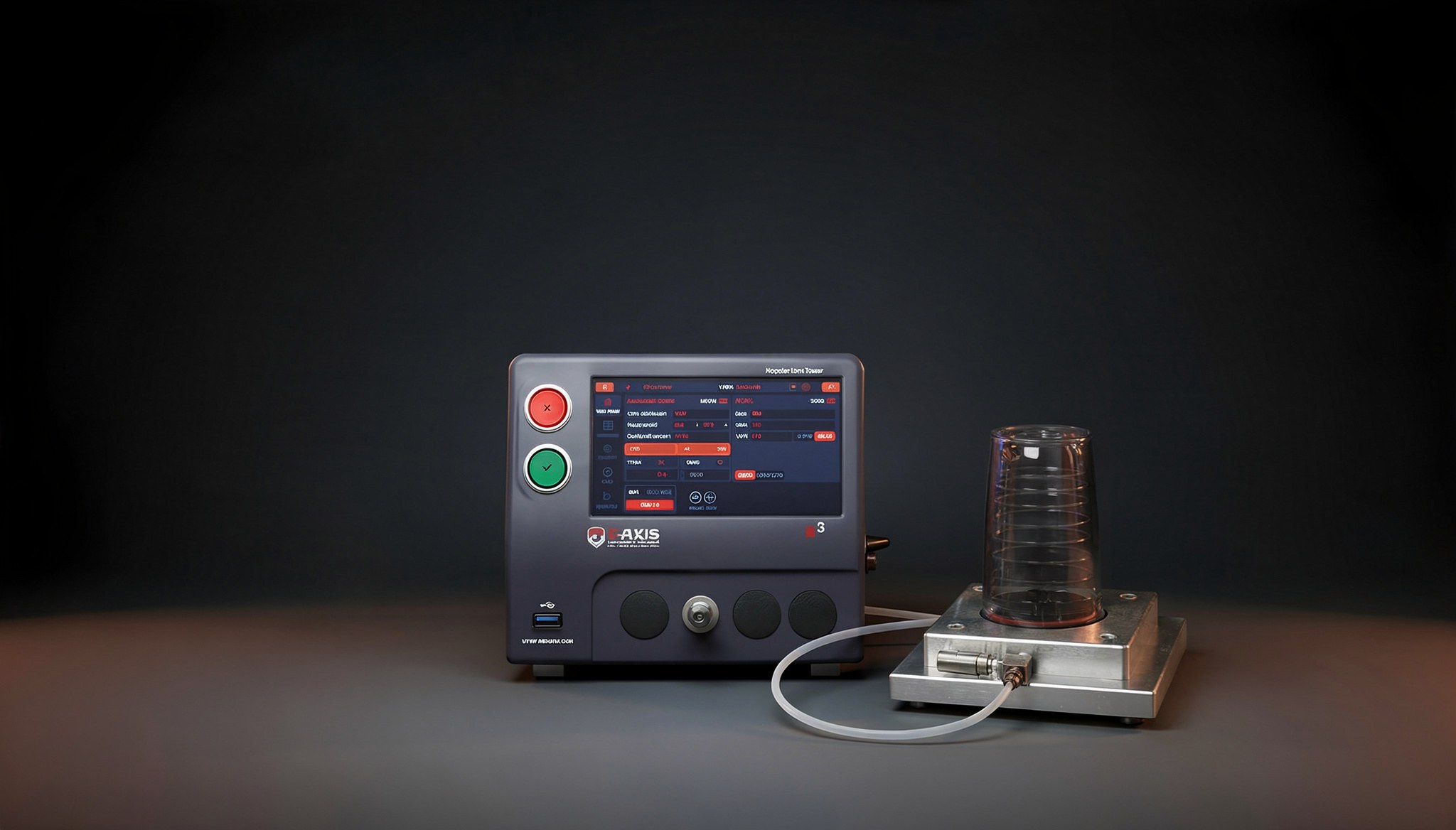
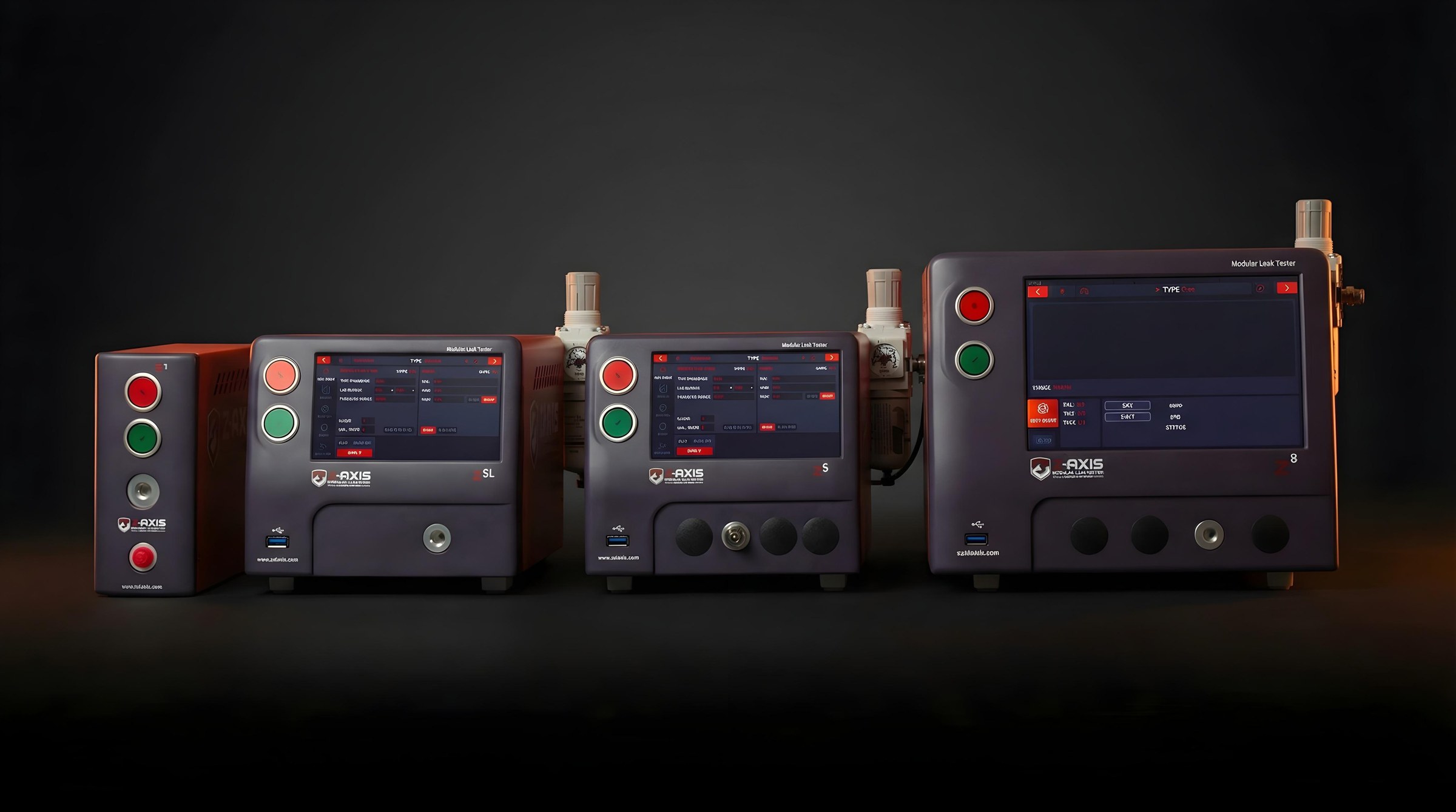
Zaxis air leak tester product lineup