
Reagent dispensing
Pharmaceutical lines dose reagent kits, strips and other fluids while meeting FDA requirements. CIP capability and sanitary components support clean production changeovers.


Positive Displacement Pumps
Valveless eVmP pumps support controlled pharmaceutical dosing with CIP capability, sanitary options and electronic volume adjustment.
Pharmaceutical manufacturing can require accurate dosing, sanitary components and controlled changeover between recipes or batches. Zaxis eVmP pumps combine a valveless ceramic-piston mechanism with electronic adjustment.
Reagent kits, reagent strips, hydrogels, pre-filled doses and soft-gel manufacturing are typical production uses.
Request for QuoteMicroliter M-Series pumps state 2.5–100 µL per revolution and under 100 mL/min. V-Series pumps state metering down to 25 µL, while the VS10-Series states nearly 10 mL per stroke and up to 10 L/min.
Sanitary fittings, 316 stainless steel and PTFE wetted parts suit servo precision metering applications.
Pharmaceutical lines dose reagent kits, strips and other fluids while meeting FDA requirements. CIP capability and sanitary components support clean production changeovers.
Microliter pumps meter under 100 mL/min or from 2.5 µL to 100 µL per revolution. PVDF (Kynar®), PTFE and Rulon® AR wetted-path options support pharmaceutical fluid compatibility.
Servo pumps can use 316 stainless steel or PTFE wetted parts with tri-clamp fittings. Milliliter and extra-large-flow options extend dispensing capacity for pharmaceutical lines.
CIP capability and automatic recipe or batch changeover support pharmaceutical eVmP applications. The valveless design avoids external supply and discharge valves.
Pump configuration can be selected around the required volume, flow, drive and wetted path.
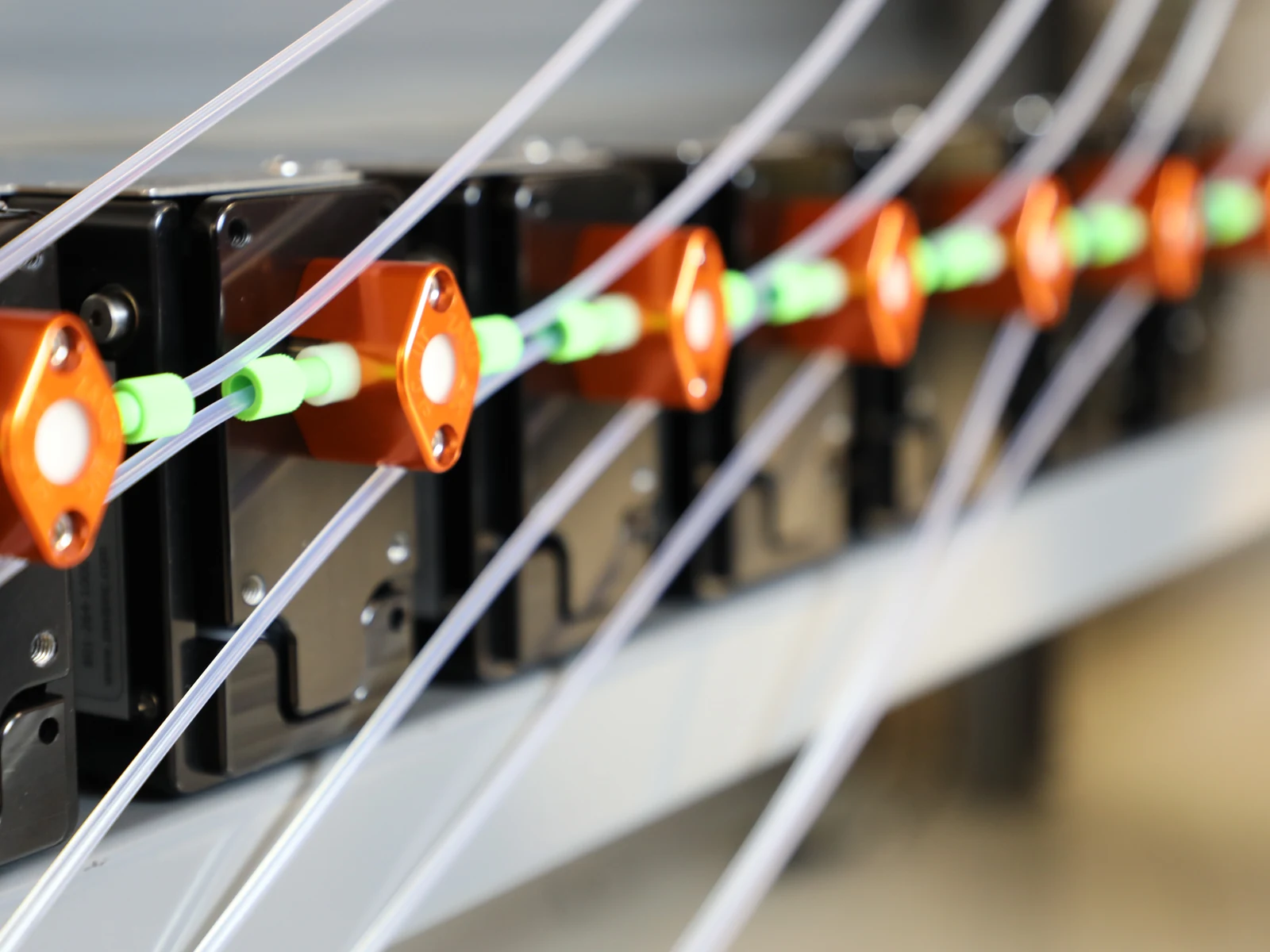
Microliter metering pumps support ultra-low-volume pharmaceutical dispensing under 100 mL/min or from 2.5 µL to 100 µL per revolution. Low-flow PVDF (Kynar®) bodies and Kynar, PTFE or Rulon® AR wetted-path options are available.
Servo precision metering pumps use sanitary tri-clamp fittings and can use 316 stainless steel or PTFE wetted parts to meet FDA, 3A and other pharmaceutical standards.
Milliliter metering pumps provide up to 1920mL/min or dispense down to 25µL. Their rugged, repeatable construction is easily disassembled to minimize production shutdowns.
Extra-large-flow eVmP systems pair a detachable touchscreen for immediate teach and control with abrasion-resistant ceramic internals and a valveless design for cleaning, low maintenance and long operating life.
Zaxis designs, manufactures and assembles precision metering pumps in the USA for pharmaceutical automation. CIP capability, sanitary components, automatic recipe changeover and ceramic wetted-path options support accurate, low-waste dosing under FDA guidelines.
Pharmaceutical fills can range from liquid reagent components to gels and oils. The fluid may have a viscosity that changes its resistance to flow, so process temperature and the dispensing path are relevant configuration inputs. A production team should establish the intended dose and repeatability requirement before it evaluates a pump range.
Repeatable dispensing improves a manufacturing operation by delivering an intended quantity while reducing avoidable material loss. Positive-displacement technology is appropriate for controlled transfer because internal pump movement establishes the fluid volume. A valveless construction is an option for applications where the fluid and cleaning requirements fit the wetted path. Final selection should include the formulation, the needed rate and the production equipment that receives the dose.
Soft-gel operations, diagnostic reagent lines and other pharmaceutical workflows place different demands on a dispense. A controlled fill must be evaluated at the volume and speed appropriate to that product, rather than by using a generic setting. Where a material is viscous, the operating team can assess temperature and resistance to flow. These process details help establish a repeatable approach before production use.
Match dose volume, viscosity and the production-line controls to the pharmaceutical operation.
Microliter-scale metering is useful when a formulation calls for a small controlled quantity. Confirm the selected range against the fill volume and fluid behavior.
The electronic adjustment approach lets a team change volume and flow settings for a defined program.
View M-Series for small fills →Milliliter dispensing can fit capsule, vial or formulation workflows where the required dose is larger. Selection begins with the actual shot size rather than a nominal product category.
Valveless ceramic pumping components avoid an external-valve flow path in the metering assembly.
View V-Series for milliliter dispensing →Viscous materials can create resistance that affects a dispensing step. A higher-torque servo configuration gives a separate option for such conditions.
Review temperature, fluid rheology and backpressure together before finalizing the pump head.
View VS10-Series for resistant flow →Soft-gel manufacture requires controlled delivery of the liquid or semi-solid fill into a formed shell. The dispensing stage must coordinate with capsule production so that fill quantity remains consistent.
Pump selection should consider formulation viscosity, required dose and the timing of the production equipment. Positive displacement ties the fluid quantity to the pump’s internal movement rather than relying on a dynamic-flow condition.
A valveless configuration can be considered where the material and cleaning requirements suit the wetted path.
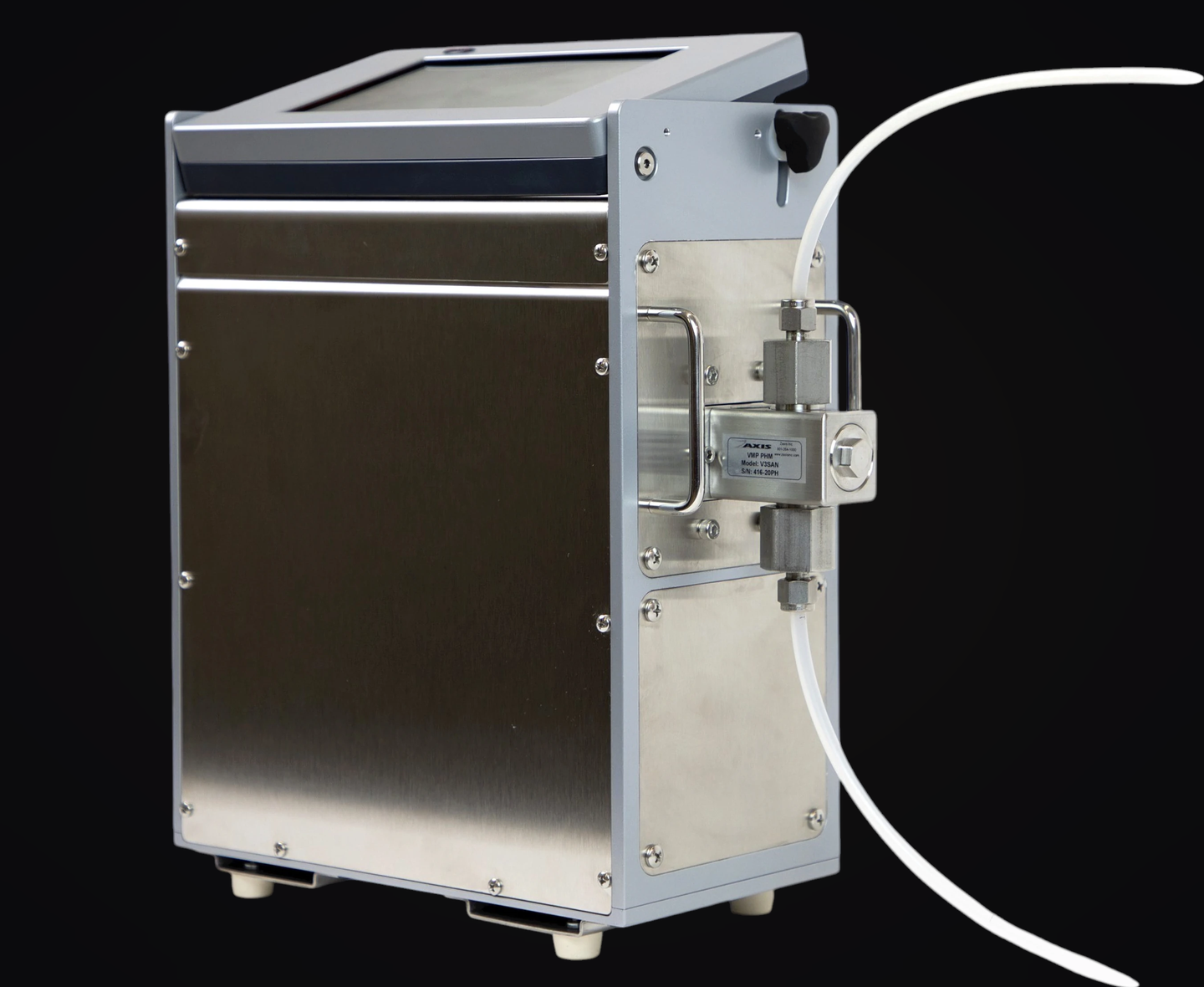
Reagent operations can include enzymes, buffers, diluents, standards, calibrators and controls. Those distinct chemistries make cleanliness and repeatable volume important at the dispensing point.
Quality controls for the kit or formulation must account for the specific regulatory requirements that apply to the product. The pump is one element of that controlled process, not a substitute for product validation.
Electronic variable metering can support recurring programmed volumes and speed settings on an integrated line.
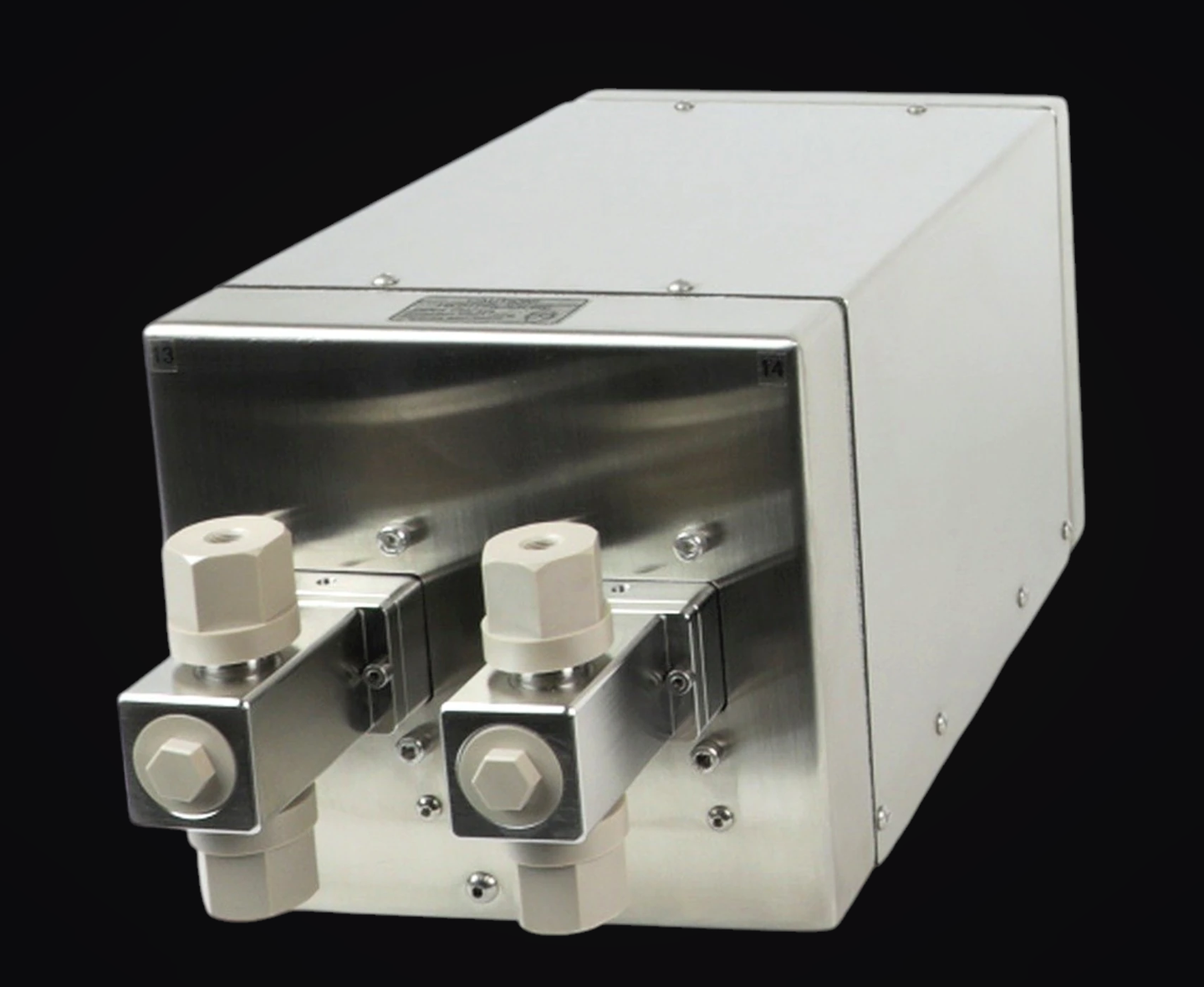
Low-viscosity liquids such as water or alcohol behave differently from gels and oils. High-viscosity fluids may need heating to reduce resistance before they reach the dispensing point.
Abrasive slurries and filled compounds can wear seals and alter clearances over time. Fluid evaluation should therefore include both the short-term dose and long-term service condition.
Positive-displacement pumping is used where a known volume per cycle is helpful for accurate repeatability.
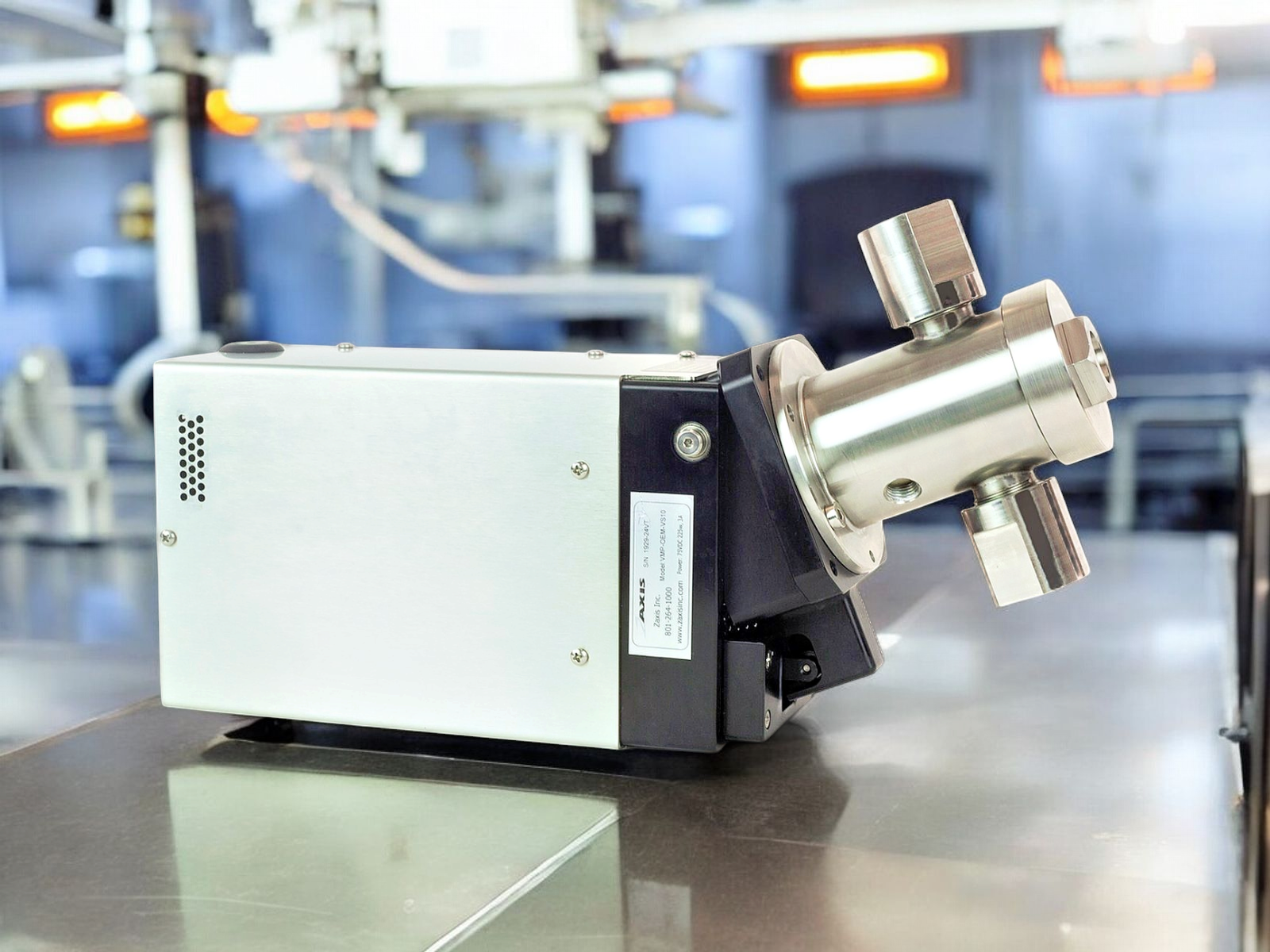
eVmP pumps support reagents, hydrogels, pre-filled doses and soft-gel manufacturing.
The M-Series documents 2.5–100 µL per revolution.
The product comparison names ceramic, stainless steel, PTFE, PVDF, PEEK and Rulon options by configuration.
The VS10-Series is available with sanitary fittings.
An electronically controlled actuator changes angle position to change metered-liquid volume.

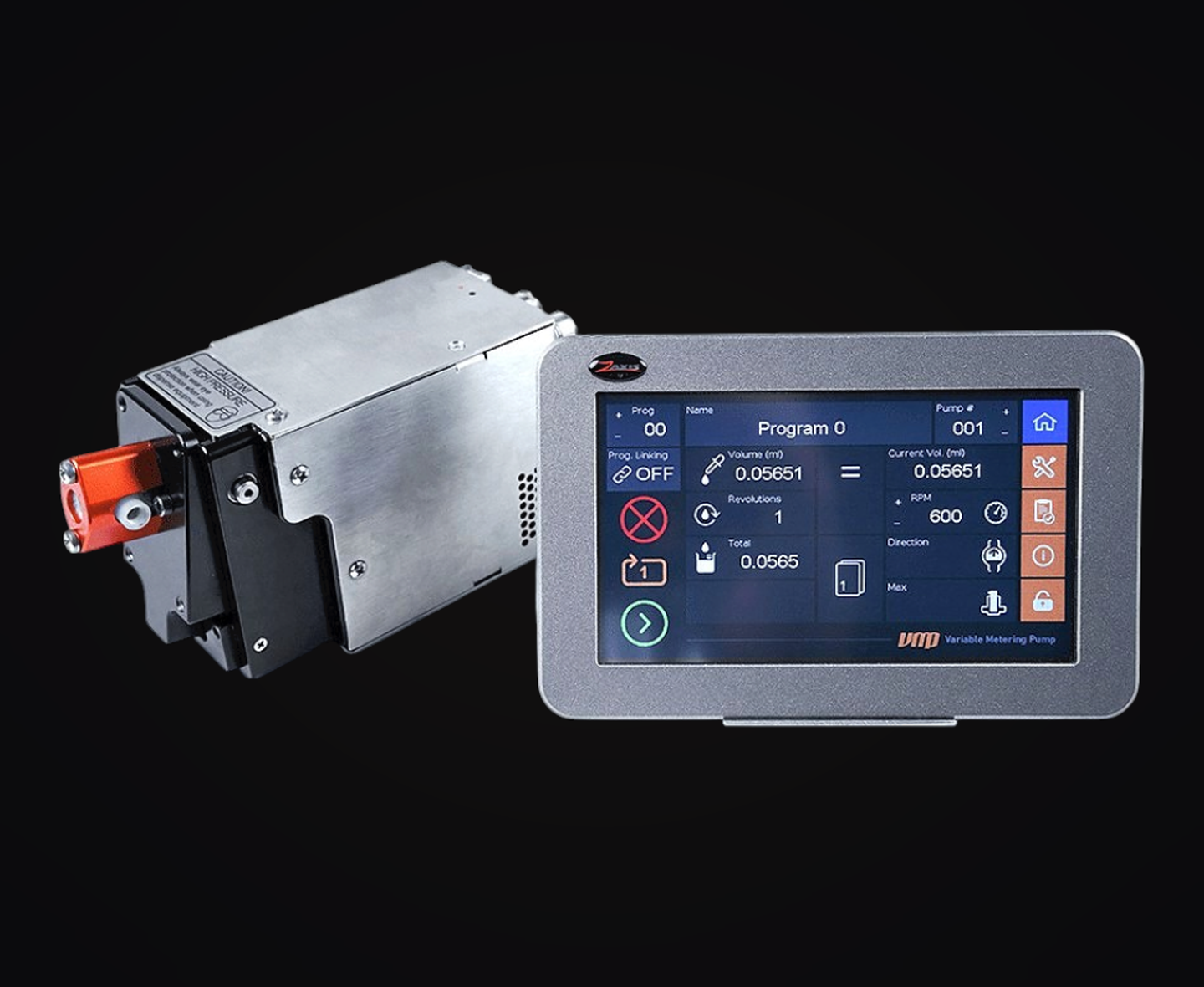 eVmP M-SeriesMicroliter metering from 2.5–100 µL per revolution.
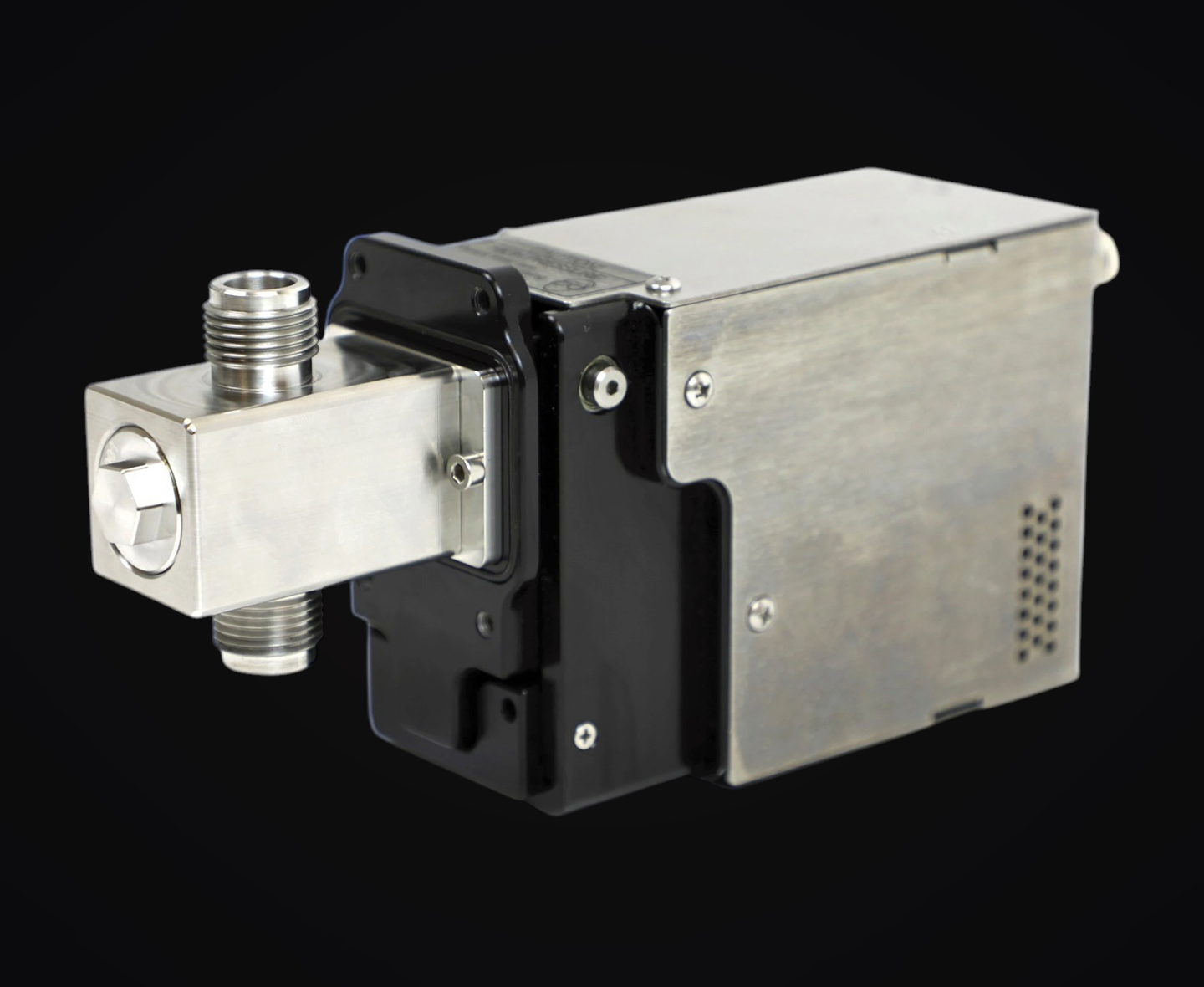 eVmP V-SeriesMilliliter metering up to 1,920 mL/min on the VS drive.
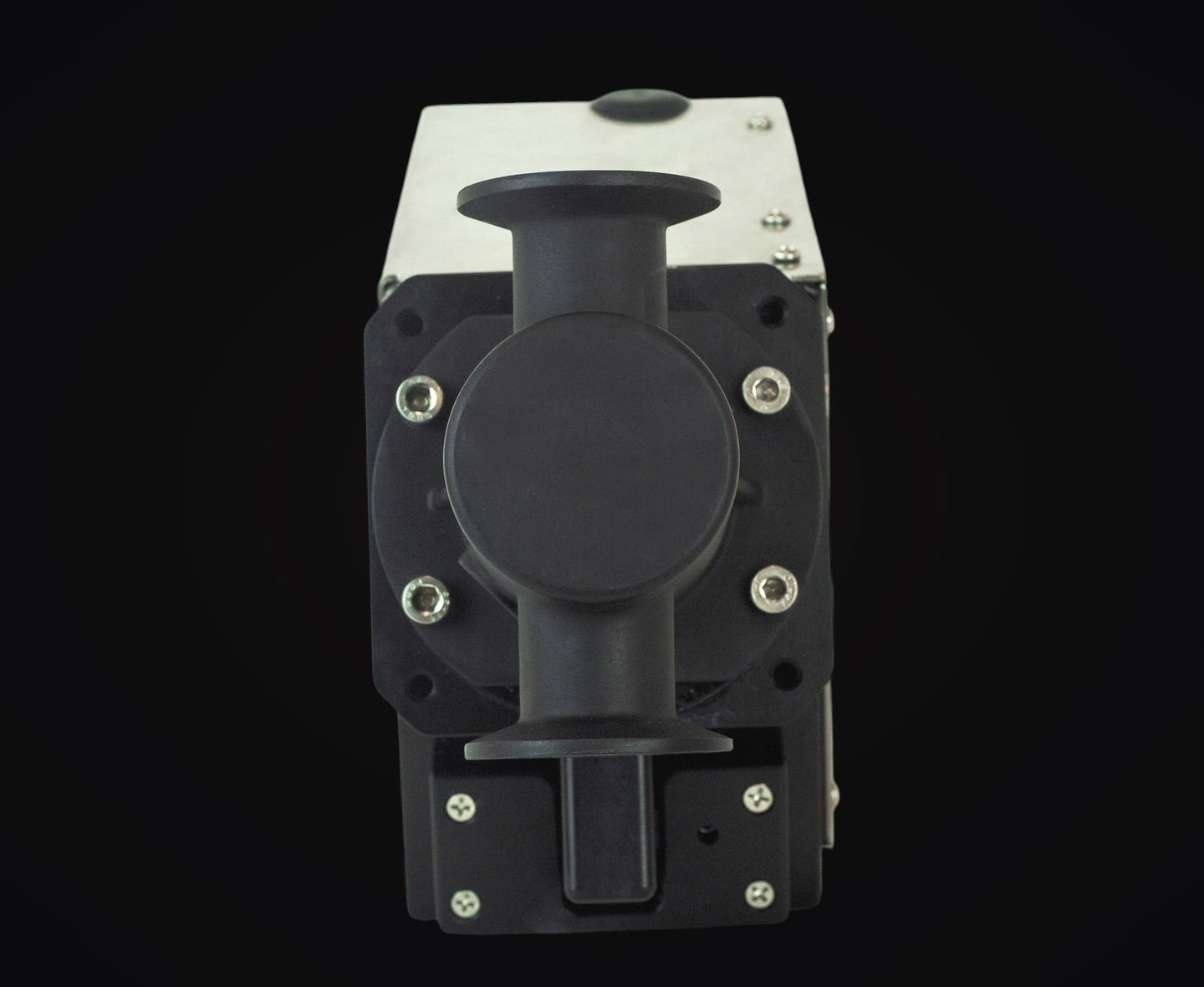 eVmP VS10-SeriesNearly 10 mL per stroke and up to 10 L/min.
