
FILL BOTH
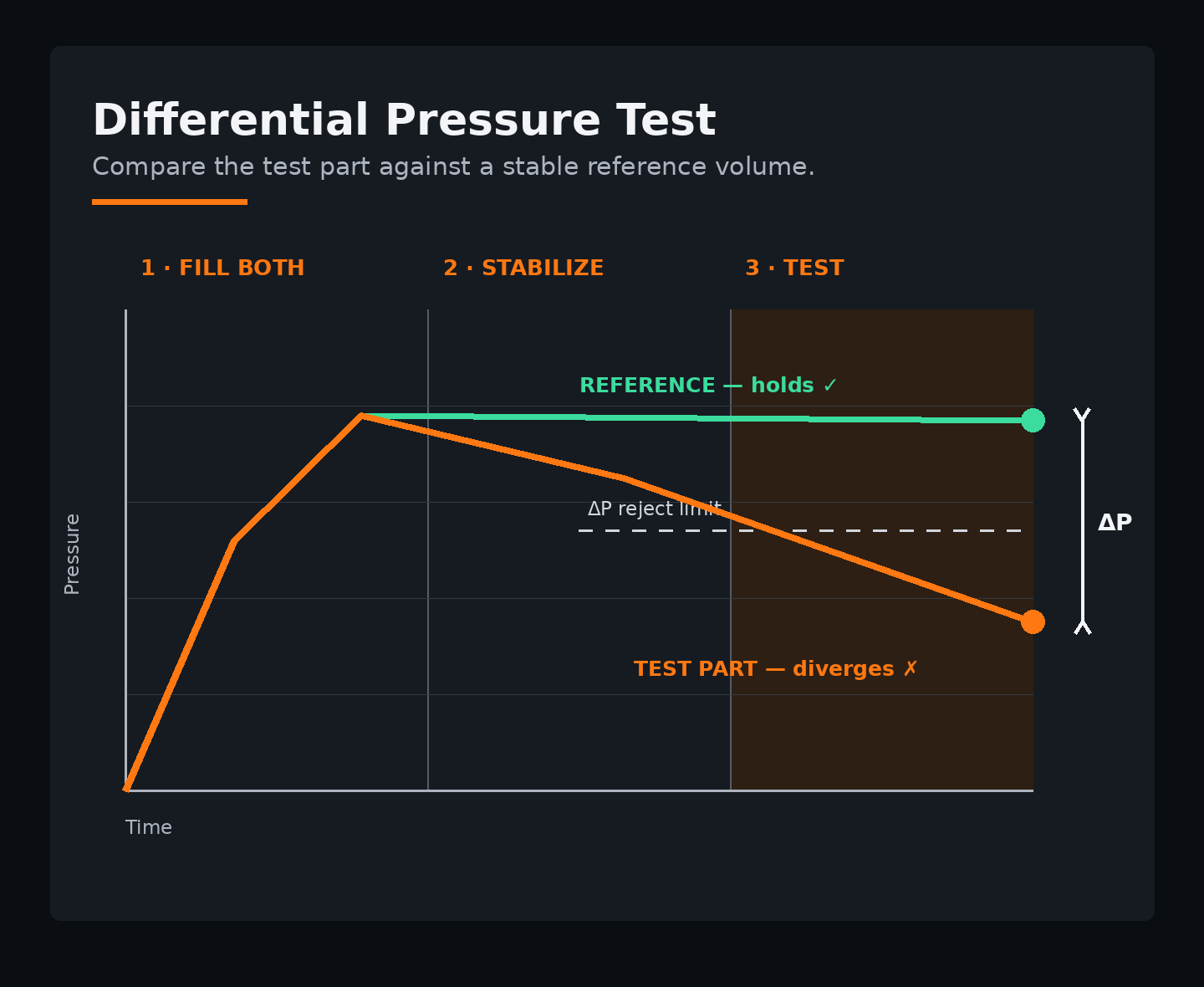
Connect the part and fill it with air to the pre-determined test pressure while establishing the reference volume.

Leak Test Method
A differential pressure test compares the pressure in a test part with a pre-established reference air volume to detect pressure differences caused by leakage.
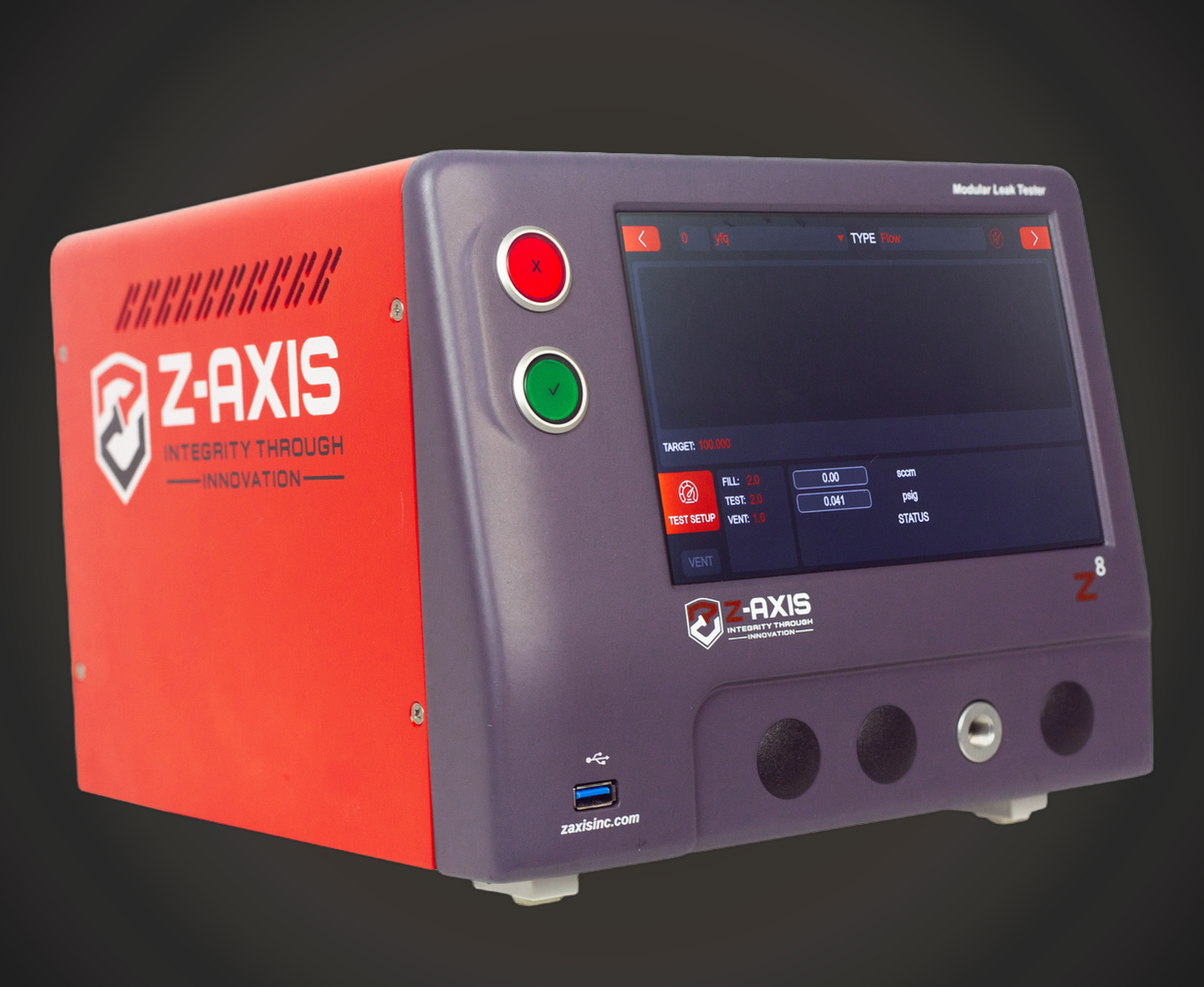
Differential pressure testing is a form of pressure-decay testing that compares two pressure readings: the test-part volume and a pre-established reference volume. Differential pressure transmitters send those readings to a manometer, which evaluates their difference.
The part connects to the tester through fittings or fixtures and fills with air. After reaching the selected pressure, the system stabilizes to account for stretching, flexing or other changes before relative pressure is measured.
The method suits components with large volumes and low leak rates. Applications include automotive equipment, industrial components, consumer goods, medical parts, electronic devices and packaging lines.
Request for QuoteDifferential pressure testing compares a test part with a reference volume instead of relying on a single pressure reading. Both volumes are established at test pressure, and the tester monitors the relative pressure between them.
During stabilization, the fill valve remains closed so the part can settle. If pressure drops in the test part, the resulting difference from the reference volume becomes the basis for a production decision.
After the test, remaining pressure is flushed from the system. A green indicator represents a part within its pre-set specifications, while a red indicator represents a failed part.
Connect the part and fill it with air to the pre-determined test pressure while establishing the reference volume.
Keep the fill valve closed while the part stabilizes to account for stretching, flexing or other changes.
Monitor relative pressure between the part and the reference volume with differential pressure transmitters.
Flush remaining pressure from the system when the differential pressure test is complete.
A part within its pre-set differential-pressure specification passes; a pressure drop that exceeds the specification fails.
The reference volume distinguishes this method. After fill and stabilization, differential pressure transmitters monitor the relative pressure between that volume and the test-part volume.
Stabilization accounts for stretching, flexing and other changes before relative pressure is evaluated, with the fill valve closed throughout the process.
Differential pressure testing suits large volumes with low leak rates. The Isaac HD and Zaxis 7i both run differential-pressure sequences.
By comparing the stabilized part with the reference volume, the test evaluates relative pressure change rather than a single pressure reading. The programmed specification converts that measurement into a clear, non-destructive pass/fail decision.
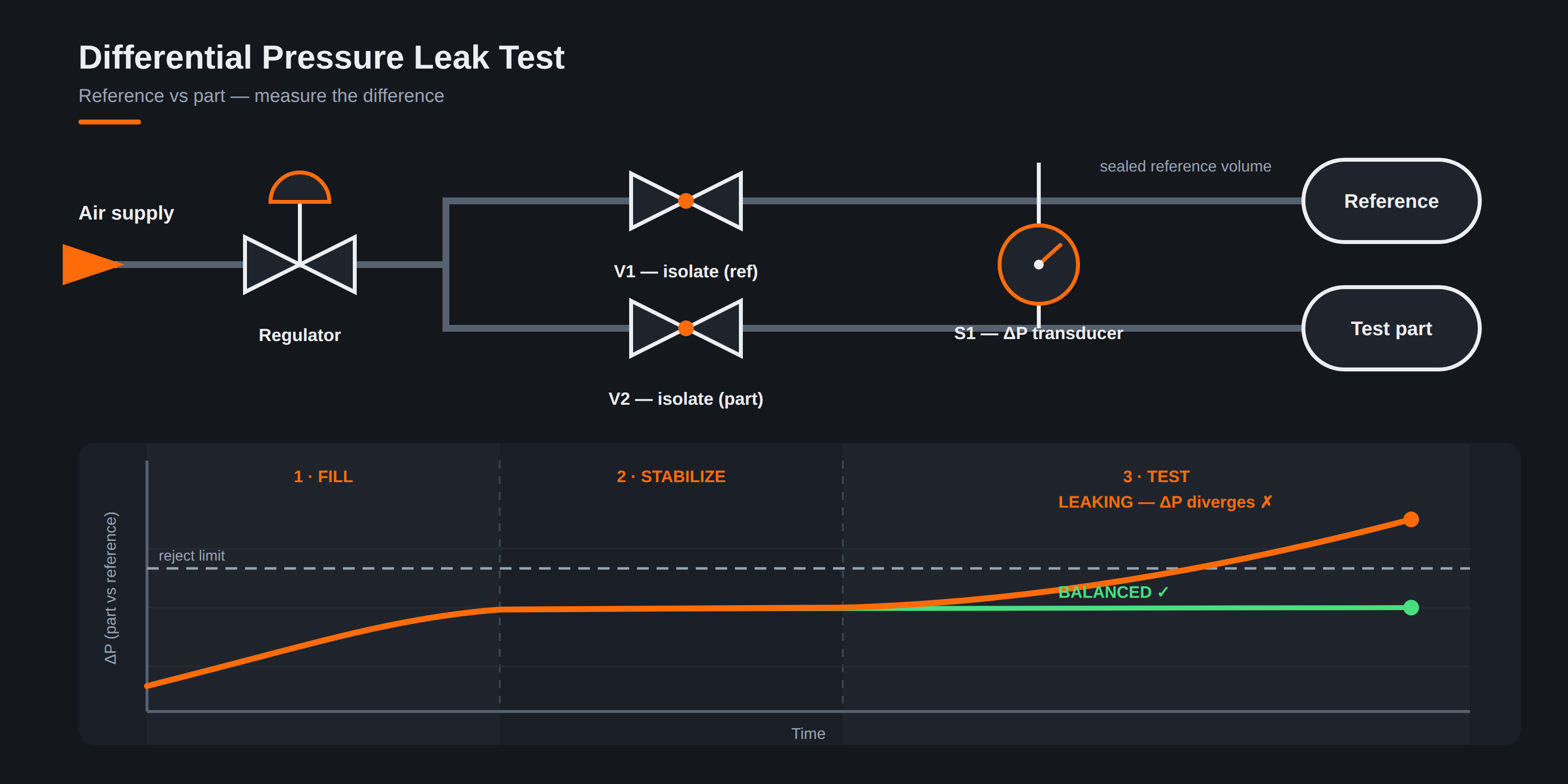
Differential pressure needs a tester that manages a reference volume alongside the part. These Zaxis testers run the differential-pressure sequence.
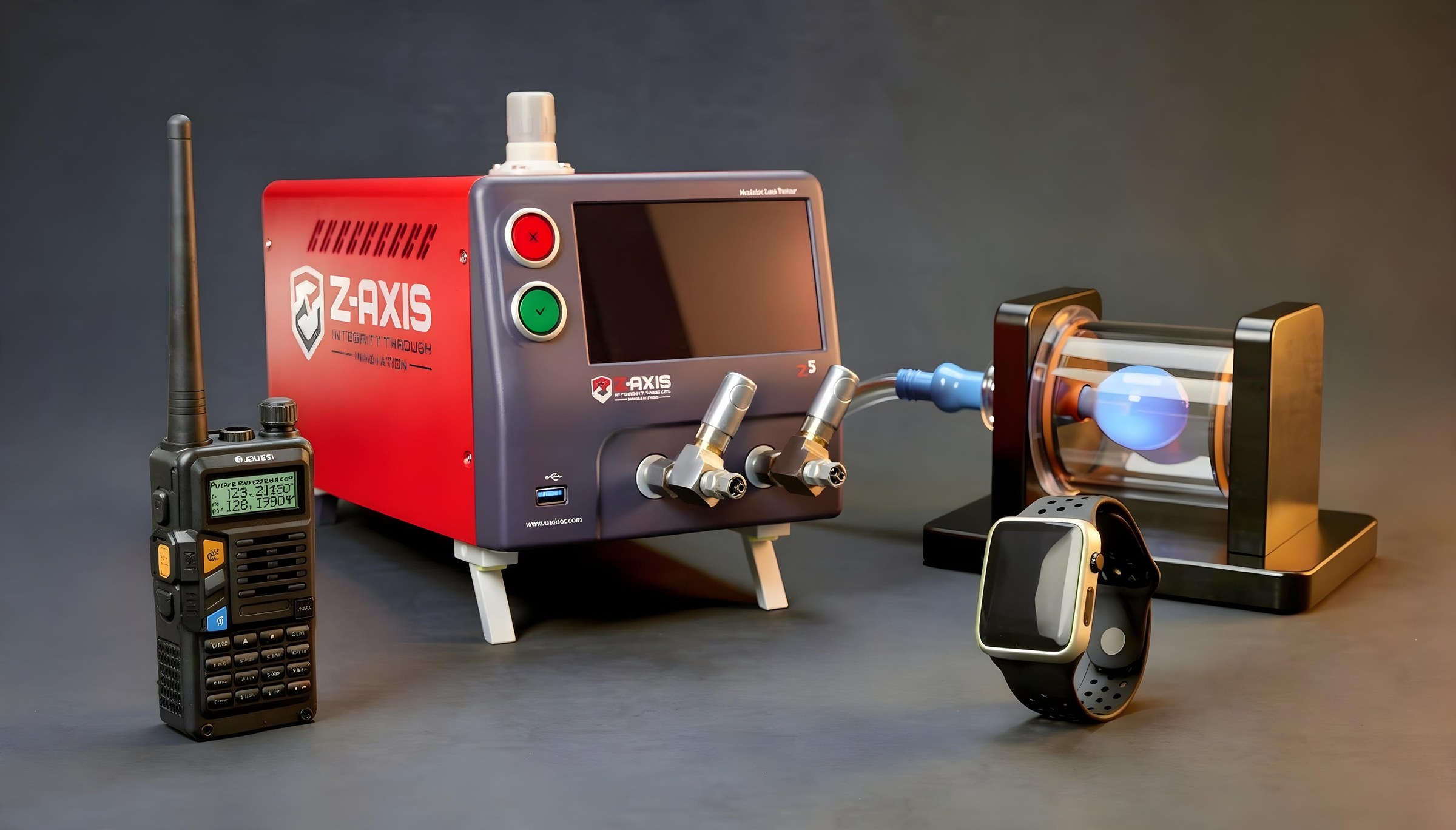
Differential pressure testing is used for automotive equipment.
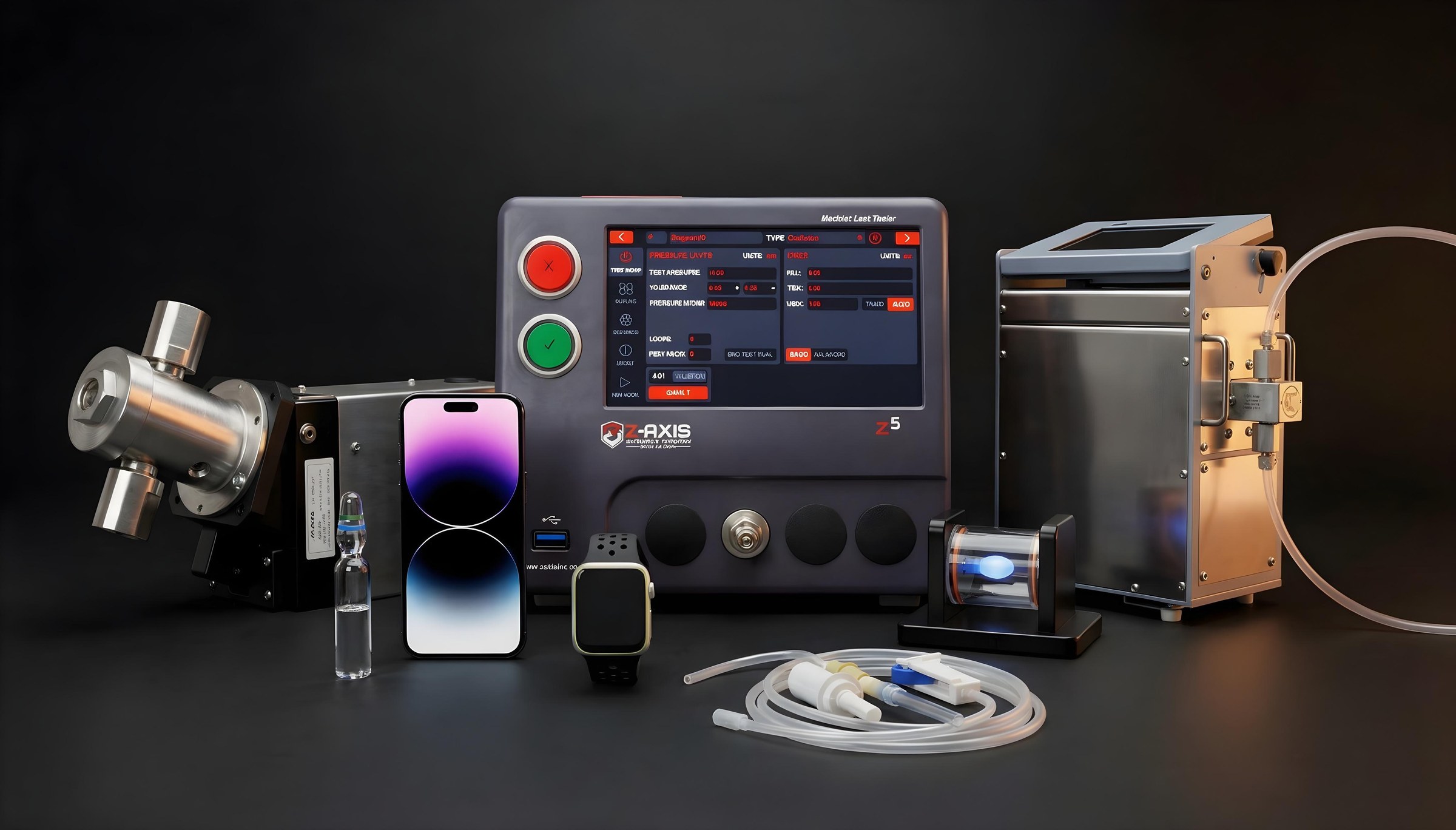
Large-volume industrial components can be evaluated against a reference volume.
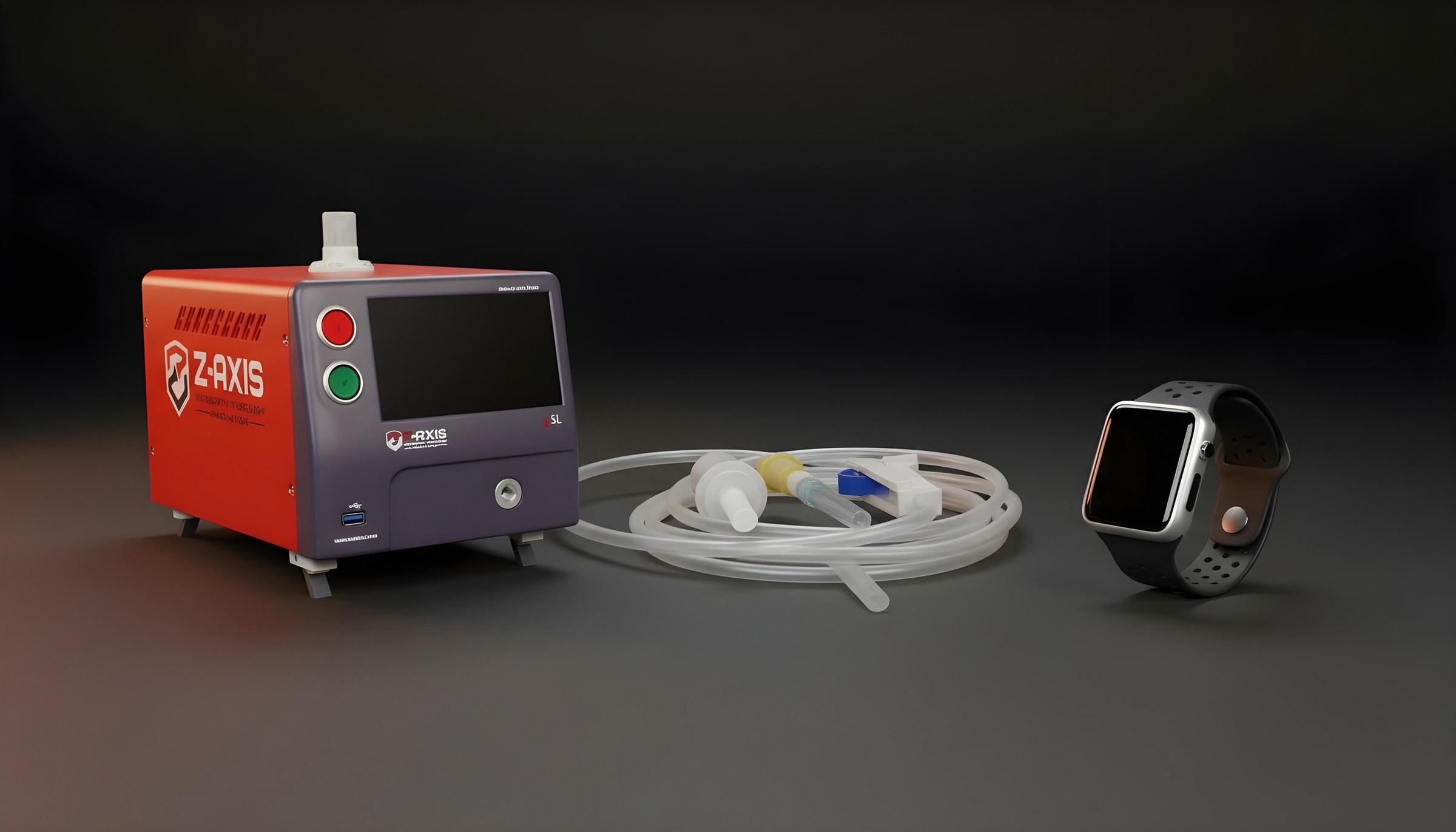
Medical parts with large internal volumes are tested against a reference volume.

Electronic devices and packaging lines use the reference-volume comparison for low leak rates.
| Method | Non-destructive | Needs an access port | Locates the leak | Typical use |
|---|---|---|---|---|
| Pressure decay | ✓ | ✓ | × | Sealed parts with a port |
| Vacuum decay | ✓ | ✓ | × | Parts and packaging |
| Mass flow | ✓ | ✓ | × | Flow-rate limits |
| Occlusion | ✓ | ✓ | × | Blocked passages |
| Burst | × | ✓ | × | Failure pressure |
| Pressure cracking | ✓ | ✓ | × | Valve opening pressure |
| Chamber | ✓ | × | × | Sealed parts, no port |
| Sniffing | ✓ | ✓ | ✓ | Finding the leak site |
| Hard vacuum | ✓ | ✓ | × | Hermetic, safety-critical parts |
| Accumulation | ✓ | ✓ | × | Large parts, total leak rate |
| Bombing | ✓ | × | × | Sealed parts, no fill port |
| Differential pressure | ✓ | ✓ | × | Large volumes, low leak rates |
| Trace gas | ✓ | ✓ | ✓ | Very small leaks, quantified |
It compares pressure in a test part with a pre-established reference volume to measure the difference between them.
A pressure drop in the test part creates a relative pressure difference from the reference volume.
It provides the established air volume against which test-part pressure is compared.
The part stabilizes to account for stretching, flexing or other changes while the fill valve remains closed.
It is an ideal solution for components involving large volumes with low leak rates.
No. It is a non-destructive testing method.
Remaining pressure is flushed from the system, and the tester indicates pass or fail against the pre-set specification.

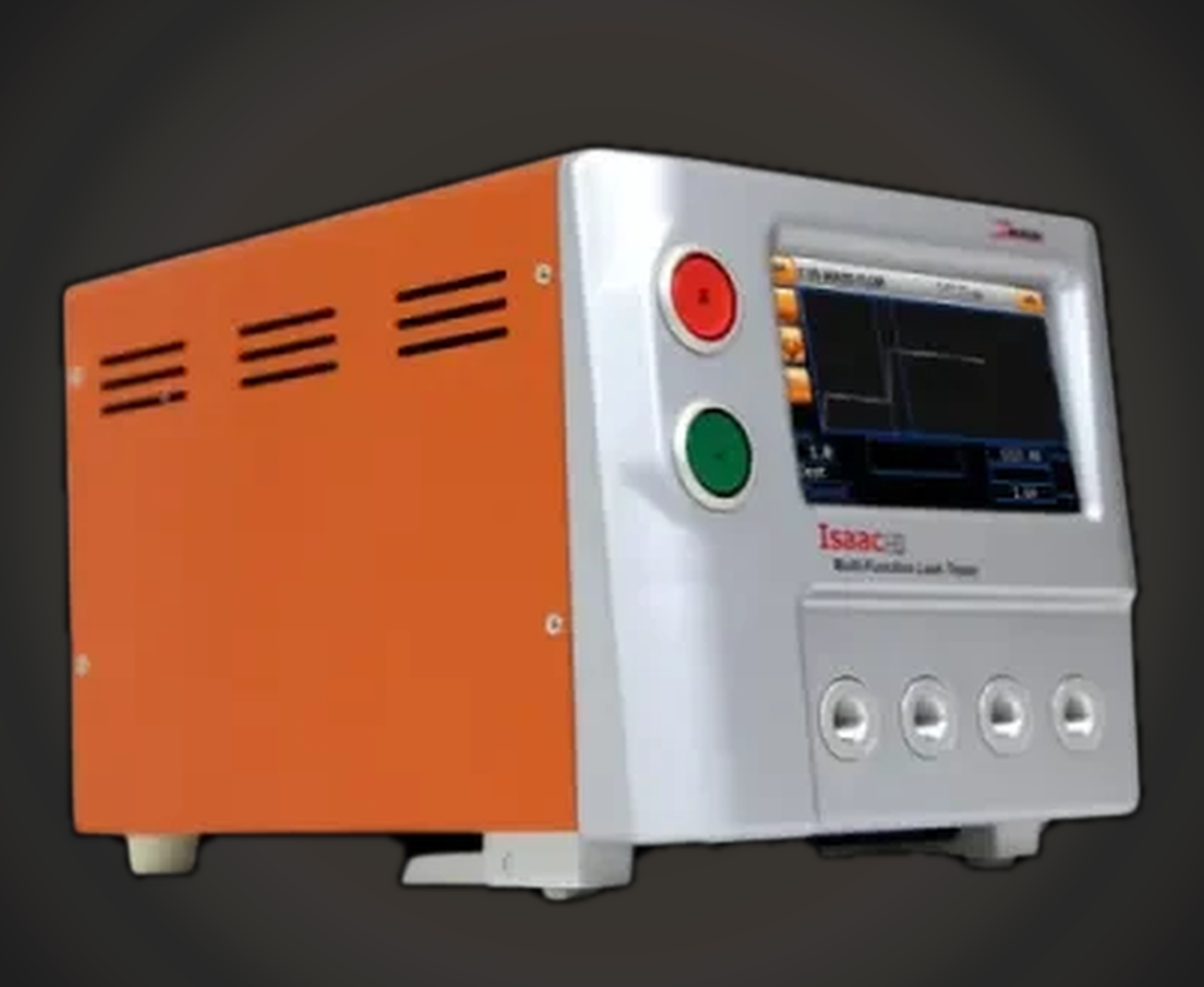 Isaac HDA modular tester with the extensive leak-testing capability differential-pressure sequences call for.
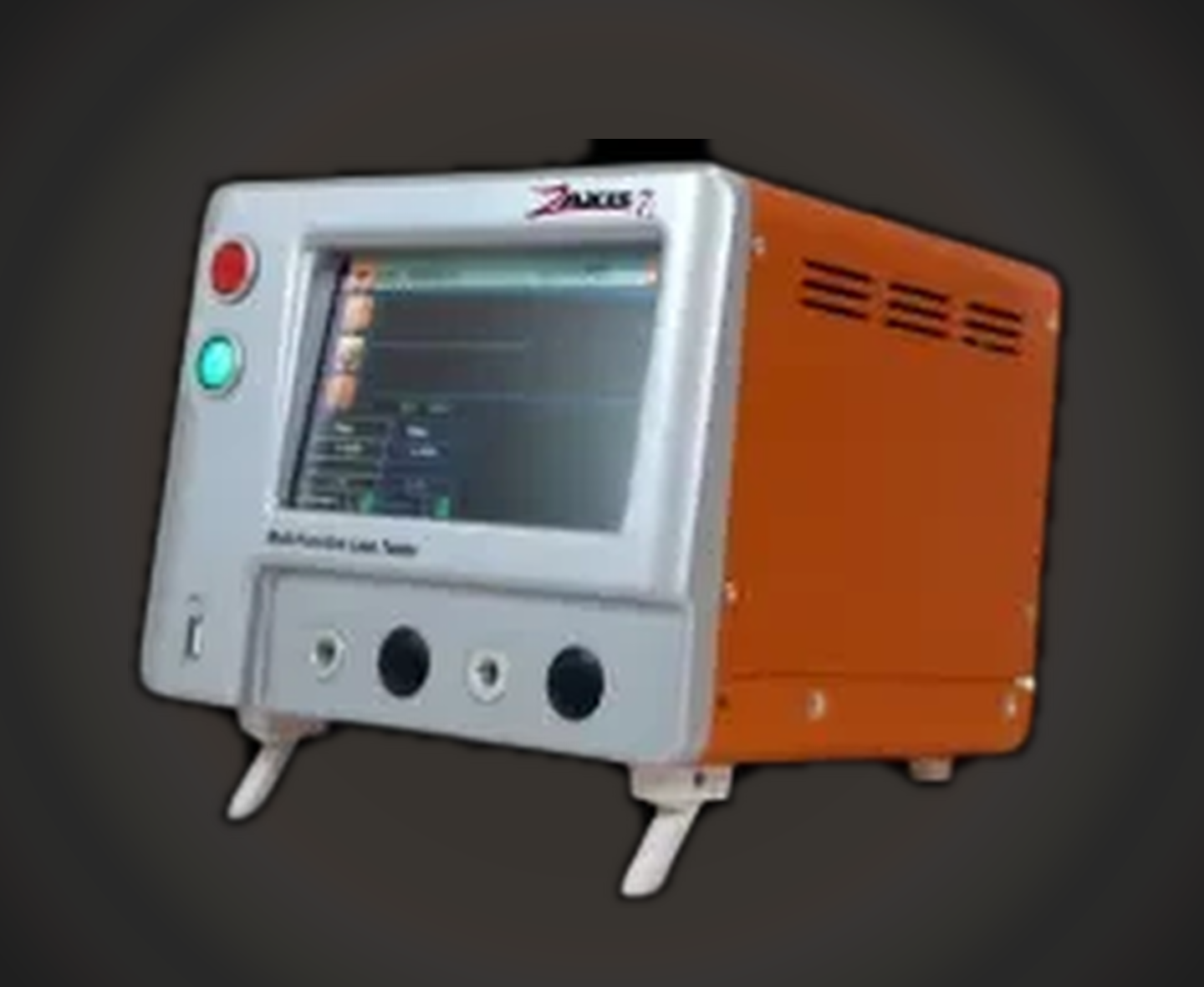 Zaxis 7iA large-display tester built for fast test times on larger test volumes.
 Z8A modular tester with up to four test ports for automated production lines.



