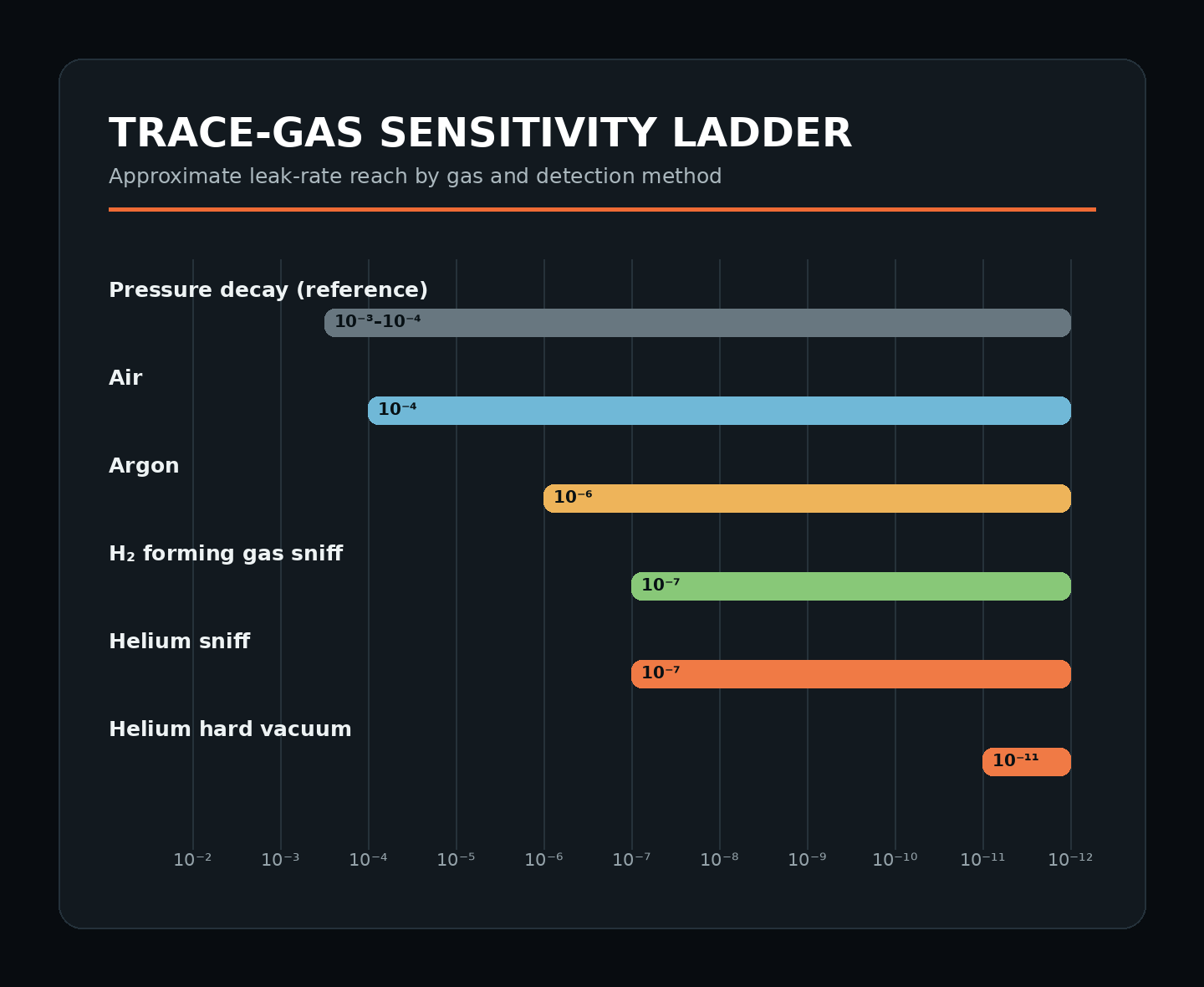
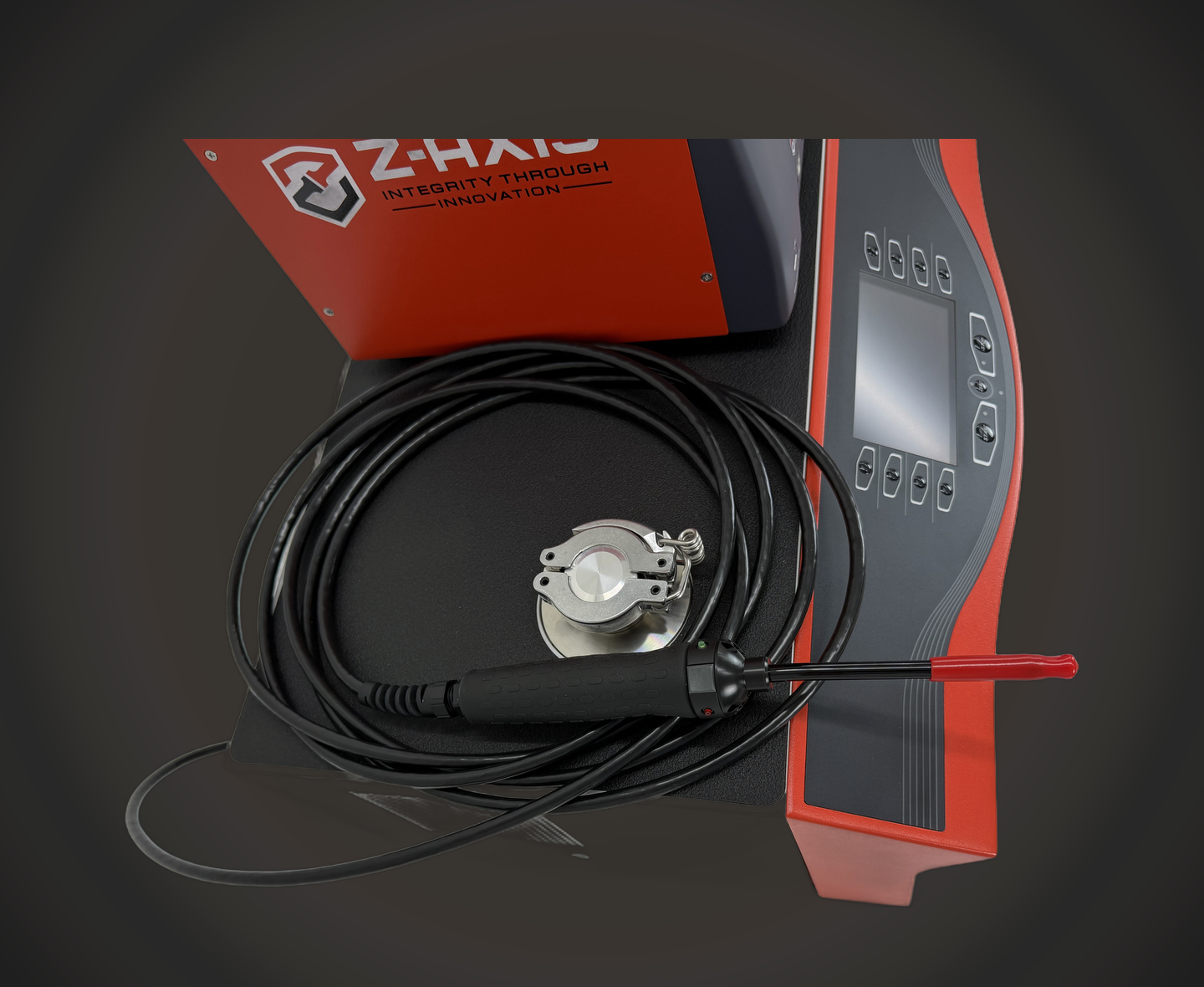
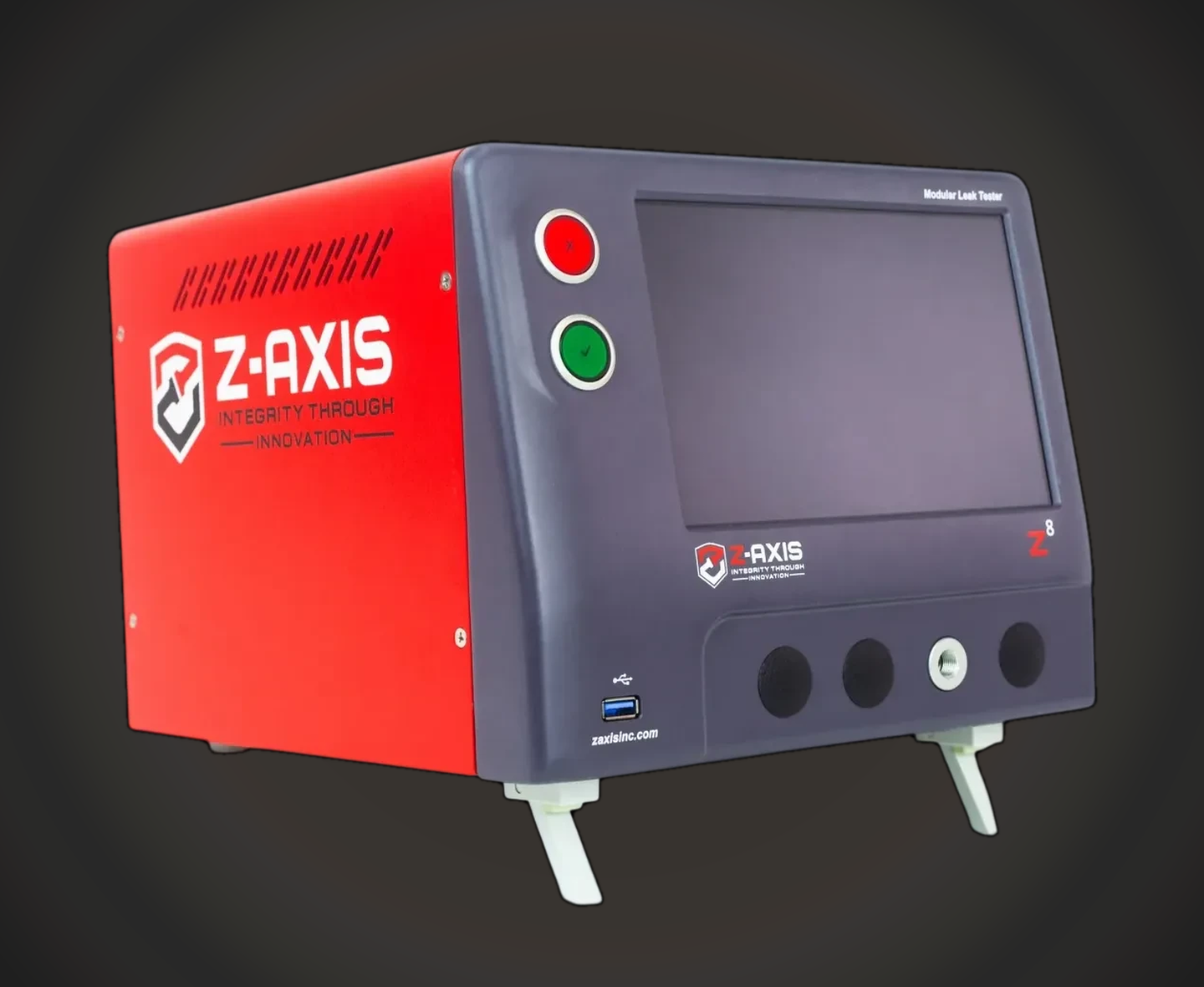
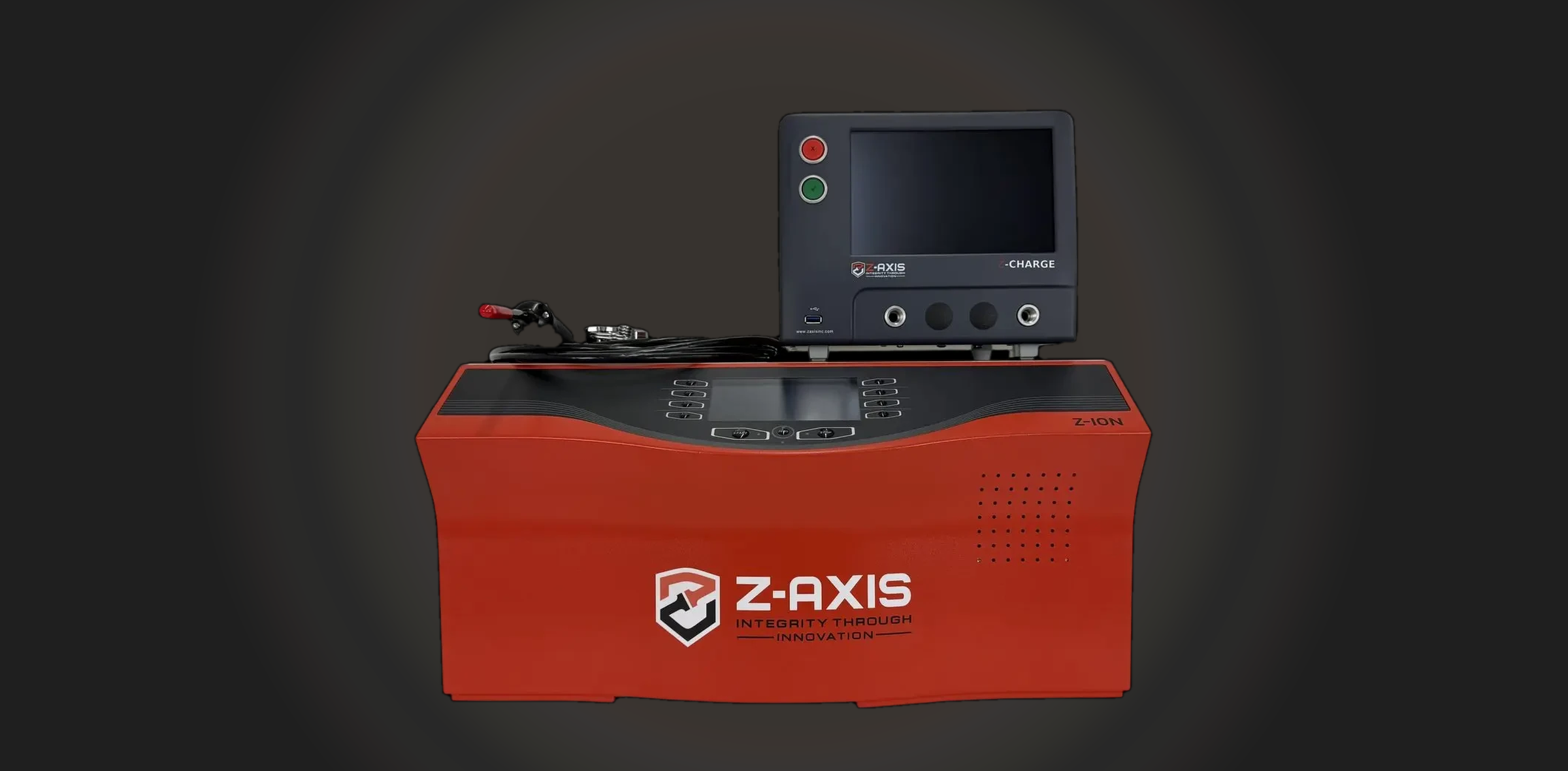
Sensitivity ladder comparing air, argon, forming gas and helium leak testingZaxis Z-Ion helium sniffer probe

Trace Gas Guide

Which Trace Gas Should You Use?

Choose helium, hydrogen forming gas, argon or air by selecting the least expensive gas that reliably meets the reject limit.

A trace-gas test fills a sealed part with a gas the detector can measure, then measures the gas that escapes. The decision starts with the reject limit, then considers the method, gas availability and the production environment.

Helium reaches the smallest leak paths, hydrogen forming gas offers sensitive sniffing at lower operating cost, argon provides an atmospheric alternative, and air uses the supply already plumbed to many lines.

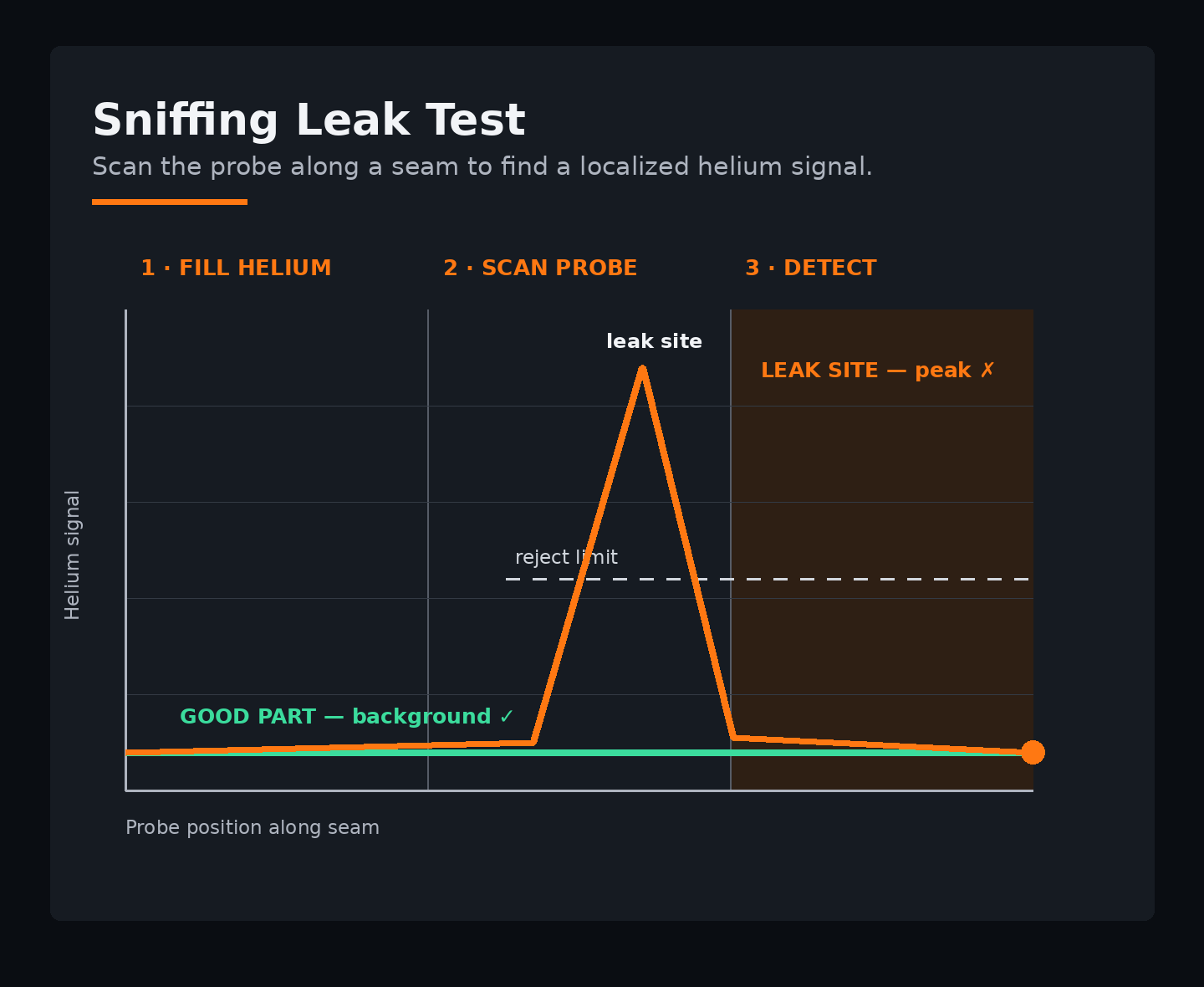
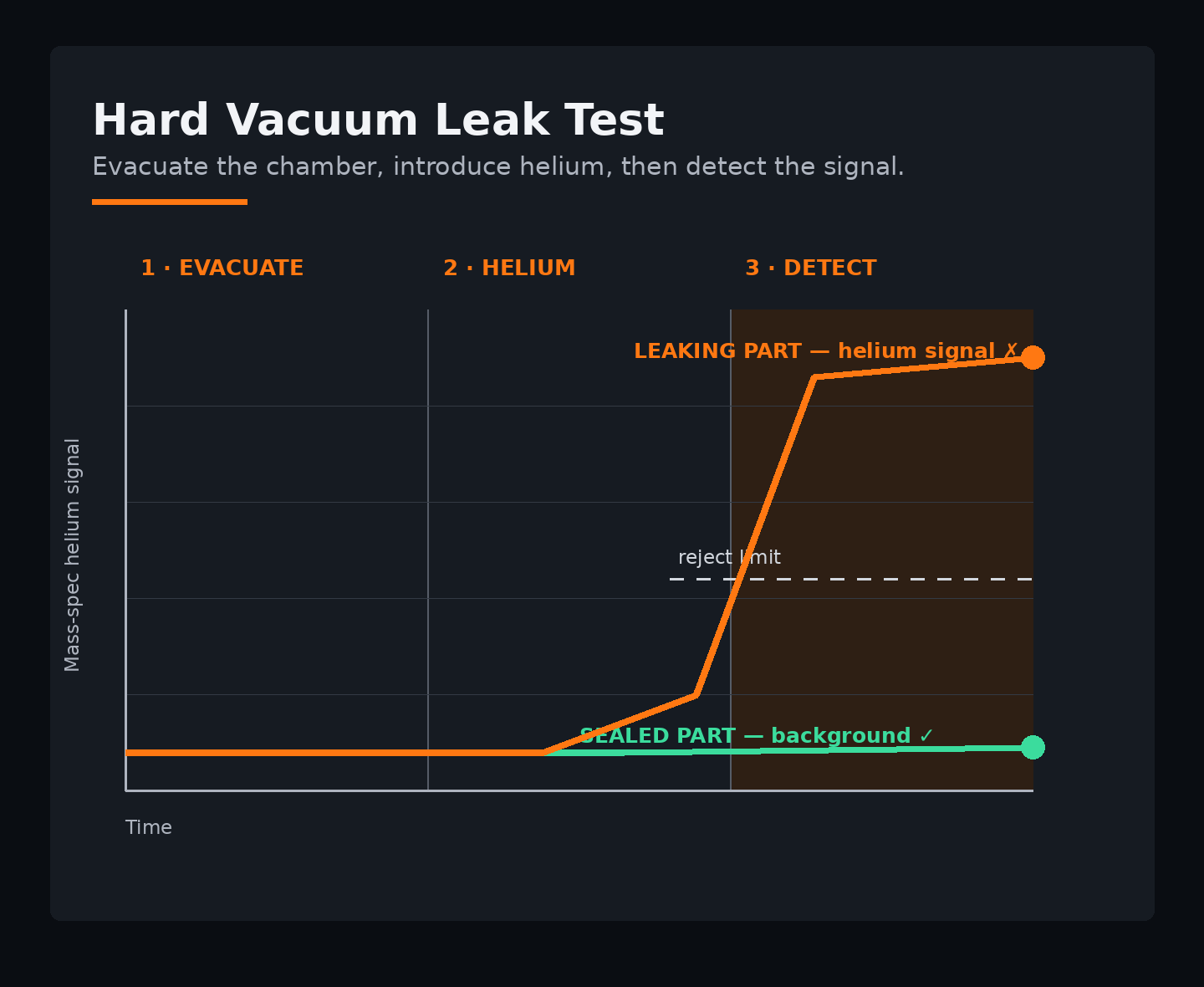
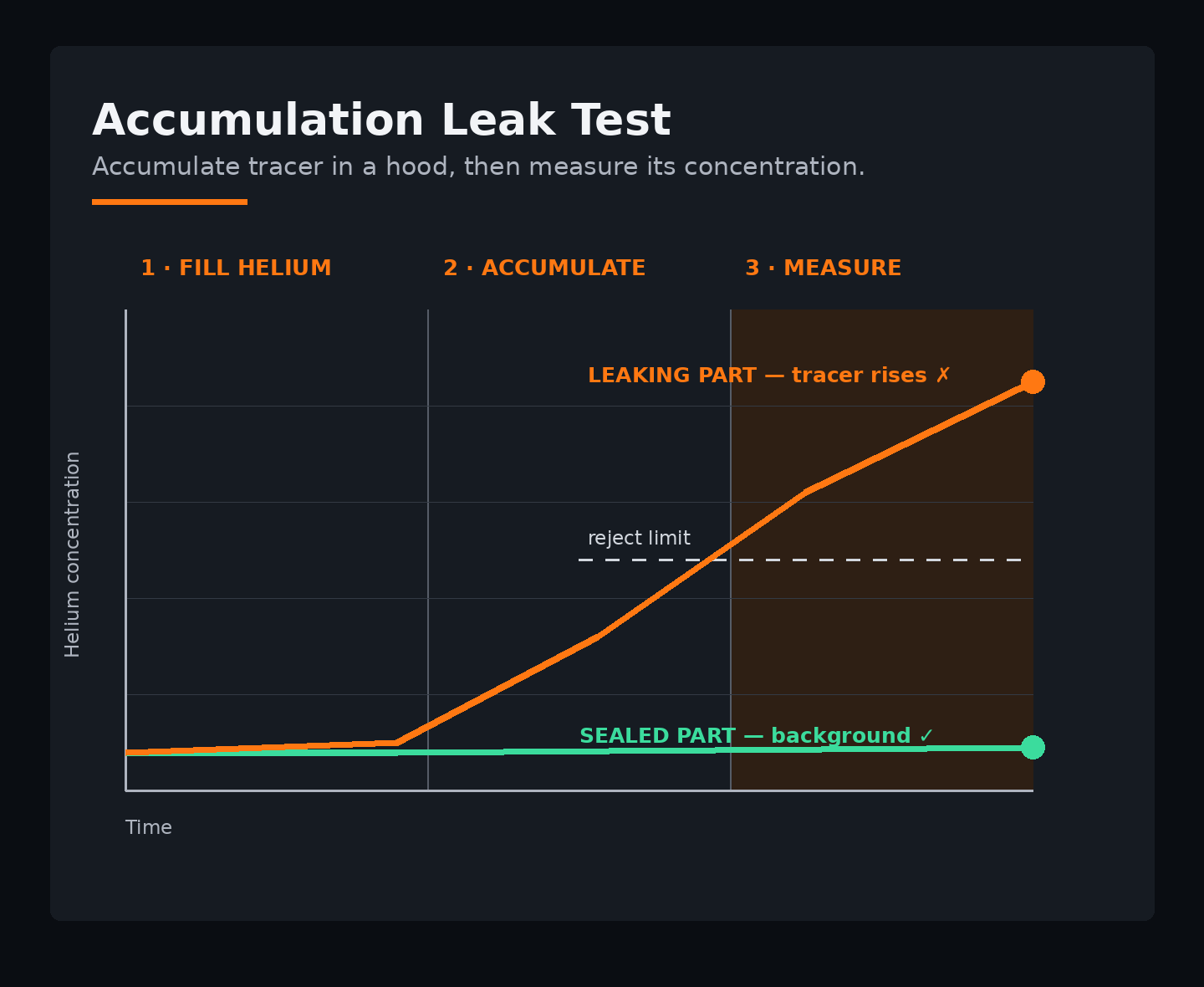
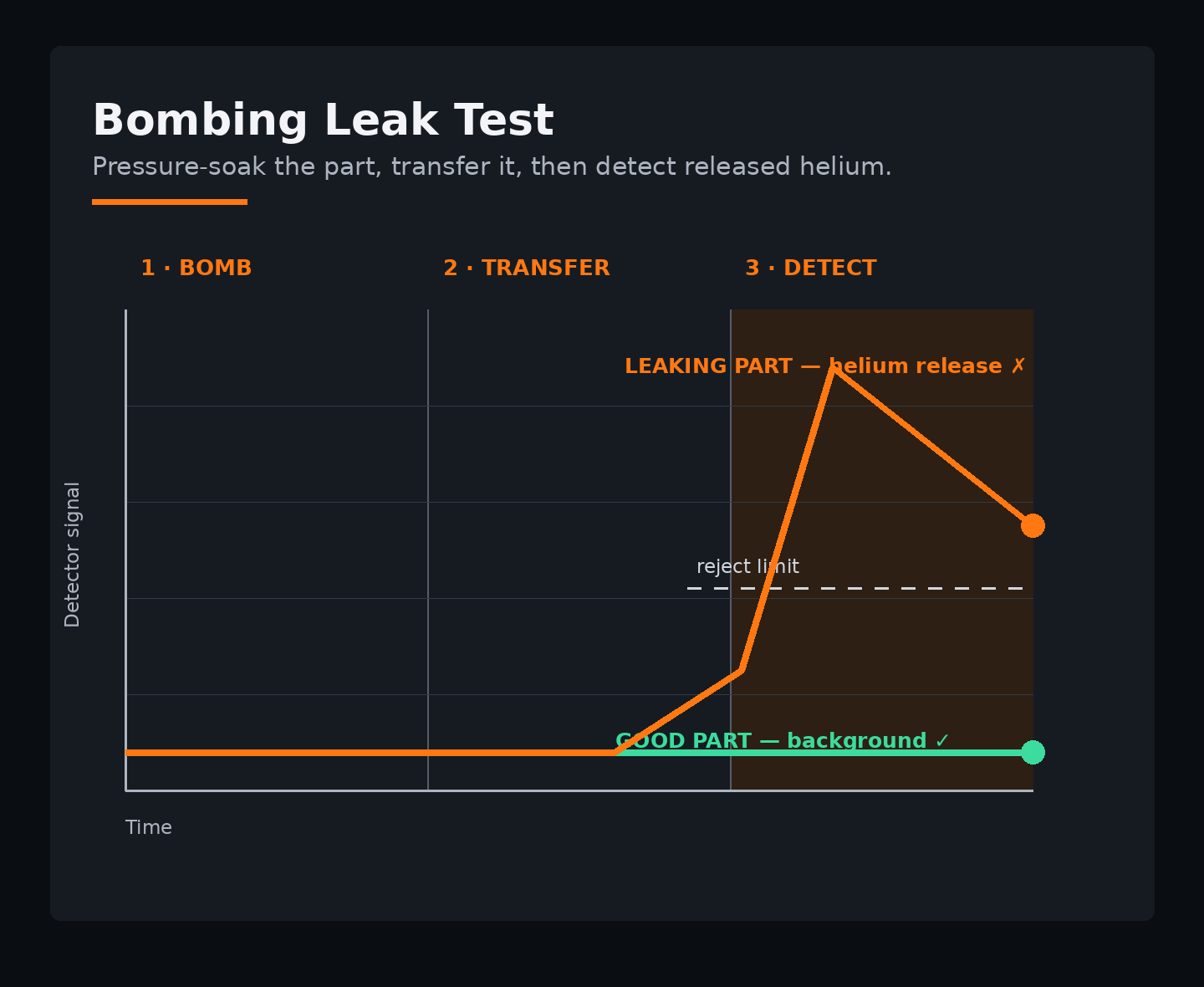
Choose the gas and detection method together. Sniffing localizes a leak, hard vacuum reaches the smallest rates, accumulation measures gas collected around a part, and bombing supports sealed devices that cannot be connected directly.

Request for Quote

What is trace gas leak testing?

Trace gas leak testing detects an escaping tracer rather than inferring a leak from a pressure change. The selected gas is introduced into the part, and the detector measures the signal where the gas leaves the sealed volume.

For the method sequence, detector setup and application details, visit the trace gas leak testing method page. This guide focuses on the gas selection decision.

A gas choice does not replace fixture design or a controlled sequence. It determines the signal available to the detector, while the selected method determines whether the station scans a seam, measures a chamber, uses vacuum or verifies a sealed package.

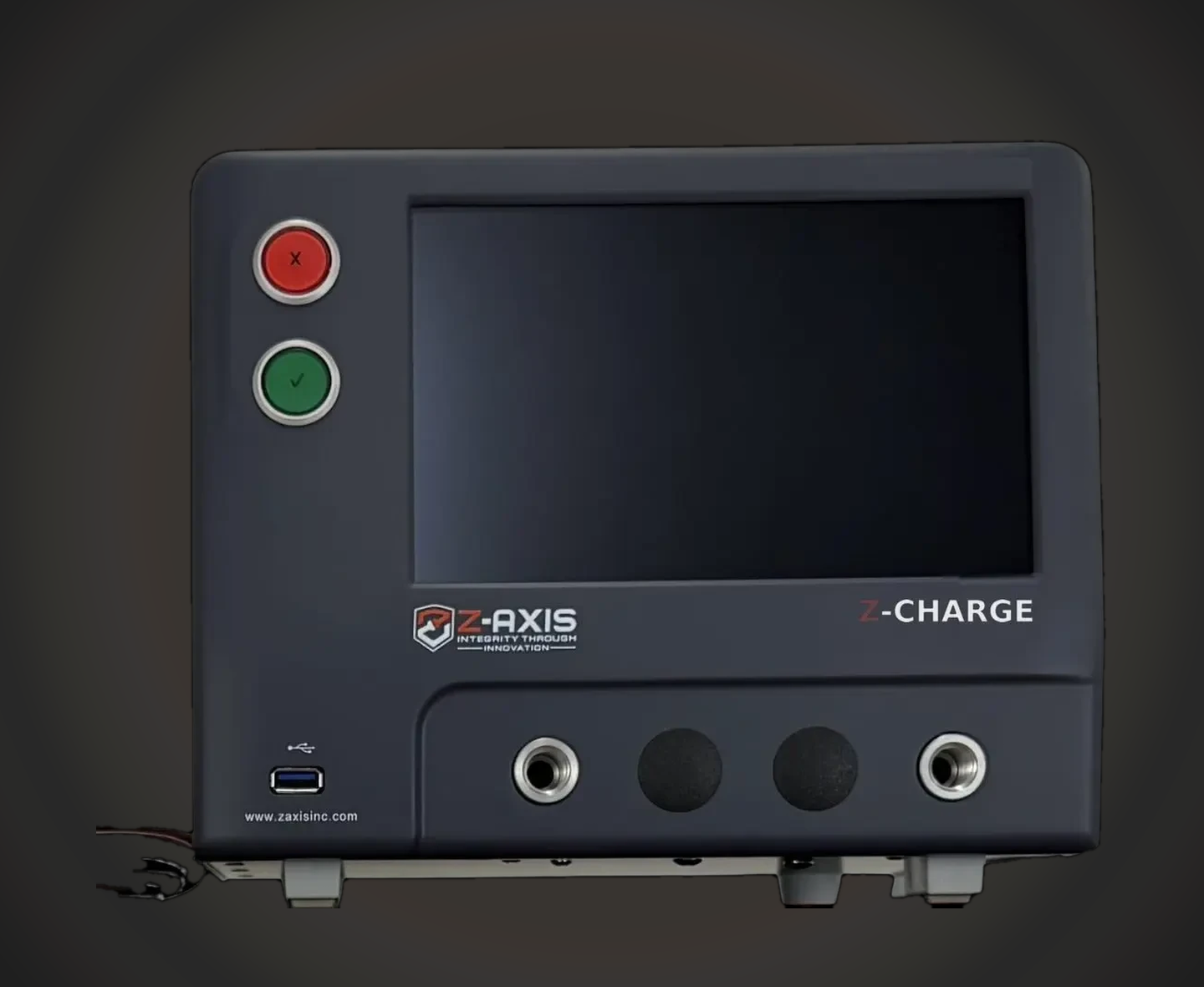
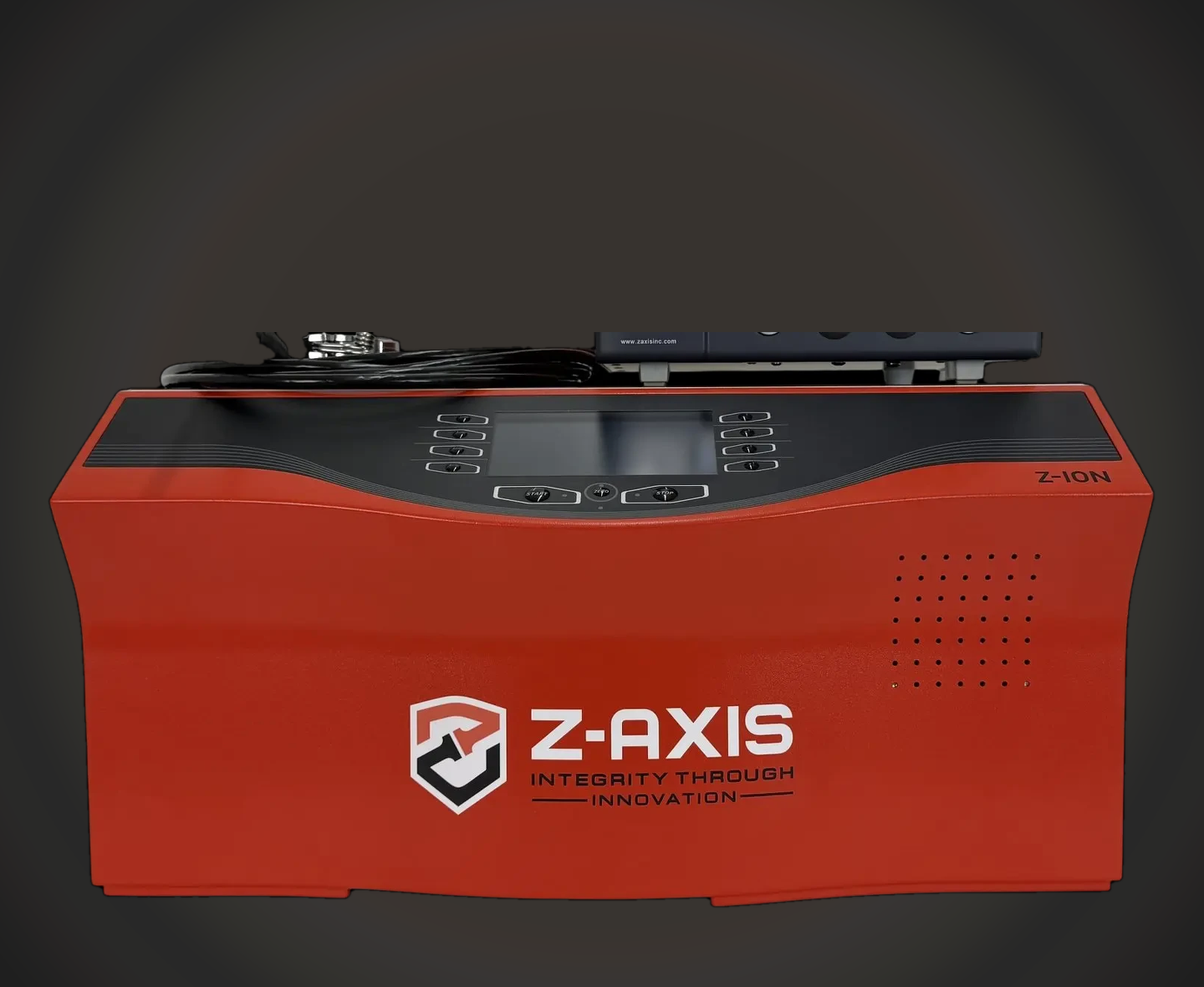
This table compares gas-selection concepts, not a Zaxis detector compatibility list. Z-Ion detects helium. Z-Charge provides helium preparation and air-test control; hydrogen and argon require compatible gas-specific detection hardware. Confirm the supplied configuration, external vacuum source, chamber/tooling and automation scope before ordering.

Zaxis offers leak-testing configurations for helium, hydrogen, argon and air. Select the gas-specific detector and preparation equipment for the application; gas capability belongs to the supplied configuration, not to every Zaxis model. The Z-Charge + Z-Ion configuration described here provides helium preparation and detection, while Zaxis air leak testers provide pressure/vacuum decay and mass-flow options.

For a configuration review, provide the part drawing, test gas, reject limit and units, test pressure, required result (leak location or total rate), cycle-time target and automation requirements. Confirm the detector, preparation controller, external vacuum equipment, chamber/tooling and qualification responsibilities in the quotation.

Choose the gas for your reject limit

Helium

Benchmark

Helium is inert, non-toxic and non-flammable. Its atmospheric background is about 5 ppm, which keeps background interference low.

  • ✓Sensitivity: Hard vacuum reaches 10⁻⁹–10⁻¹¹ mbar·l/s; sniffing reaches about 10⁻⁷ mbar·l/s.
  • ✓Cost & supply: Pricing and availability can be volatile; high-volume users may add recovery.
  • ✓Best for: The smallest reject limits and methods that need helium detection.

Hydrogen forming gas

Workhorse

Forming gas is 5% hydrogen and 95% nitrogen. It is non-flammable, inexpensive and widely available.

  • ✓Sensitivity: Sniff detection typically reaches about 10⁻⁷ mbar·l/s.
  • ✓Cost & supply: A lower operating-cost option for sensitive sniffing.
  • ✓Best for: High-throughput detection where the reject limit fits sniffing.

Argon

No-supply-risk alternative

Argon makes up nearly 1% of the atmosphere and is produced in bulk as a byproduct of air separation.

  • ✓Sensitivity: Argon-capable detectors reach roughly 10⁻⁶ mbar·l/s.
  • ✓Cost & supply: Inexpensive and not supply-constrained.
  • ✓Best for: Industrial reject limits that do not require helium reach.

Air

Drop-in upgrade

Clean, dry compressed air already used on a line can act as the tracer for air-based detection.

  • ✓Sensitivity: Air-based detection reaches roughly 10⁻⁴ mbar·l/s, comparable to pressure decay.
  • ✓Cost & supply: No cylinders or gas logistics.
  • ✓Best for: Large, flexible or temperature-sensitive parts where pressure decay struggles.

Trace gas comparison

Selection factorHeliumForming gasArgonAir
Typical sensitivity10⁻⁹–10⁻¹¹ hard vacuum; ≈10⁻⁷ sniff≈10⁻⁷ sniff≈10⁻⁶≈10⁻⁴
Atmospheric backgroundAbout 5 ppmDisperses after testingNearly 1%Available on the line
Cost & supplyPricing and availability can varyInexpensive and widely availableBulk air-separation byproductNo cylinder supply
SafetyInert, non-toxic, non-flammable5% H₂ / 95% N₂; non-flammableInertClean, dry compressed air
Detection methodsHard vacuum, sniffing, accumulation, bombingSniffingArgon-capable detectionAir-based detection
Best forSmallest leak pathsHigh-throughput sensitive sniffingIndustrial leak specsPressure-decay-like limits
Zaxis hardware scopeZ-Charge preparation/air control + Z-Ion helium detectionGas-specific detector required; not Z-IonGas-specific detector required; not Z-IonZaxis pressure/vacuum decay and mass-flow platforms; not Z-Ion tracer detection

How a trace gas test runs

1

CONNECT & SEAL

Connect the part to the fixture and establish the seal before gas flows.

2

CHARGE

Introduce the selected gas using the programmed sequence.

3

TEST

Run the selected trace-gas method and measure the detector response.

4

RECORD

Store the quantitative result and pass/fail decision for the part.

Why choose trace gas?

  • ✓Find leaks orders of magnitude smaller than pressure-based test types.
  • ✓Pinpoint exactly where a part leaks.
  • ✓Produce a quantitative, recordable leak rate for every part.
  • ✓Remain largely immune to temperature drift, part flexing and volume effects.

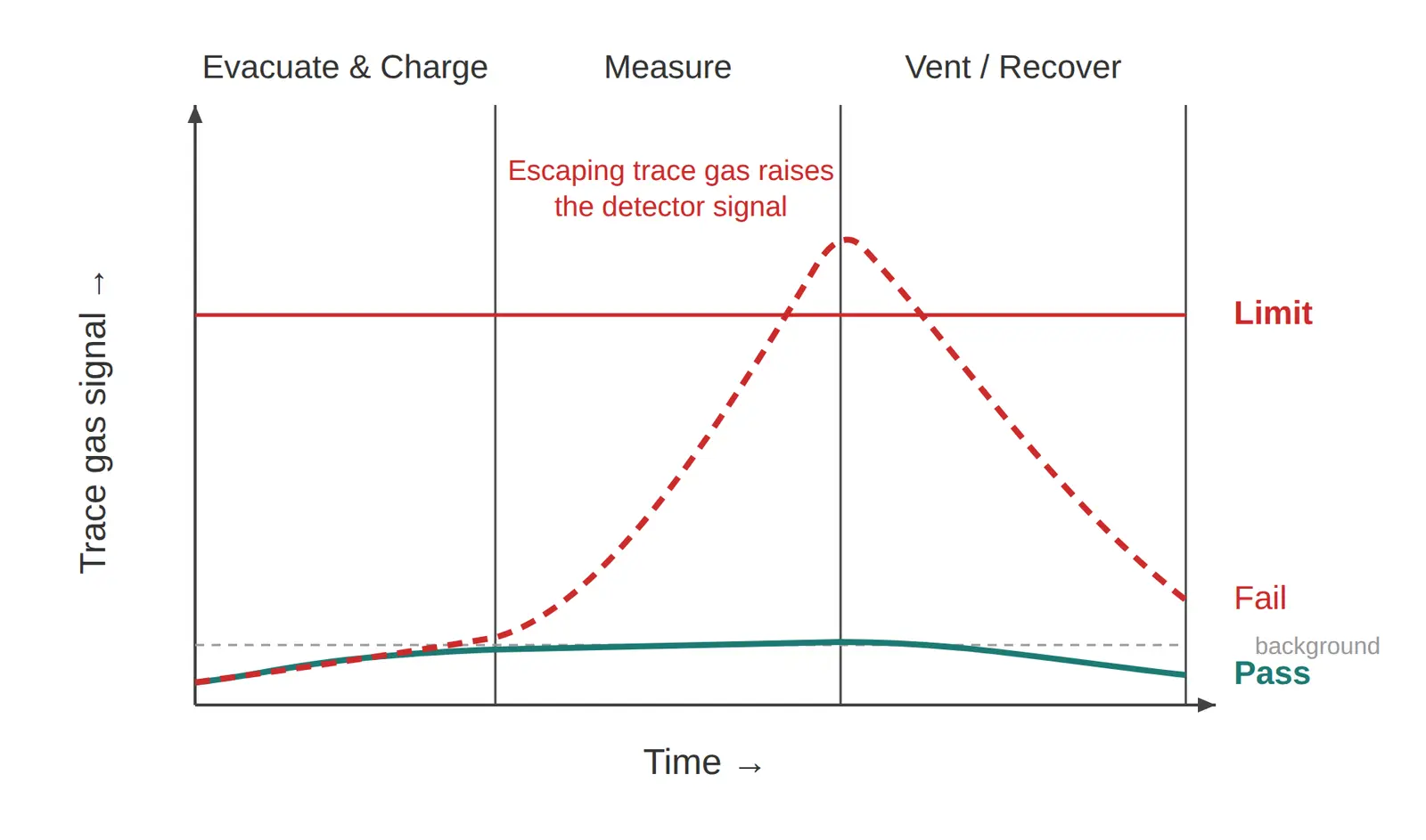
Signal versus time

Trace gas detector signal rises when a leaking part releases gas

Trace gas FAQ

Which trace gas is cheapest?

Air avoids cylinder supply, while argon is inexpensive and produced in bulk through air separation.

Which gas is most sensitive?

Helium hard vacuum reaches 10⁻⁹–10⁻¹¹ mbar·l/s; helium sniffing reaches about 10⁻⁷ mbar·l/s.

Is hydrogen forming gas flammable?

The forming gas described here is 5% hydrogen in 95% nitrogen and is non-flammable.

Can I use air as a trace gas?

Yes. Clean, dry compressed air can reach roughly 10⁻⁴ mbar·l/s with air-based detection.

When is helium recovery useful?

High-volume helium users may add recovery when helium pricing and availability are a concern.

When should I use argon?

Argon fits industrial leak specifications that need roughly 10⁻⁶ mbar·l/s sensitivity without a helium supply.

Do I choose the gas before the method?

Select the gas and method together around the reject limit and whether the application needs localization, vacuum detection, accumulation or bombing.

Does Z-Ion detect every gas compared here?

No. Z-Ion is a helium mass-spectrometer detector. Hydrogen and argon selection requires compatible gas-specific hardware; the educational gas table is not a compatibility specification.

Can Zaxis supply leak testing for hydrogen, argon and air as well as helium?

Yes. Zaxis offers configurations for helium, hydrogen, argon and air. Confirm gas and method compatibility for the supplied detector and equipment. Z-Ion is the helium detector in the Z-Charge + Z-Ion configuration; this does not make every Zaxis model a detector for every gas.

Match your test gas to your reject limit

Talk to an Engineer
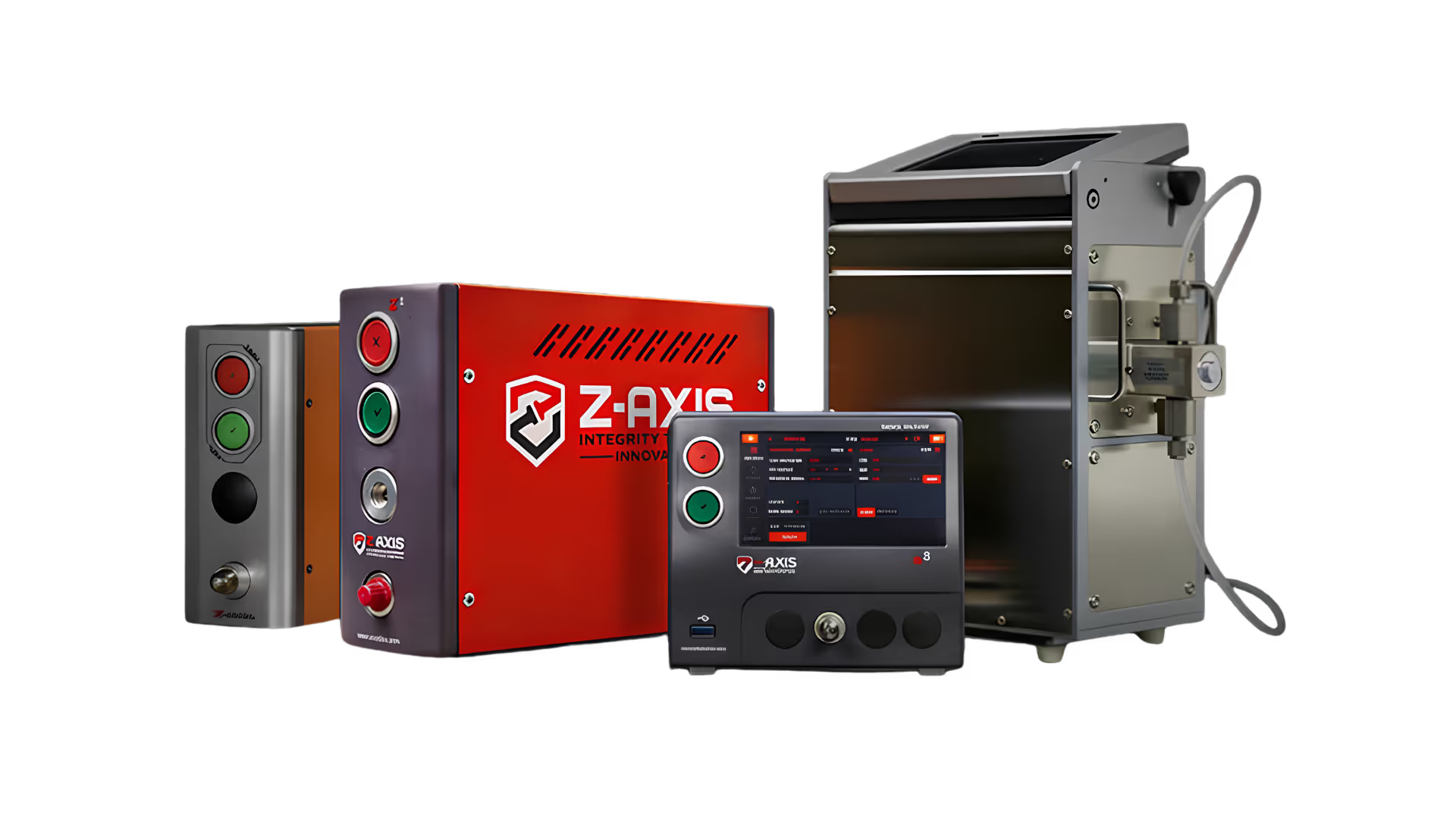
Zaxis trace gas test cell

Ready to Ensure Product Integrity ?

Request for Quote