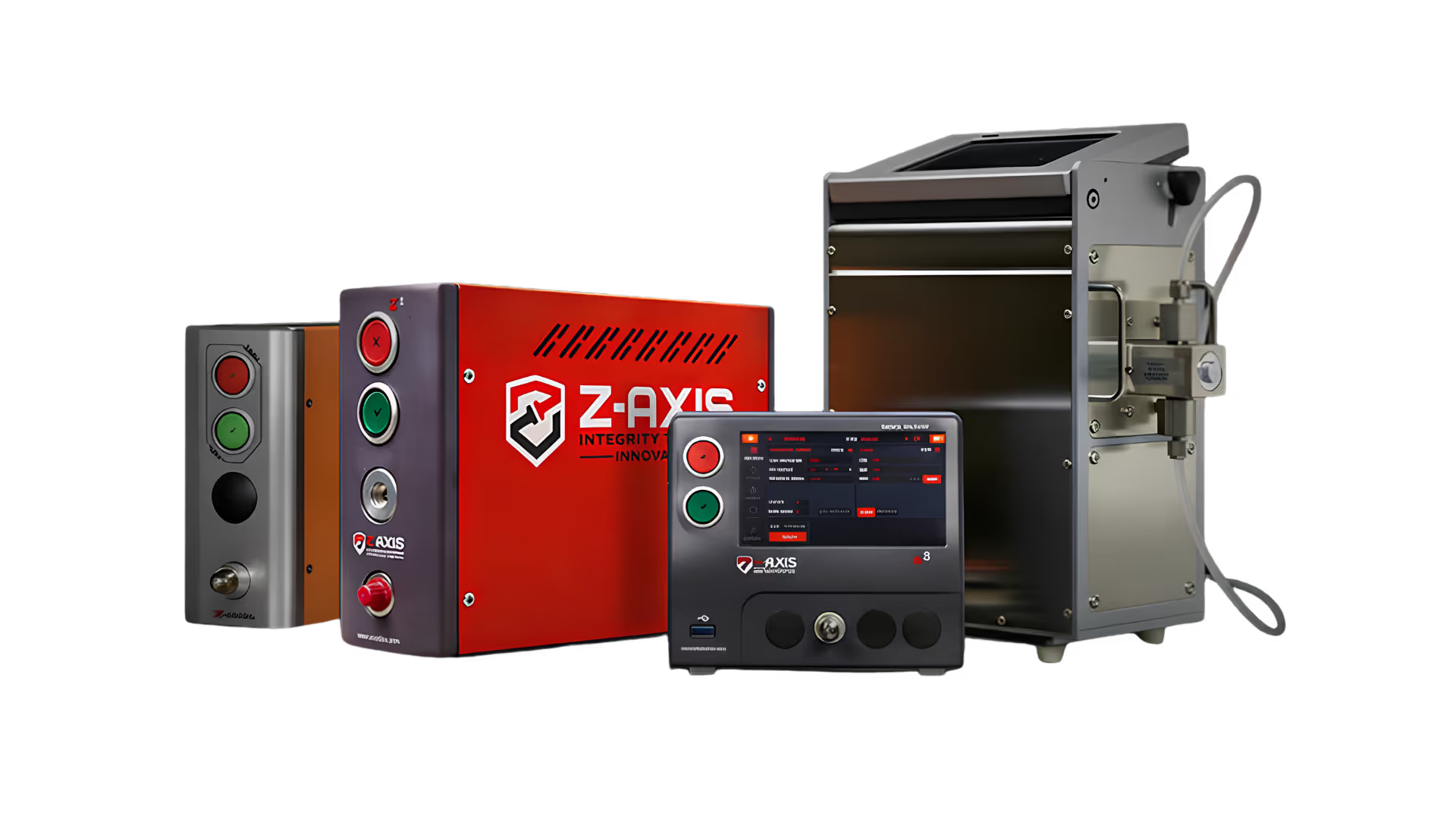
Z5 air leak tester
- ✓0.00001 PSI test-result resolution.
- ✓2–1000 PSIG positive pressure; 0–14.7 PSI vacuum.
- ✓USB, Ethernet/IP, TCP/IP and 24 VDC I/O.
- ✓100 stored programs.


Leak Testing
Build a repeatable production test for cold plates, CDUs, quick disconnects, manifolds, hoses and rack assemblies.
Liquid cooling puts a coolant circuit beside high-value computing hardware. Component makers, CDU manufacturers, fitting suppliers and rack integrators need an in-line test that confirms the intended pressure boundary before a part moves downstream.
Air leak testing and trace-gas leak testing are peer method families. Pressure decay, vacuum decay and mass flow provide dry, fast evidence for gross and moderate leaks. Helium or hydrogen forming-gas methods add fine-leak sensitivity or location information when the requirement calls for it.
Request for QuoteRequest an application review with a drawing or sample, pass/fail requirement, test pressure, cycle-time target and volume.
A cold plate may have machined passages, brazed joints and ports; a manifold adds branches and connections; a QD and hose assembly add seals and interface geometry; a CDU can combine several circuits. The test must define which volume is being challenged, how every open port is sealed, and whether the result is a production screen or a diagnostic measurement.
For larger or flexible volumes, temperature stabilization, part compliance and fixture volume affect a pressure-based result. Use the leak test method chooser and leak-rate calculator to frame the method discussion around the actual part and reject requirement.
Pressure decay observes pressure after a connected part is filled and isolated. Vacuum decay observes movement back toward atmospheric pressure after evacuation. Mass flow measures controlled air flow against programmed bounds. These methods are practical production options when their result and cycle time fit the defined component requirement.
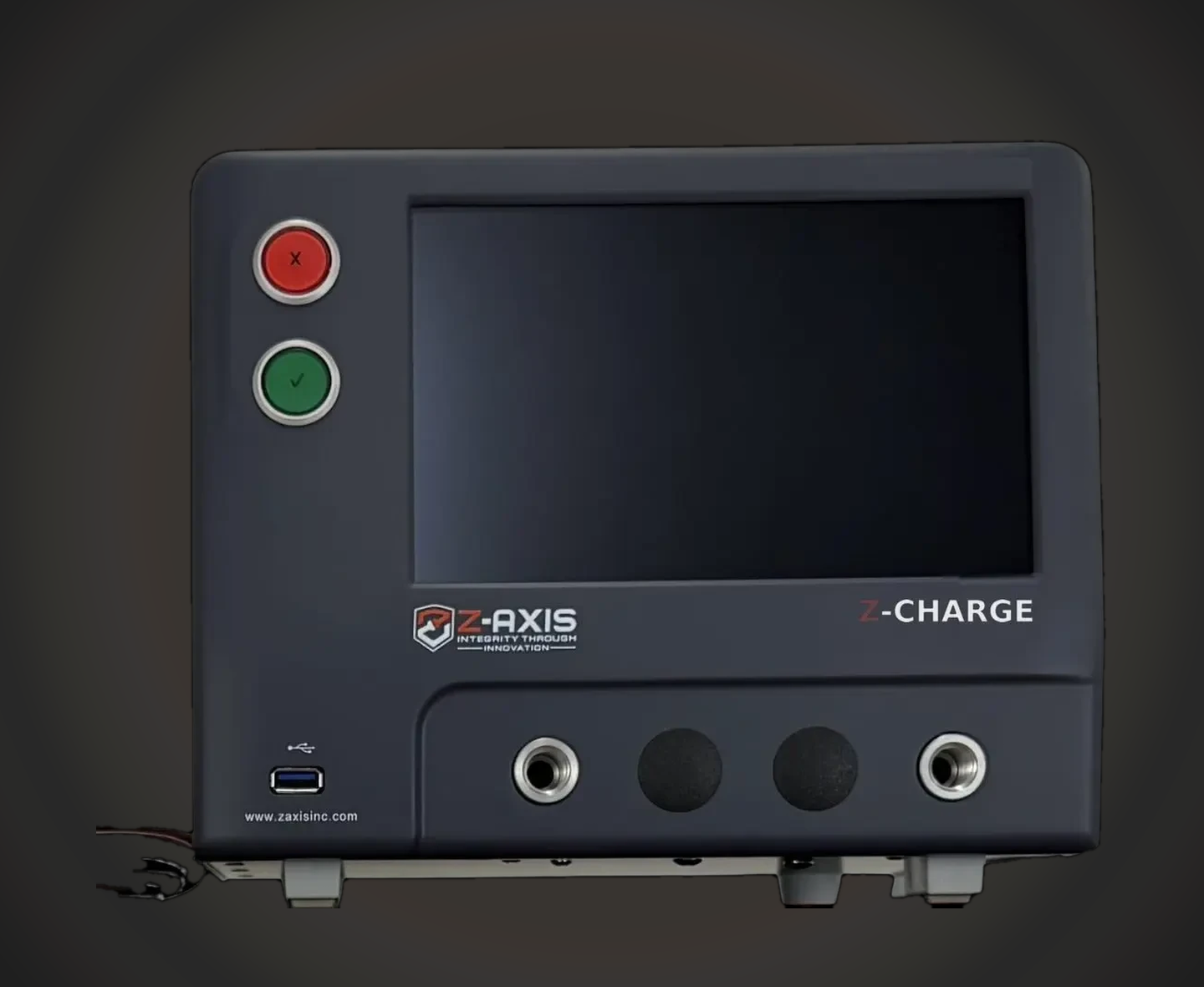
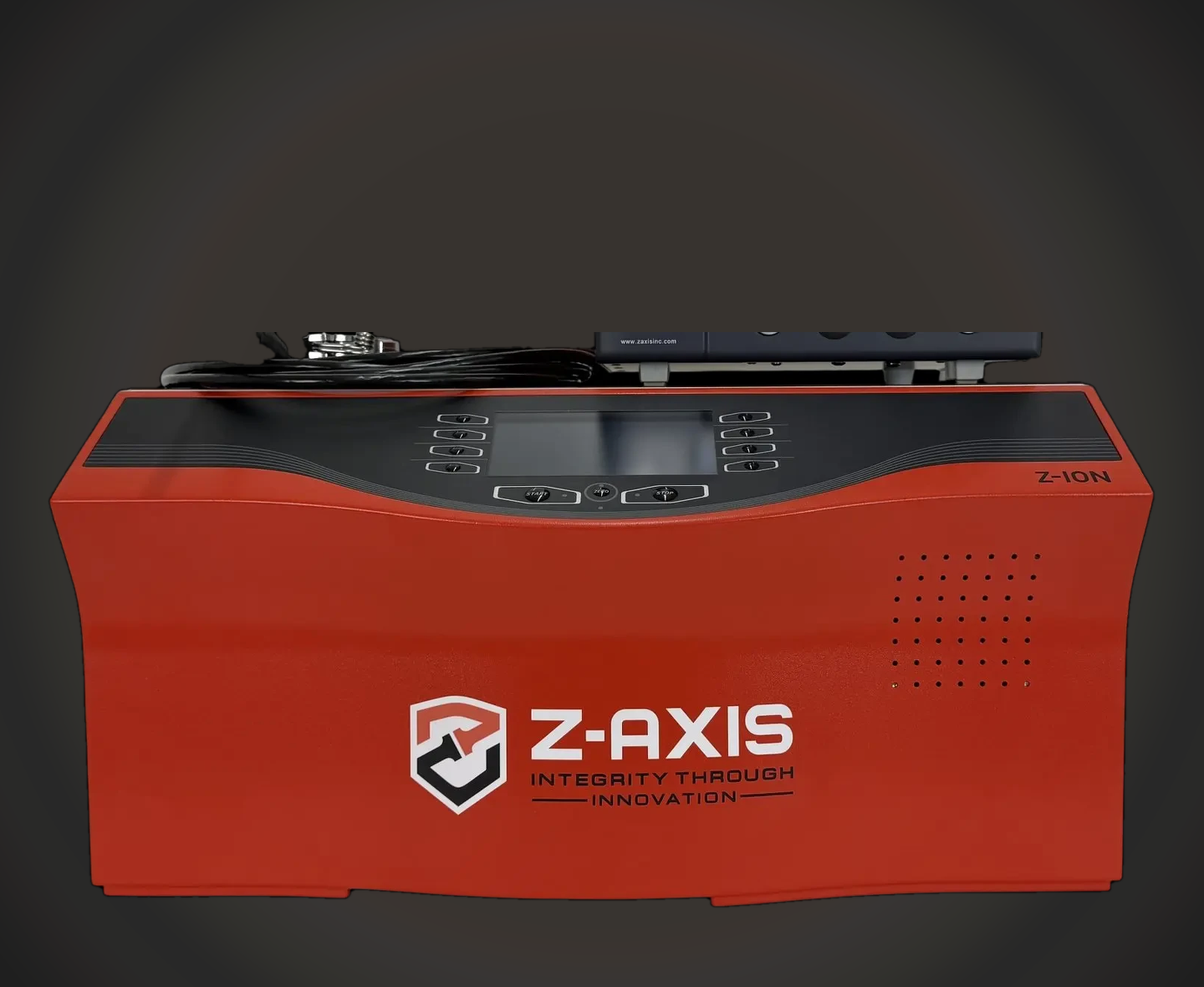
Z-Charge + Z-Ion can combine an air screen with trace-gas detection in one coordinated recipe. Z-Charge prepares and charges the part and can run gross leak, pressure decay and vacuum decay. Z-Ion is the helium mass-spectrometer detector for trace-gas work.
With helium, Z-Ion lists vacuum sensitivity better than 5 × 10⁻¹² mbar·L/s and sniff sensitivity of 5 × 10⁻⁸ mbar·L/s. The system records pass/fail, recipe ID, charge parameters and detector result. For method selection, see sniffing, accumulation and hard vacuum. Helium and hydrogen forming gas are trace-gas options for sniffing; select the gas and method around the documented requirement and production environment.
| Component | Air screen | Trace-gas route | Fixture focus |
|---|---|---|---|
| Cold plate | Pressure or vacuum decay | Sniffing or hard vacuum when required | Seal ports and define passage volume |
| Rack manifold | Pressure decay or mass flow | Sniffing for location; accumulation or hard vacuum as selected | Branch ports and repeatable closures |
| Quick disconnect | Pressure or vacuum decay | Sniffing when localization is needed | Interface geometry and actuation |
| Hose assembly | Pressure decay | Sniffing when required | End fittings and flexible volume |
| CDU | Pressure or vacuum decay | — | Multiple circuits and ports |
These are planning routes, not default acceptance recipes. Confirm the selected gas, fixture, pressure or vacuum stages, timing and pass/fail decision using representative components and the manufacturer’s defined requirement.
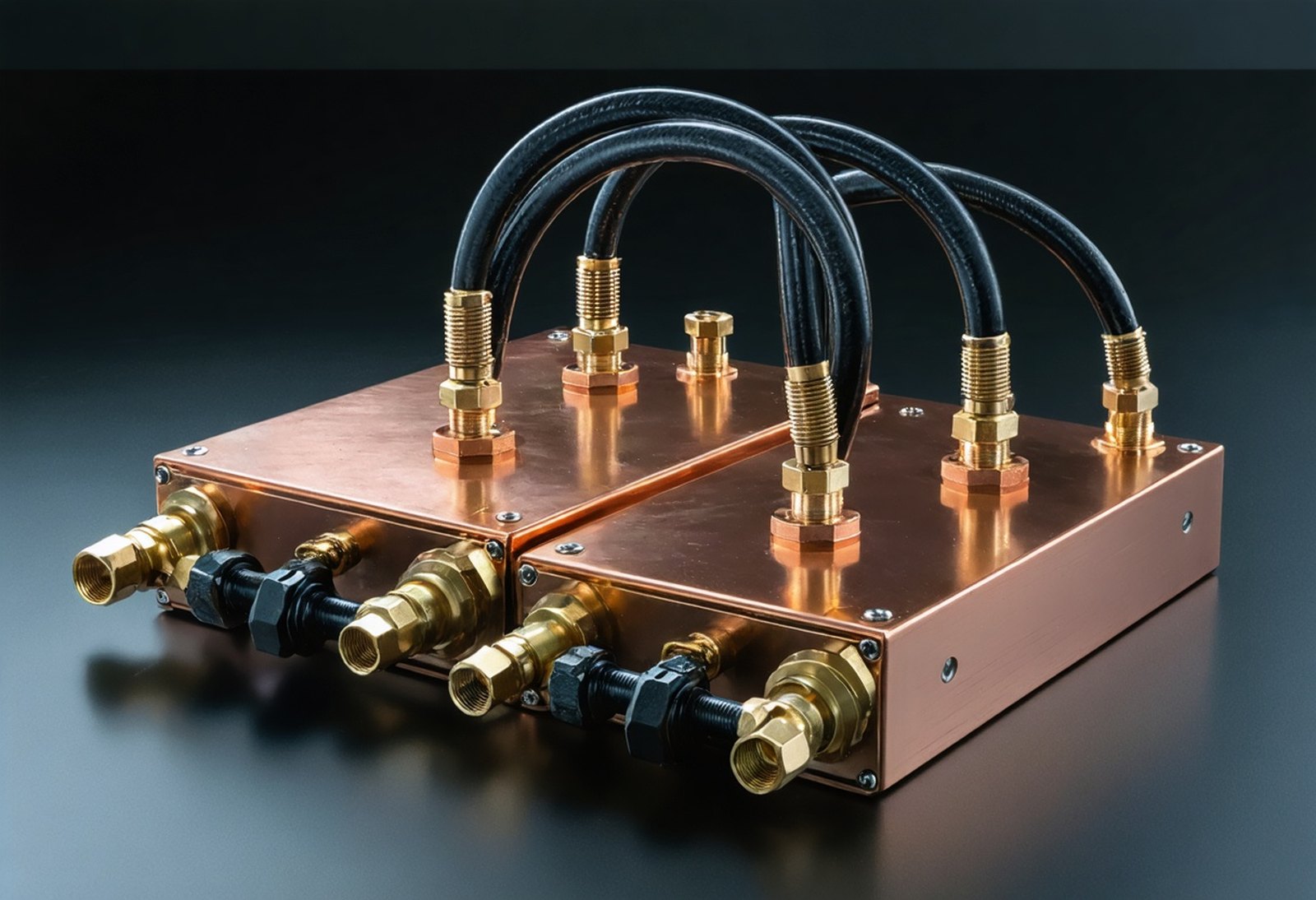
The fixture turns a complex coolant path into a repeatable test boundary. It must locate the component, seal the intended ports and avoid bypassing the joint or seal being evaluated. Review the leak test fixture design guide for fixture inputs and verification questions.
For a production station, review leak-tester automation integration. Z5 and Z8 list Ethernet/IP, TCP/IP, USB and 24 VDC I/O; Z-Charge + Z-Ion lists Ethernet/IP, TCP/IP, USB and serial communications for quality-system integration. Record the recipe and result with the part or assembly record where that is part of the manufacturing process.
Liquid-cooling leak requirements are set by the component maker and its customer in the drawing, specification and validation plan; industry guidance frames the environment rather than the acceptance limit. ASHRAE Technical Committee 9.9 publishes thermal guidance for data-processing environments, including liquid cooling. Zaxis builds the production test to the written requirement: a defined test boundary, fixture, method, timing and pass/fail decision that keep the station evidence tied to the component being made.
Relevant product information is available from the Downloads library. Bring the component drawing or sample, leak requirement, pressure, cycle-time target and production volume to an application review.
Start with the component boundary, reject limit, volume, access and cycle-time target. Pressure or vacuum decay can screen gross and moderate leaks; trace gas is considered when the requirement needs a measurable tracer or localization.
Yes. Z-Charge runs gross leak, pressure decay and vacuum decay natively, and coordinates trace-gas methods with Z-Ion when the selected sequence requires them.
The fixture establishes the test boundary. Its seals, ports, added volume and repeatable part location affect the station result and should be reviewed with the component geometry.
Yes. Sniffing charges the part with helium or hydrogen forming gas and scans welds, joints, seals and fittings with a probe to identify the local area for investigation.
Provide a drawing or sample, pass/fail requirement, test pressure, flow, cycle-time target and expected production volume so the test boundary and method can be reviewed.