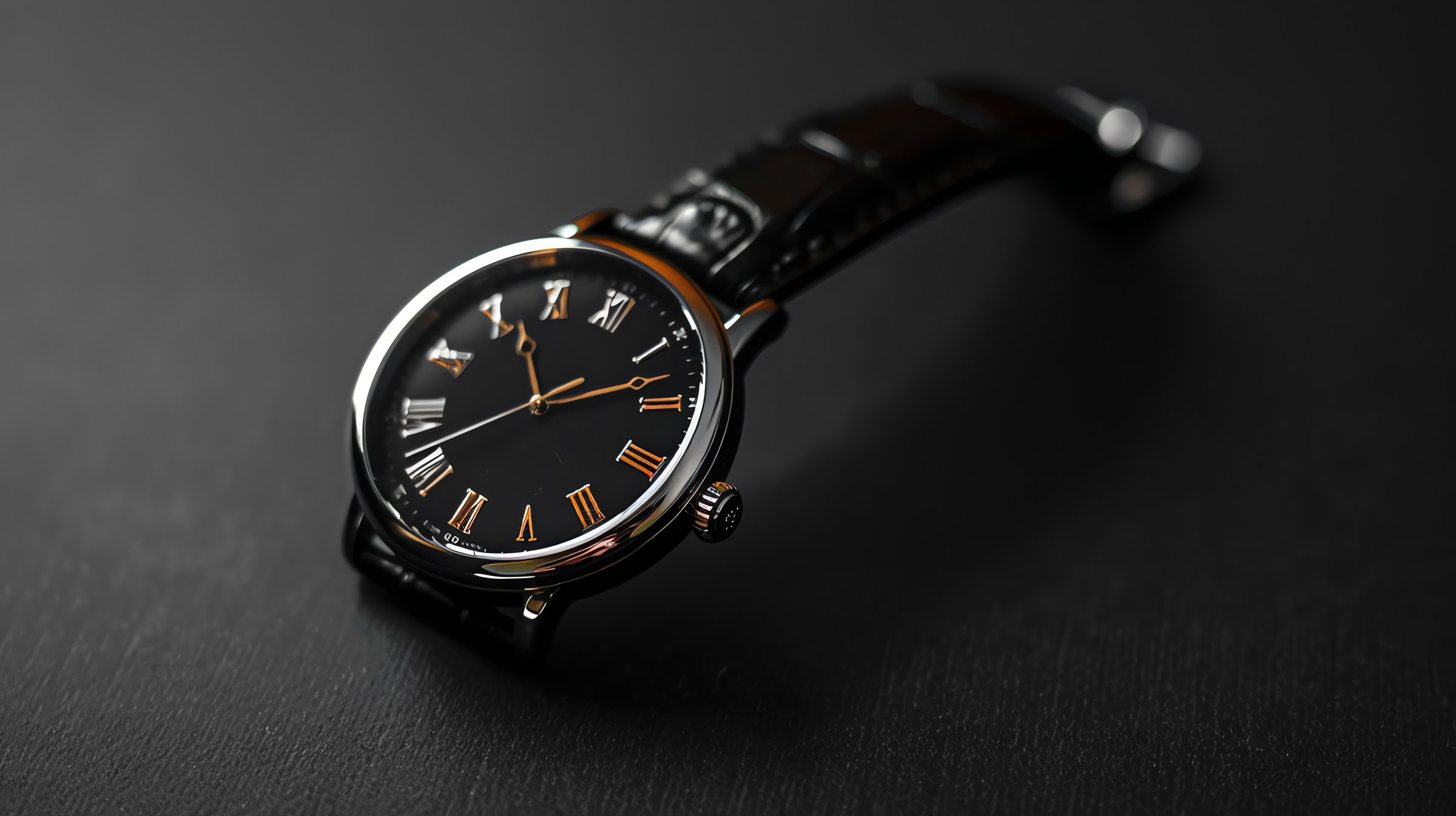
Electronics circuit board for sealed-device leak testing

Industry Solutions

Consumer Electronics Leak Testing

Leak testing helps manufacturers verify sealed electronics before environmental exposure compromises performance.

Sealed electronic devices can be vulnerable to water, dust and other environmental elements when an enclosure leaks.

Zaxis air leak testing equipment supports production checks for electronics and components that need dependable sealed-component integrity.

Zaxis consumer-electronics leak-testing equipment is made in the USA and can deliver precision results on an electronic manufacturing line.

Implantable medical devices, underwater equipment and aerospace components are sensitive electronics that can be vulnerable to environmental elements when their enclosures leak.

Request for Quote

What gets tested

Consumer electronics production can include sensitive sealed components where a leak can affect performance or safety.

Chamber testing evaluates sealed electronic components in a custom-fit sealed chamber and helps assess whether external elements can compromise functionality.

•Glucose sensor implants•Smartphones•Smartwatches•Diving watches•Underwater lights•Automotive proximity sensors•Wireless tower antennas•GPS locators

Methods used

Choosing the method

Select a non-destructive test around the enclosure geometry, the required ingress protection and the way the device moves through production.

Chamber testing

A chamber surrounds a finished phone, watch, beacon or other enclosure that has no port for a direct connection. A closely matched chamber volume supports a fast pressure response while preserving the assembled device.

For a sealed electronic product, the chamber is filled with a measured quantity of regulated air; stable chamber pressure indicates an intact seal, while a drop directs the unit to evaluation.

Chamber testing explained →

Vacuum decay

Vacuum decay is suited to sealed electronic enclosures, sensors, radios, cell phones and smartwatches where pressure-versus-time data can make a pass/fail decision. The method evaluates a change in pressure while the part is under vacuum.

Its non-destructive cycle avoids visual bubble inspection and can fit automated production, providing repeatable results with minimal operator influence.

Vacuum decay explained →

Pressure decay

Pressure decay can be configured when an electronic part or its fixture has a path for controlled pressurization. Keeping the test circuit compact matters because extra tubing and fixture volume slow the pressure response.

A production cell benefits when the tester remains close to the enclosure or assembly: short air paths reduce added volume and improve the usefulness of the measured change.

Pressure decay explained →

Which Zaxis testers fit

Electronics manufacturing can use these Zaxis tester configurations. The Isaac HD, iKit and 7i referenced on this page were discontinued on 03/31/25 with limited parts after 2028; their successors are the Z5, Z1 and Z8.

Environmental durability & validation

Chamber testing helps inspect sealed components for resistance to external factors and supports testing of devices used underwater, in space or in extreme climates.

Zaxis leak testers can be used to test in accordance with published IP ratings for waterproof status.

Chamber testing can support safety assurance by helping prevent hazards caused by compromised seals or leaks. It evaluates whether a sealed device can continue to function under environmental conditions.

Sealed electronics enclosure for environmental validation

In depth: sealed electronic enclosures

Turning an IP requirement into an enclosure test

Ingress protection gives manufacturers a common way to communicate resistance to solids and liquids. The first IP digit runs from 0 to 6 for solid ingress, while the second runs from 0 to 9 for liquid ingress; either position may be X when that protection is not applicable.

IP67 is common for electronics and medical assemblies. Its first digit means dust tight, and its second digit covers immersion up to one meter for up to thirty minutes. The target protection should account for whether the product faces air, liquid or other elements, plus the expected pressure, assembly complexity and operating environment.

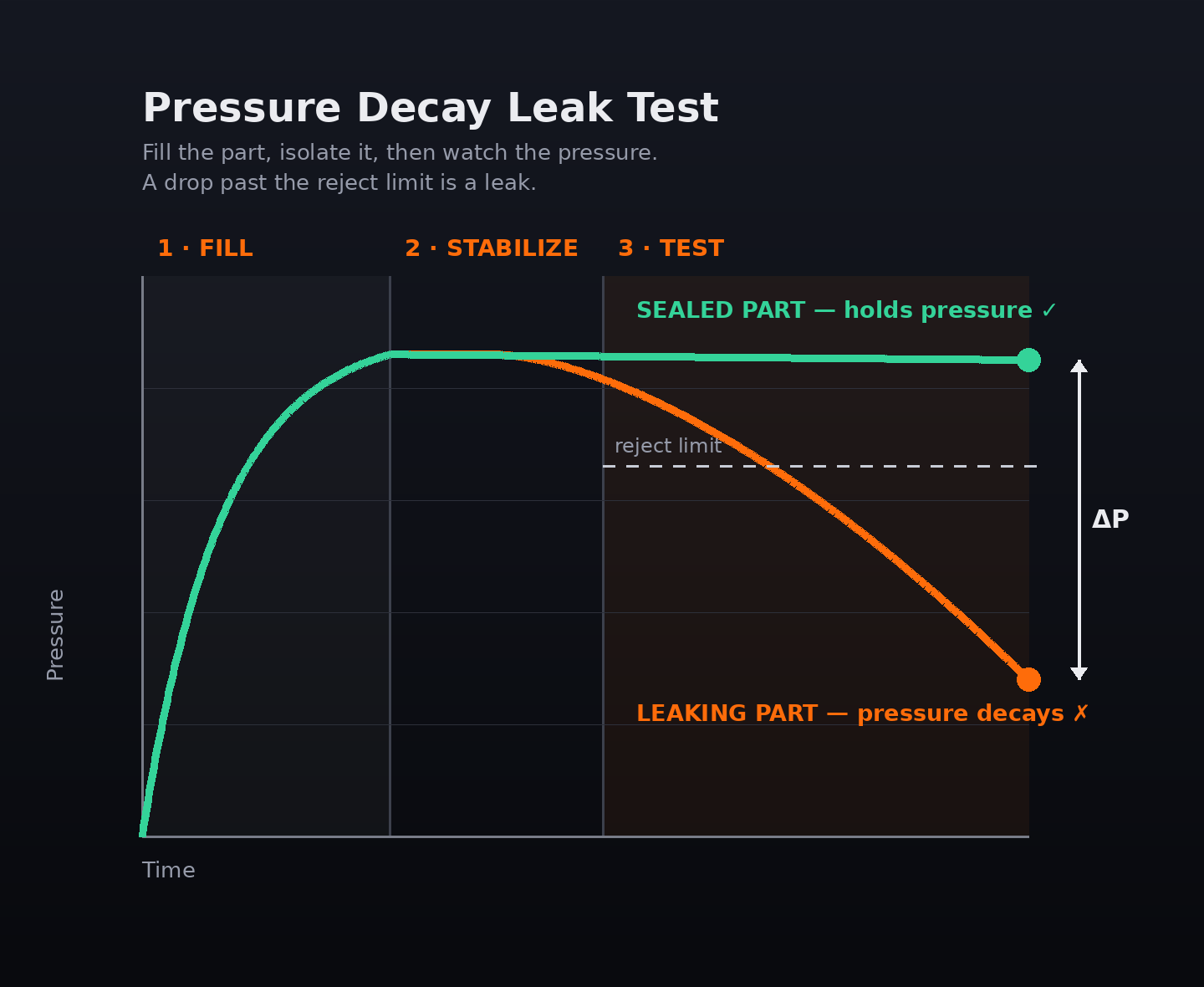
A sealed device can be checked without submerging or destroying it. In a chamber cycle, the device sits inside a sealed fixture; the fixture receives pressure based on the acceptance calculation, and a held pressure supports a passing unit while a loss calls for further evaluation.

Pressure-decay graph for electronics enclosure testing

Why a chamber starts with the space around the device

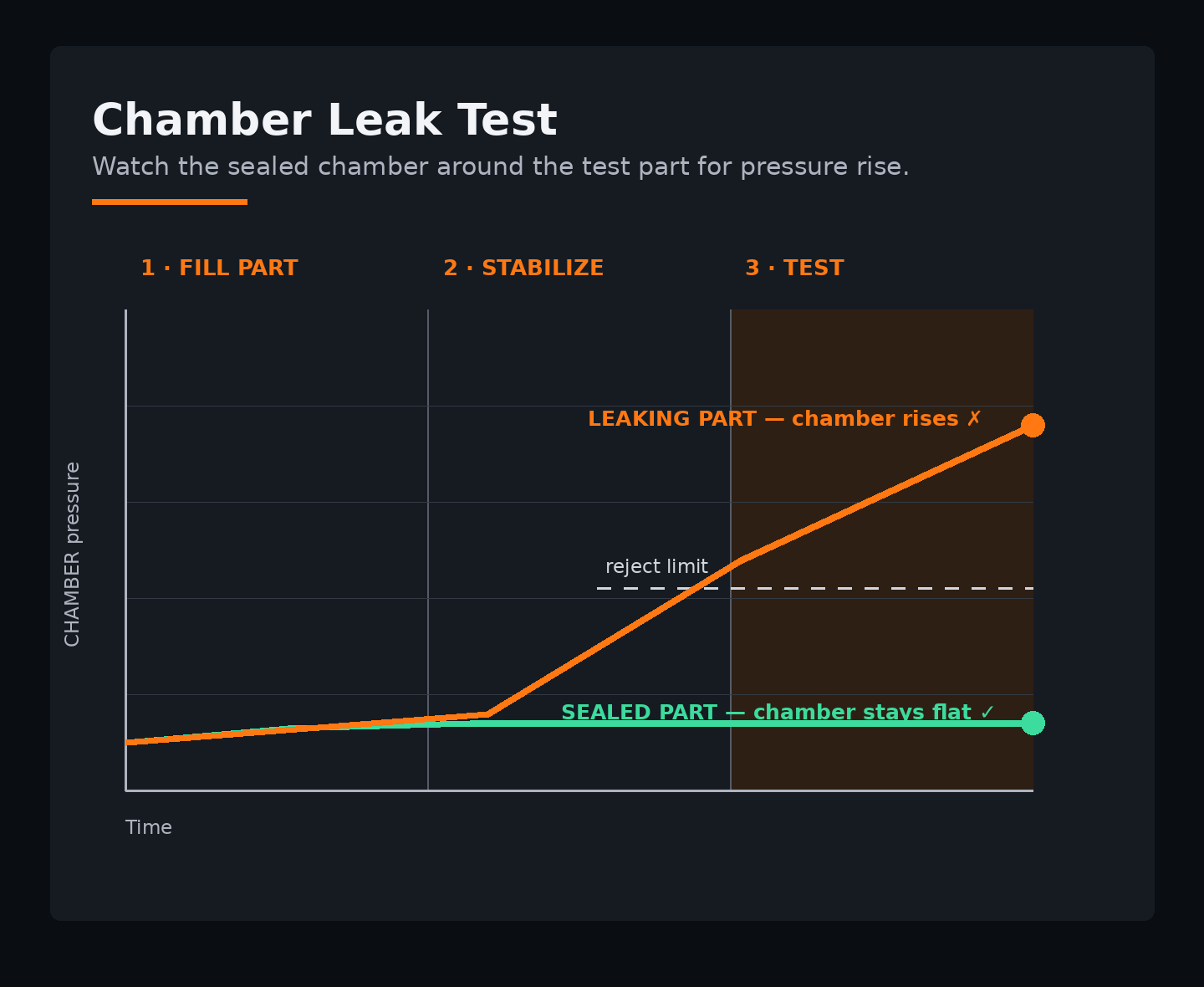
Finished electronics often cannot be opened or punctured merely to reach a test port. Chamber testing instead creates a controlled environment around an enclosure, allowing a pressure change to reveal whether air has entered the product.

Metered-volume fill makes the air delivery repeatable. A known reference volume is charged, released into the chamber, allowed to settle, and then monitored for decay. Boyle’s Law explains the response: a leaking product adds volume, so the final pressure falls below the expected range.

The chamber nest should hold the product securely and minimize excess air. O-rings and clamp valves complete the chamber seal; one fixture can accept different nests when an operator selects the matching program for each electronic product.

Chamber testing graph for sealed electronics

Keeping leak testing inside a cellular electronics line

Cellular manufacturing groups machines by task to save floor space and arrange work as a line. A leak tester that must sit away from the unit under test can require long hoses, adding air volume that affects the test.

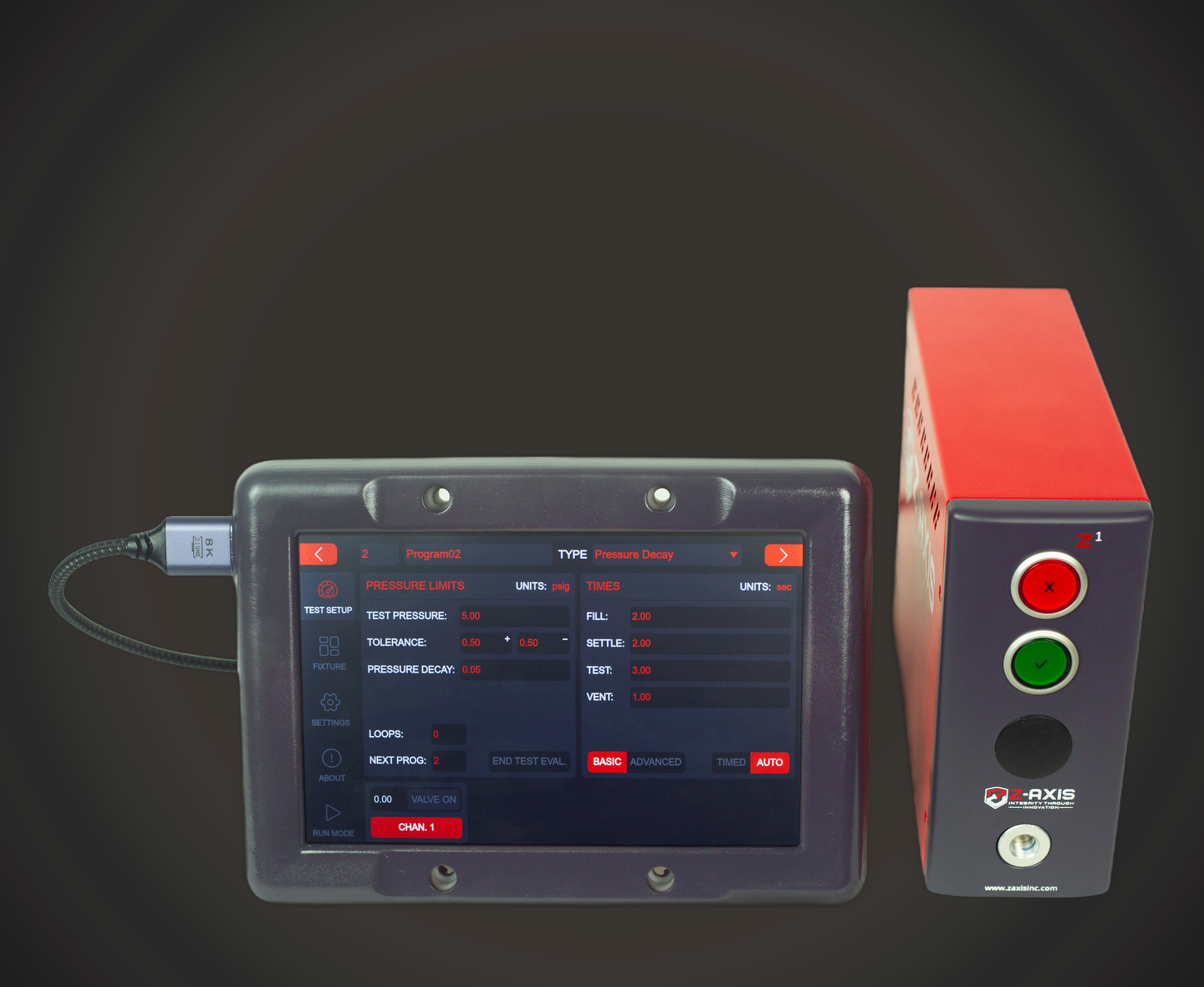
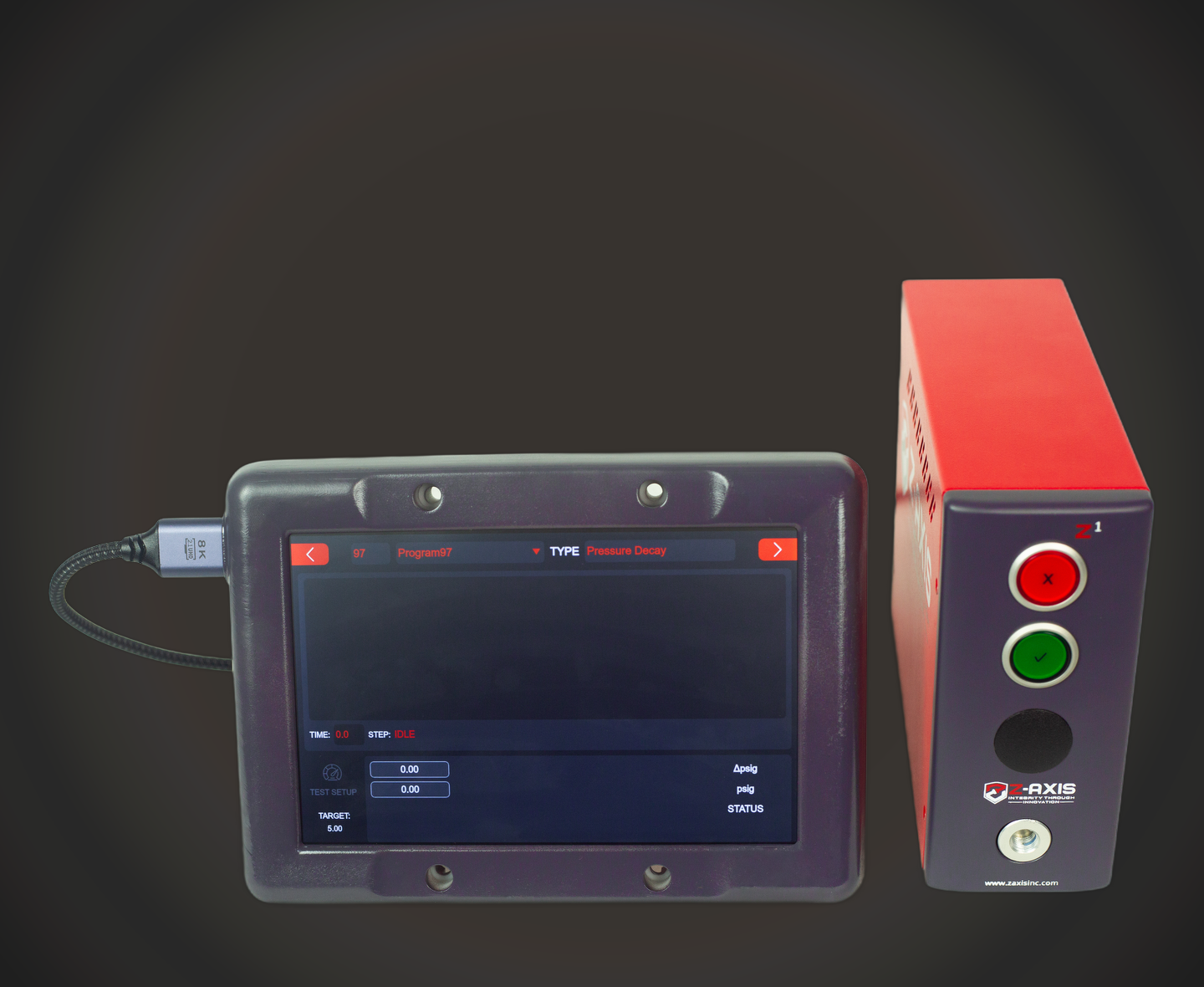
Locating a compact tester near the product keeps the unit-under-test volume lower and makes the result easier to monitor at the station. A touchscreen can retain at-a-glance status without moving the tester away from the assembly cell.

This layout choice connects fixture design with test behavior: tubing diameter, routing and unnecessary internal volume all influence how quickly a pressure change becomes visible. A direct, short path is particularly helpful when test time and sensitivity matter.

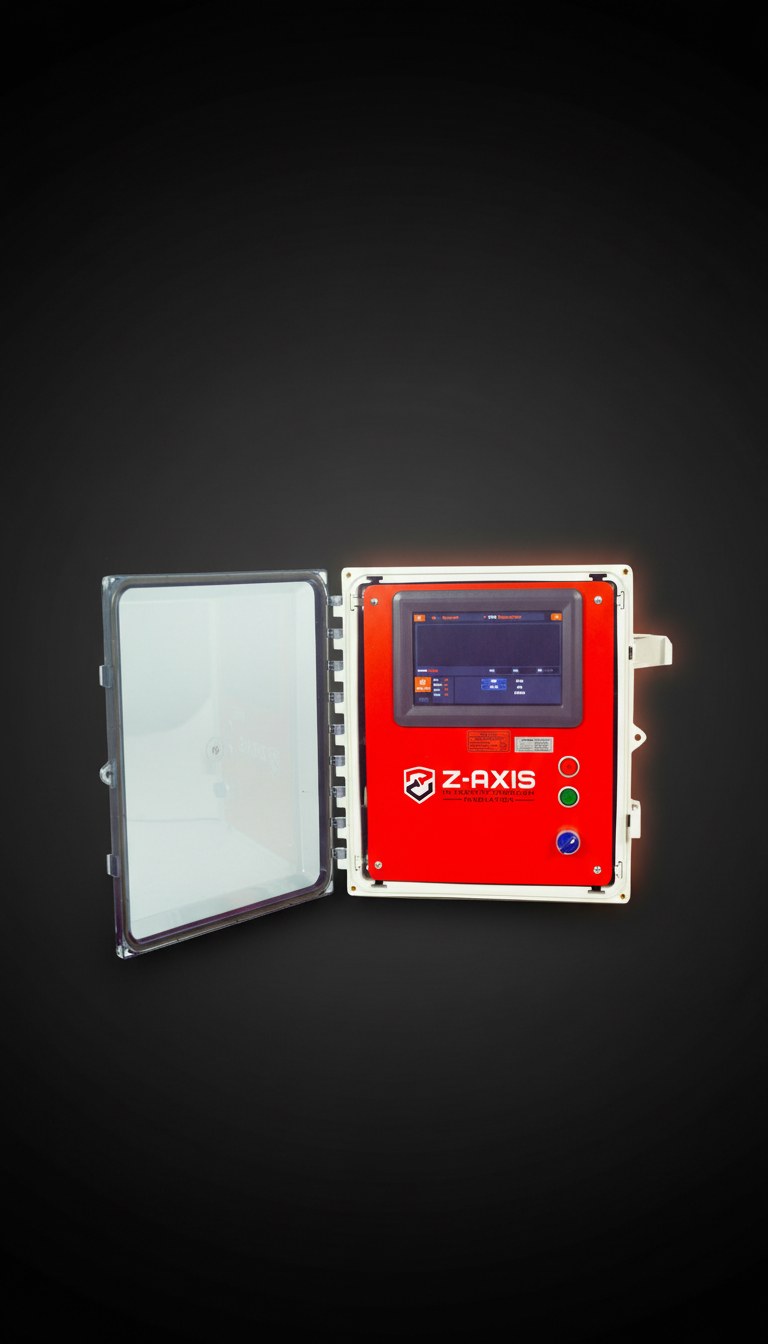
Zaxis Z1 machine-integration leak tester for automated electronics cells

Applications in this industry

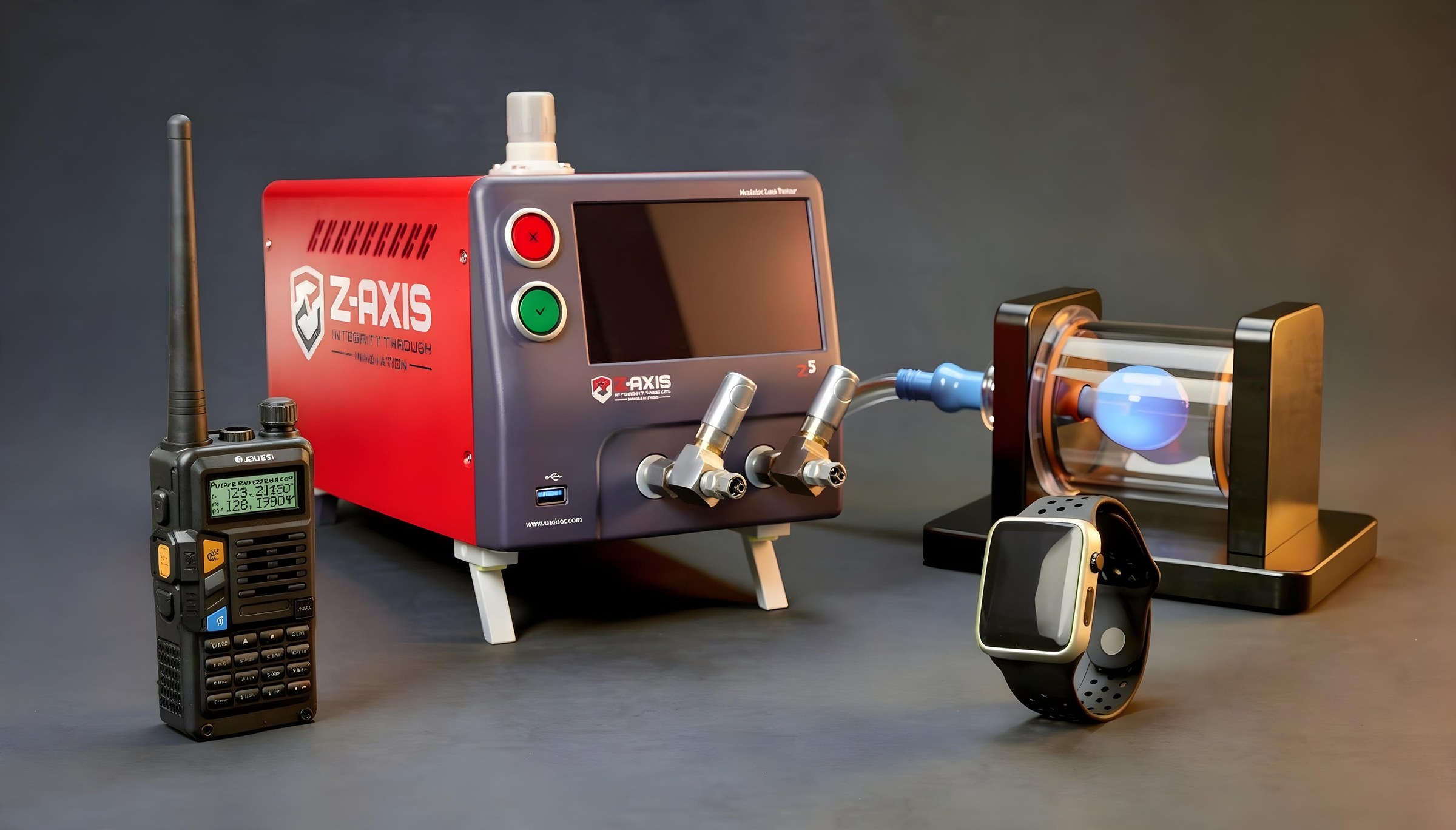
Zaxis tester with a sealed chamber fixture next to a handheld radio and smartwatch

Sealed devices

Smartphones, underwater lights and GPS locators are chamber tested in custom-fit sealed chambers to confirm published IP ratings.

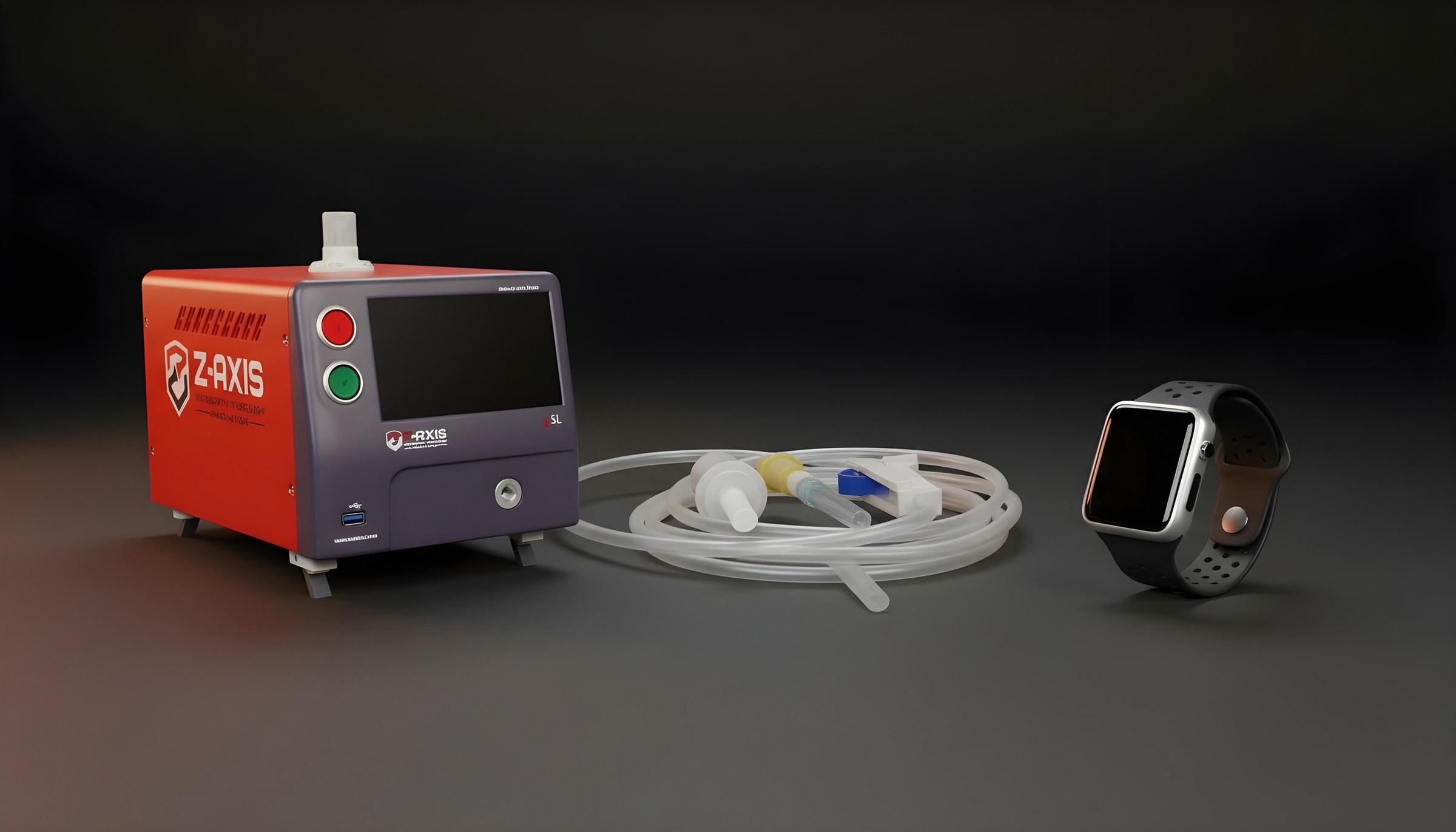
Zaxis Z5L leak tester with a smartwatch and sealed medical tubing

Wearables

Smartwatches, diving watches and glucose sensor implants must keep external elements out; chamber testing evaluates the integrity of the sealed component.

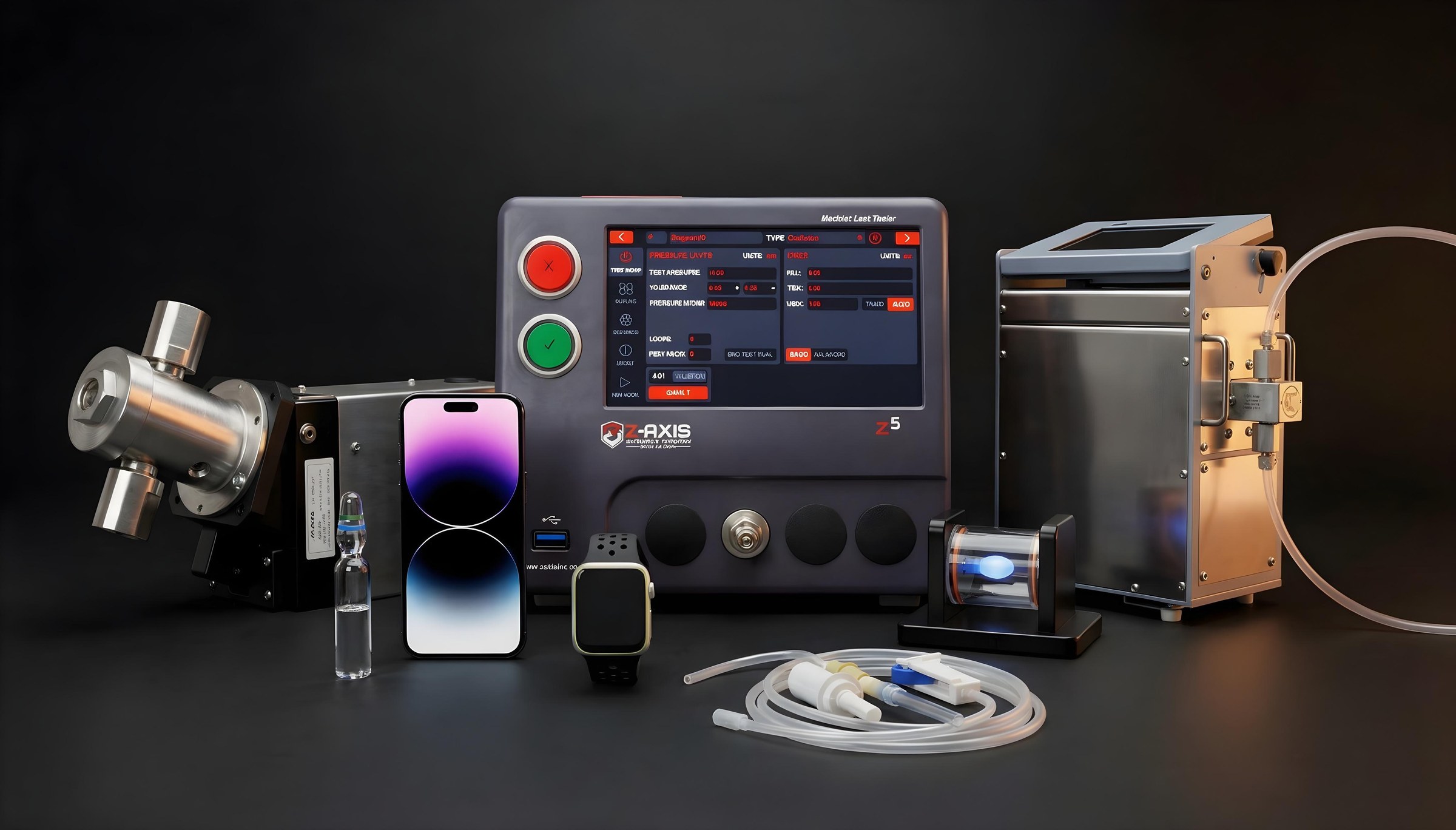
Zaxis Z5 leak tester with a smartphone, smartwatch and sealed electronic parts

Sensors and antennas

Automotive proximity sensors and wireless tower antennas are tested so they keep working underwater, in space or in extreme climates.

Consumer Electronics Leak Testing FAQ

Why is chamber testing used for sealed electronics?

A custom-fit sealed chamber evaluates enclosure integrity and helps determine whether external elements can compromise functionality.

Which electronic devices need leak testing before environmental exposure?

Examples include glucose sensor implants, smartphones, smartwatches, diving watches, underwater lights, proximity sensors, antennas and GPS locators.

Are Zaxis electronics leak testers made in the USA?

Yes. Zaxis consumer-electronics leak-testing equipment is made in the USA for electronic manufacturing lines.

Can chamber testing support underwater or aerospace devices?

Chamber testing helps assess sealed devices used underwater, in space, or in extreme climates where environmental durability is important.

How do published IP ratings relate to electronics leak testing?

Zaxis leak testers can test in accordance with published IP ratings for waterproof status on suitable products.

Which tester configurations suit an electronics automation line?

Z8, Z1 and iKit configurations support production testing for sealed electronic components and fixtures.

What can happen when an electronic enclosure leaks?

Water, dust and other environmental elements can degrade performance, cause malfunction, or create safety hazards for sensitive devices.

How can IP67 influence a sealed-electronics test plan?

IP67 combines dust-tight protection with immersion protection up to one meter for up to thirty minutes, so the enclosure test must support the product's required ingress protection.

Why does short test plumbing matter for an electronics cell?

Long hoses and oversized tubing add air volume that can slow the pressure response. Keeping the test circuit direct and close to the unit supports faster, more useful measurements.

Ready to Ensure Product Integrity?

Request for Quote
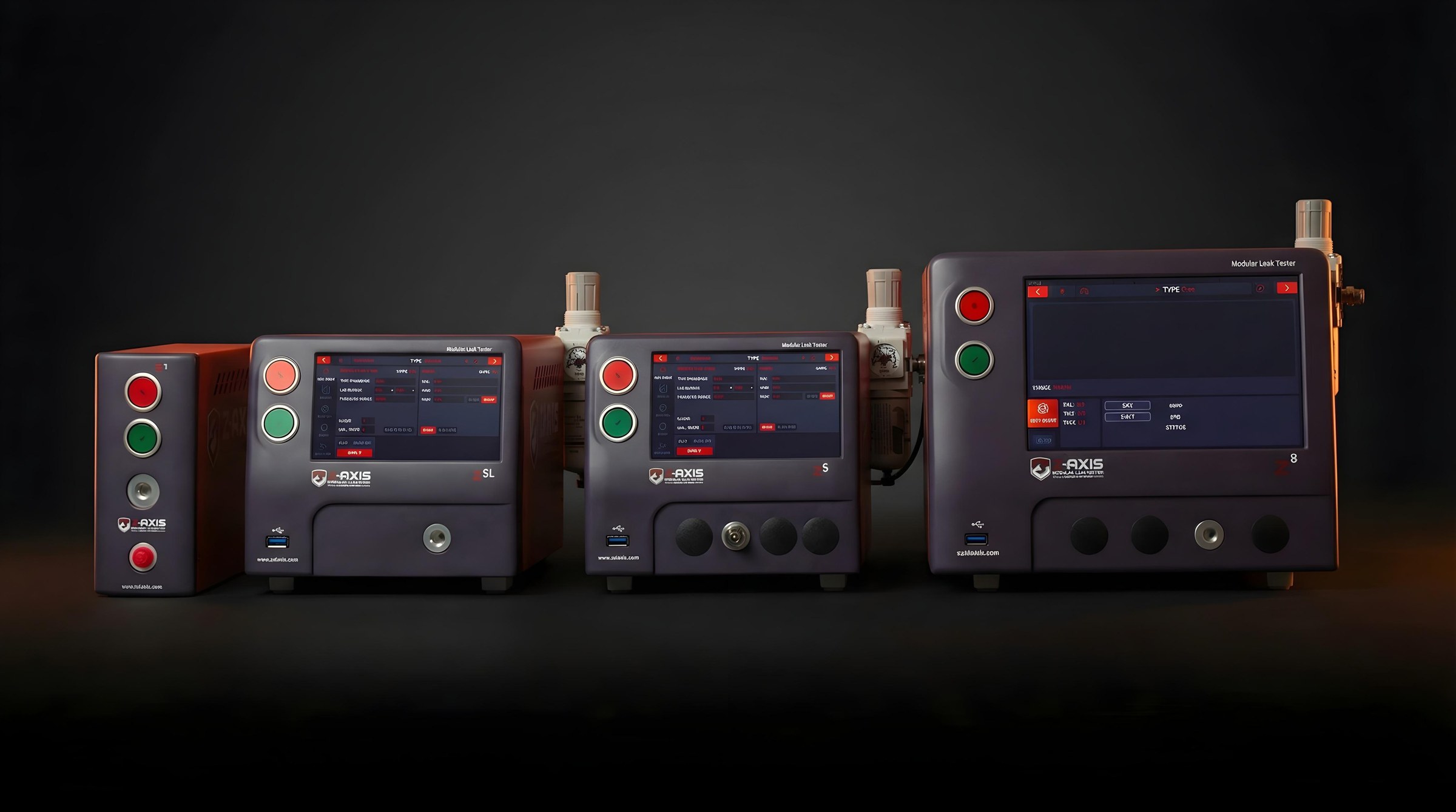
Zaxis air leak tester product lineup

For an IEC 60529 scope and production-correlation caveat, read IP67 / IP68 Leak Testing in Production.