

Automotive component solutions
Automotive Castings Leak Testing
Large cavity volumes and porosity questions make fixture design and method selection central.
Request a QuoteComponent and fixture scope
Engine, transmission and e-drive housings may contain large enclosed volumes and machined ports that must be isolated consistently. The automotive hub lists engine blocks, cylinder heads and powertrain components among production leak-test applications. Start by identifying the cavity, the connection points and the required production decision.
Select an air-leak-test method
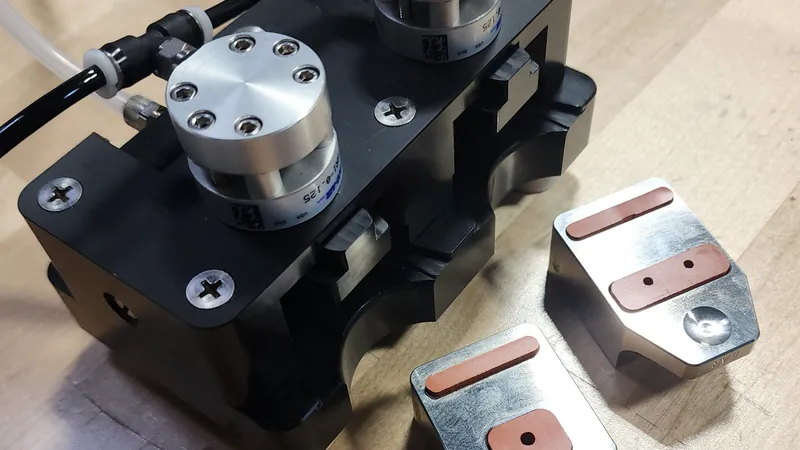
Porosity and sealing paths are application questions, not a reason to promise a universal test. A fixture should control the part location, sealing surfaces, clamp force and added test volume. The fixture guide provides the engineering questions to document before cycle tuning.
Production considerations
Pressure or vacuum decay can evaluate a closed cavity. Mass flow is a peer option where the part and requirement use a flow-based measurement. Large volumes change stabilization and cycle considerations, so validate the method with the part rather than carrying forward a generic setting. Where a tight specification requires it, trace gas leak testing is a separate peer line to review.
Plan the next review
A Zaxis station can be configured around the part and workflow. Use the air leak tester comparison to compare active platforms, then request a fixture discussion with the actual housing, ports and acceptance requirement.
Build a repeatable station
Use the production requirement to define a sequence: locate the part, create the intended seal, fill or evacuate the defined cavity, allow the condition to stabilize, measure, vent and communicate the result. Each step is part of the measurement system. A short cycle is useful only when the fixture and process produce a repeatable decision.
Document the nominal part condition and the variables that can change it: temperature, material response, connection geometry, internal volume and the number of cavities. The fixture guide calls out these practical inputs because an added hose, seal or manifold volume can affect the test condition. A production review should make those inputs visible rather than relying on trial-and-error settings.
Plan a representative study before releasing the station. It should include good parts, known defects or a suitable reference where available, normal operator sequence and realistic environmental conditions. The goal is to understand the station result for the defined requirement; this content does not publish a universal leak limit, cycle time, gage R&R result or standard-compliance claim.
Keep traceability decisions separate from the leak method. The cell can retain the selected program and result through its configured interfaces; see the PLC and automation integration guide for the published interface matrix and station-architecture questions.
Sources and next steps
This application page is based on the automotive leak-testing hub, the published pressure-decay, vacuum-decay and mass-flow method pages, the fixture design guide and the linked automotive or IP resources. It is intended to help an engineering team frame an application conversation, not to replace part-specific validation.
Bring drawings or the part, port and cavity information, target production sequence, required result handling and any applicable customer requirement to the discussion. Zaxis can then scope the tester, fixture and station options around the real component. Use the request-for-quote path to begin that review.
Frequently asked questions
Which automotive components does this page cover?
Automotive Castings Leak Testing planning for the components named on the page.
Should pressure or vacuum decay be used?
Choose from the part cavity, fixture and production requirement; review both method pages.
Can mass flow be used?
Mass flow is a peer air-test method when a flow-based measurement fits the part and requirement.
When should trace gas be discussed?
Discuss the separate trace-gas line when the application requires it.
What should a fixture review include?
The part cavity, seals, ports, clamp force, internal volume and acceptance requirement.

