
CONNECT
Attach the product to the test port and initiate the programmed sequence.

Leak Test Method
A burst pressure test increases regulated air pressure until a component fails, then records the failure pressure for a pass/fail decision.
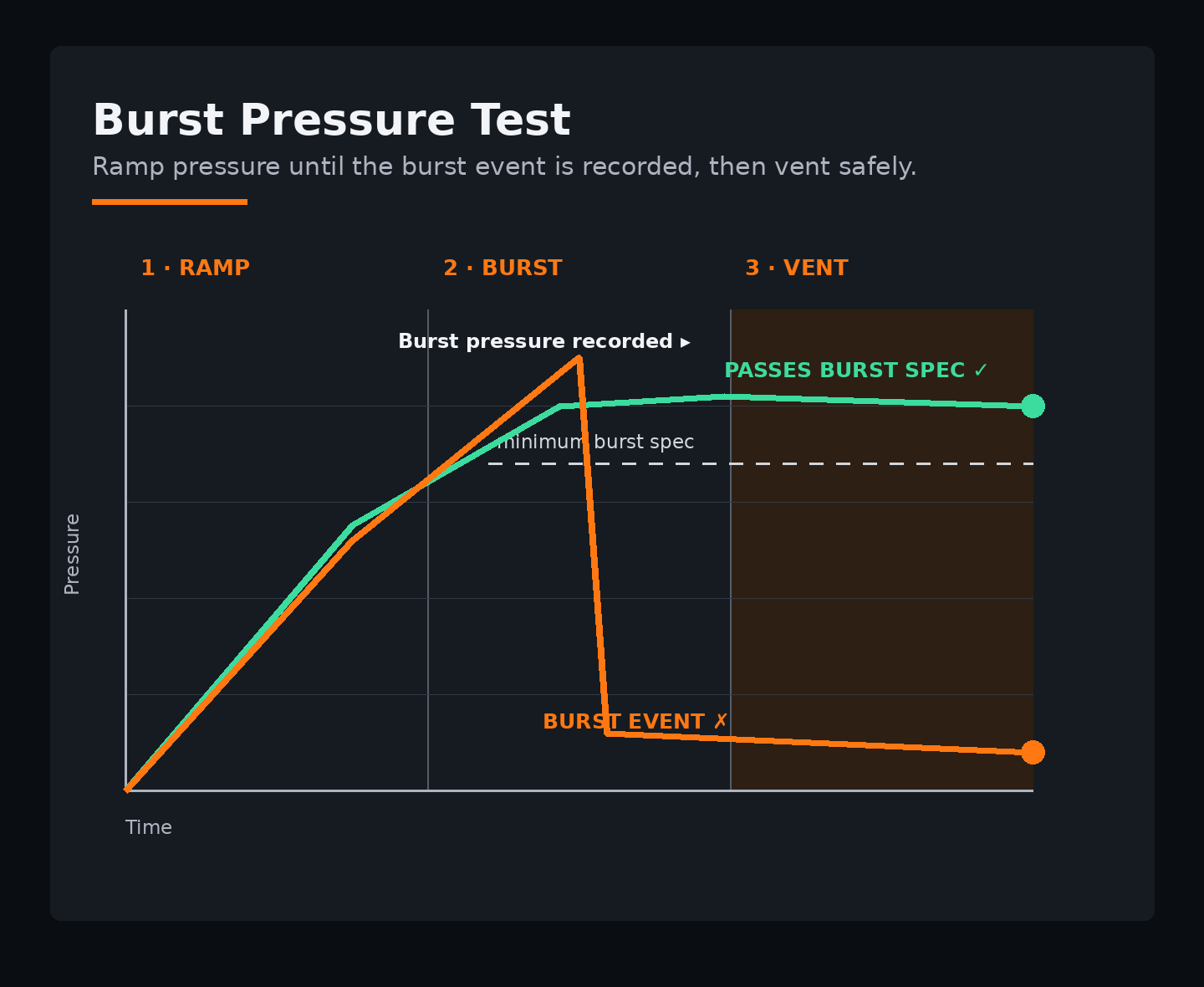
Burst pressure testing measures the pressure at which an object fails or bursts. The part connects to a test port and is pressurized with regulated air while the system monitors the pressure ramp and burst event.
Unlike routine leak tests, burst testing is destructive. The measured failure pressure helps design engineers assess material selection and component geometry.
For check-valve opening behavior without catastrophic failure, use pressure cracking testing. A burst program sets pressure limits, records the result, and vents the remaining pressure.
Request for QuoteA burst test connects a part to a regulated-air test port, increases pressure, and detects the moment the part fails. Pressure sensors monitor the ramp rate; a small drop in that rate marks the burst event.
The method suits component-development work where maximum failure pressure matters. It is not a routine, non-destructive screen for finished sealed parts because the test is designed to cause a burst.
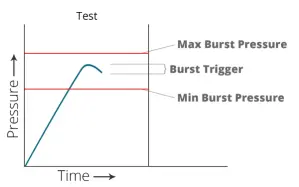
The system records the pressure at the burst event and compares it with the required limits.
Attach the product to the test port and initiate the programmed sequence.
Pressurize the part with regulated air through a needle valve or programmable electronic regulator.
Measure the pressure ramp rate with the pressure sensor while pressure rises.
Detect the burst event from a drop in ramp rate, record the pressure, and compare it with the programmed limits.
A recorded burst pressure within the programmed limits passes; vent remaining pressure for safety after the sequence.
Burst testing follows the pressure ramp rather than simply looking for a final pressure value. A pressure sensor measures ramp rate as regulated air is introduced, so the system can identify the event when the rate changes at the burst.
The recorded burst pressure is compared with predetermined limits, turning a destructive event into a repeatable pass/fail result for product development or quality control.
A needle valve or programmable electronic regulator controls the ramp. Securely connecting the part and venting remaining pressure after the event are essential parts of the sequence.
The test is useful when component strength must be evaluated under pressure. The measured failure pressure can inform material-selection and component-geometry decisions while providing a clear recorded result.
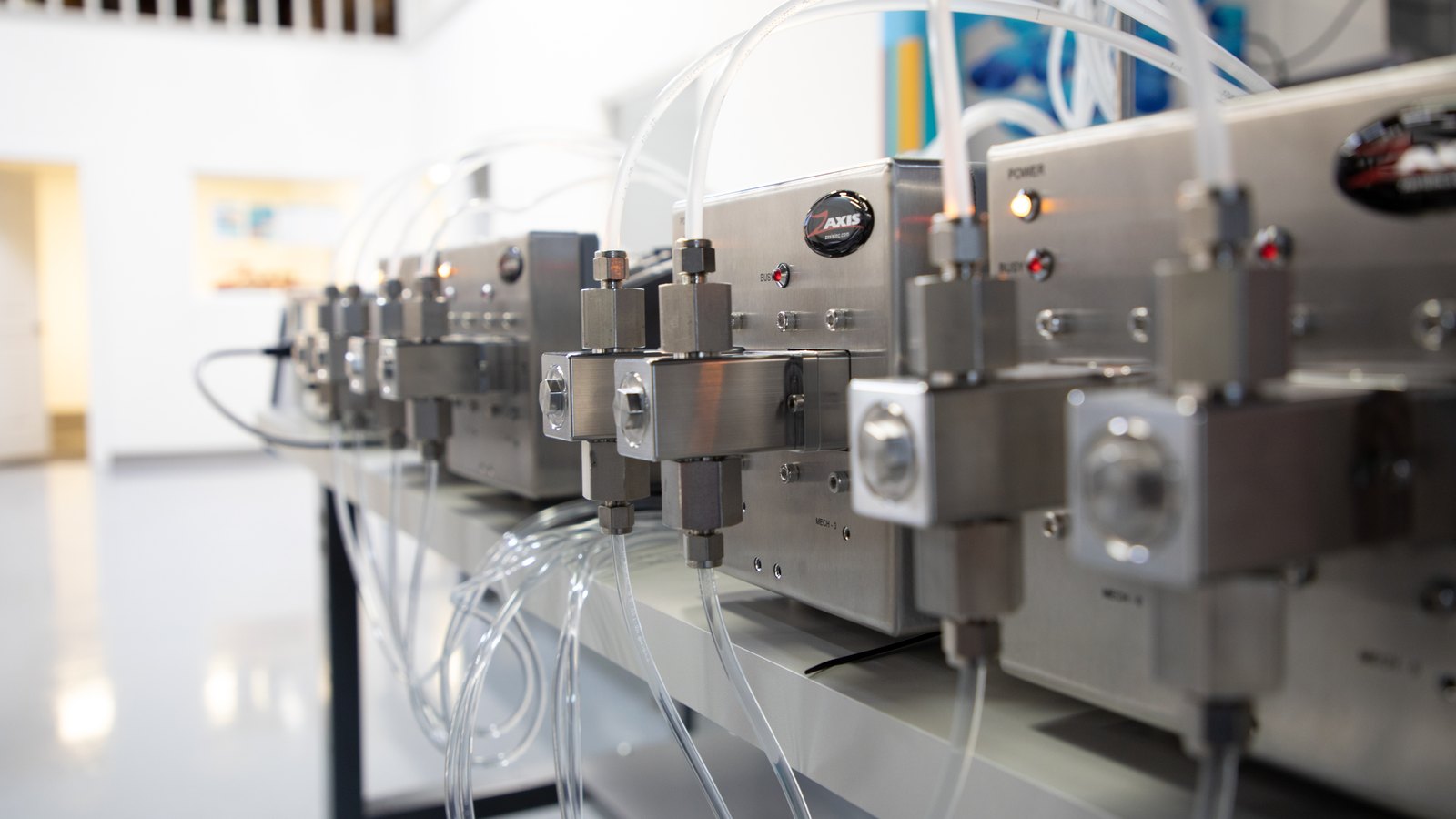
Burst testing needs a controlled pressure ramp and a tester that records the failure event. These Zaxis testers run a programmable ramp and capture the burst pressure.

Catheters are ramped to failure to prove wall and bond strength.
Check valves can use the event-detection approach without catastrophic failure.

IV sets and tubing are burst-tested to confirm the pressure their joints and walls withstand.
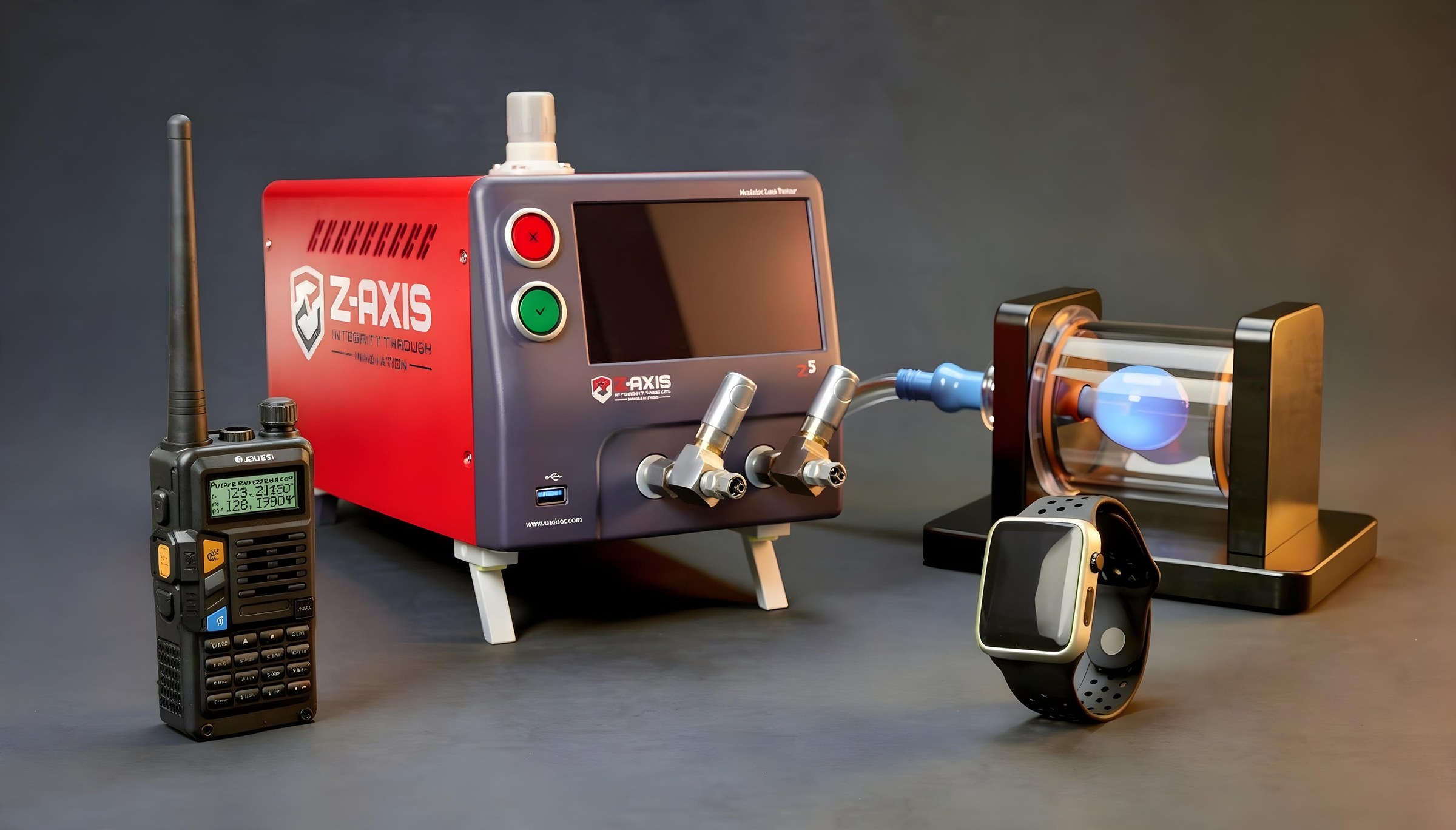
Bags and pouches are pressurized to the point of seal failure to qualify seal strength.
Pressure-sensitive aerospace components are burst-tested to validate their required failure-pressure limits.
| Method | Non-destructive | Needs an access port | Locates the leak | Typical use |
|---|---|---|---|---|
| Pressure decay | ✓ | ✓ | × | Sealed parts with a port |
| Vacuum decay | ✓ | ✓ | × | Parts and packaging |
| Mass flow | ✓ | ✓ | × | Flow-rate limits |
| Occlusion | ✓ | ✓ | × | Blocked passages |
| Burst | × | ✓ | × | Failure pressure |
| Pressure cracking | ✓ | ✓ | × | Valve opening pressure |
| Chamber | ✓ | × | × | Sealed parts, no port |
| Sniffing | ✓ | ✓ | ✓ | Finding the leak site |
| Hard vacuum | ✓ | ✓ | × | Hermetic, safety-critical parts |
| Accumulation | ✓ | ✓ | × | Large parts, total leak rate |
| Bombing | ✓ | × | × | Sealed parts, no fill port |
| Differential pressure | ✓ | ✓ | × | Large volumes, low leak rates |
| Trace gas | ✓ | ✓ | ✓ | Very small leaks, quantified |
It measures the maximum pressure at which an object catastrophically fails or bursts.
Yes. The test is designed to take the part to failure.
The pressure sensor measures ramp rate. A small drop in ramp rate triggers the burst event.
The pressure is recorded and compared with programmed limits, then remaining pressure is vented for safety.
Burst testing is used for catheters, check valves, IV sets, tubing, bags, pipes, fittings, and pressure-sensitive systems.
The event-detection approach can be run on products such as check valves without taking the product to catastrophic failure.
It can inform material-selection and component-geometry decisions.
Regulated air is applied through a needle valve or programmable electronic regulator.

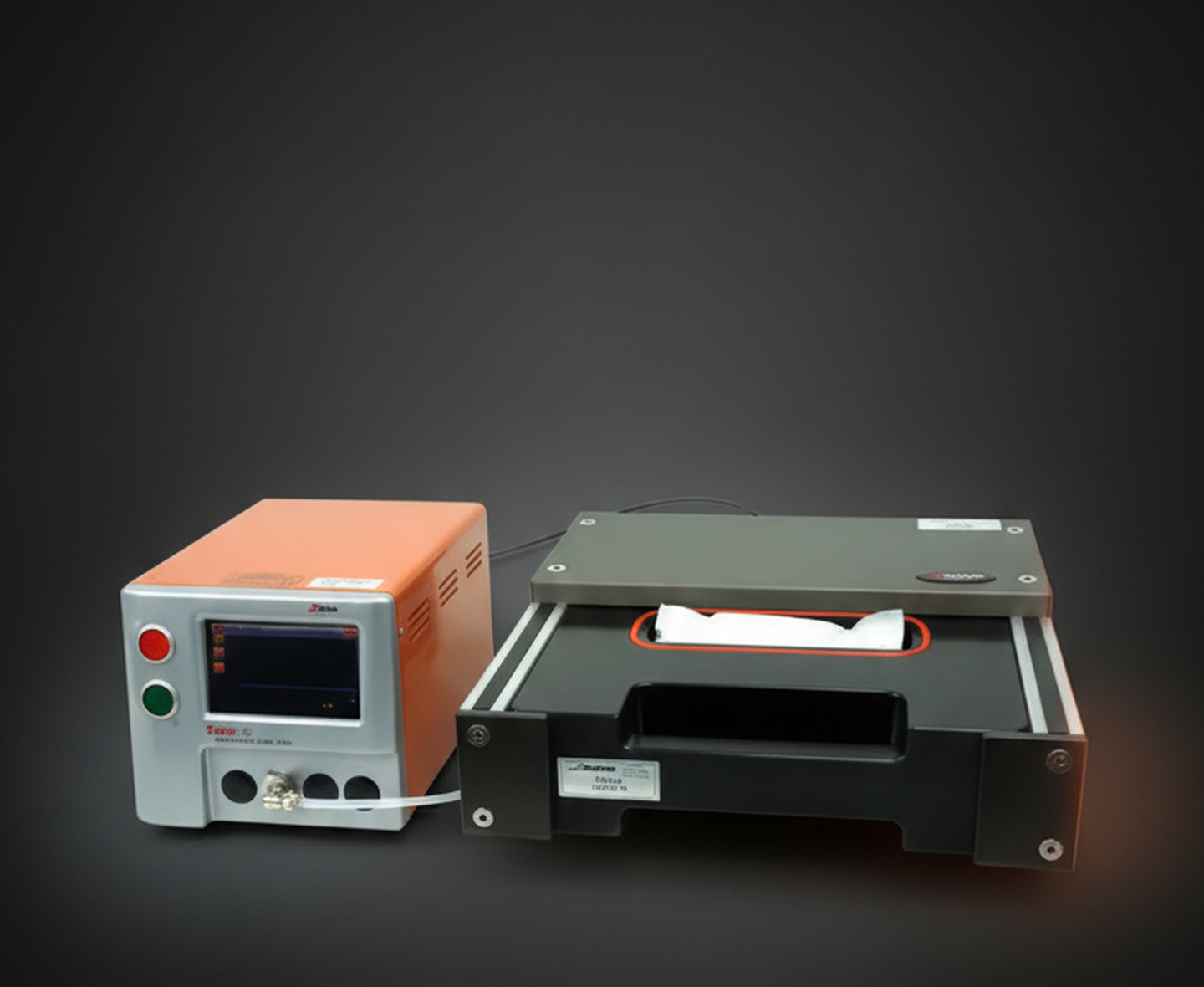
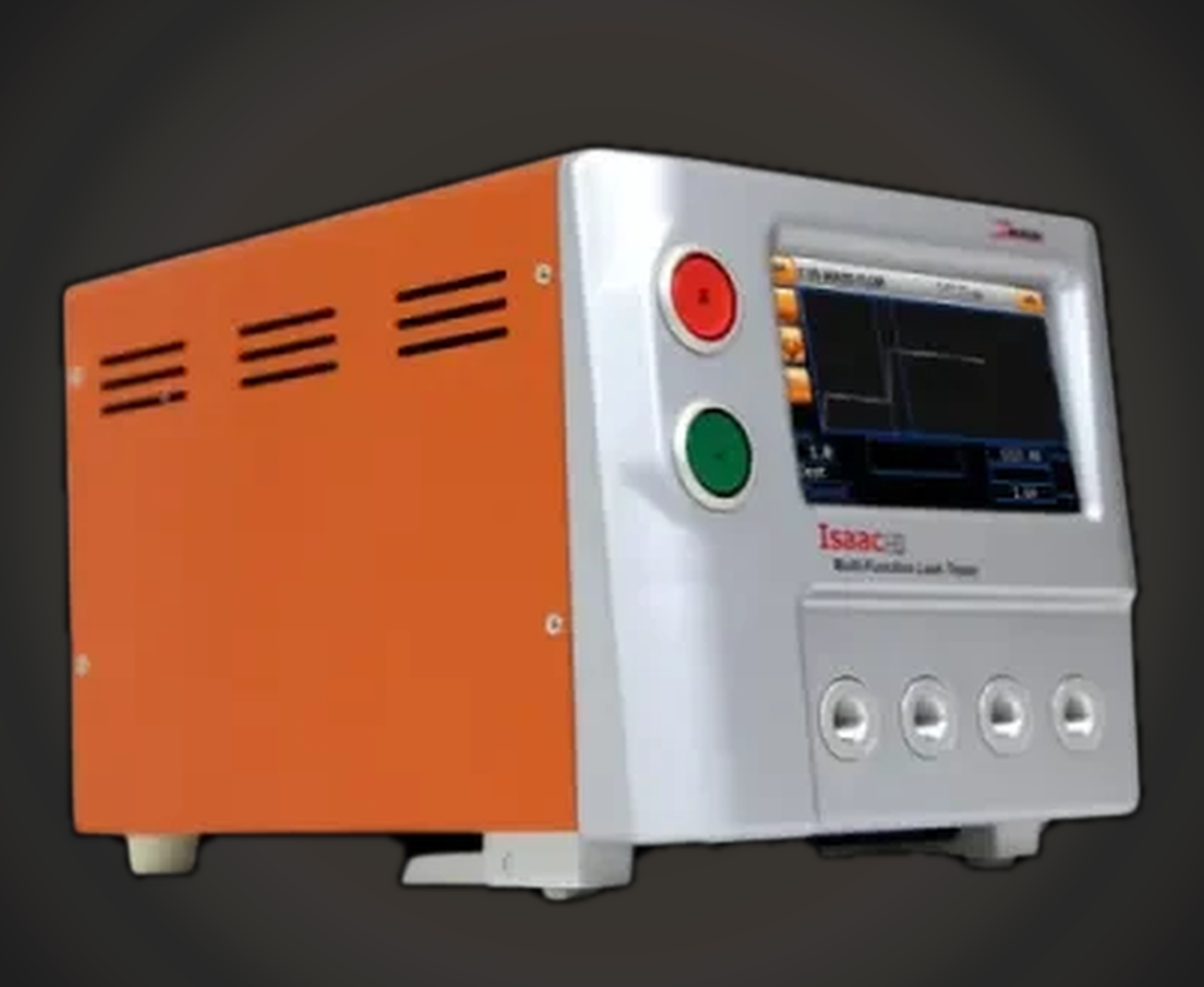 Isaac HDA modular multi-tester that measures the burst-test pressure ramp and event.
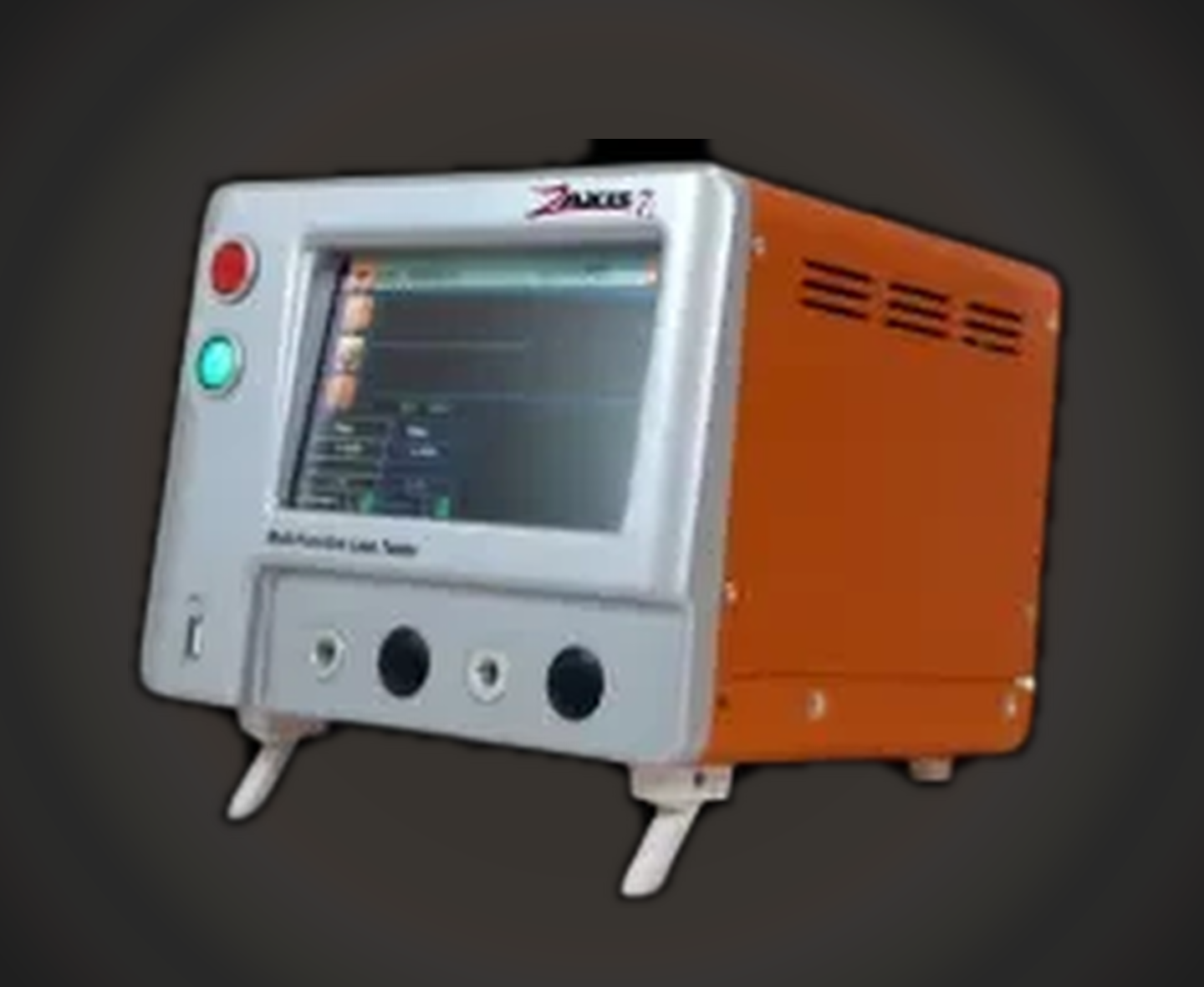 Zaxis 7iLarge-display multi-tester capacity for stored burst-test programs.


