
Reagent production
Reagent kits and reagent strips need repeatable fluid dispensing with cleaning between production work. CIP capability and ceramic wetted-path materials support hygienic manufacturing.


Positive Displacement Pumps
eVmP pumps pair valveless positive displacement with electronic volume adjustment for medical dispensing and dosing processes.
Medical manufacturing processes can require hygienic handling, repeatable precision and recipe or batch changes without unnecessary downtime. Zaxis eVmP pumps provide an electronically controlled metering platform for those conditions.
Reagent kits, reagent strips, hydrogels, pre-filled doses, medical devices, assemblies and pharmaceuticals are typical applications for precision fluid metering.
Request for QuoteA rotating and reciprocating ceramic piston meters liquid through a valveless path, with tight tolerances, 1% accuracy and 0.5% repeatability based on the application.
Ceramic wetted-path material options support washdown procedures, while CIP capability supports cleaning between production work.
Reagent kits and reagent strips need repeatable fluid dispensing with cleaning between production work. CIP capability and ceramic wetted-path materials support hygienic manufacturing.
Medical devices and assemblies can use electronically controlled volumes during automated production. Pump-head, drive, enclosure and wetted-path choices can fit the application.
Hydrogels, pre-filled doses and pharmaceuticals require controlled fluid metering. The rotating ceramic piston provides 1% accuracy and 0.5% repeatability, based on the application.
Electronic adjustment provides system-wide volumetric changes through digital controls. The product family also provides choices of pump head, drive, enclosure and wetted path.
The platform supports 24VDC digital I/O plus Ethernet IP, Ethernet TCP/IP and RS485 control.
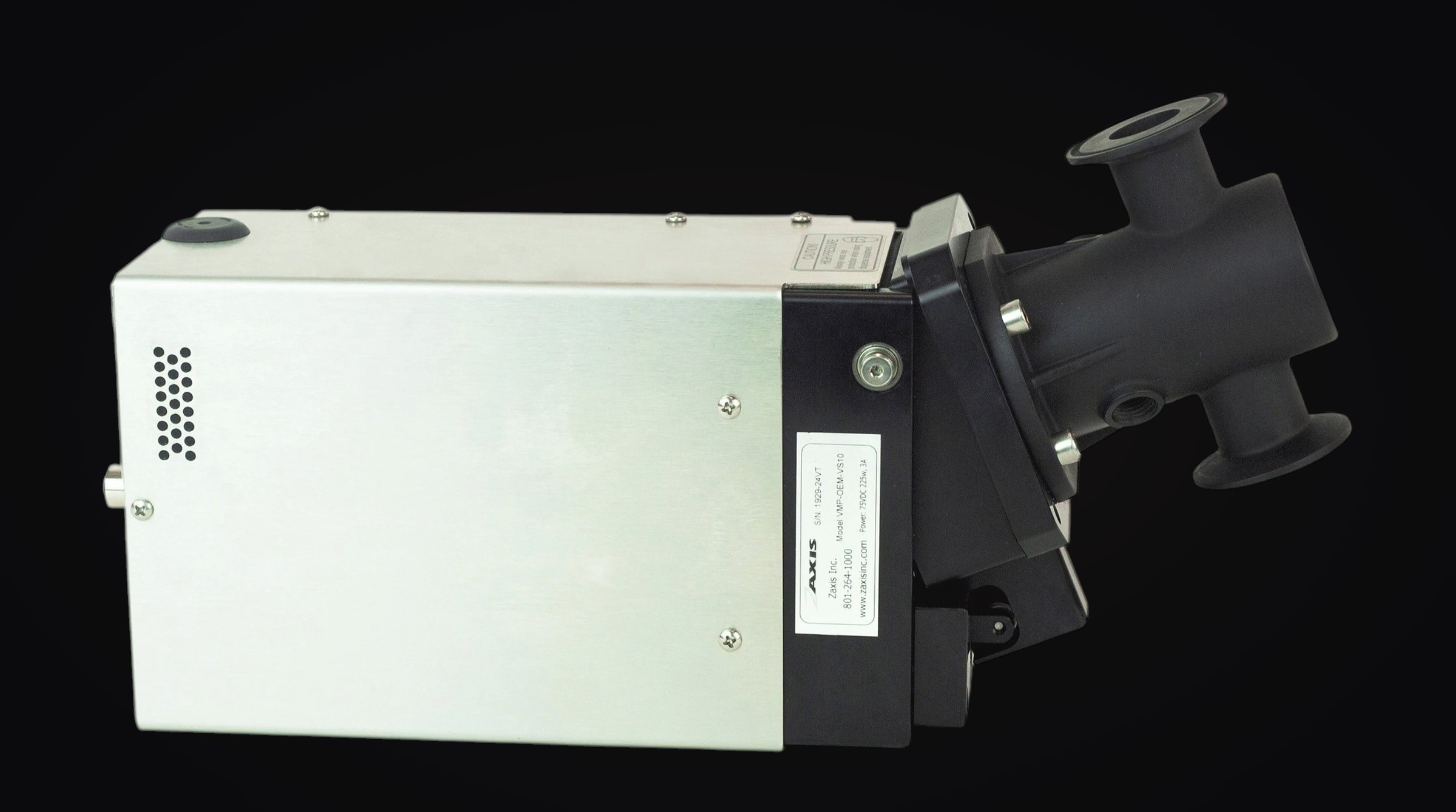
Medical manufacturing requires hygienic, repeatable dispensing and rapid recipe or batch changes without cross-contamination. FDA-compliant eVmP configurations use positive displacement and digital volumetric control to minimize human error in medical and pharmaceutical lines.
Additional capabilities include 1% accuracy and a 0.5% coefficient of variation, CIP cleaning, ceramic wetted-path materials for washdown, rapid changeover without disassembly, and Ethernet IP, Ethernet TCP/IP, RS485 or 24VDC digital I/O. Zaxis designs and manufactures equipment in the USA; ISO 9001:2015, REACH and RoHS practices support its quality program.
Medical and pharmaceutical applications can use 100% positive displacement with ultra-fine electronically controlled volume adjustment. FDA and ASTM compliance requirements can be incorporated with the pump head, drive, enclosure and wetted-path selection.
Medical and diagnostic applications can combine small reagent doses with requirements for clean components and controlled packaging. A practical pump review records the fluid, intended volume, delivery speed, nozzle arrangement and the production controls. That record provides a useful starting point for qualification of the complete dispensing station.
A medical manufacturing operation may use precision metering for reagent kits, device assembly, pre-filled syringes, gel caps or hydrogels. These are distinct applications, so the desired volume and fluid-contact requirements must be defined for the actual use. Positive displacement provides a controlled volume per cycle, and electronic adjustment provides a way to change settings. Qualification should consider the completed system, including the container, nozzle and manufacturing controls.
Diagnostic manufacturing can involve test strips, biomarkers, clinical chemistry and molecular diagnostic procedures. Those uses can call for liquid enzymes, buffers, calibrators and controls with different volume and cleanliness requirements. A metering pump configuration should therefore be evaluated for the specific diagnostic product rather than treated as a universal fill solution. The selected line controls must support the validated manufacturing program.
Select the stated dispense range and automation interface around the reagent or device operation.
Diagnostic reagent work can involve enzymes, buffers, diluents, calibrators and controls in very small quantities. The M-Series gives a microliter-scale option for those fluid paths.
Electronic settings can change dispense volume and flow rate without a mechanical adjustment.
View M-Series microliter pump →A milliliter-scale configuration fits vial filling and other production steps that need a larger controlled dose. Pair range selection with the actual fluid and required production rate.
Ceramic internals and a valveless path support clean, repeatable dispensing where contamination control matters.
View V-Series milliliter pump →Use the VS10 option when the medical assembly process presents higher viscosity or backpressure. Its servo-driven configuration is intended for demanding dispensing conditions.
Evaluate the complete wetted path, fittings and control integration with the production equipment.
View VS10-Series high-torque option →Diagnostic kits can serve laboratory, point-of-care and personal uses, including test strips, PCR, clinical chemistry and diabetes applications. Their fluids may include liquid enzymes, buffers, diluents, standards, calibrators and controls.
Each reagent can place a different demand on cleanliness, repeatability and volume control. Minor errors in a kit line can affect the intended test result, so the dispense step belongs in the quality plan.
Electronic variable metering pumps can deliver nanoliter, microliter and milliliter amounts while storing programs for repeat operations.
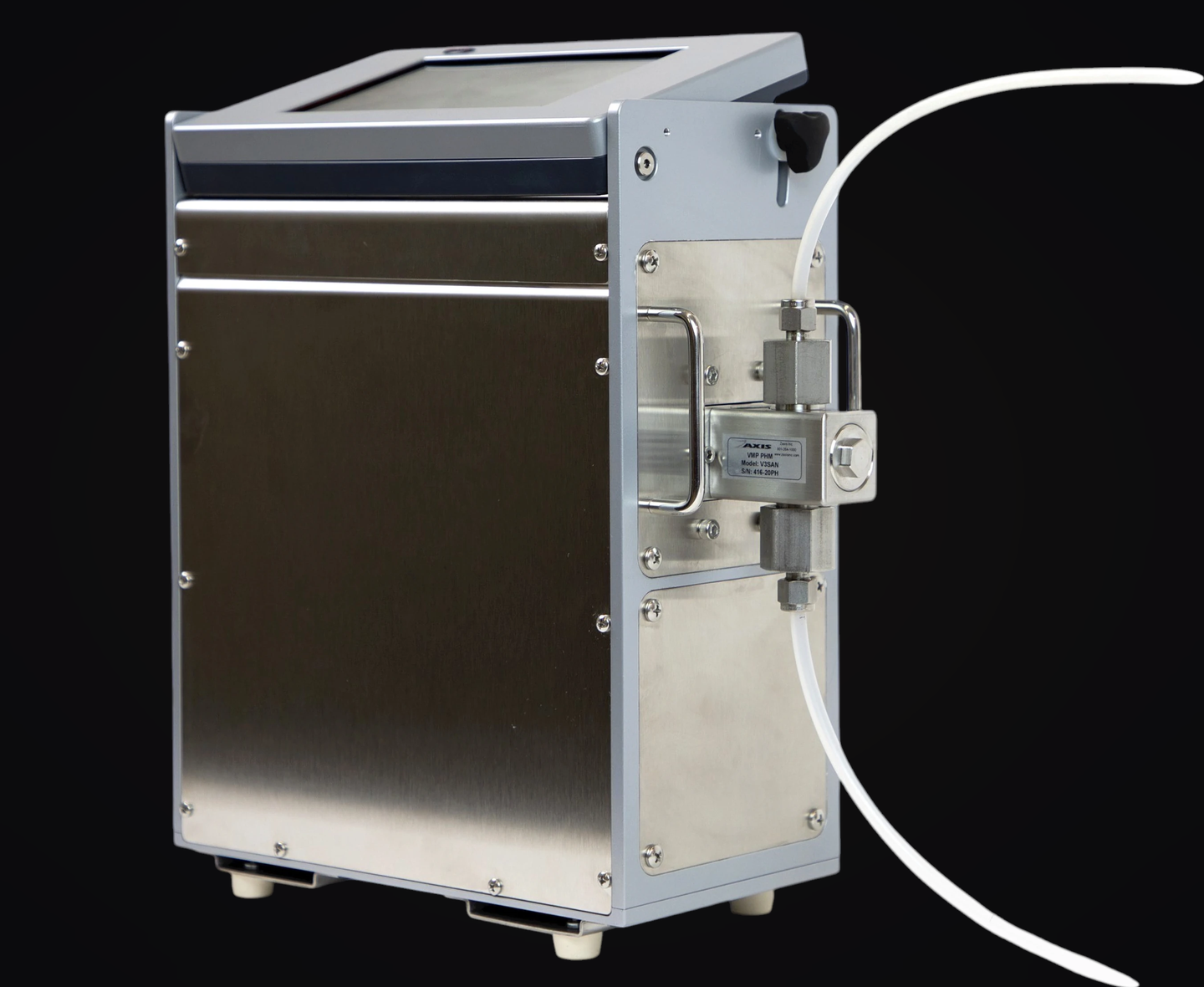
Testing-kit filling needs a pump that can keep pace with vial production while preserving an accurate dose. Buffer filling is one of the applications where speed and controlled volume must work together.
A positive-displacement design moves a known quantity per cycle, which makes controlled transfer practical across a production sequence. The process still needs qualification for the specific fluid, container and nozzle.
Clean nozzles matter when frequent dispenses can otherwise leave fluid at the tip. Dynamic suck-back is one control available for keeping a dispense tidy.
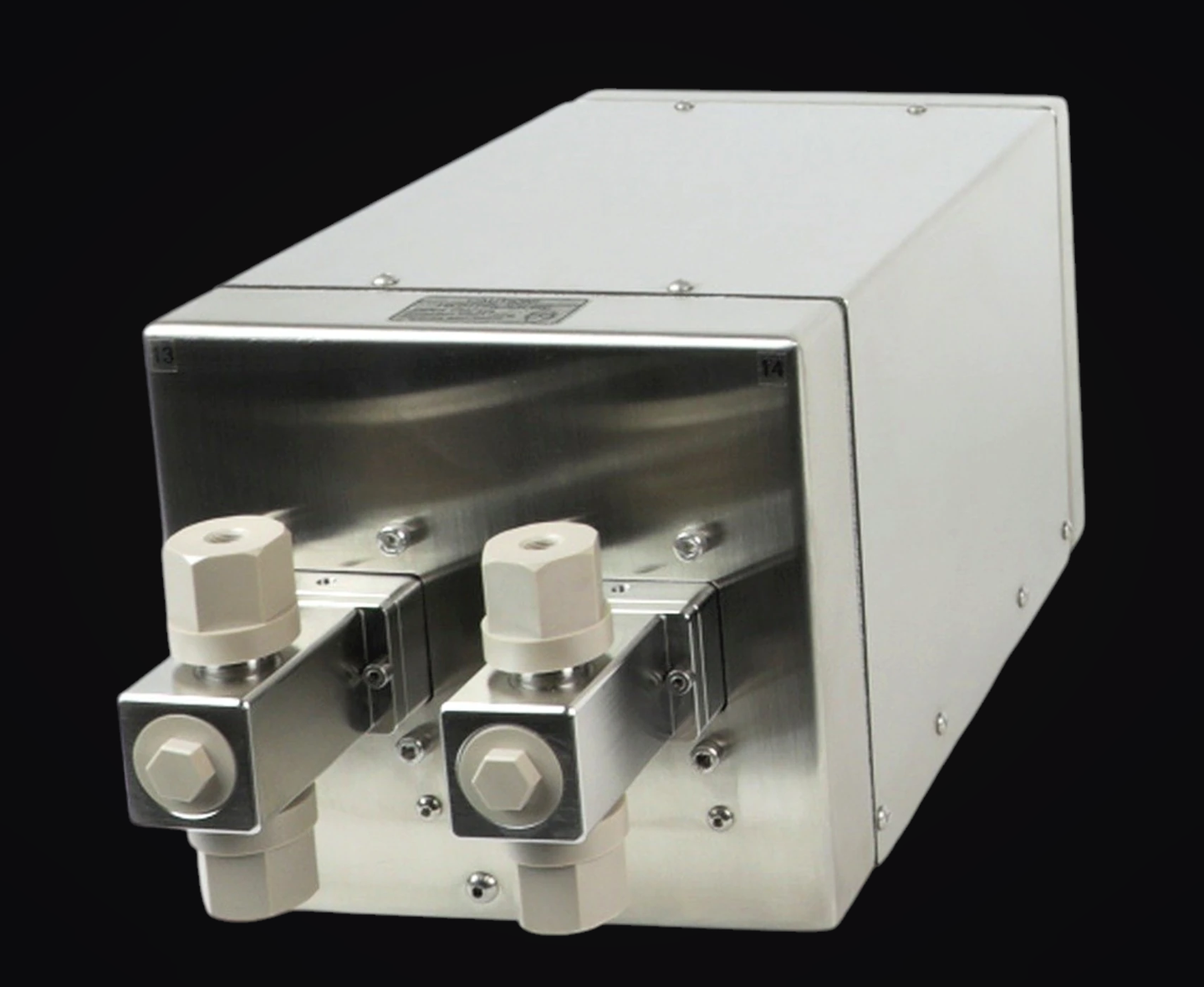
Electronic sensing catheters report temperature, glucose, position, pressure and contact force, and their manufacture depends on repeatable steps for the tubing, the sensor and the assemblies around them.
Fluid dispensing enters that process where adhesives, sealants or lubricants are applied to the device, and the metered volume has to be the same on every unit. A valveless positive-displacement pump delivers a fixed volume per cycle, so the dose does not drift as the fluid warms or the line speeds up.
Leak validation of the finished catheter is a separate control step, run on a Zaxis air leak tester rather than the dispensing pump, so the two operations are qualified independently.
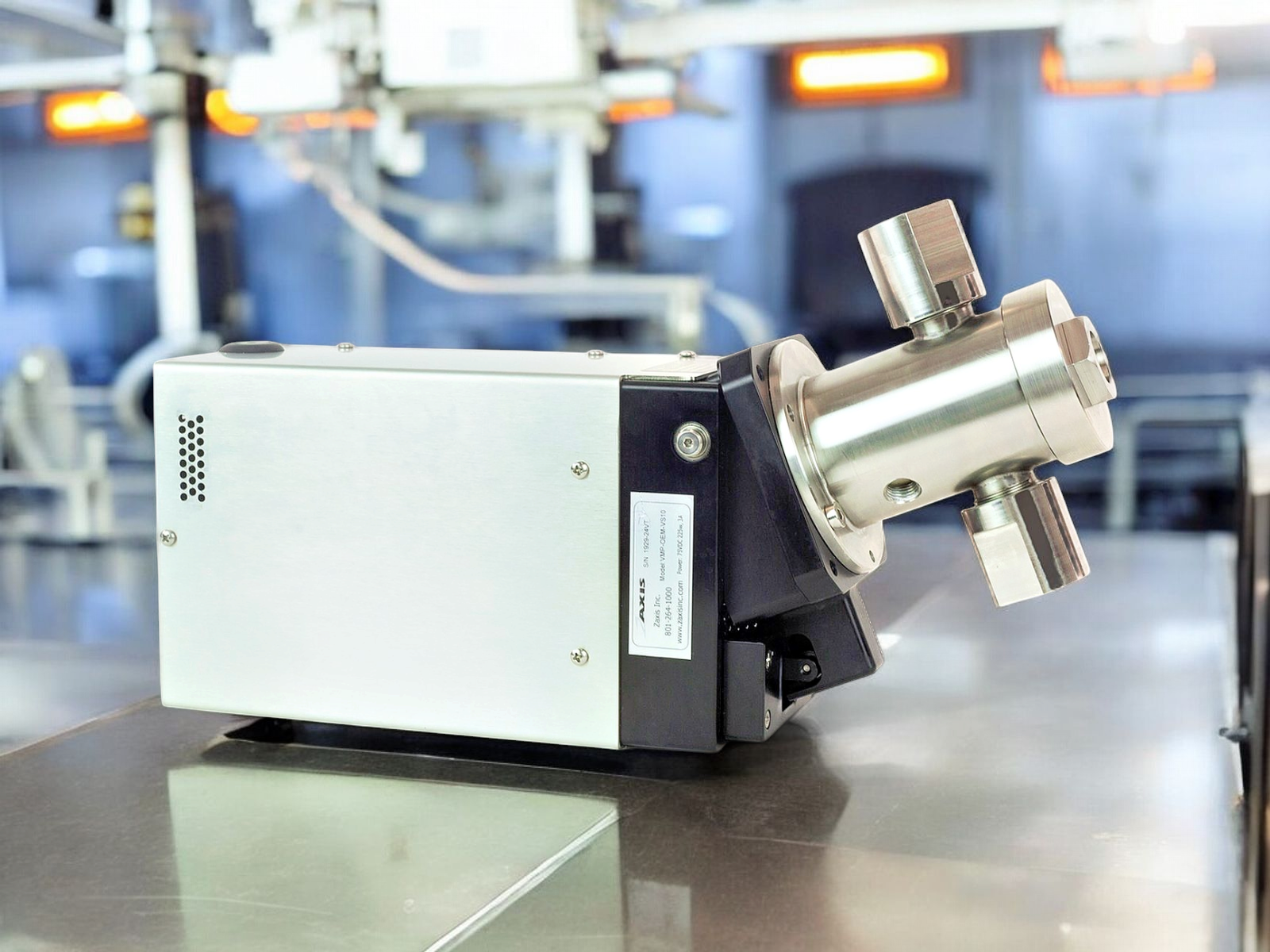
The medical application page names reagents, hydrogels, pre-filled doses, devices and assemblies.
The page states 1% accuracy and 0.5% repeatability, based on the application.
CIP capability supports the eVmP medical application.
Its rotating and reciprocating ceramic-piston arrangement has no external supply or discharge valves.
Digital I/O and network control are both available: Ethernet IP, Ethernet TCP/IP, RS485 or 24VDC I/O.

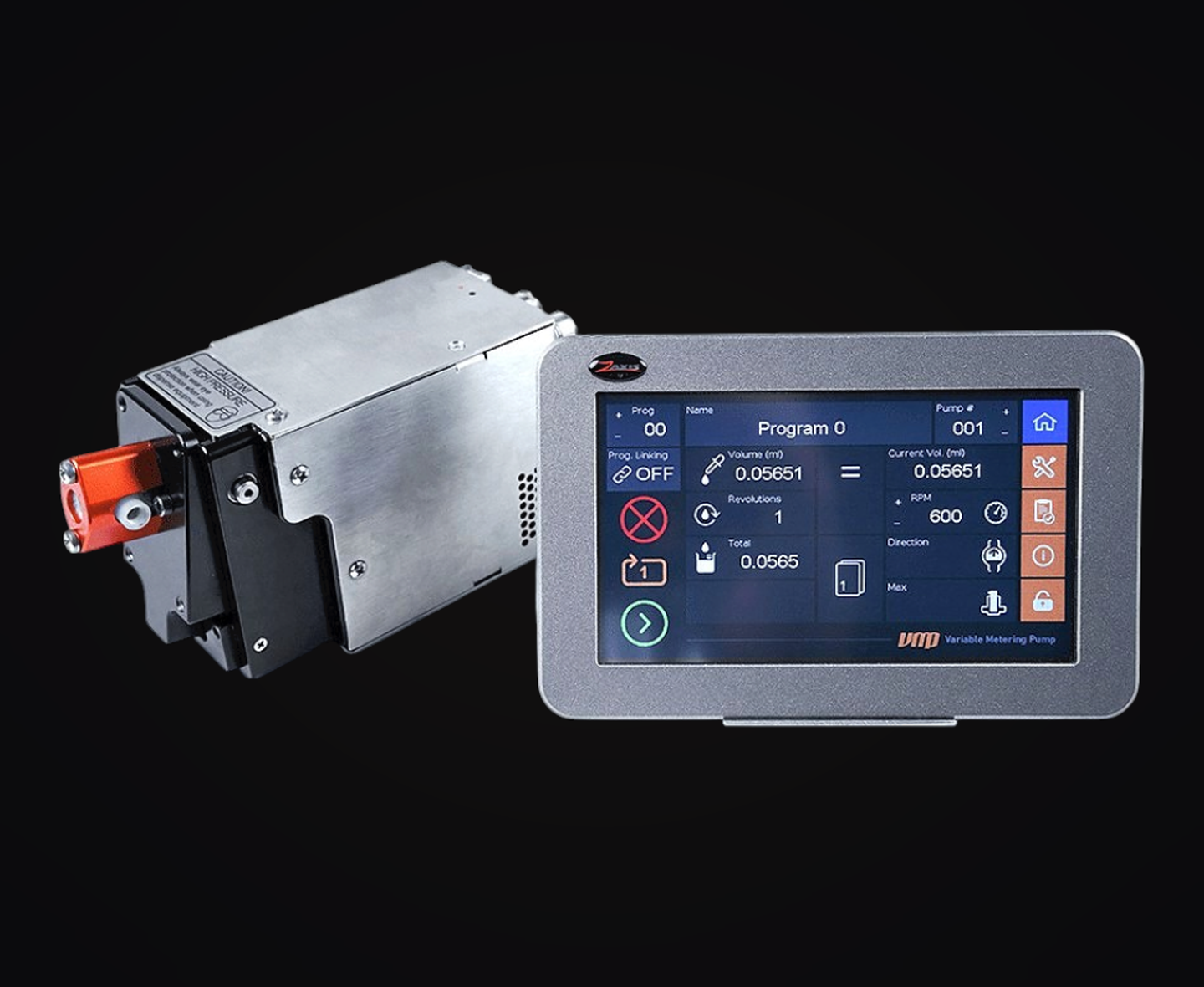 eVmP M-SeriesMicroliter metering from 2.5–100 µL per revolution.
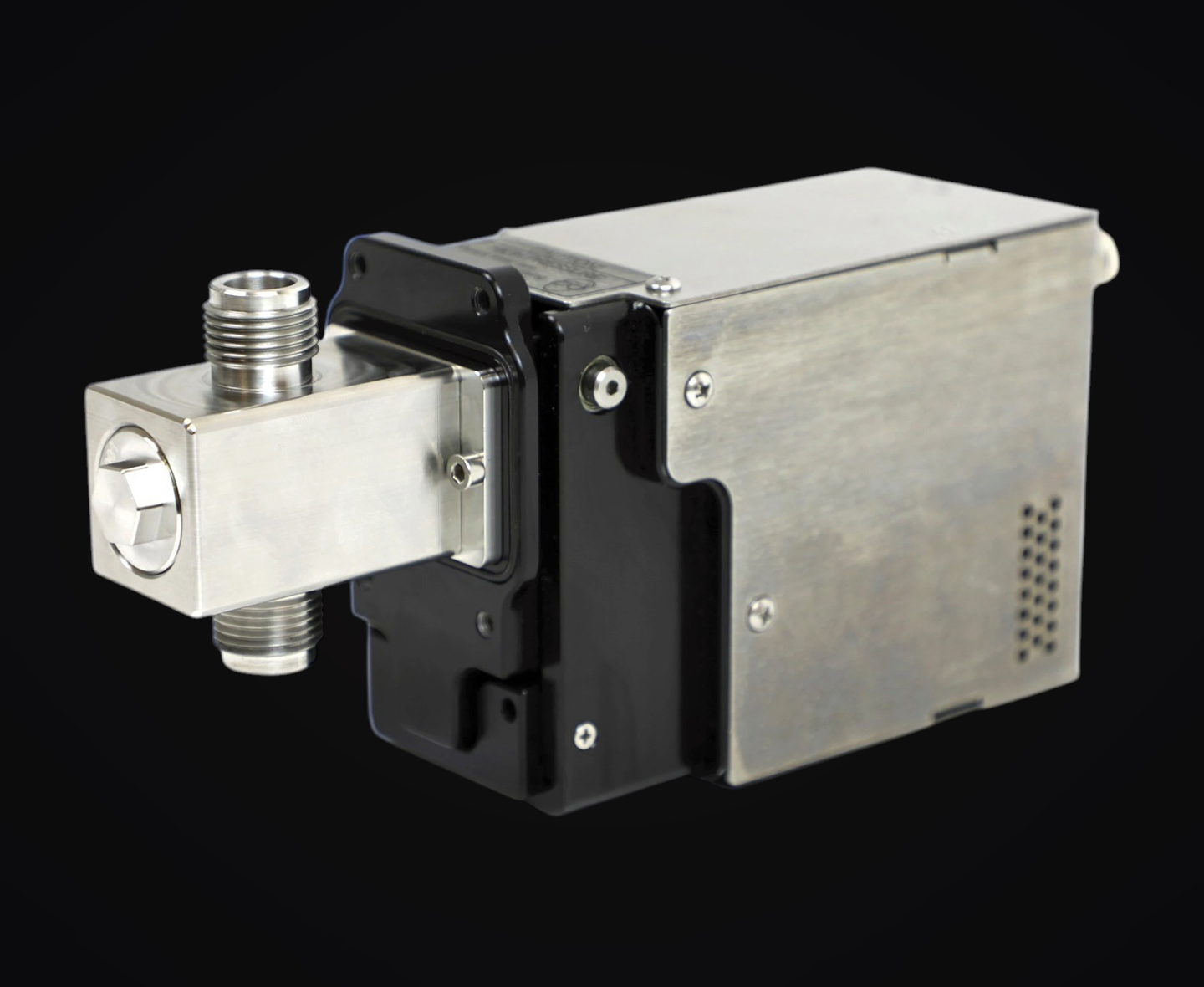 eVmP V-SeriesMilliliter metering up to 1,920 mL/min on the VS drive.
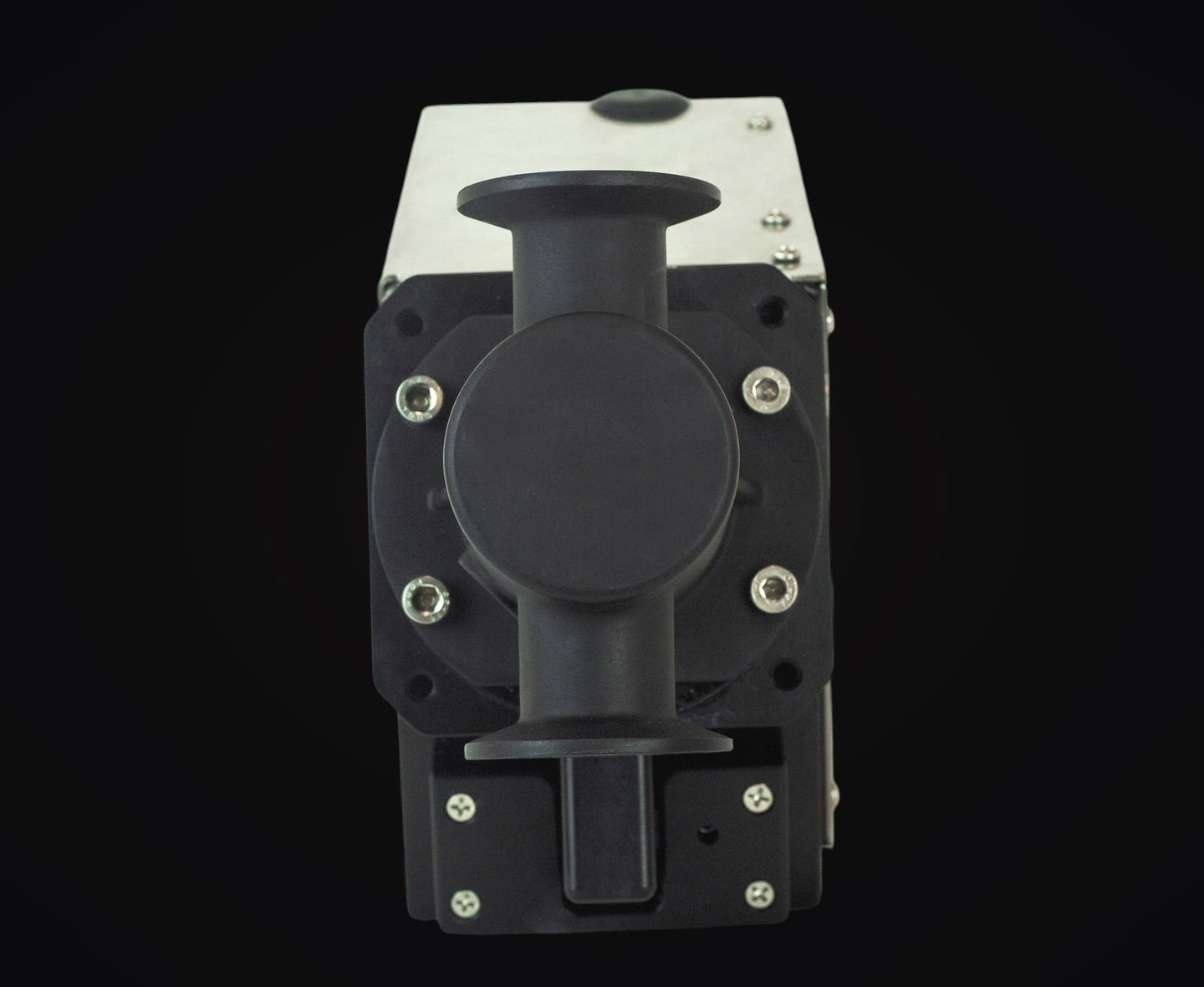 eVmP VS10-SeriesNearly 10 mL per stroke and up to 10 L/min.
