Industrial metal component for production leak testing

Industry Solutions

Industrial Leak Testing

Zaxis leak testing supports industrial production from bench testing to automated high-throughput lines.

Industrial production lines need dependable testers that provide repeatable results while supporting product integrity and quality.

Zaxis can configure Isaac HD or iKit testers in multiple ways for a lab bench or an automated production line.

A production-line example uses two four-channel Isaac HD leak testers integrated directly into the line. Their automated configuration increases throughput and mitigates user error.

Request for Quote

What gets tested

Industrial testing can range from one part on a lab bench to thousands of parts on a production line.

Automated configurations can increase throughput while mitigating user error.

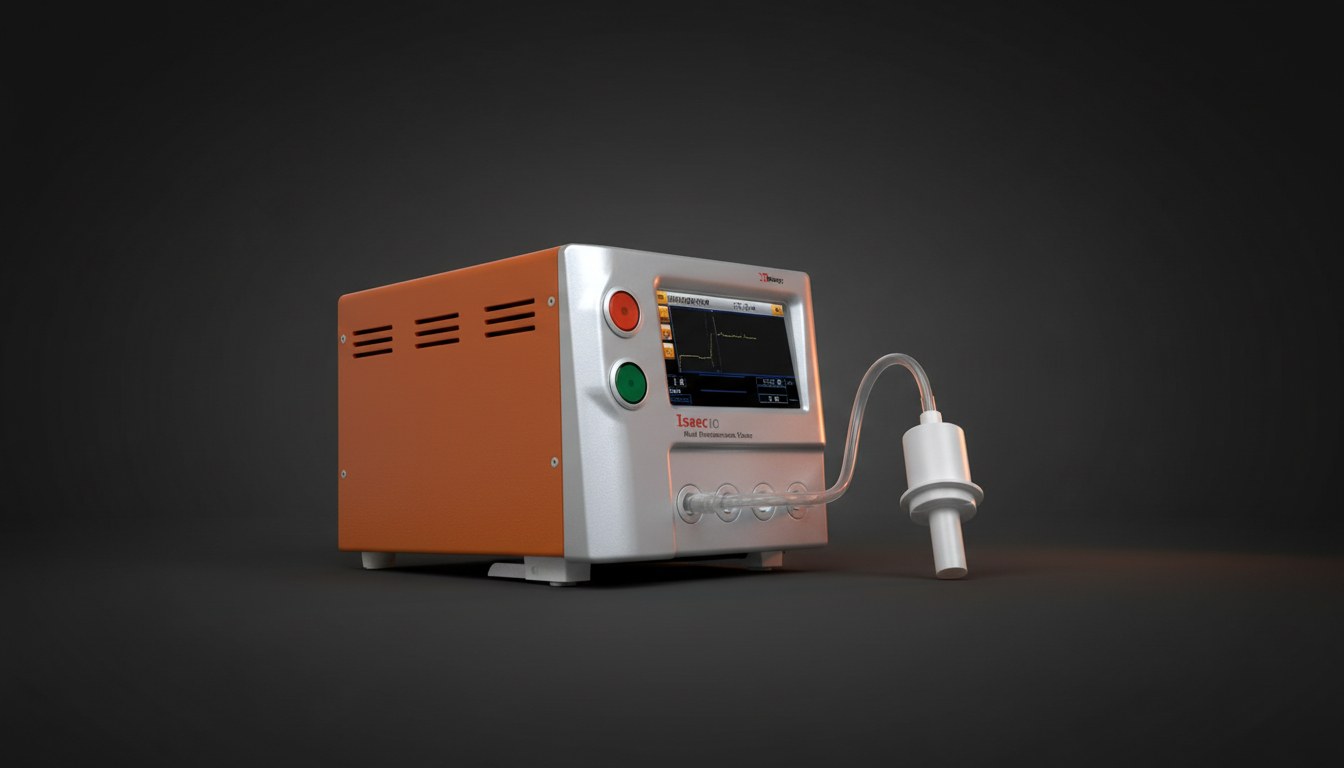
The Isaac HD has a large full-color graphic display and signal processing for test stability and repeatability. It is suited to pressure/vacuum decay, pressure cracking, mass flow, valve cracking pressure and burst pressure tests.

•Industrial components•Assemblies•Production-line parts•Automated fixture positions

Methods used

Choosing the method

Industrial lines benefit when the method, fixture location, environmental conditions and data connection are designed as one repeatable test cell.

Pressure decay

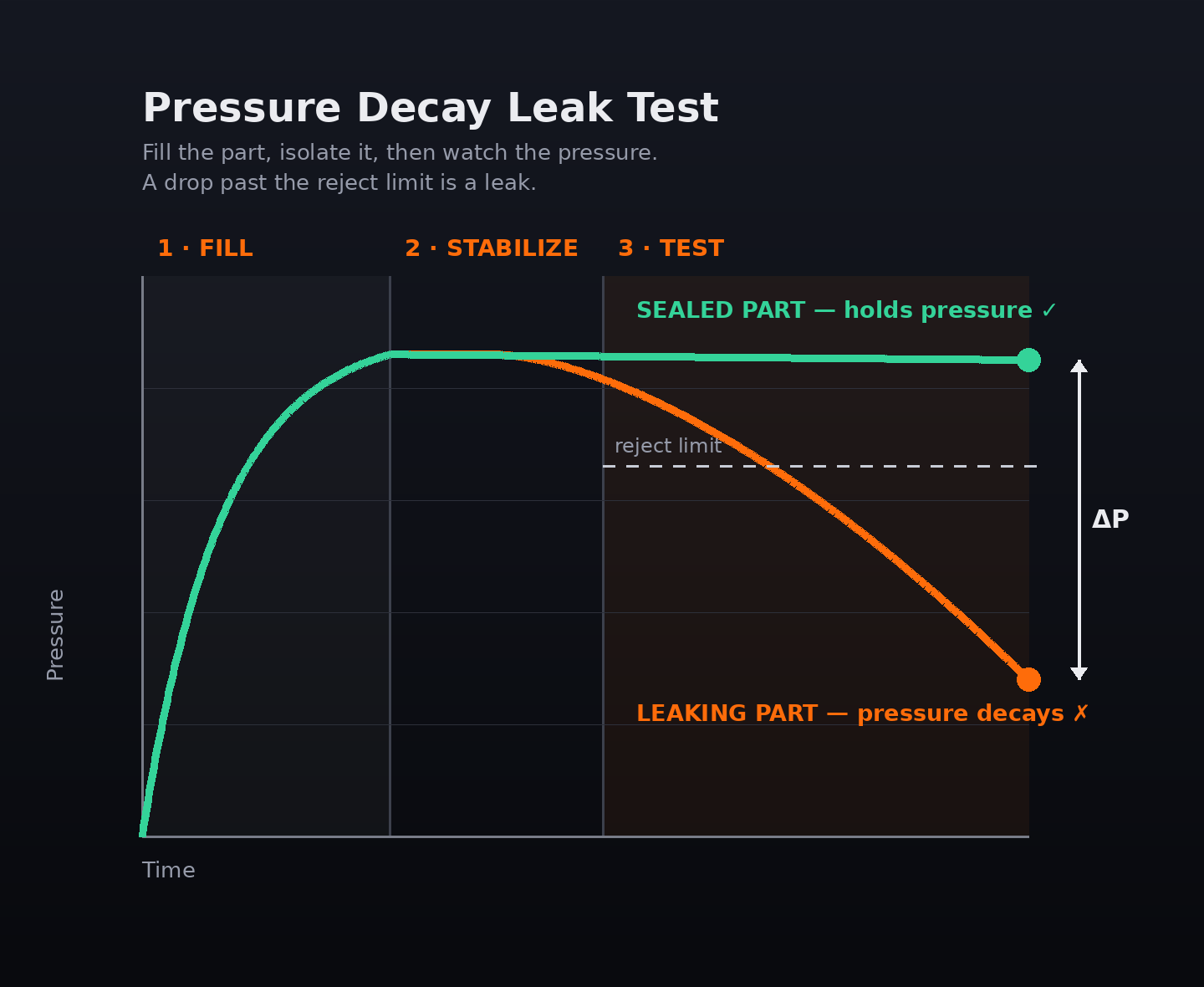
Pressure decay suits assembled industrial products that need a defined leak limit. Keeping the tester close to the part reduces connection-tube volume, which improves pressurization time and supports throughput.

A short, stable pneumatic path helps the test measure the part instead of an unnecessarily large air volume.

Pressure decay explained →

Vacuum decay

Vacuum decay provides an alternative for industrial components when evacuation better matches the sealed product or fixture. It can be selected alongside pressure decay as part of an automated test cell.

The part connection, internal volume and stable test conditions remain central to a repeatable result.

Vacuum decay explained →

Mass flow

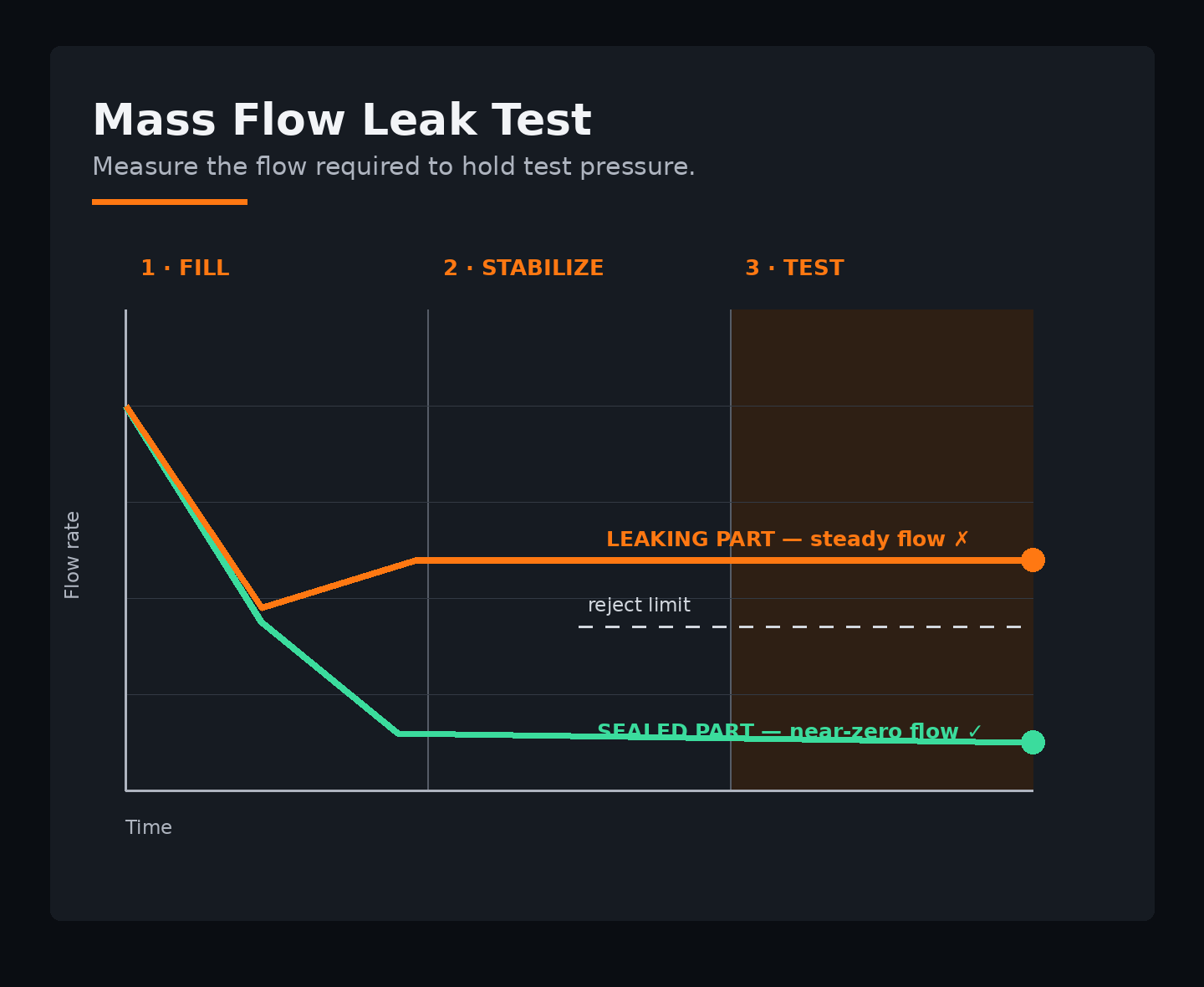
Mass flow supports industrial components with an intentional open route where the amount of gas passing through matters. It measures flow at the required condition rather than only a sealed-volume pressure change.

The method can complement pressure or vacuum testing in a multi-function station.

Mass-flow testing explained →

Pressure cracking and burst pressure

Pressure cracking and burst-pressure capabilities address components whose opening behavior or pressure resistance must be checked. They can be combined with decay and flow methods in an industrial configuration.

Choose the program around the component’s required behavior and safe test limits, then make the sequence repeatable in the fixture.

Pressure cracking explained →

Which Zaxis testers fit

Industrial production workflows can use these Zaxis tester configurations. The Isaac HD, iKit and 7i referenced on this page were discontinued on 03/31/25 with limited parts after 2028; their successors are the Z5, Z1 and Z8.

Production configuration

Two four-channel Isaac HD testers can be integrated into a production line and configured for automated operation.

An electronic regulator can program up to 100 test pressures so parts can be tested across a range of pressures automatically.

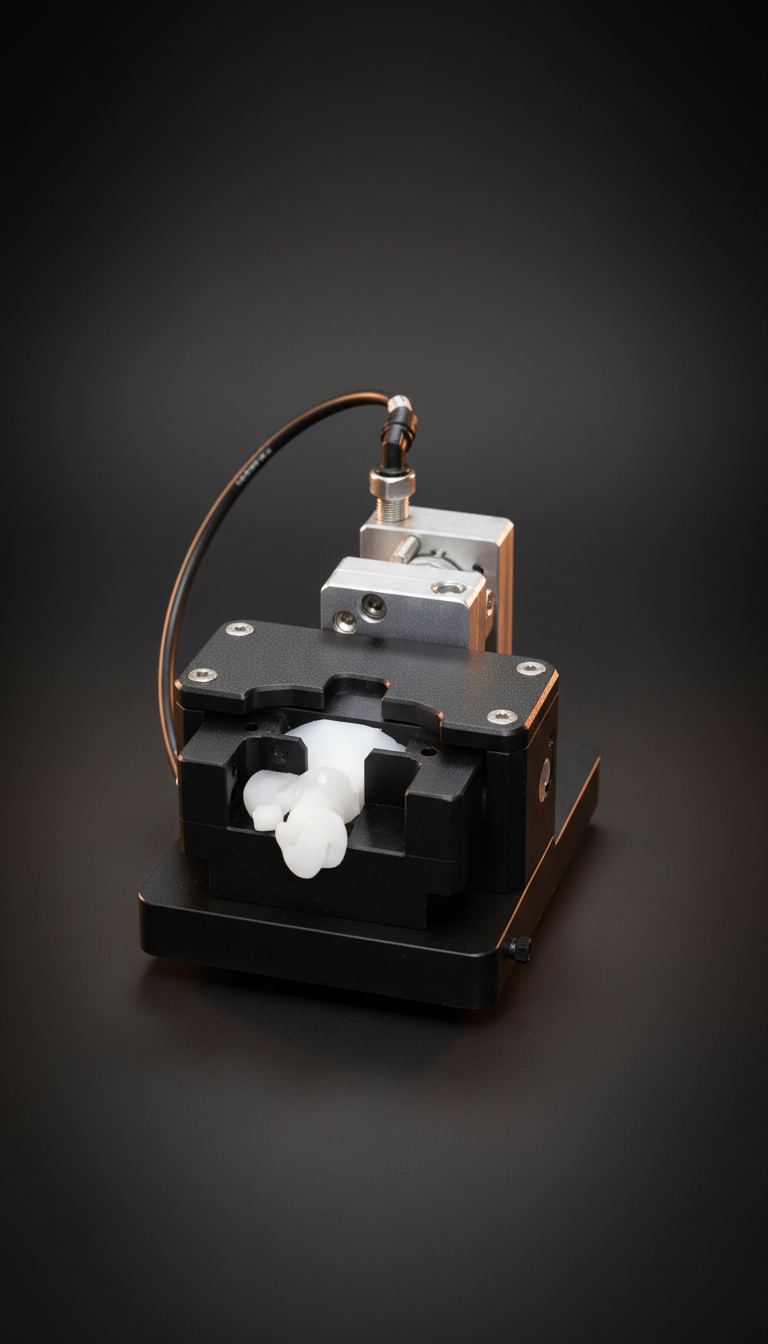
Production fixture for automated industrial testing

In depth: industrial production

Putting pressure-decay testing close to the part

Production-line space is valuable, yet the location of the leak tester has a direct effect on the pneumatic system. Long connection hoses add volume between the tester and the part, on top of the tester’s internal volume and the product’s own volume.

A larger test volume takes longer to pressurize, which can reduce productivity and throughput. It can also affect the accuracy of a pressure-decay measurement, since the test includes more air than the product alone.

Integrate the tester close to the fixture when possible. Shorter connections reduce added volume and help the test cell meet both its measurement and cycle-time goals.

Pressure-decay graph for production-line testing

Replacing visual water checks with automated data

Traditional water dunk testing asks an operator to submerge a part and visually look for bubbles. The process can be slow, has limited sensitivity and depends on a person identifying the result. Water can be contaminated, viscous materials can mask leaks, and drying adds production time.

Automated air testing can collect and analyze data while applying the same repeatable sequence to each component. This removes the need to rely solely on visual observation and gives the production process a defined electronic result.

Automated testing also avoids large tanks consuming floor space. The cell can support quality work while preserving a cleaner, more efficient production area.

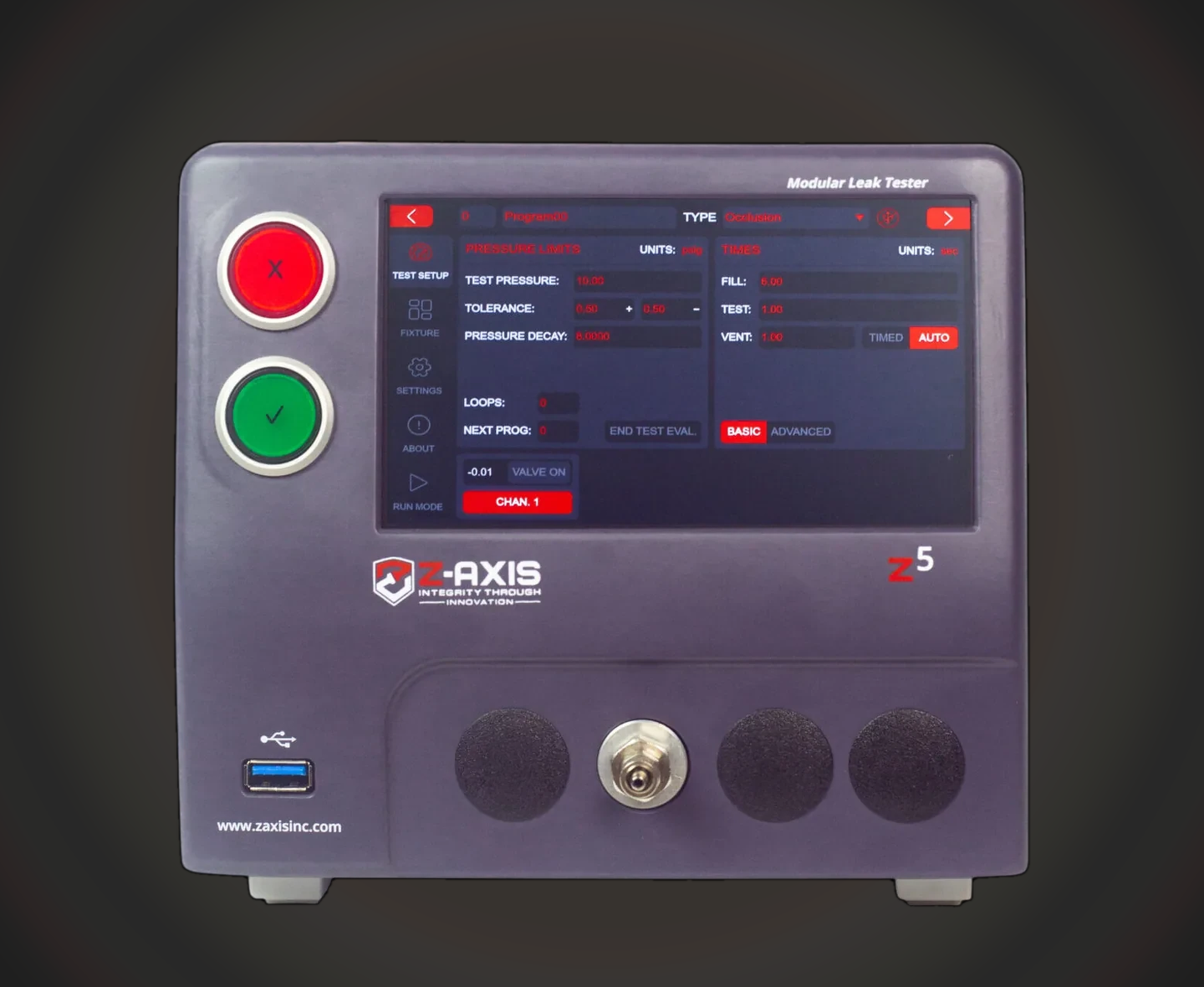
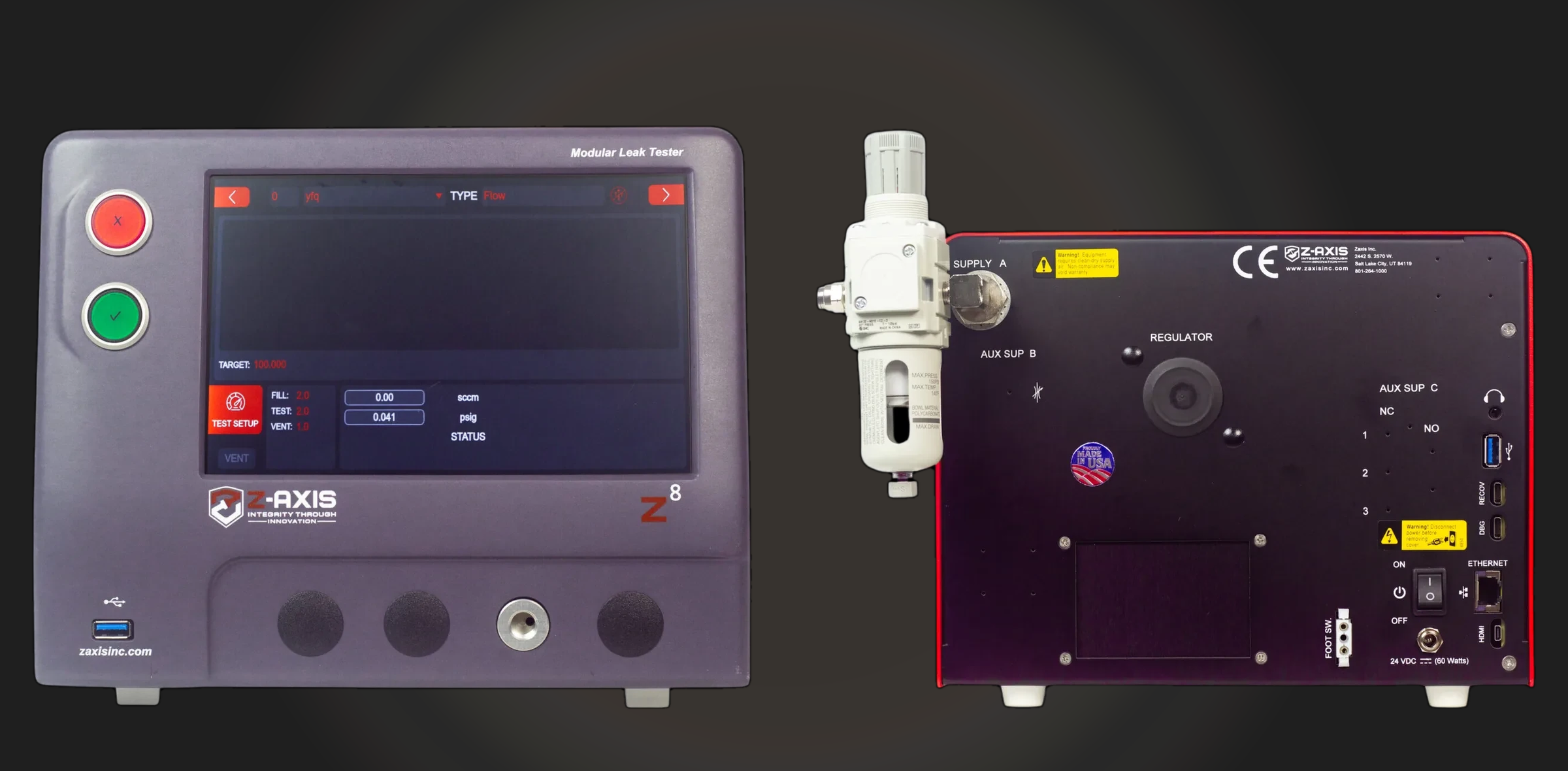
Zaxis Z8 leak tester front and back

Controlling variables that change the result

Calibration is fundamental to accurate automated testing. A poorly calibrated system can create false positives or false negatives, placing product quality and regulatory compliance at risk. Routine maintenance supports consistent performance and reduces downtime.

The environment matters too. Temperature, humidity and pressure fluctuations can affect a leak-test result, while the material used in the product can change how the part responds during the cycle. These conditions belong in the test design, not outside it.

The method must match the application. Selecting pressure decay where a vacuum method is needed, or using an unsuitable fixture, can produce unreliable results even when the instrument itself is capable.

Mass-flow graph for controlling leak-test variables

Connecting test cells to factory automation

Factory automation needs real-time communication between sensor-actuator networks and controller or enterprise networks to support quality and throughput. EtherNet/IP uses familiar Ethernet infrastructure, the Internet Protocol suite, IEEE 802.3 and the Common Industrial Protocol.

This network approach enables communication among factory devices rather than only between a controller and a single endpoint. Test results can become part of the wider production conversation when the cell connects with the surrounding automation.

A connected test cell still depends on sound pneumatic fundamentals: stable parts, a suitable fixture, appropriate volume and a clear pass/fail condition. Communication extends a robust test; it does not replace the process design.

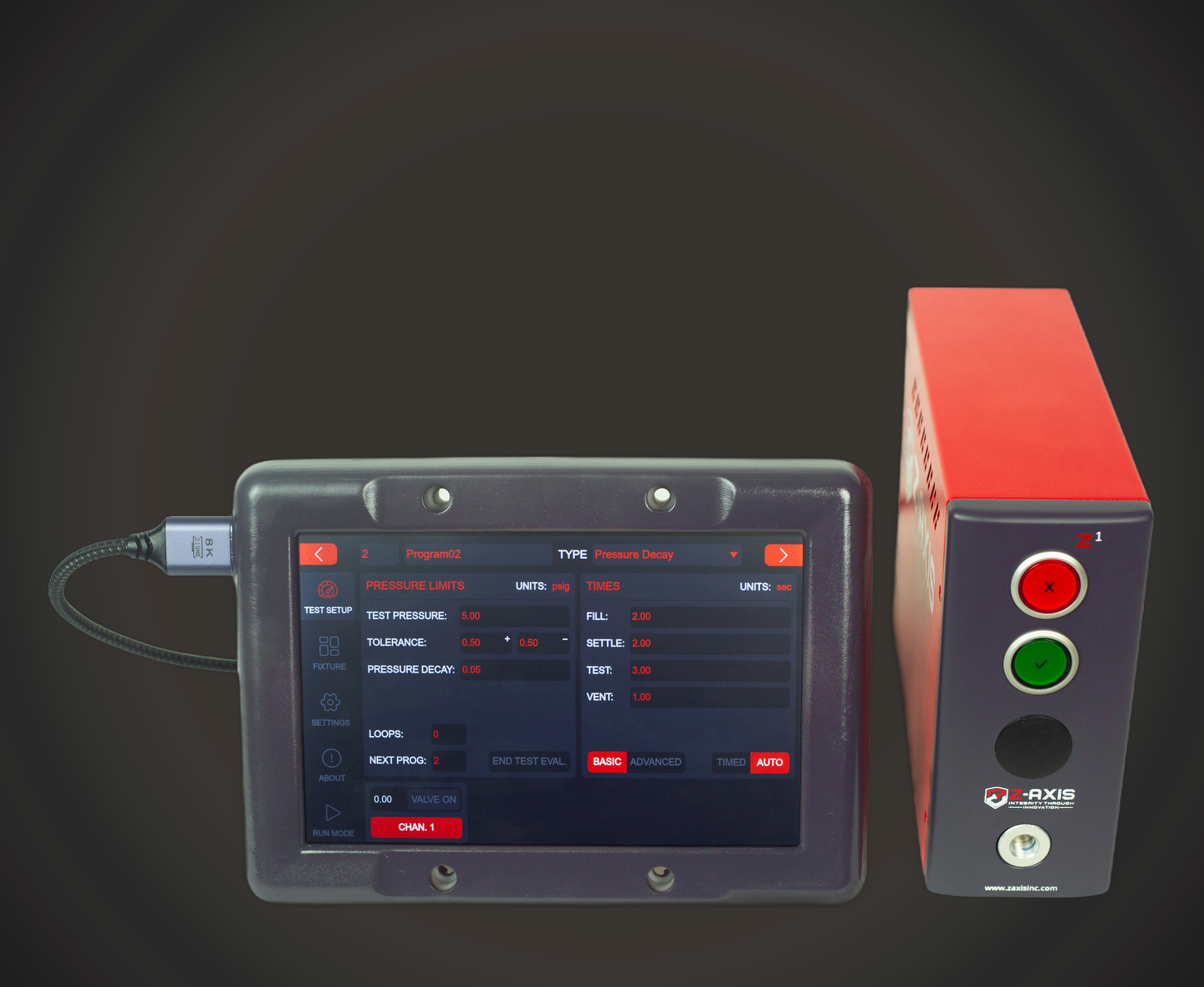
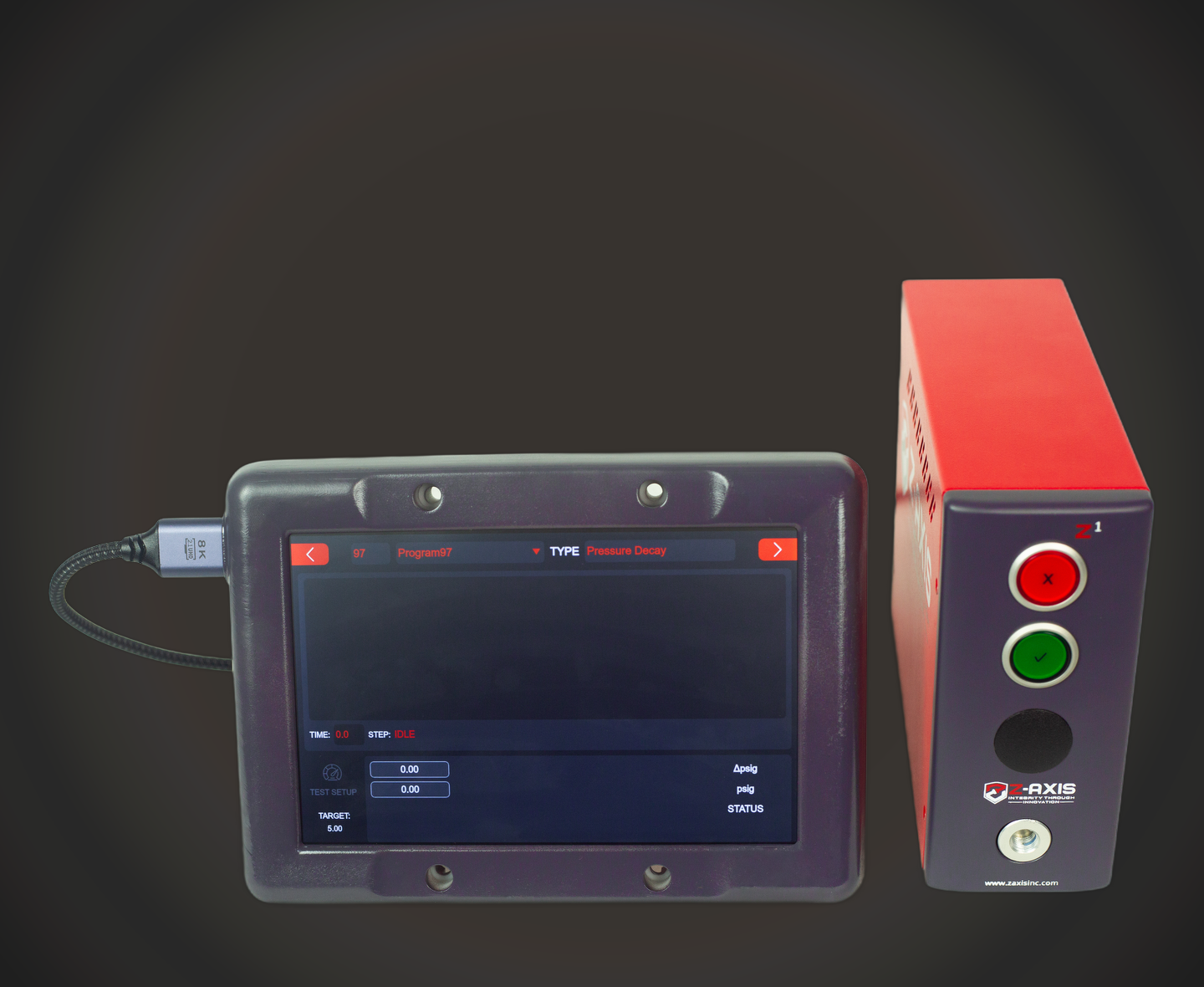
Zaxis Z1 leak tester built for machine integration

Applications in this industry

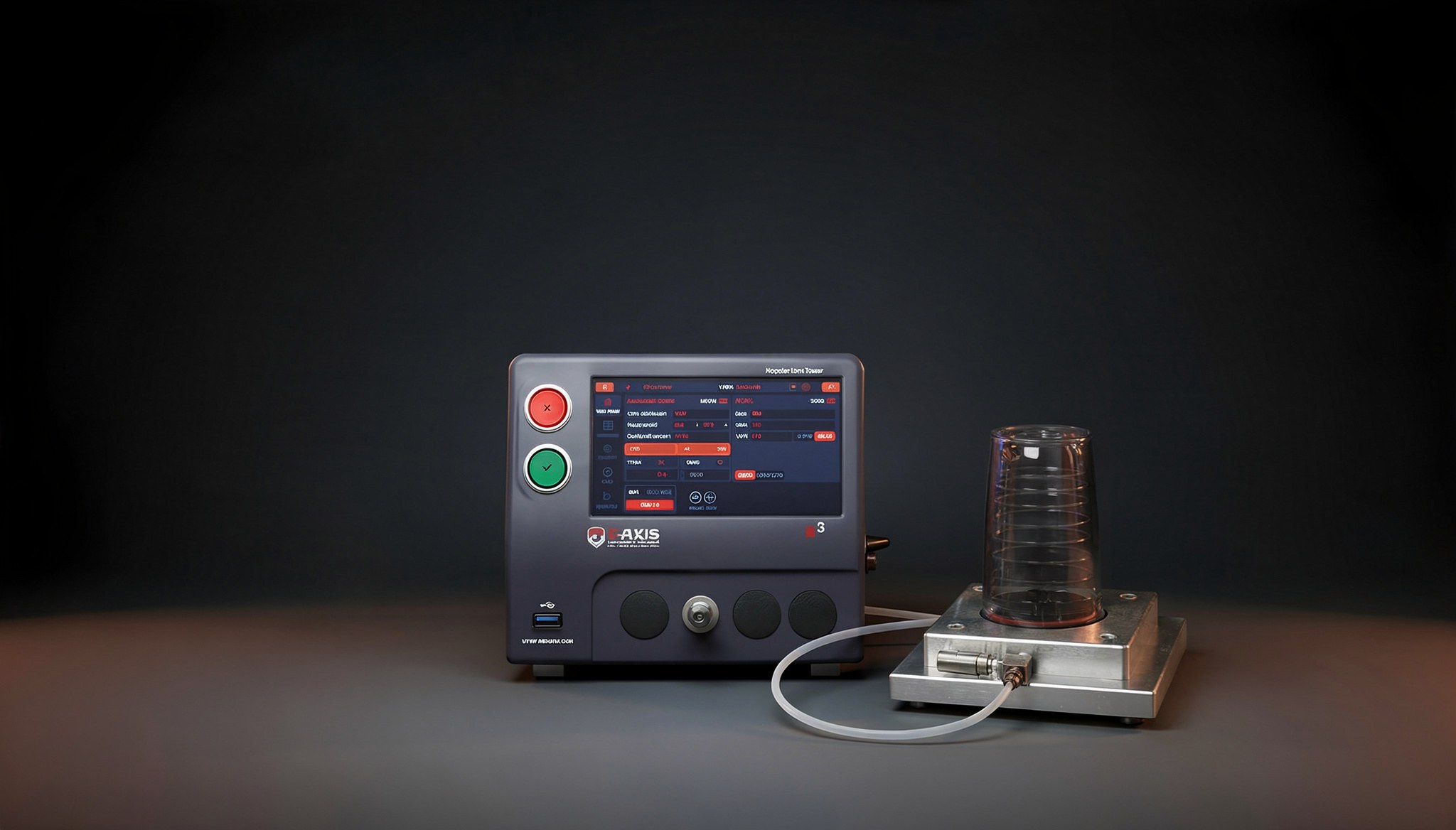
Zaxis Z5 leak tester with a sealed test fixture on the bench

Bench testing

Zaxis can configure a complete solution for one part on a lab bench, then adapt the same test as production volume grows.

Automated leak-test cells on a production floor

Automated lines

Two four-channel Isaac HD testers integrated directly into a production line run fully automated, increasing throughput and mitigating user error.

Zaxis Isaac HD leak tester connected to a test part

Multi-pressure programs

With an electronic regulator the tester programs up to 100 test pressures, so each part is checked across a range of pressures automatically.

Industrial Leak Testing FAQ

How can two four-channel Isaac HD testers be used on one line?

Both testers are built directly into the line and run an automated sequence, so the line tests more parts per hour with fewer operator touches and fewer chances for user error.

What does an electronic regulator add to industrial testing?

An electronic regulator can program up to 100 different test pressures so parts can be tested across a pressure range automatically.

Which test types suit an Isaac HD industrial configuration?

The Isaac HD is suited to pressure/vacuum decay, pressure cracking, mass flow, valve cracking pressure and burst pressure testing.

Can industrial leak testing start on a lab bench?

Yes. Zaxis can configure a complete solution for one part on a lab bench before adapting the process for higher production volume.

How does automation reduce user error in a leak-test cell?

An automated tester configuration runs the required production sequence consistently, mitigating opportunities for operator error.

What display does the Isaac HD use?

A large full-color graphic display, backed by signal processing that gives the tester its stability and repeatability from part to part.

Which industrial components can be checked in an automated fixture?

Industrial components, assemblies, production-line parts and multiple fixture positions can be configured for leak testing.

Why should an automated tester sit close to the fixture?

Shorter connection tubing adds less pneumatic volume, helping the system pressurize faster and limiting an avoidable source of measurement variation.

What production problems can automated air testing reduce?

It replaces visual bubble observation with repeatable data collection and avoids the tank, contamination and drying work of water-dunk testing.

Which environmental conditions can affect an industrial leak test?

Temperature, humidity and pressure fluctuations can affect the result, so the test process should account for them.

Ready to Ensure Product Integrity ?

Request for Quote