
FILL
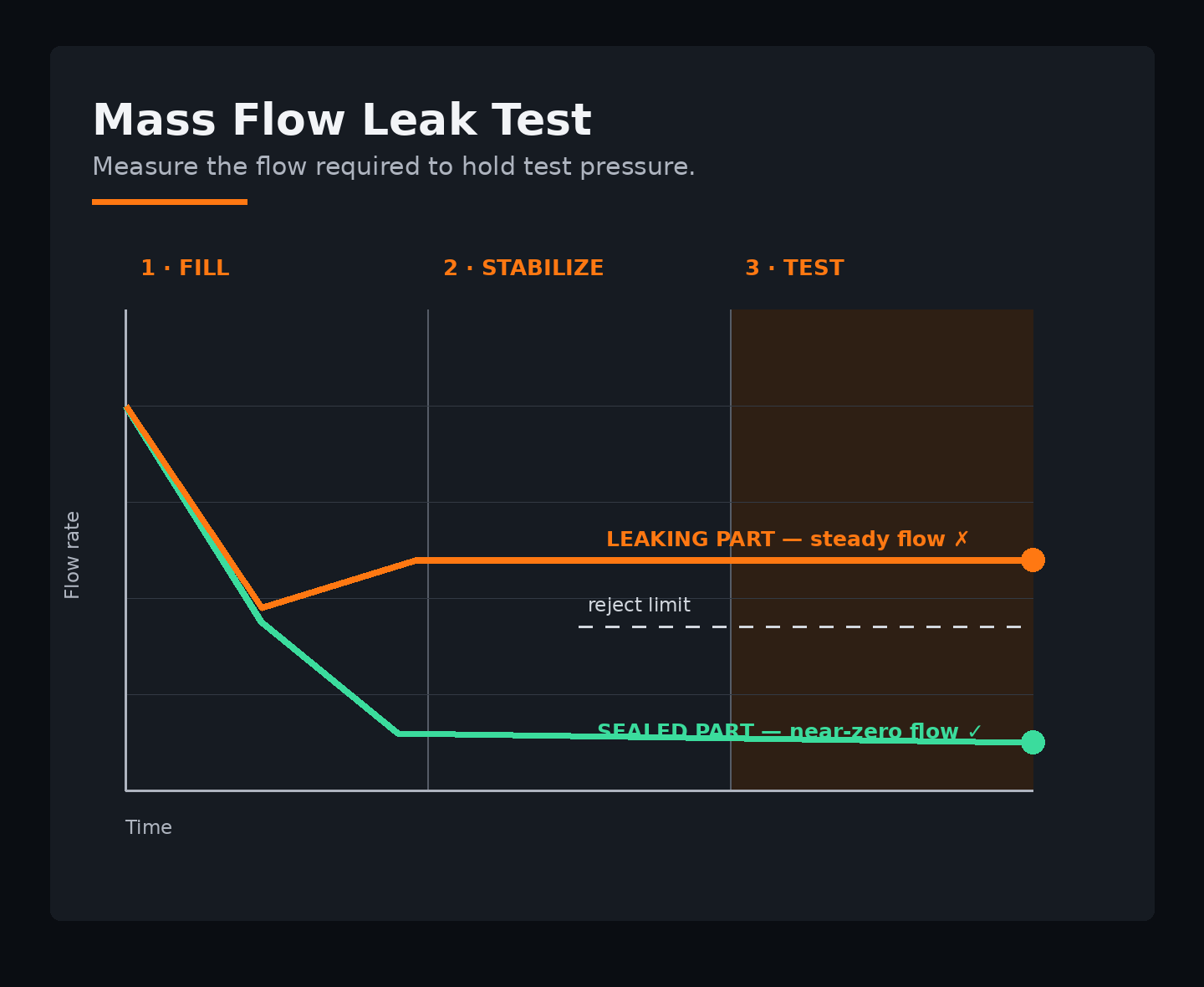
Attach the component to the test port and fill it with regulated air to the programmed test pressure.

Leak Test Method
A mass flow leak test measures the air flow through a connected component and compares the result with programmed minimum and maximum flow values.
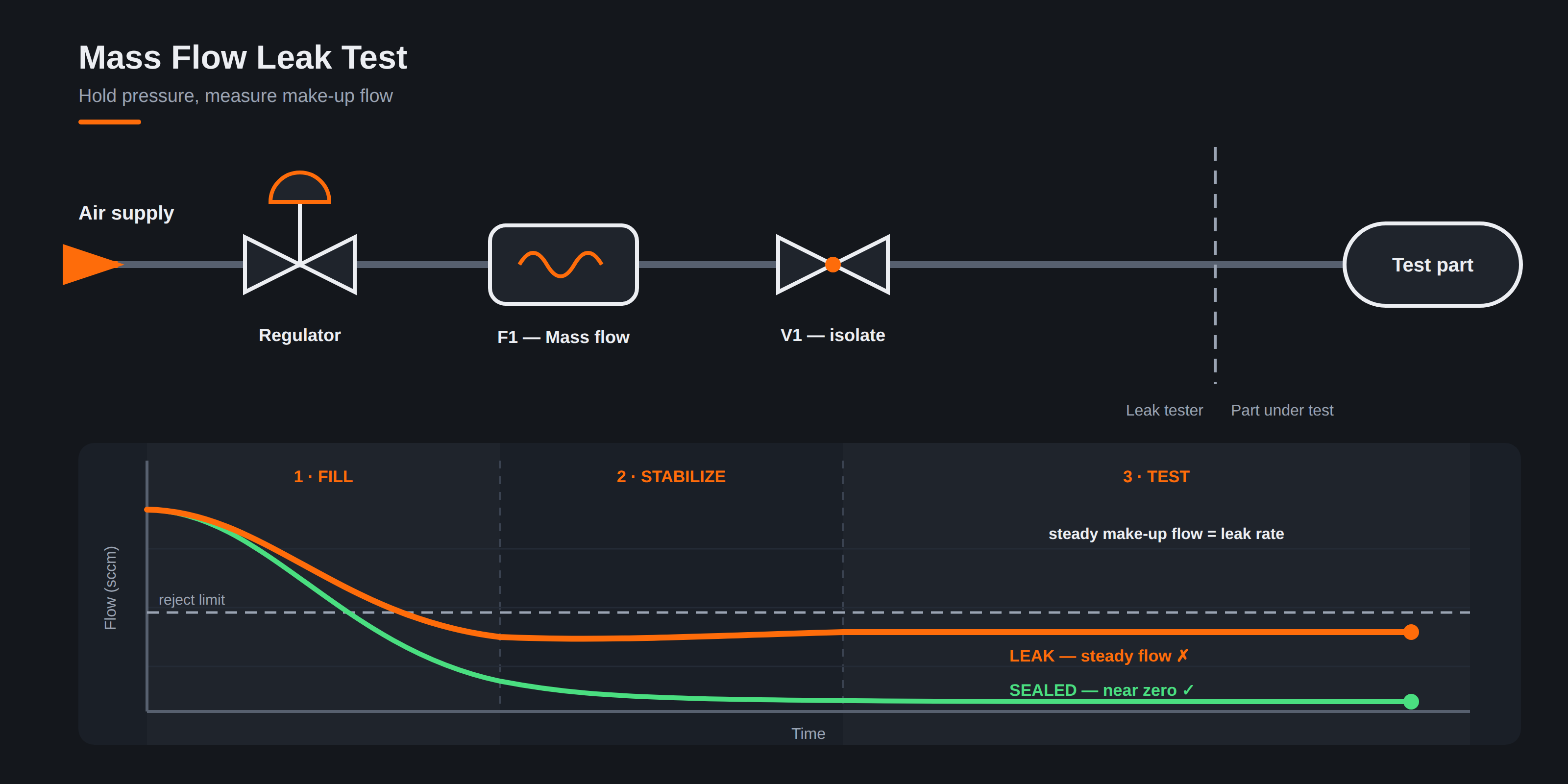
Mass flow testing checks whether the expected amount of air passes through a component. The product connects to the test port, regulated air pressurizes it, and the system measures flow during the test phase.
A pressure sensor checks the test pressure against programmed tolerances while a mass-flow sensor measures flow. The tester compares the result with predefined minimum and maximum values and displays pass or fail.
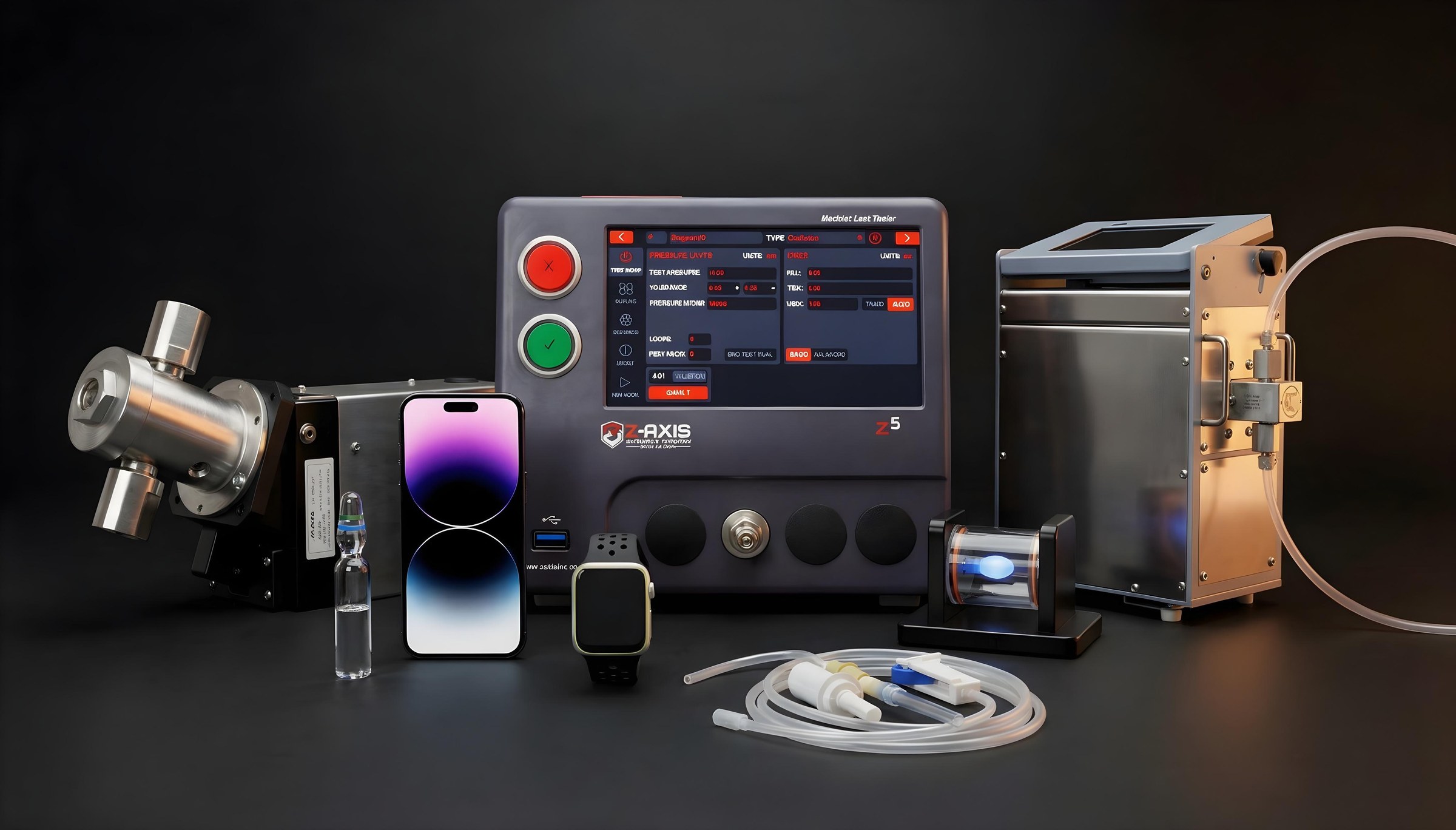
Mass flow testing is used for catheters, IV sets, check valves, tubing, needleless injections, infusion sets and metering devices. It is non-destructive and well suited to production applications that need a repeatable flow-rate check.
Request for QuoteMass flow testing measures flow through an object rather than pressure decay in a sealed object. The component connects to the test port and receives regulated air; during the test, the mass-flow sensor measures the air moving through it.
Acceptable results are defined by minimum and maximum flow values programmed for the part. A component within those values passes, confirming the expected flow rate; a component outside them fails.
Thermal mass flow measures gas flow by heating a sensor and calculating the energy needed to maintain a constant temperature. Laminar mass flow uses laminar-flow principles for precise liquid-flow measurement.
Attach the component to the test port and fill it with regulated air to the programmed test pressure.
Allow the test pressure to reach the programmed tolerance before evaluating flow.
Measure flow with the mass-flow sensor and compare it with the programmed minimum and maximum values.
Complete the cycle and release the test pressure before the next part.
A component whose measured flow is within the programmed minimum and maximum values passes; a reading outside those values fails.
The test combines pressure control and flow measurement. Regulated air fills the component while the pressure sensor checks the programmed test-pressure tolerance and the mass-flow sensor measures flow.
Programmed minimum and maximum values define the accepted flow band. The tester compares the measured flow with those values and displays a pass or fail result.
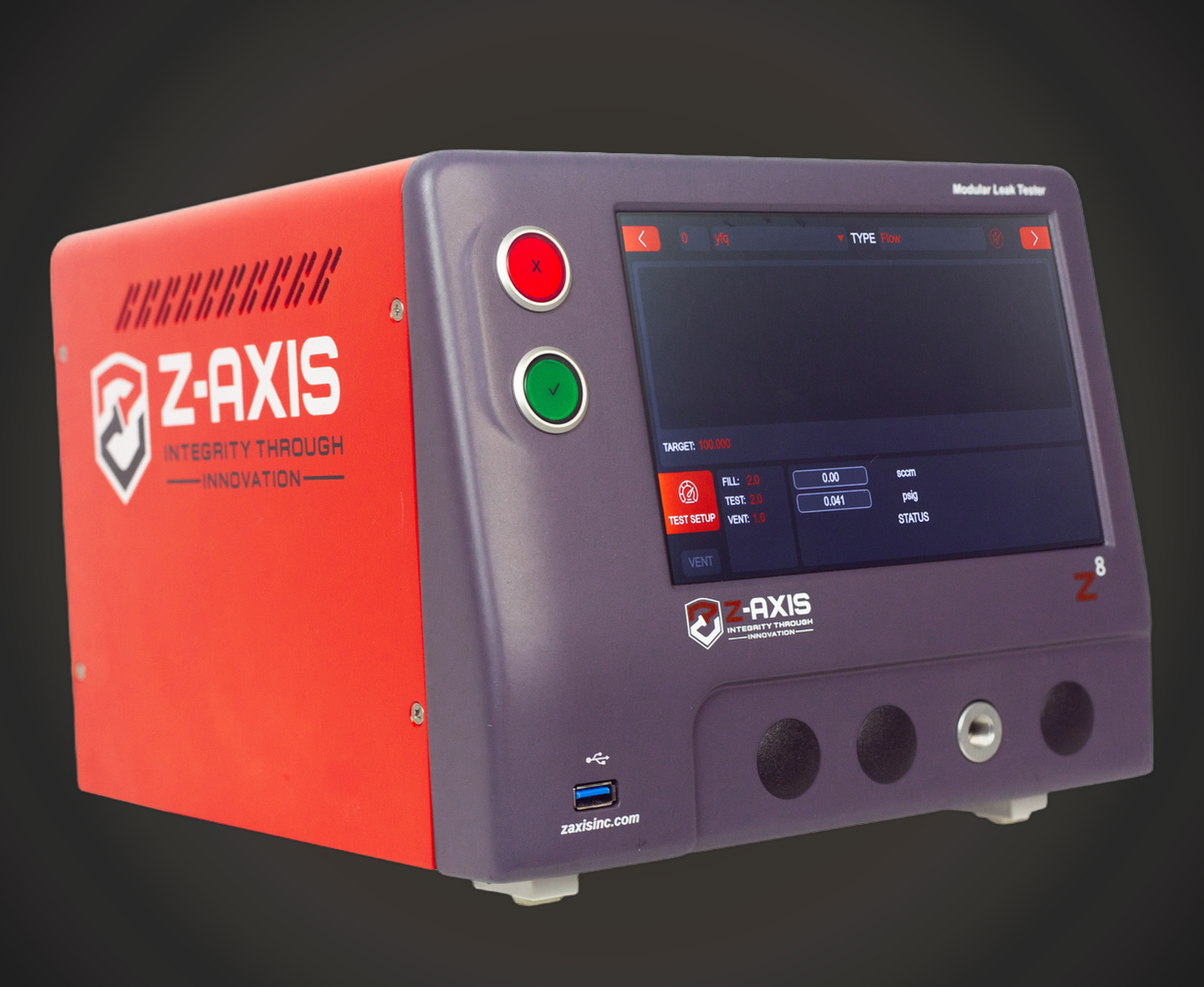
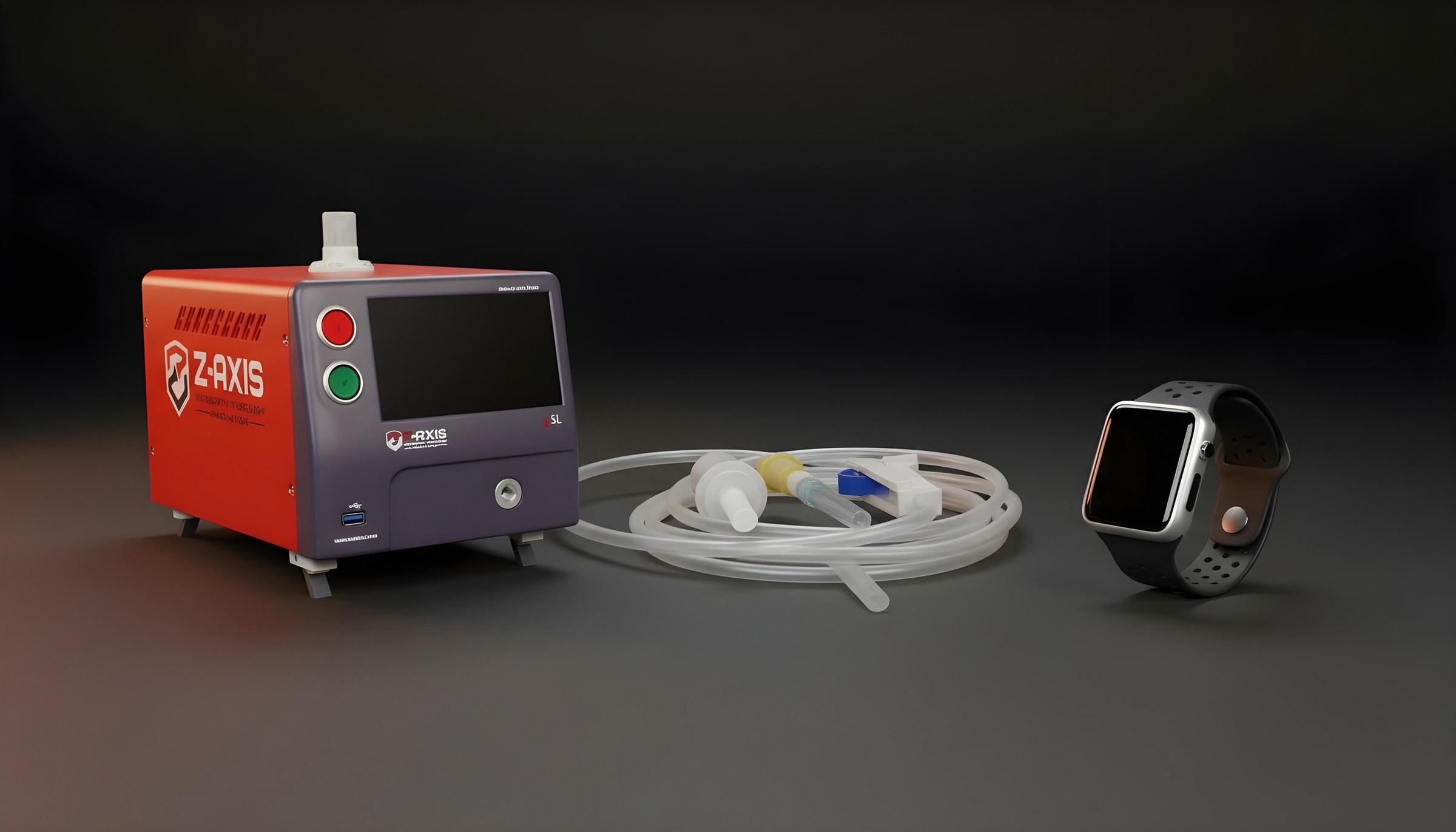
The Isaac HD, iKit and Zaxis 7i all run mass flow tests. Their fixture connection and programmed sequence support repeated production checks.
Because the same connection, pressure tolerance and flow limits can be used for each component, mass flow testing can support automated production. The non-destructive result provides a direct quality decision without damaging the part.
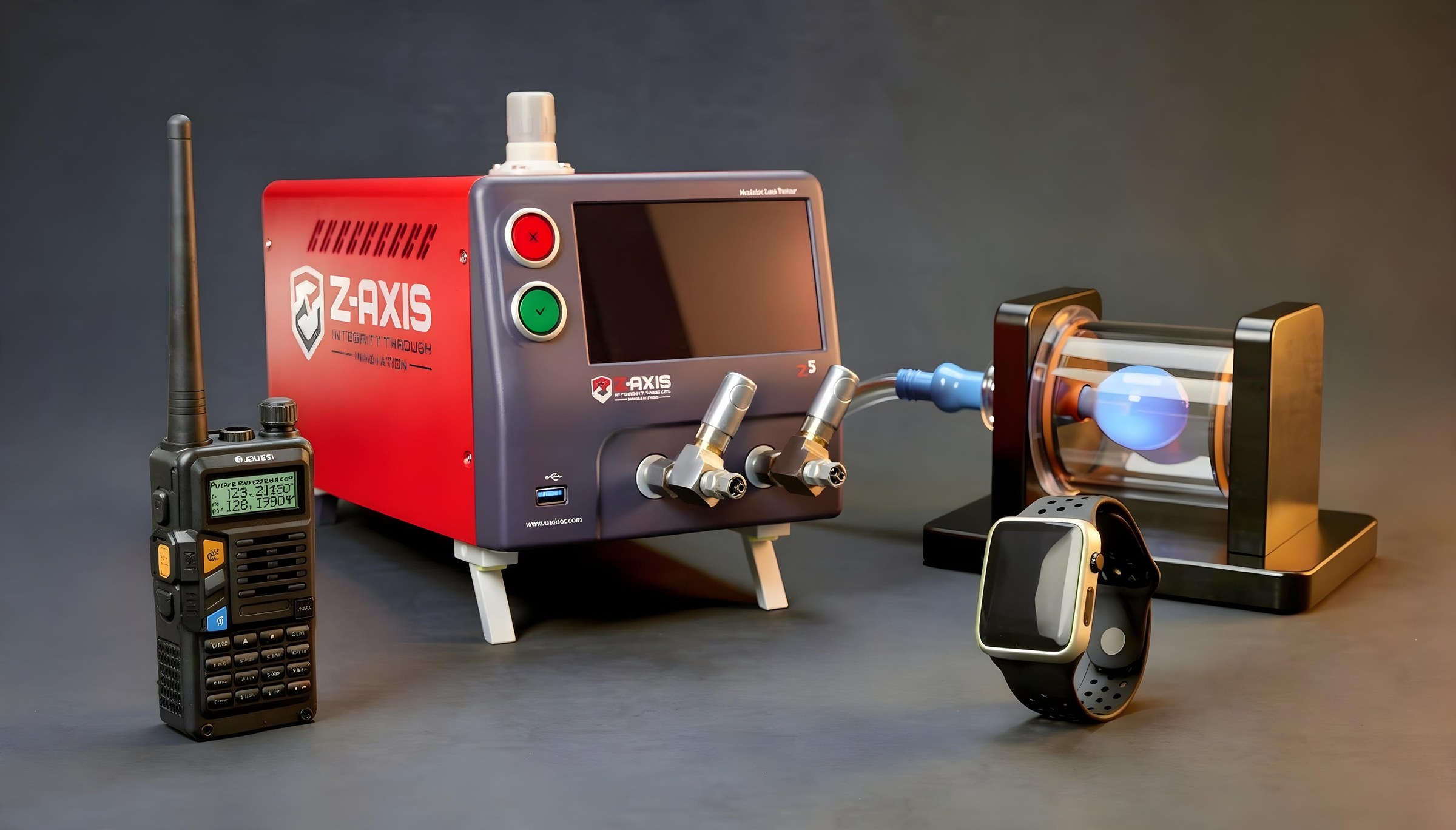
Mass flow needs a tester with a mass-flow sensor in addition to the pressure sensor. These Zaxis testers run the mass-flow sequence.
Mass flow verifies the expected air path through catheter components.
Flow-rate limits support checks of fluid-path components.
Mass flow testing evaluates whether a check valve meets its expected flow range.

Connected tubing and needleless injection components can be tested against programmed flow values.
| Method | Non-destructive | Needs an access port | Locates the leak | Typical use |
|---|---|---|---|---|
| Pressure decay | ✓ | ✓ | × | Sealed parts with a port |
| Vacuum decay | ✓ | ✓ | × | Parts and packaging |
| Mass flow | ✓ | ✓ | × | Flow-rate limits |
| Occlusion | ✓ | ✓ | × | Blocked passages |
| Burst | × | ✓ | × | Failure pressure |
| Pressure cracking | ✓ | ✓ | × | Valve opening pressure |
| Chamber | ✓ | × | × | Sealed parts, no port |
| Sniffing | ✓ | ✓ | ✓ | Finding the leak site |
| Hard vacuum | ✓ | ✓ | × | Hermetic, safety-critical parts |
| Accumulation | ✓ | ✓ | × | Large parts, total leak rate |
| Bombing | ✓ | × | × | Sealed parts, no fill port |
| Differential pressure | ✓ | ✓ | × | Large volumes, low leak rates |
| Trace gas | ✓ | ✓ | ✓ | Very small leaks, quantified |
It measures air flow through a connected component and compares the reading with programmed minimum and maximum flow values.
It measures flow during the test phase while the pressure sensor checks programmed test pressure.
A reading within the predefined minimum and maximum flow values passes; a reading outside them fails.
Applications include catheters, IV sets, check valves, tubing, needleless injections, infusion sets and metering devices.
No. It is a non-destructive test for flow-through components.
Mass flow evaluates the amount of air moving through a component; pressure decay evaluates pressure change in a sealed part.
Thermal mass flow measures gas flow by heating a sensor and calculating the energy needed to maintain a constant temperature.

For HVAC and refrigeration components, see HVAC & Refrigeration Leak Testing for large-volume and refrigerant-circuit production test planning.
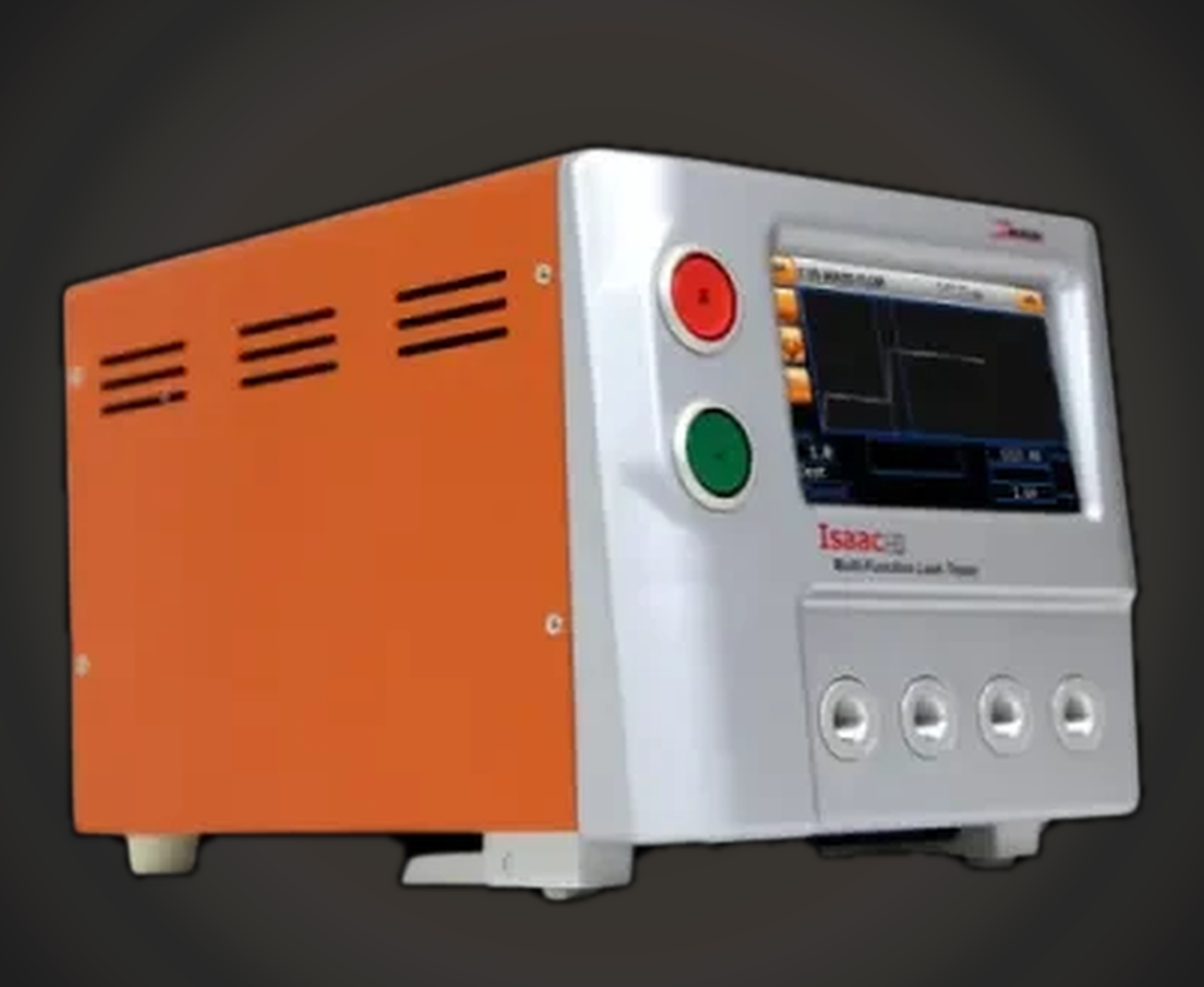 Isaac HDA modular tester that measures mass flow through the test phase.
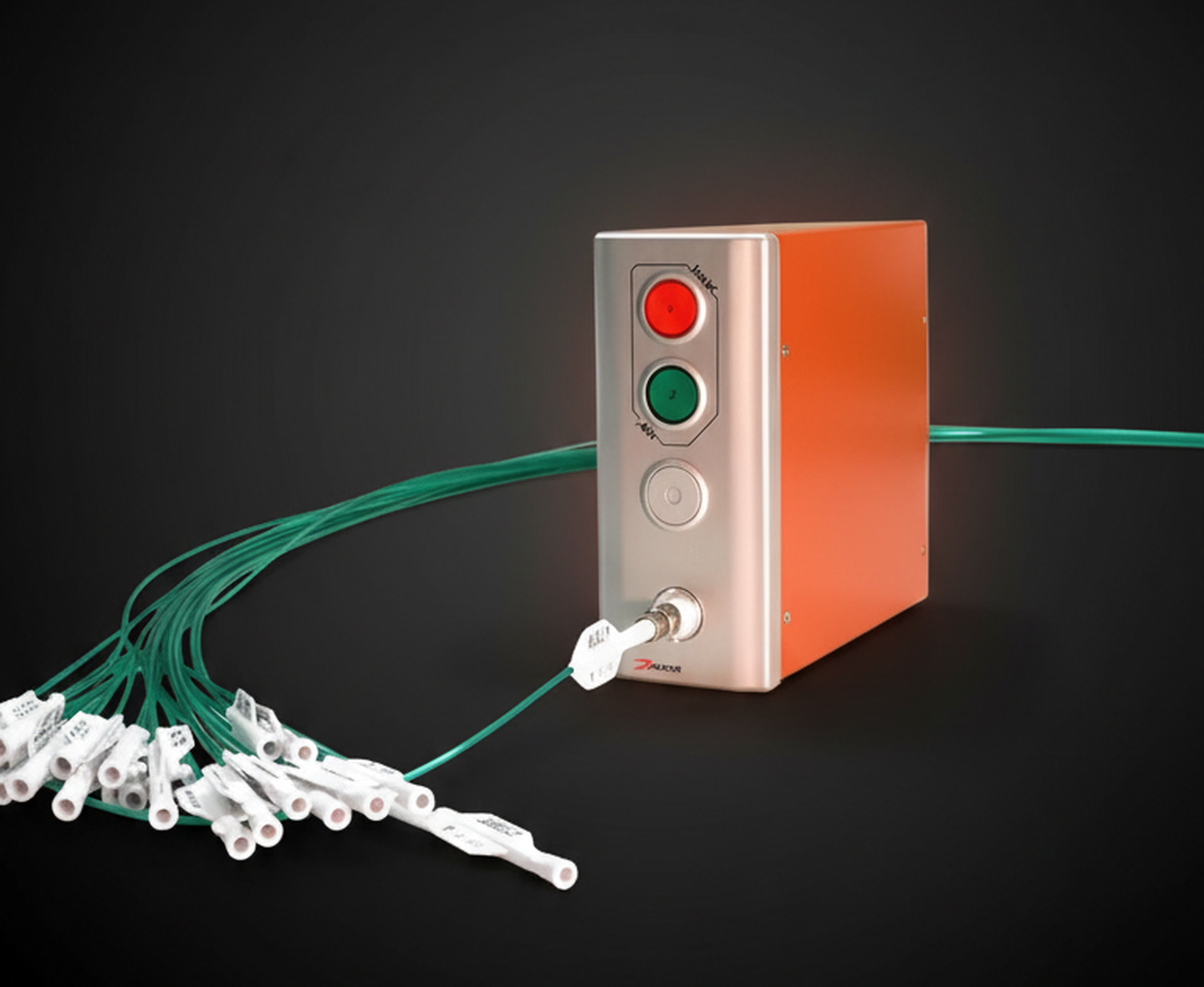 iKitA compact tester built for mass-flow testing in automation applications.
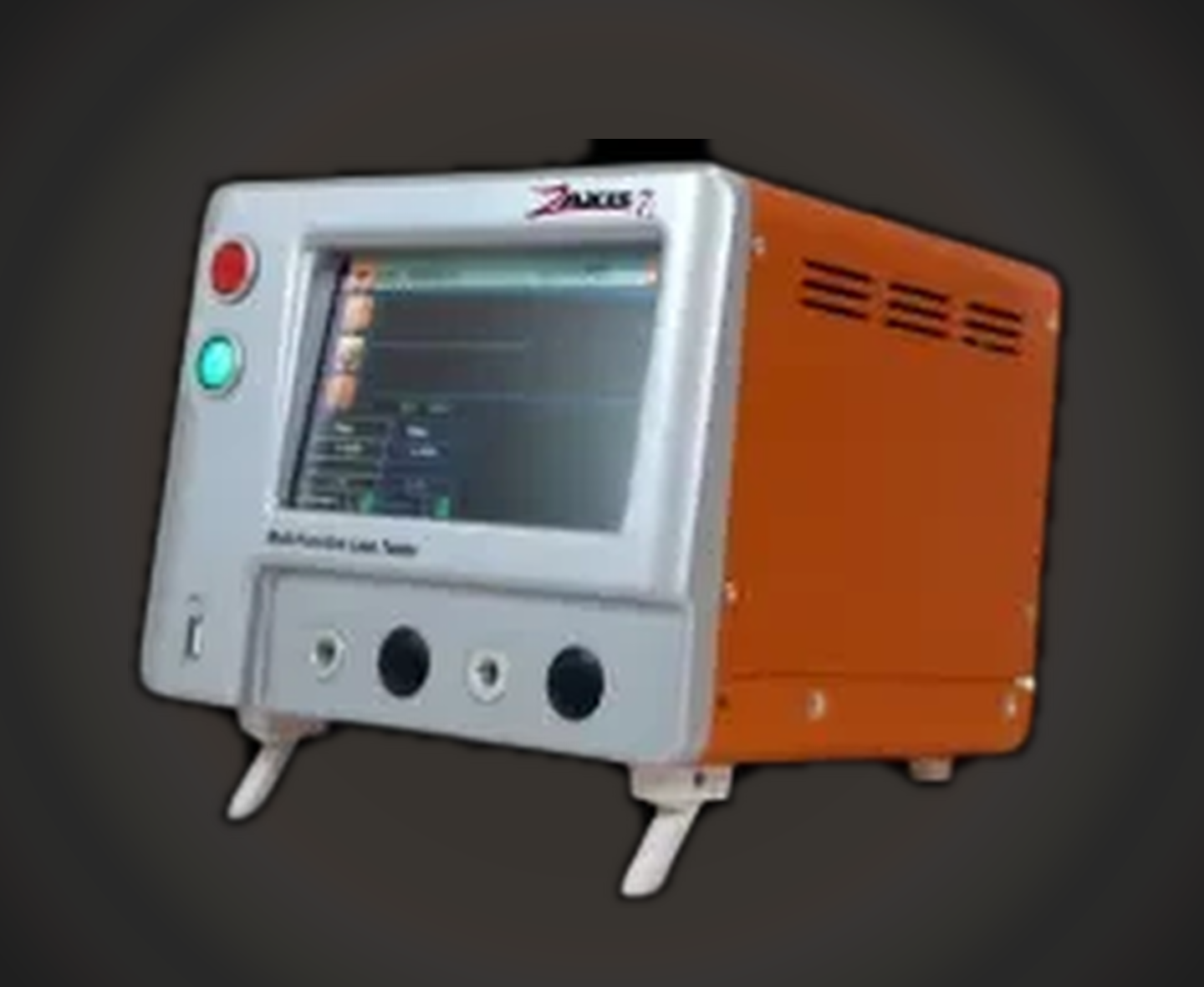 Zaxis 7iA large-display tester for mass-flow testing in production.



