
CHARGE
Evacuate the part and fill it with helium or forming gas to the specified test pressure.

Leak Test Method
An accumulation leak test charges a part with helium or forming gas, collects escaping gas in an ambient-pressure chamber, and measures concentration rise.
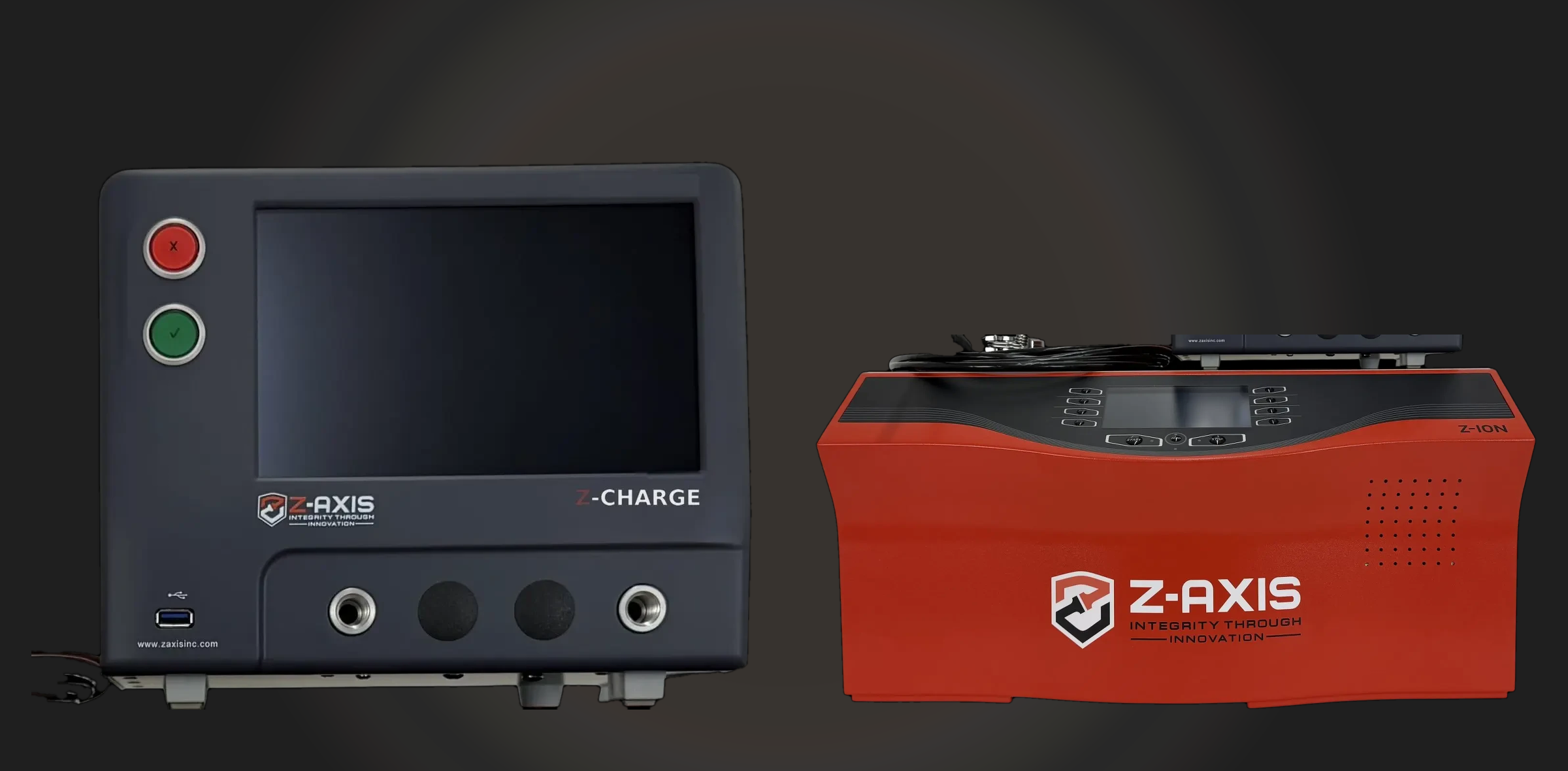
Accumulation leak testing measures a part’s total leak rate without a vacuum chamber. The part is charged with helium or 5%/95% hydrogen forming gas and enclosed in a simple chamber at ambient pressure.
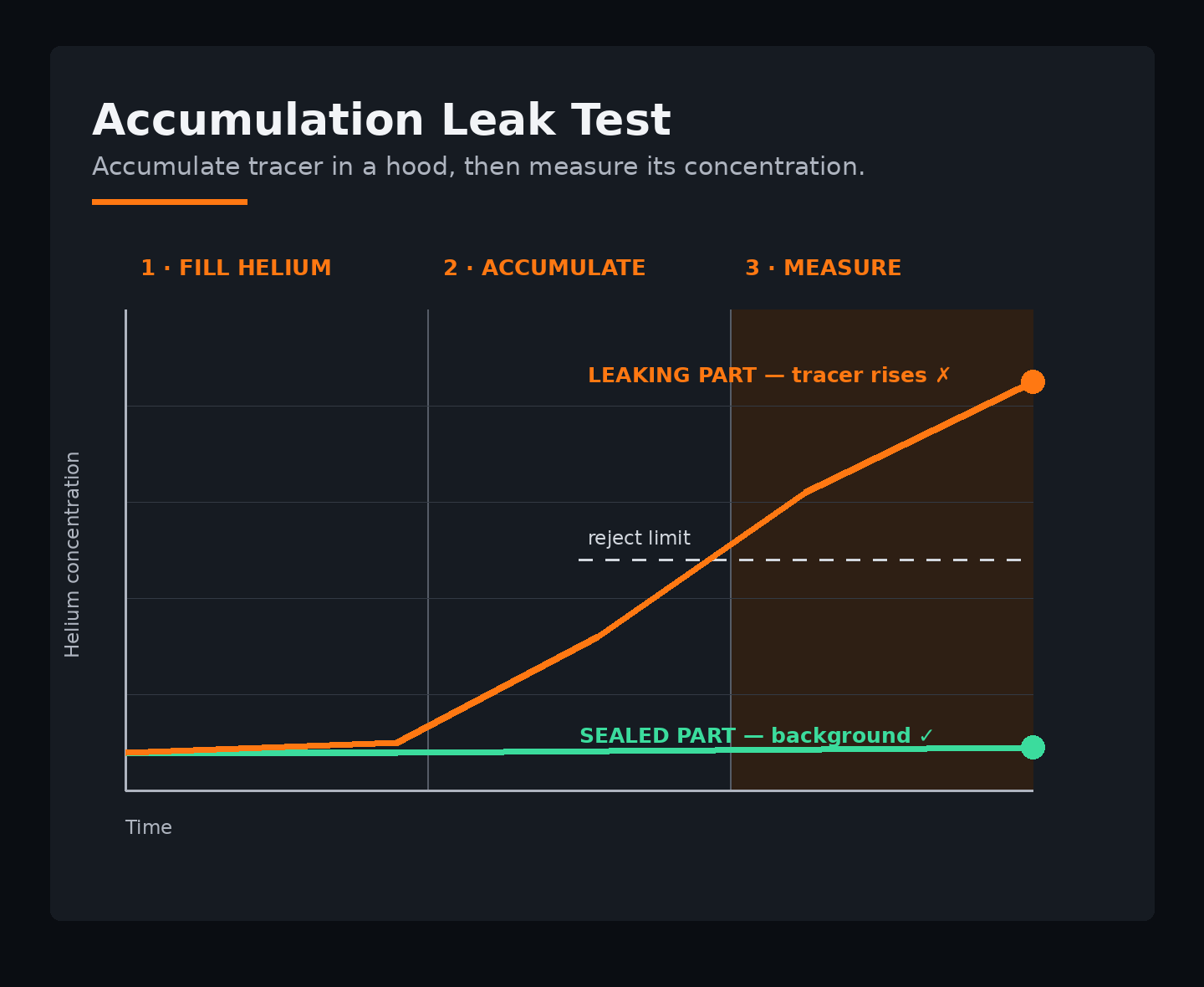
Escaping gas accumulates during a timed dwell while a fan keeps the chamber evenly mixed. A trace-gas sensor tracks concentration, and the rate of rise gives the total leak rate.
With dwell tuned to the specification, the method can reach the 10⁻⁵ to 10⁻⁶ mbar·l/s range. It is useful for large parts such as battery packs and tanks because the chamber only needs to fit the part, not hold a vacuum.
Request for QuoteAccumulation testing encloses a trace-gas-charged part in a simple ambient-pressure chamber and measures the concentration increase during a timed dwell.
It produces a quantitative whole-part result. A tight part leaves the chamber at background, while a leaking part creates a steady concentration rise whose slope is the leak rate.
Because the chamber collects gas escaping from the complete part, the concentration trend provides a whole-part leak-rate result rather than a measurement of a single seam.
Evacuate the part and fill it with helium or forming gas to the specified test pressure.
Enclose the part at ambient pressure and allow escaping trace gas to collect during the timed dwell.
Keep the chamber gas evenly mixed with a fan while the sensor tracks concentration.
Measure the concentration rise and compare its slope with the calibrated reject limit.
A background-level result passes; a concentration rise beyond the programmed limit fails, then the gas is vented or reclaimed.
Accumulation is a helium or forming-gas method. Z-Charge prepares the part by evacuating, purging, and charging it, while Z-Ion provides helium-detector capability for the sequence.
The chamber only needs to fit the part; it does not need to hold a vacuum. This makes the method practical for large assemblies while dwell time and chamber volume are tuned to the reject limit.
The sensor measures chamber concentration as the fan mixes the collected gas. A tight part remains at background; a leaking part produces the steady rise used to calculate the total leak rate.
Dwell time and chamber volume are selected for the required reject limit. Because the chamber remains at ambient pressure, it need not perform the vacuum-holding role of a hard-vacuum system.
Z-Charge and Z-Ion provide a coordinated helium workflow: Z-Charge evacuates, purges, and charges the part, then Z-Ion supplies detector capability. After the concentration result is judged, the trace gas can be vented or reclaimed.
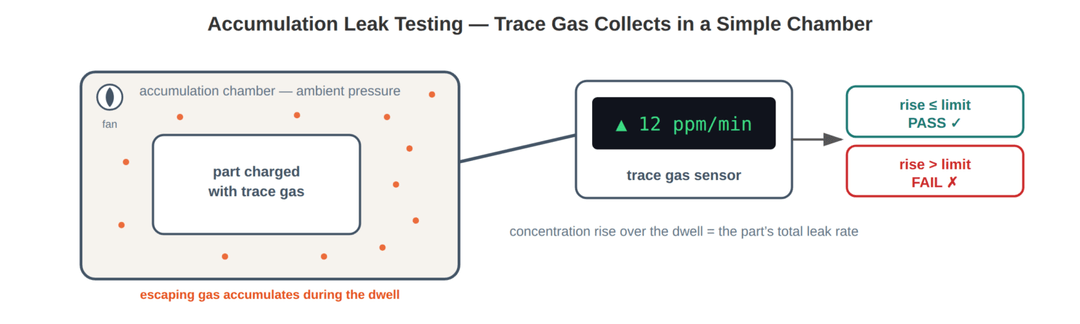
Accumulation is a trace-gas method, so the station pairs a charging system with a helium detector. Z-Charge prepares and charges the part; Z-Ion measures the accumulated helium.

Large battery packs and modules fit an ambient-pressure hood and need a quantified total leak rate.

Fuel tanks and filler systems are tested whole for total leak rate without a vacuum chamber.
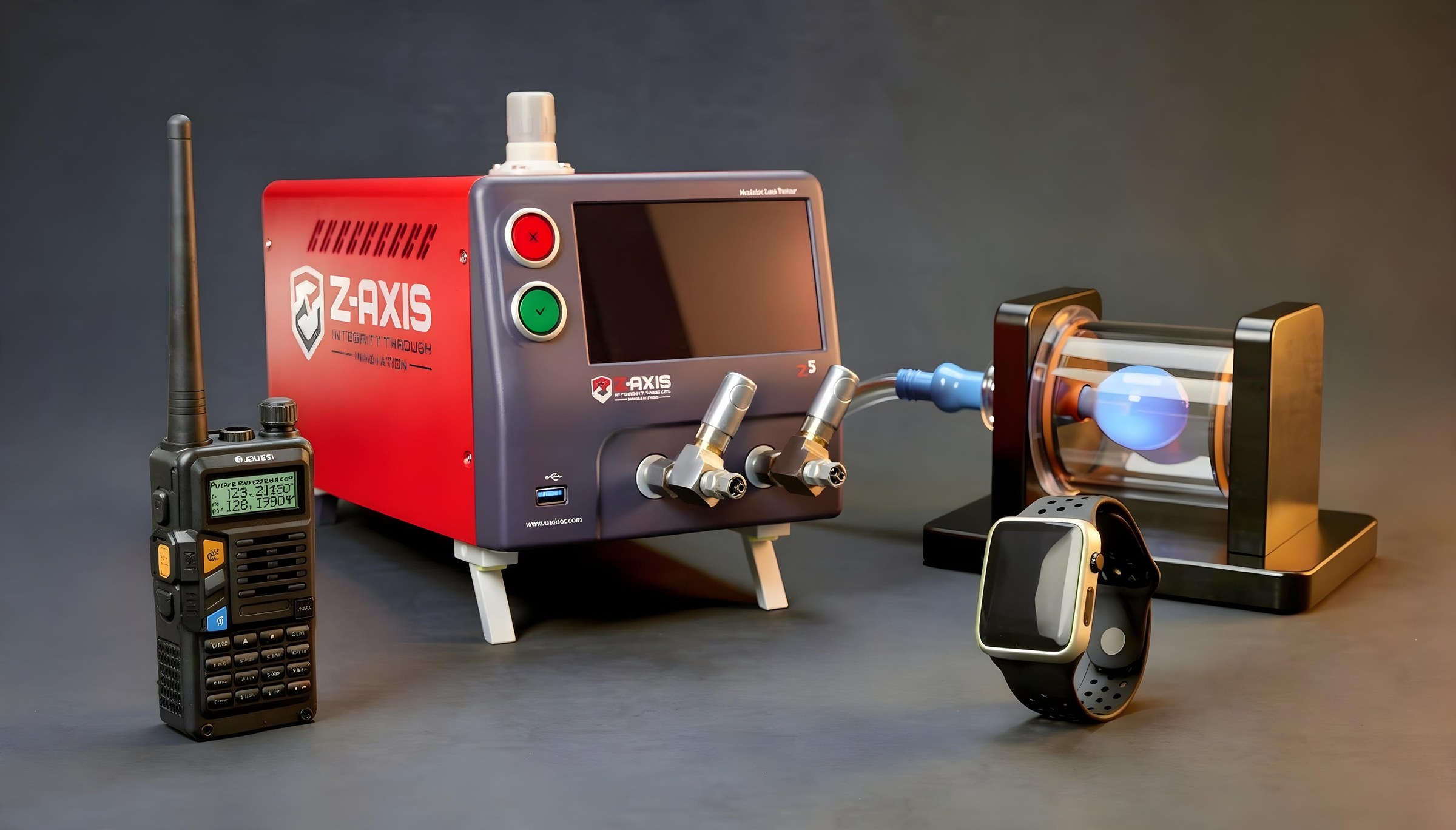
HVAC/R assemblies and heat exchangers are charged with trace gas and measured as one part.

Sealed medical and electronic enclosures get a whole-part result at ambient pressure.
| Method | Non-destructive | Needs an access port | Locates the leak | Typical use |
|---|---|---|---|---|
| Pressure decay | ✓ | ✓ | × | Sealed parts with a port |
| Vacuum decay | ✓ | ✓ | × | Parts and packaging |
| Mass flow | ✓ | ✓ | × | Flow-rate limits |
| Occlusion | ✓ | ✓ | × | Blocked passages |
| Burst | × | ✓ | × | Failure pressure |
| Pressure cracking | ✓ | ✓ | × | Valve opening pressure |
| Chamber | ✓ | × | × | Sealed parts, no port |
| Sniffing | ✓ | ✓ | ✓ | Finding the leak site |
| Hard vacuum | ✓ | ✓ | × | Hermetic, safety-critical parts |
| Accumulation | ✓ | ✓ | × | Large parts, total leak rate |
| Bombing | ✓ | × | × | Sealed parts, no fill port |
| Differential pressure | ✓ | ✓ | × | Large volumes, low leak rates |
| Trace gas | ✓ | ✓ | ✓ | Very small leaks, quantified |
It measures a part’s total leak rate from the rate of trace-gas concentration rise in the chamber.
The part can be charged with helium or 5%/95% hydrogen forming gas.
No. The part is enclosed in a simple chamber at ambient pressure.
The chamber only has to fit the part, not hold a vacuum, which suits large parts such as battery packs and tanks.
A fan keeps the chamber evenly mixed while a trace-gas sensor tracks concentration.
A tight part leaves the chamber at background.
A leaking part produces a steady concentration rise whose slope is the total leak rate.
With dwell tuned to the specification, the stated range is 10⁻⁵ to 10⁻⁶ mbar·l/s.

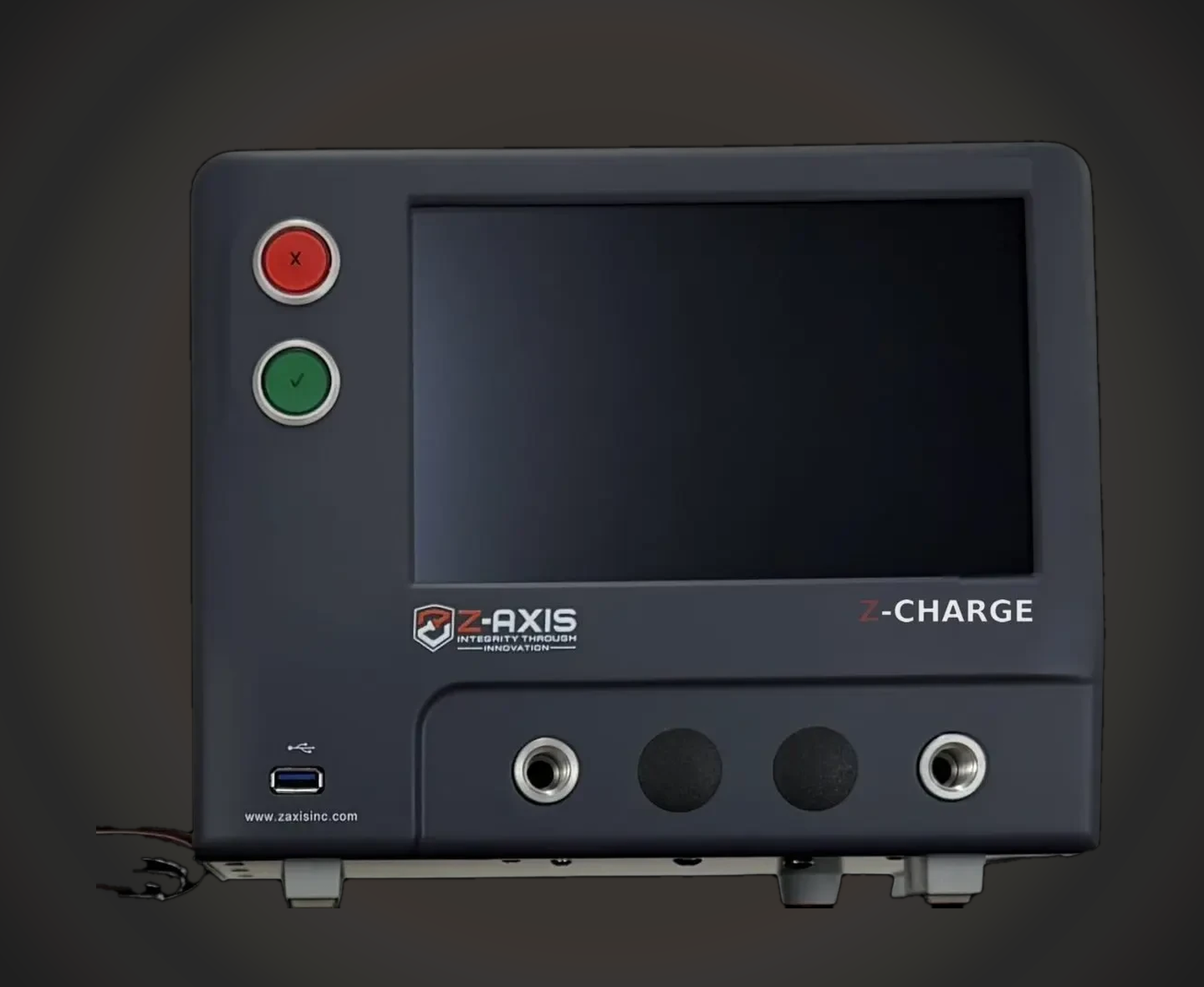 Z-Charge + Z-IonZ-Charge prepares and charges the part; Z-Ion measures helium detection in the coordinated test cell.
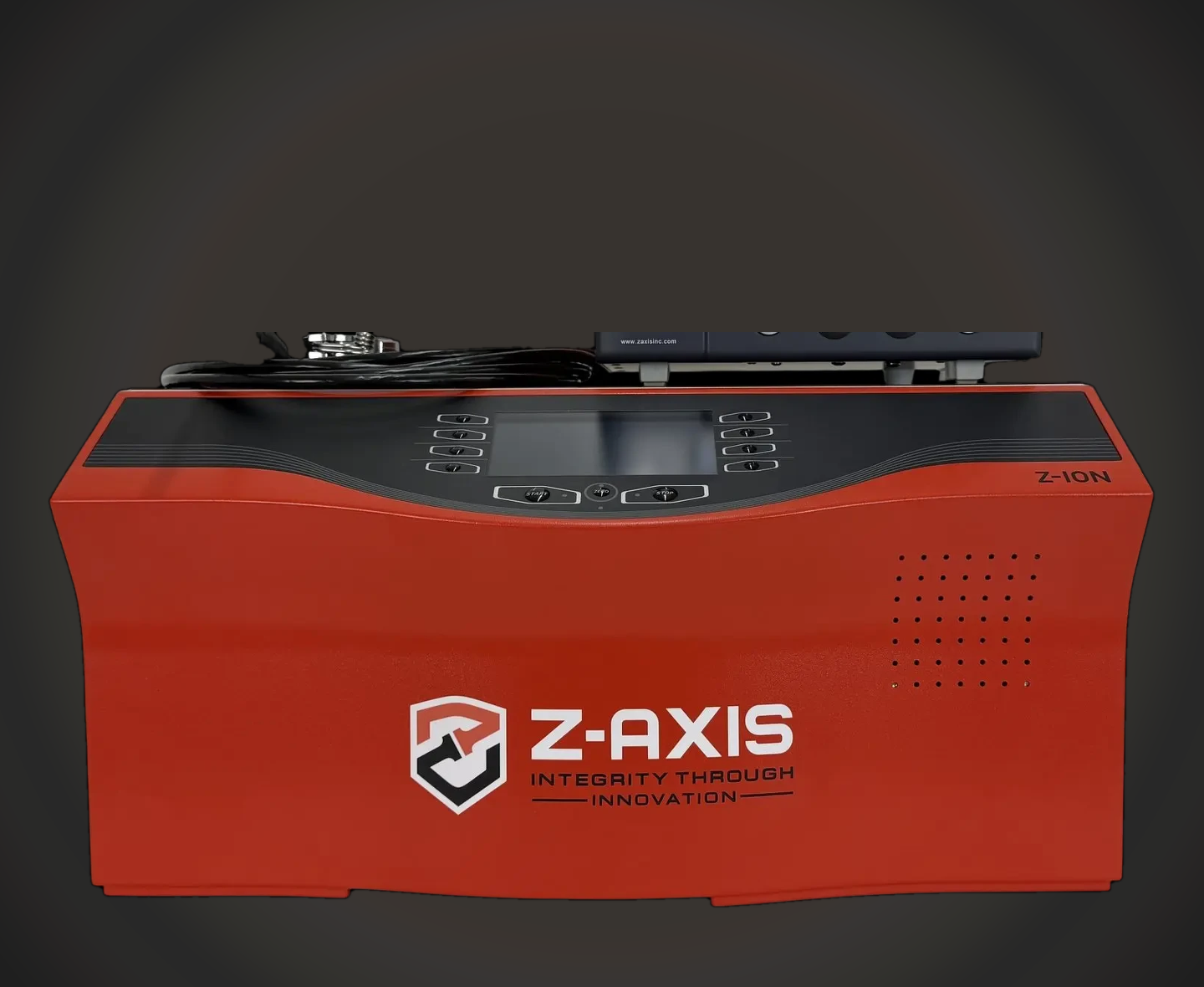 Z-IonHelium mass-spectrometer detector capability for the trace-gas measurement.
 Z8Modular platform for configured air-test and production workflows.

