
LOAD
Secure the product inside the sealed chamber designed around its volume.

Leak Test Method
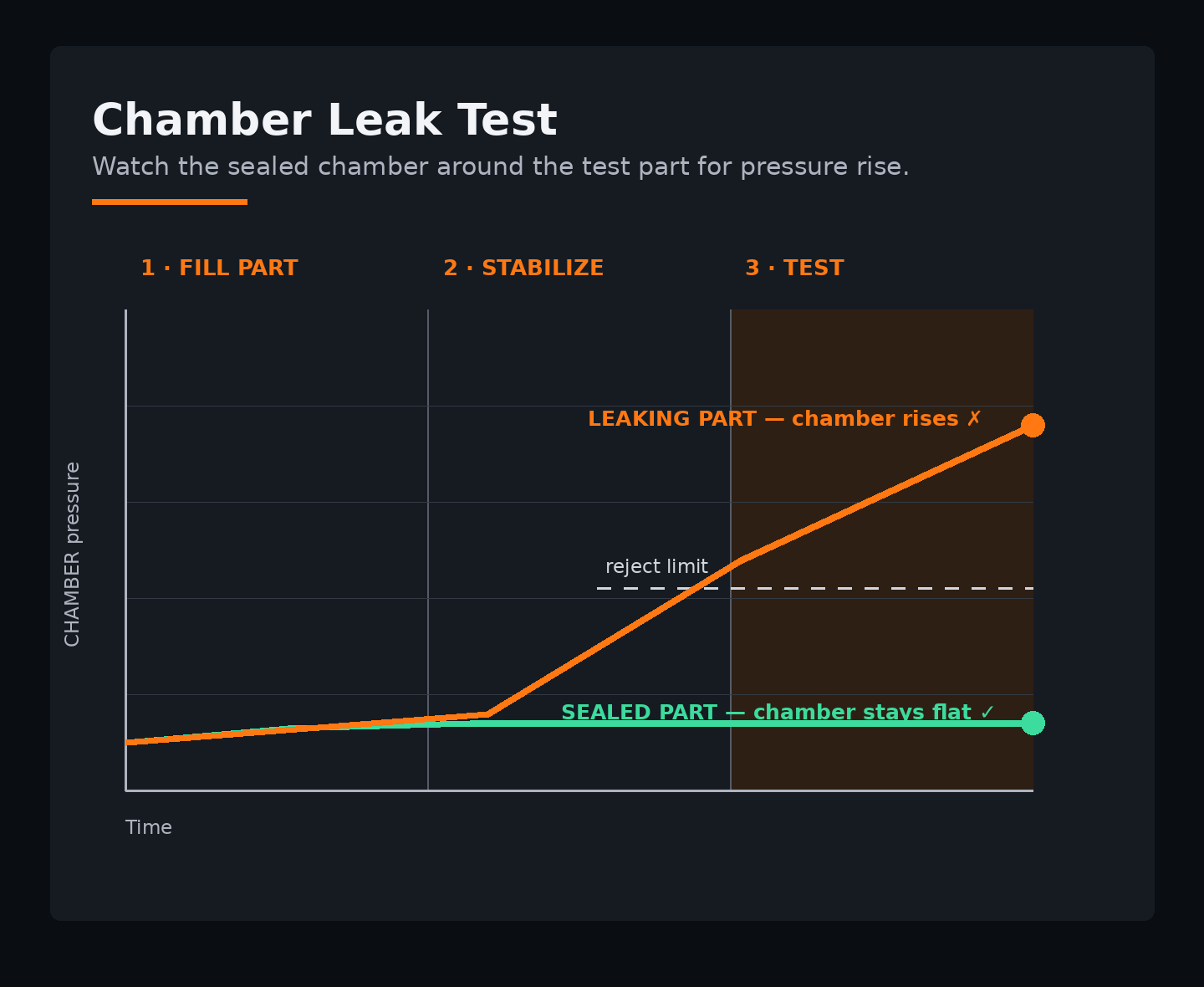
A chamber leak test surrounds a sealed product with measured regulated air, then evaluates the chamber pressure for a pass/fail result.
Chamber leak testing is used for sealed packaging and devices without accessible openings for a direct connection. The product is enclosed in a sealed chamber designed to closely match its volume.
The chamber is pressurized with a measured quantity of regulated air. Once it reaches the specified pressure, the test evaluates product integrity through the chamber pressure response.
Stable chamber pressure indicates a passing part; a pressure drop indicates a leak. Matching chamber and product volumes closely supports a fast, precise test.
Request for QuoteChamber testing measures the space around a product instead of connecting directly to it. It is a practical option for sealed items that cannot be connected for direct testing.
The custom chamber holds the product, receives regulated air to a specified pressure, and maintains that condition during the measurement period. Its pressure response produces a pass or fail result.
Because the chamber becomes the test volume, the method suits packaging and devices with no accessible opening. The pressure response in that surrounding space indicates whether the product maintained its seal.
Secure the product inside the sealed chamber designed around its volume.
Pressurize the chamber with a measured quantity of regulated air to the specified pressure.
Allow the chamber pressure to reach the predetermined test condition.
Maintain and evaluate chamber pressure to assess the sealed product’s integrity.
Stable pressure indicates a pass; a pressure drop indicates a leak and a failed part.
Chamber design is part of the test. Closely matching chamber and product volumes supports a fast, precise measurement.
The chamber is filled with a measured quantity of regulated air to the specified pressure. During the test, stable pressure indicates product integrity, while a drop indicates a leak.
Because the method evaluates the sealed space around the product, it suits products that cannot be connected through a traditional access opening and supports repeatable automated testing on manufacturing lines.
The chamber is designed around the product volume, and the measured fill brings it to the required pressure before evaluation.
For production, the result is straightforward: maintain chamber pressure and the part passes; observe a pressure drop and the part fails. The method supports sealed medical, electronics, automotive, and consumer products without modifying them for a direct connection.
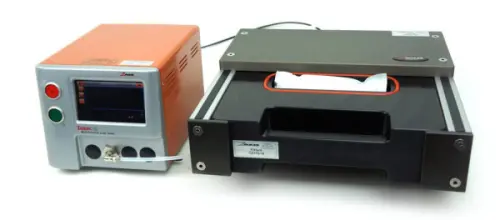
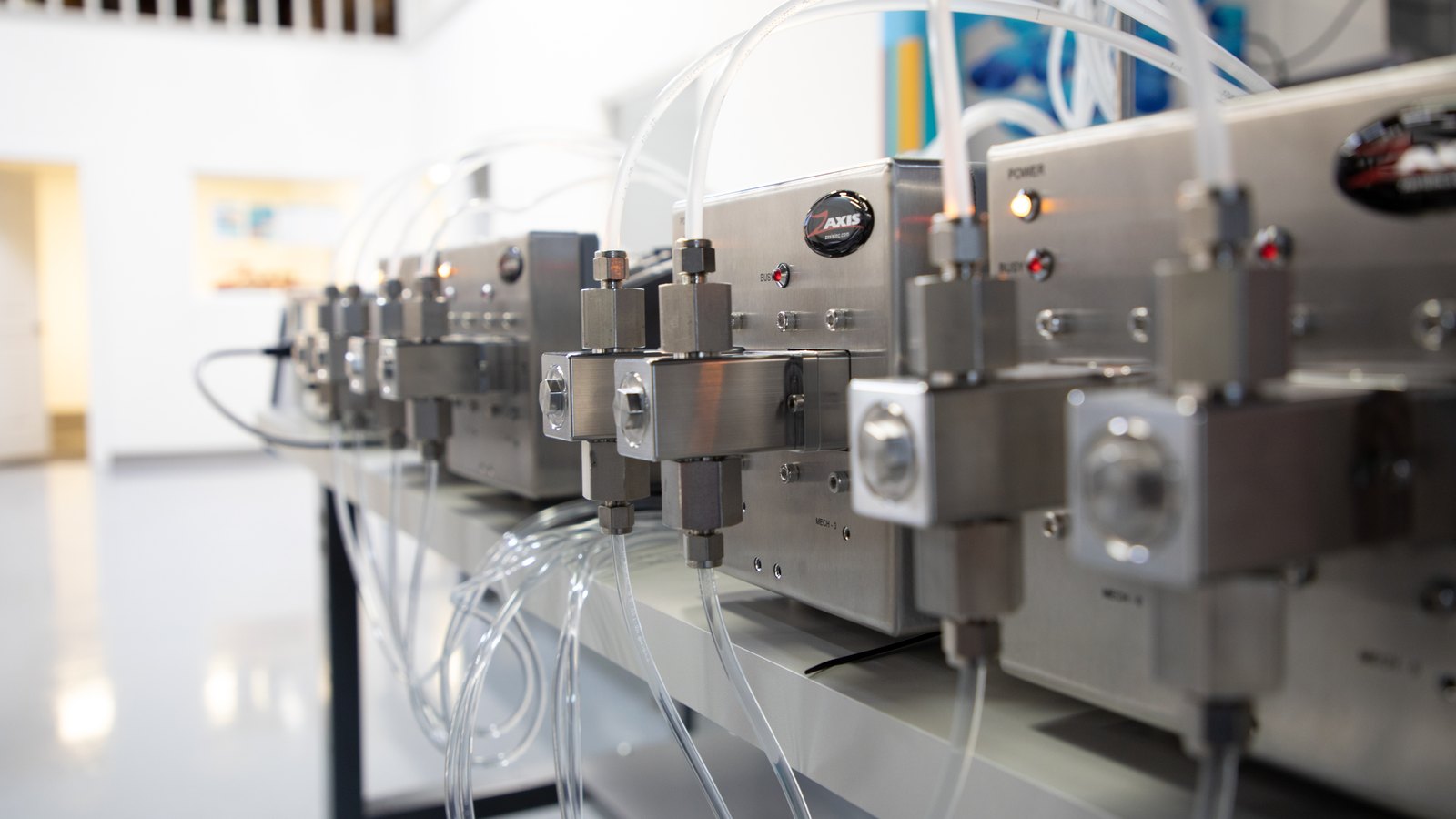
Chamber testing runs on the same Zaxis pressure-decay platform; the tester measures the chamber instead of the part. These models are commonly paired with a chamber fixture.
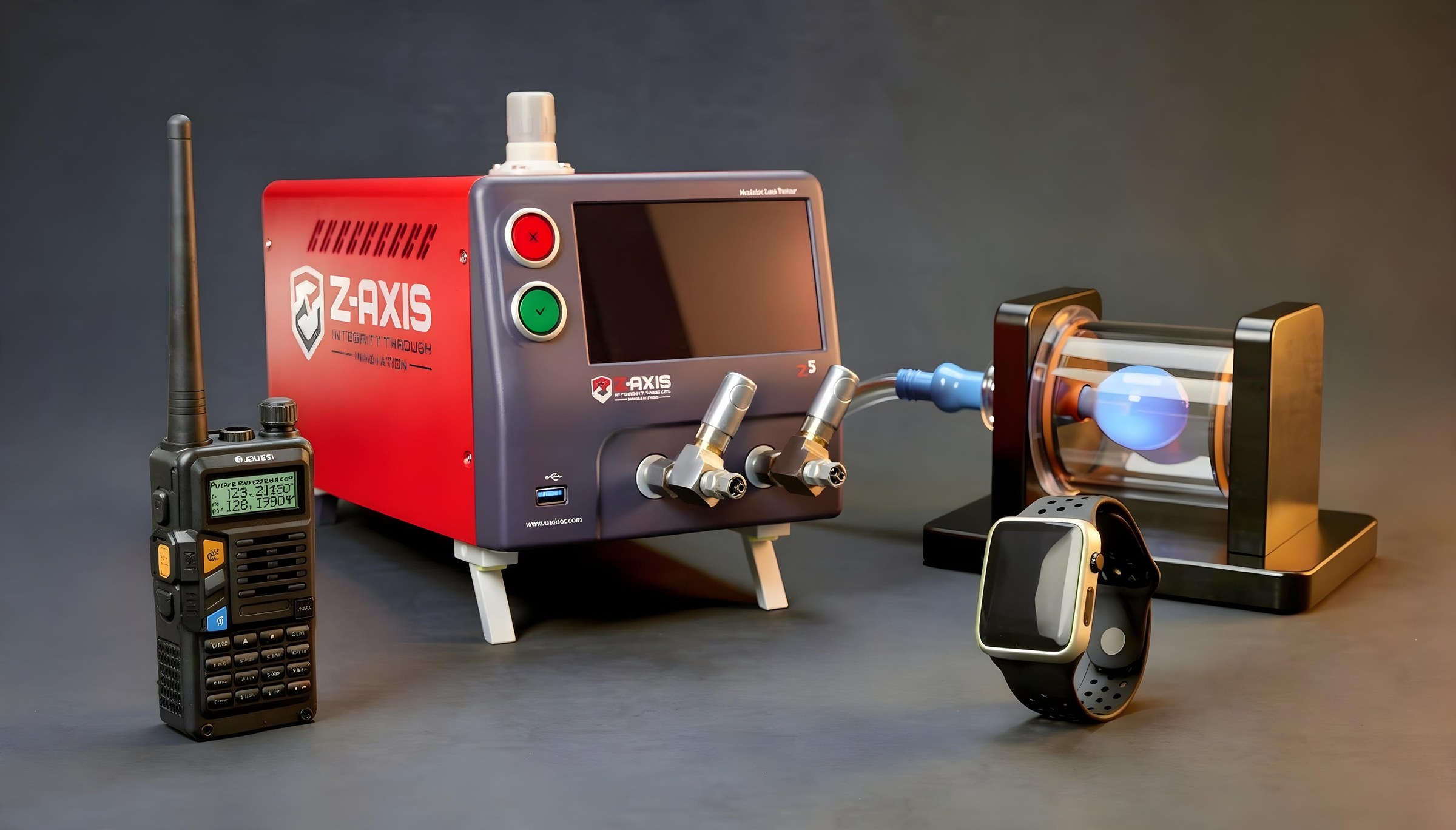
Sealed implantable devices with no port are tested inside a chamber.

Sealed electronic enclosures are checked for ingress without opening them.

Automotive sensors and indicators are tested as finished sealed units.
Radios, cell phones, watches and consumer goods are verified after final assembly.
| Method | Non-destructive | Needs an access port | Locates the leak | Typical use |
|---|---|---|---|---|
| Pressure decay | ✓ | ✓ | × | Sealed parts with a port |
| Vacuum decay | ✓ | ✓ | × | Parts and packaging |
| Mass flow | ✓ | ✓ | × | Flow-rate limits |
| Occlusion | ✓ | ✓ | × | Blocked passages |
| Burst | × | ✓ | × | Failure pressure |
| Pressure cracking | ✓ | ✓ | × | Valve opening pressure |
| Chamber | ✓ | × | × | Sealed parts, no port |
| Sniffing | ✓ | ✓ | ✓ | Finding the leak site |
| Hard vacuum | ✓ | ✓ | × | Hermetic, safety-critical parts |
| Accumulation | ✓ | ✓ | × | Large parts, total leak rate |
| Bombing | ✓ | × | × | Sealed parts, no fill port |
| Differential pressure | ✓ | ✓ | × | Large volumes, low leak rates |
| Trace gas | ✓ | ✓ | ✓ | Very small leaks, quantified |
It encloses a sealed product in a chamber, pressurizes the chamber with regulated air, and evaluates the pressure response.
It is used for sealed packaging and devices that lack accessible openings for traditional direct testing.
A chamber that closely matches the product volume supports a fast, precise test.
A pressure drop indicates a leak and marks the product as failed.
Stable pressure indicates that the product passes the integrity test.
Implantable devices, electronic enclosures, automotive sensors, radios, cell phones, watches and consumer goods are typical chamber-test parts.
Yes. Chamber testing is a non-destructive method.
No. Chamber testing does not require an access port.

For pharmaceutical and medical package applications, see Pharmaceutical & Medical Packaging Leak Testing for chamber testing and CCI context.
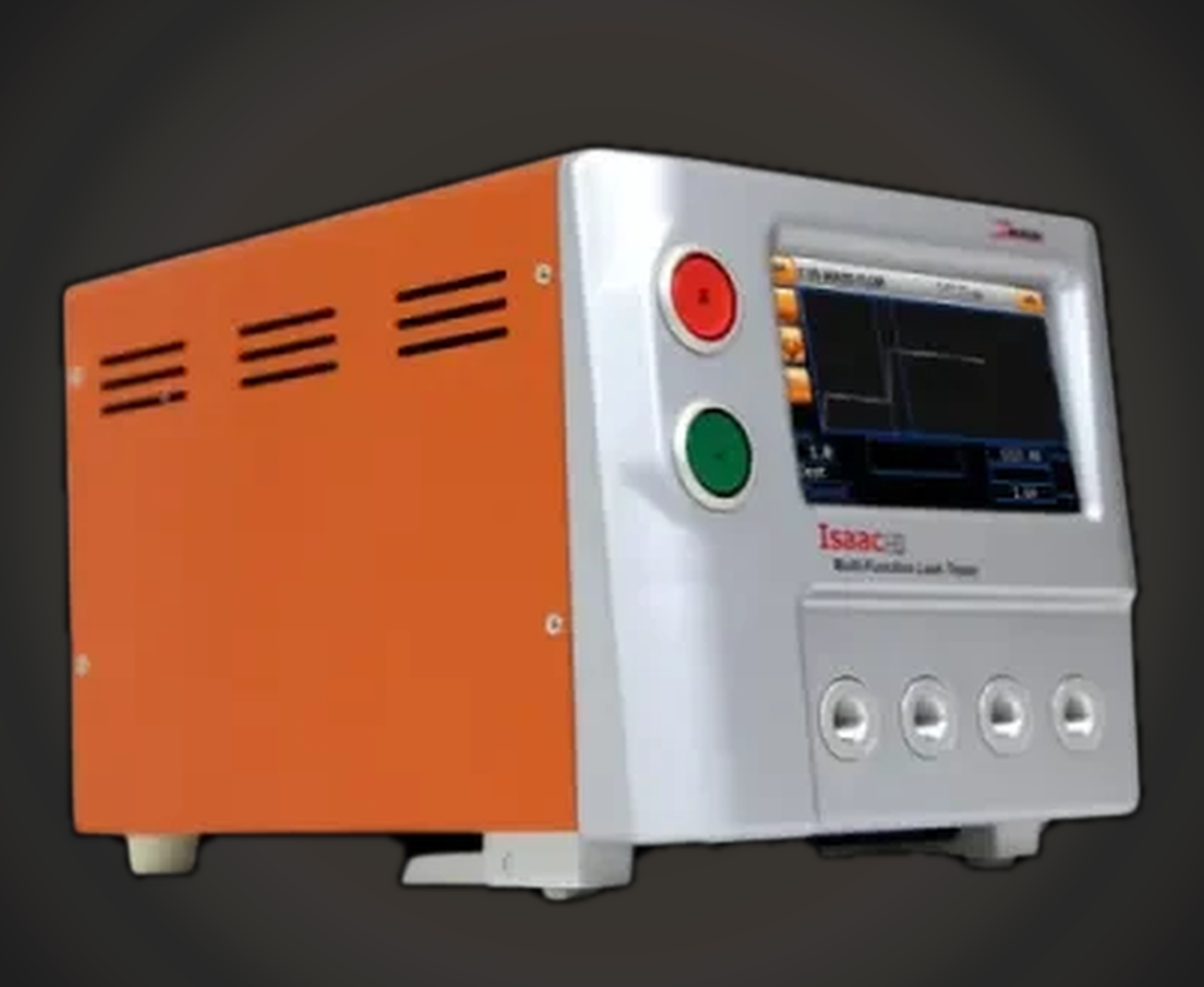 Isaac HDSingle-channel multi-tester configuration for chamber testing.
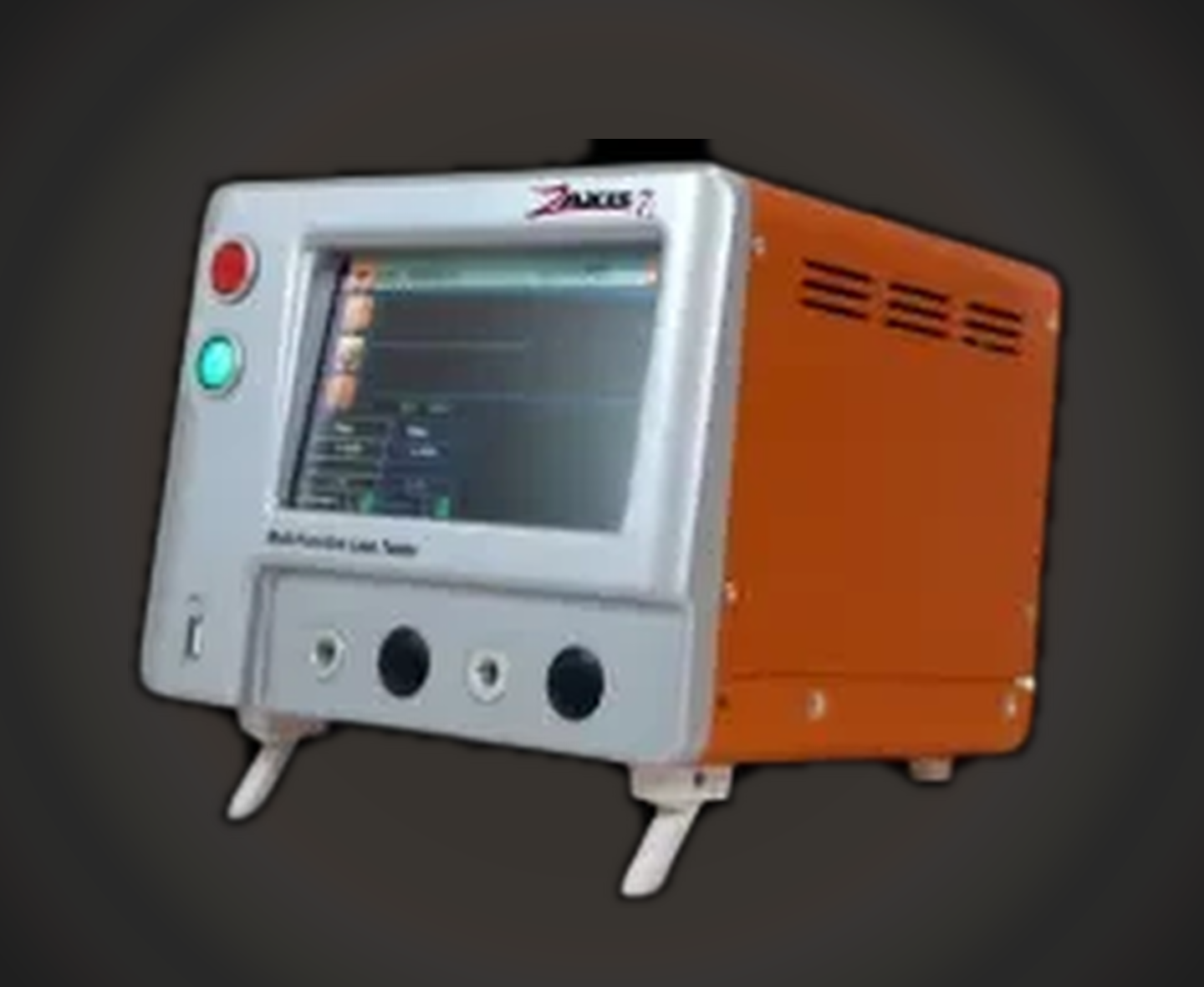 Zaxis 7iBenchtop multi-tester capacity for chamber-test programs.
 Z8Modular platform that supports chamber testing.

