What is battery and EV leak testing?
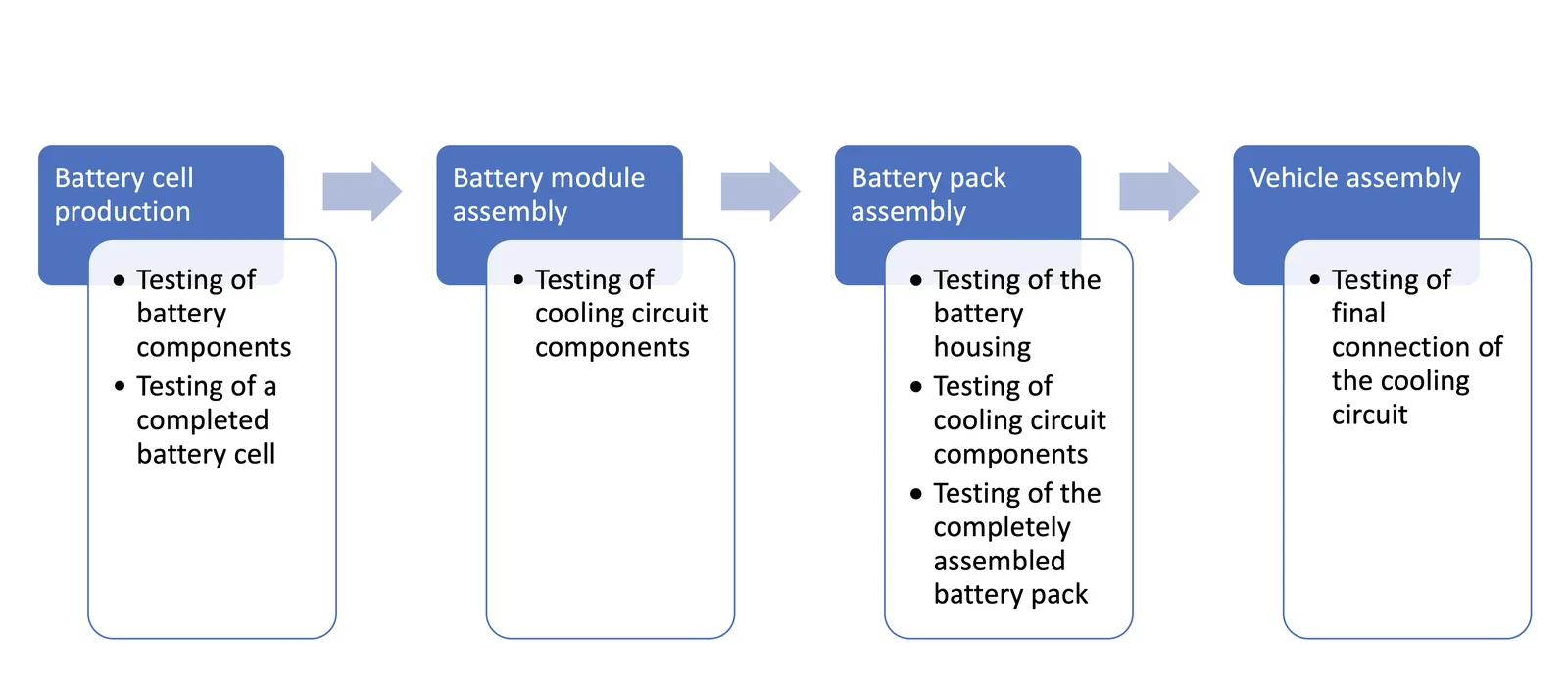
Battery and EV leak testing evaluates sealed battery pack enclosures and trays, cooling plates and coolant loops, cell and module housings, connectors and sensors, charging components, and high-voltage electronics housings during manufacturing.
Which leak-test method is used for a battery pack enclosure?
Pressure decay or vacuum decay can be used for a sealed battery pack enclosure. For a large internal volume, stabilization time and fixture volume are important; mass flow can also be considered where a flow-based approach suits the component.
How do SAE J3277/1 and IPX7 relate to battery production testing?
SAE J3277/1 is a recommended practice for liquid leak-tightness of propulsion battery packs and describes nondestructive in-line production testing correlated to IPX7-class ingress. IEC 60529 provides IP-code context. Your validation team sets the acceptance criteria; Zaxis helps correlate production air or trace-gas tests to those criteria. Standards define requirements for the product under test, not certification of the test equipment.
When is trace-gas leak testing considered for an EV component?
Trace gas can be considered when the required leak target is lower than the air-based method can support or when a measurable tracer and the selected detection method fit the application. Zaxis offers helium, hydrogen and argon trace-gas guidance plus Z-Charge and Z-Ion systems.
Why does a battery leak-test fixture matter?
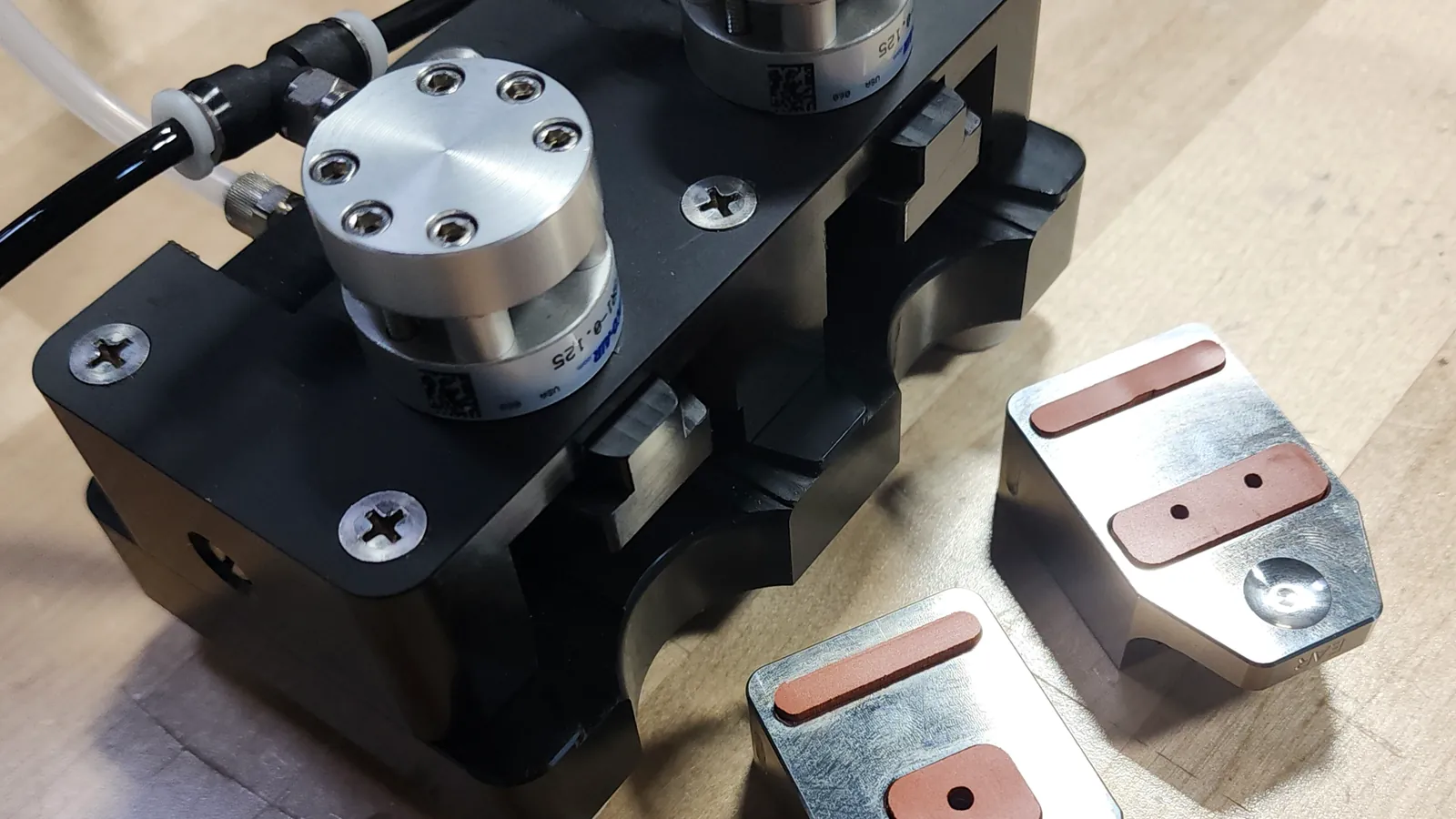
A fixture seals the part, controls added test volume and provides repeatable connections. For battery enclosures or multi-port parts, it can close multiple openings and support a defined automated sequence.
Can Zaxis connect a battery leak-test station to automation?
Compatible Zaxis platforms provide connectivity options including 24 VDC I/O, Ethernet TCP/IP, EtherNet/IP, RS232, RS485 and USB. The required interface and traceability approach should be confirmed for the specific platform and line.


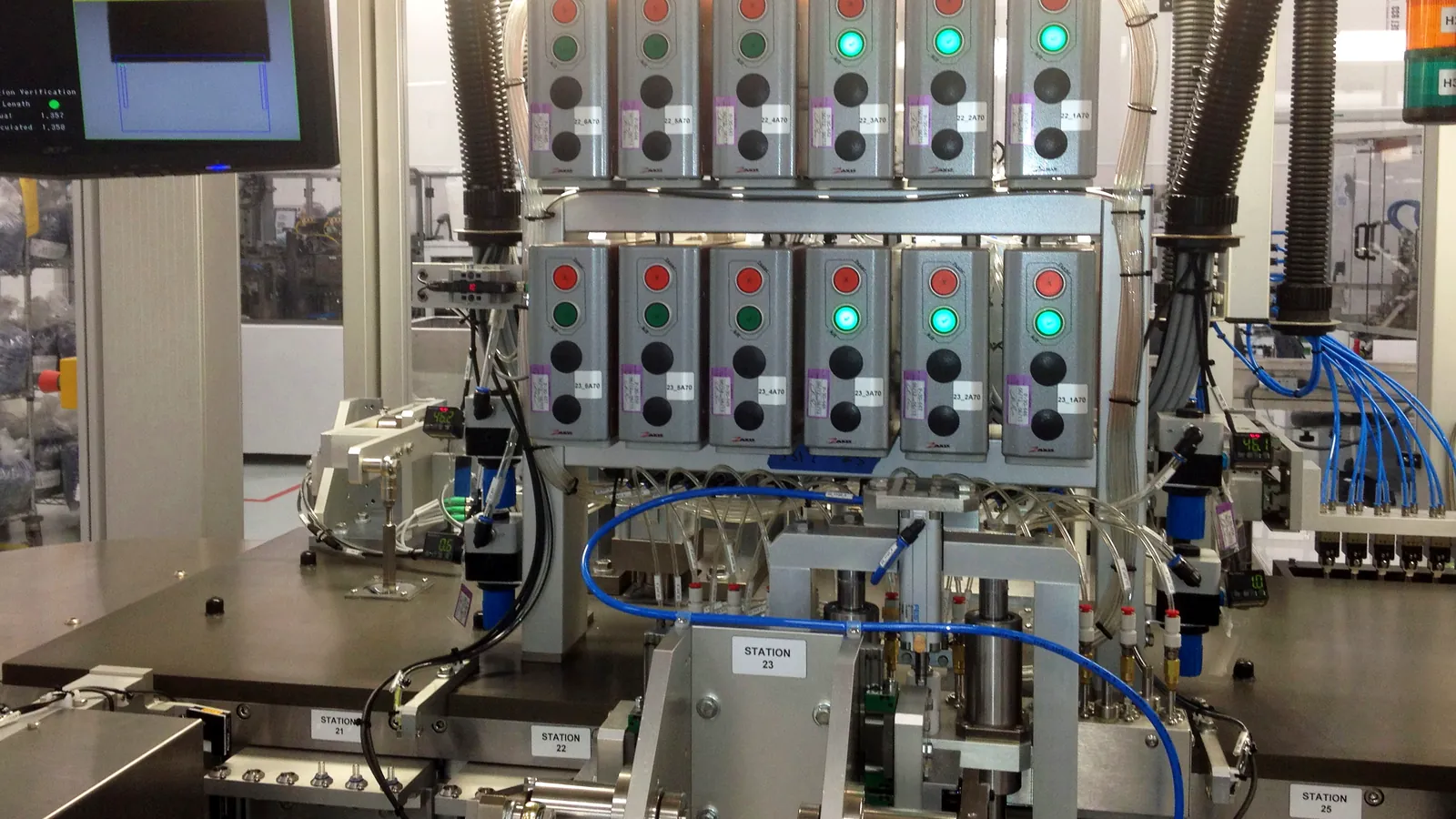
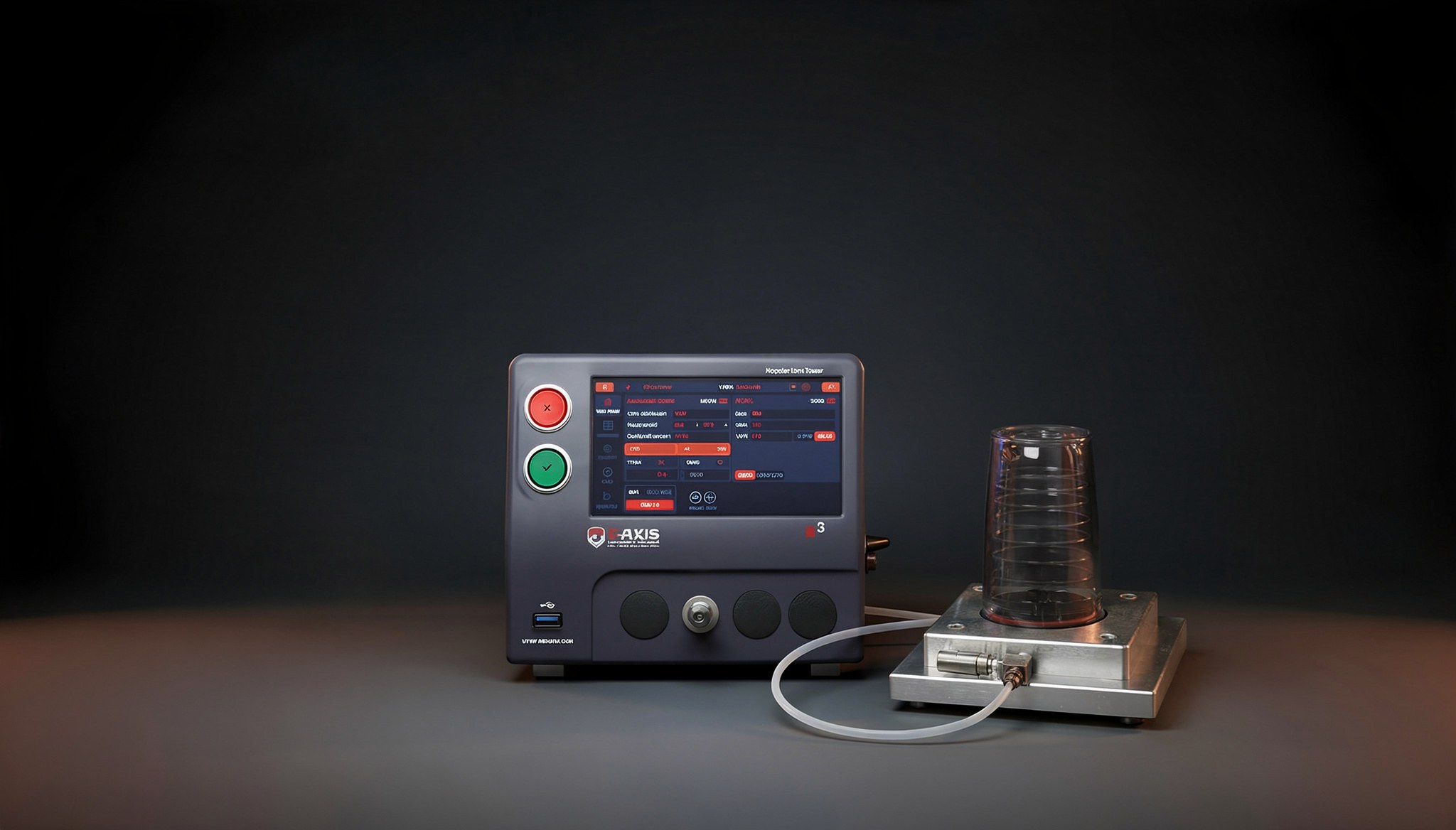
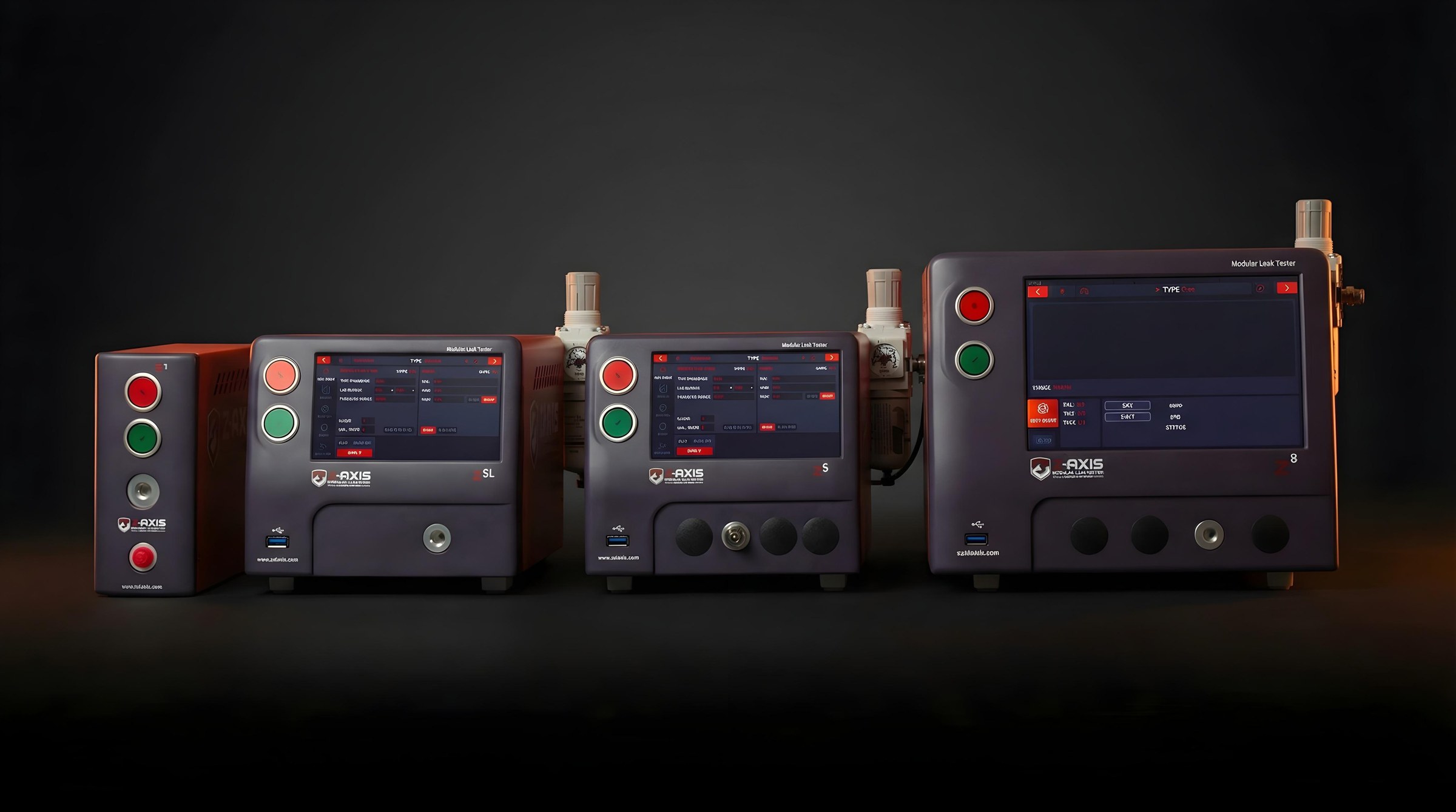
 Z8Modular air leak tester with up to four test ports for sequential or concurrent production testing.
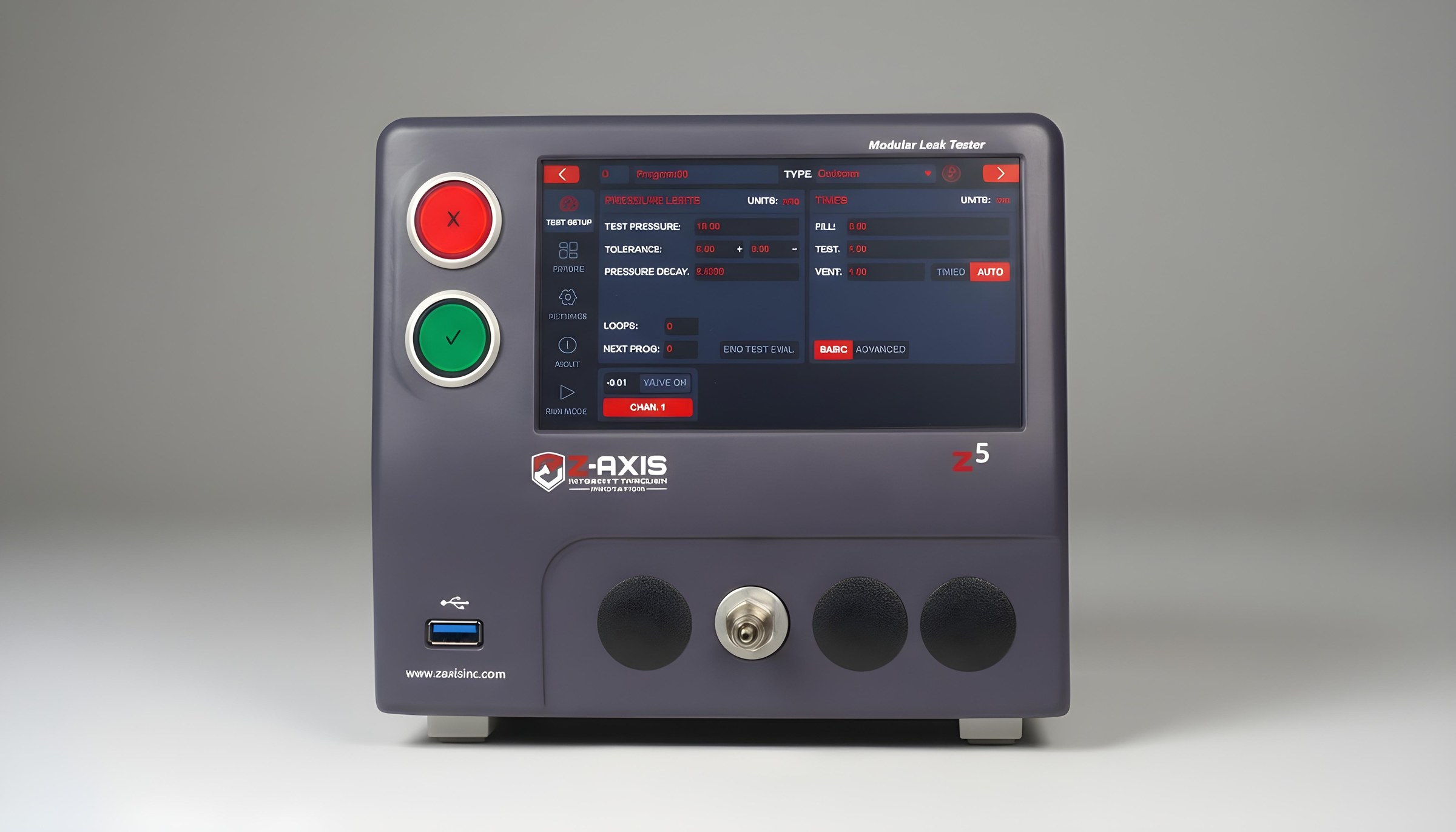
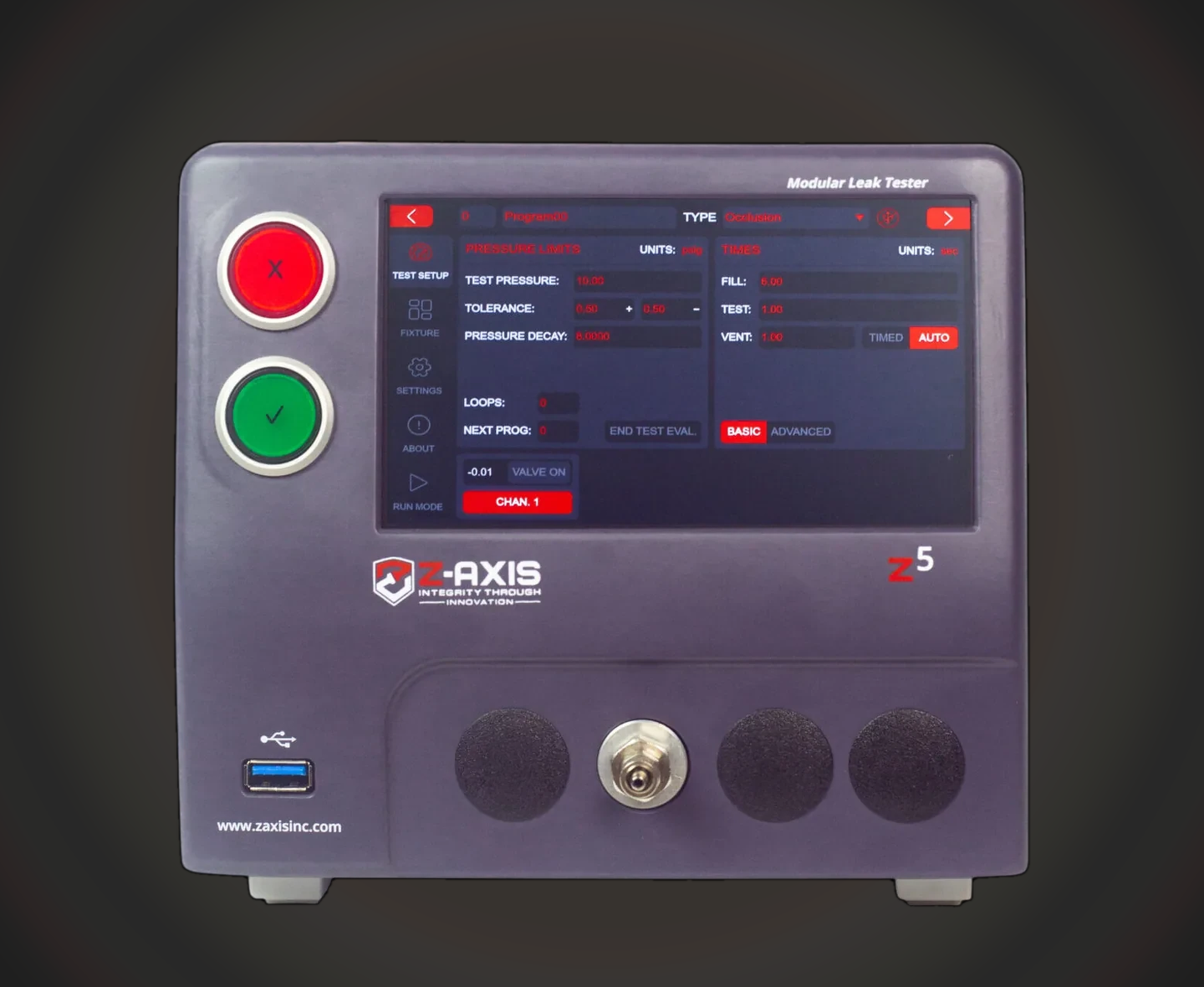 Z5Compact multi-channel air tester for configured factory stations.
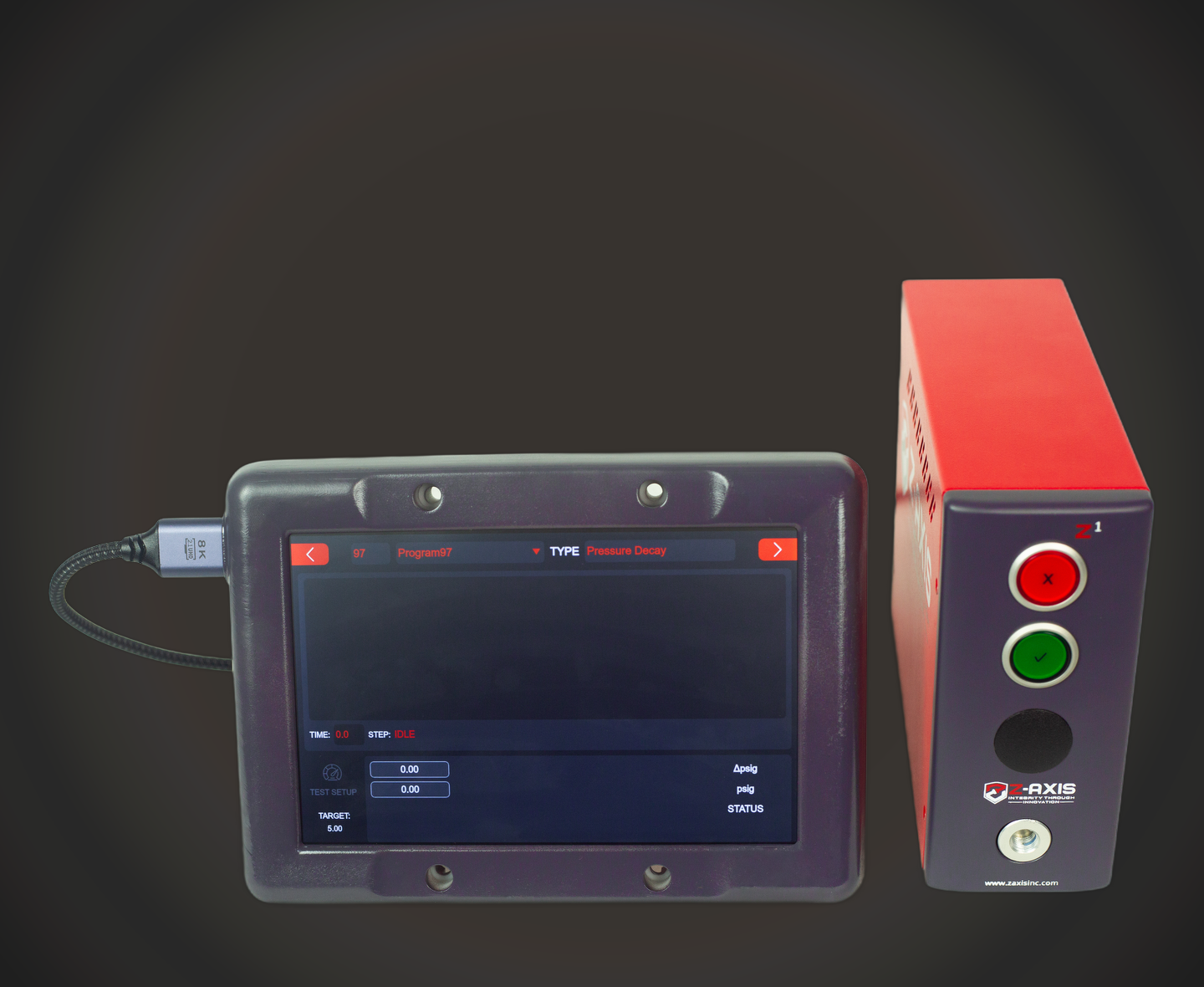
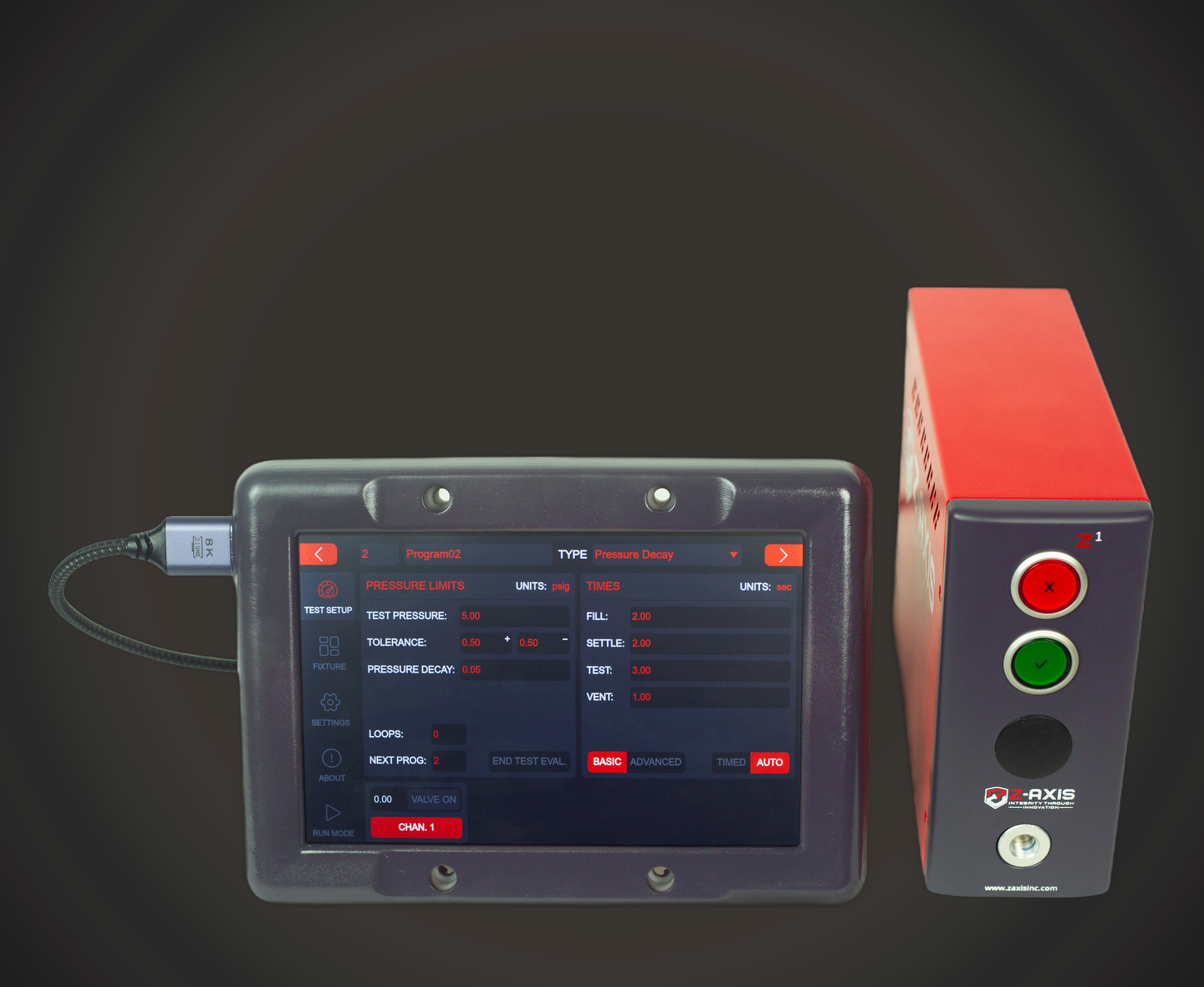 Z1Single-channel air tester built for machine integration and cascading test cells.
 Z-Charge + Z-IonCoordinated part preparation and helium leak detection in one trace-gas test cell.