Menu

Trace Gas Leak Testing

What is Trace Gas Leak Testing?

Trace gas leak testing (also called tracer gas leak testing) fills a sealed part with a gas that a detection instrument can positively identify — helium, hydrogen forming gas, argon, or even clean dry air — and then measures how much of that gas escapes. Instead of inferring a leak from a pressure change, the instrument detects the escaping molecules themselves.

That difference matters. Because the signal is the gas itself, trace gas methods can find leaks orders of magnitude smaller than pressure-based test types, pinpoint exactly where a part leaks, and produce a quantitative, recordable leak rate for every part — largely immune to the temperature drift, part flexing, and volume effects that limit pressure decay testing.

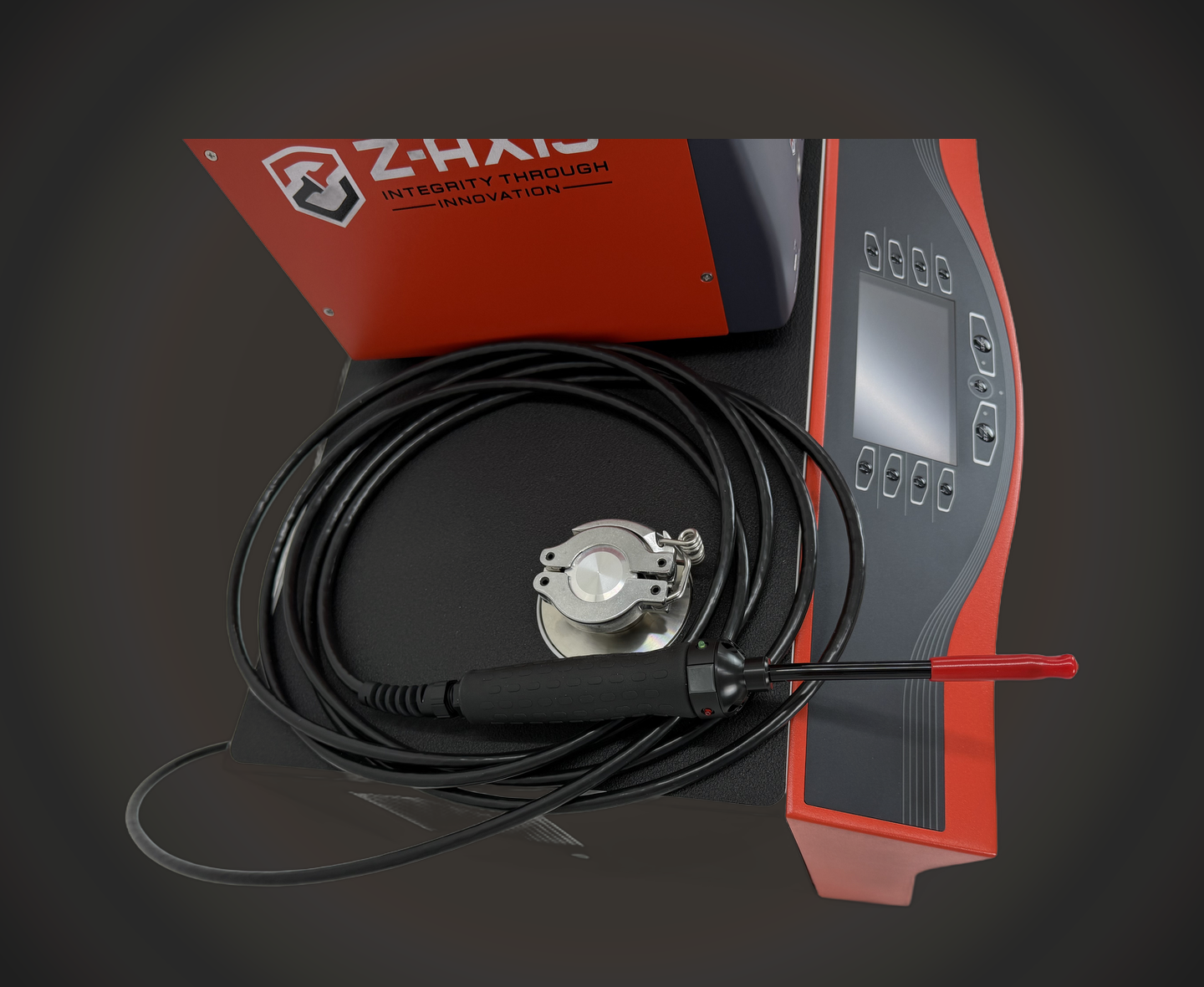
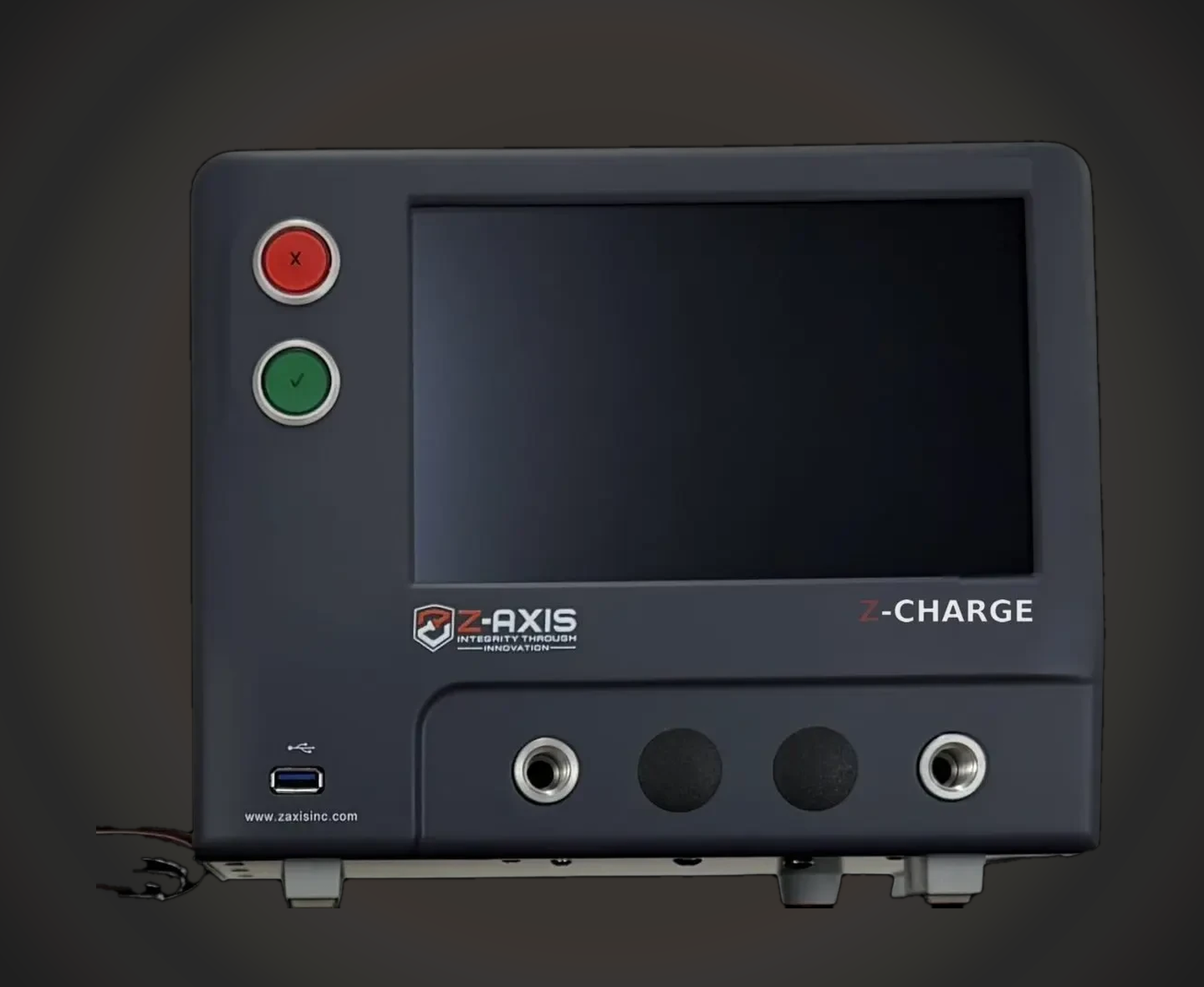
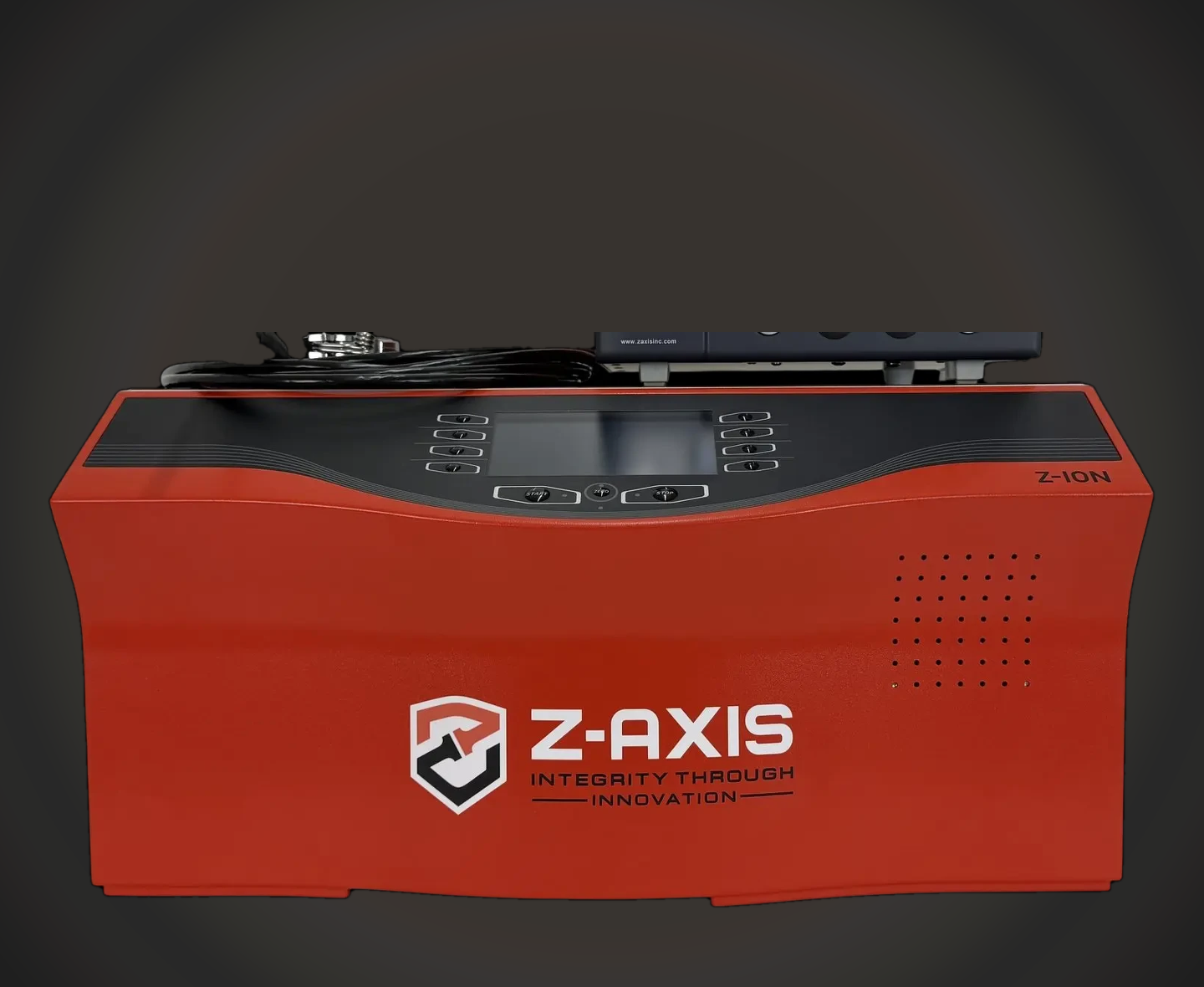
Zaxis helium leak test system — Z-Charge controller with Z-Ion helium leak detector
Click image to enlarge
The trace gas leak test sequence: connect, evacuate, charge, detect, pass/fail

Which Trace Gas Should You Use?

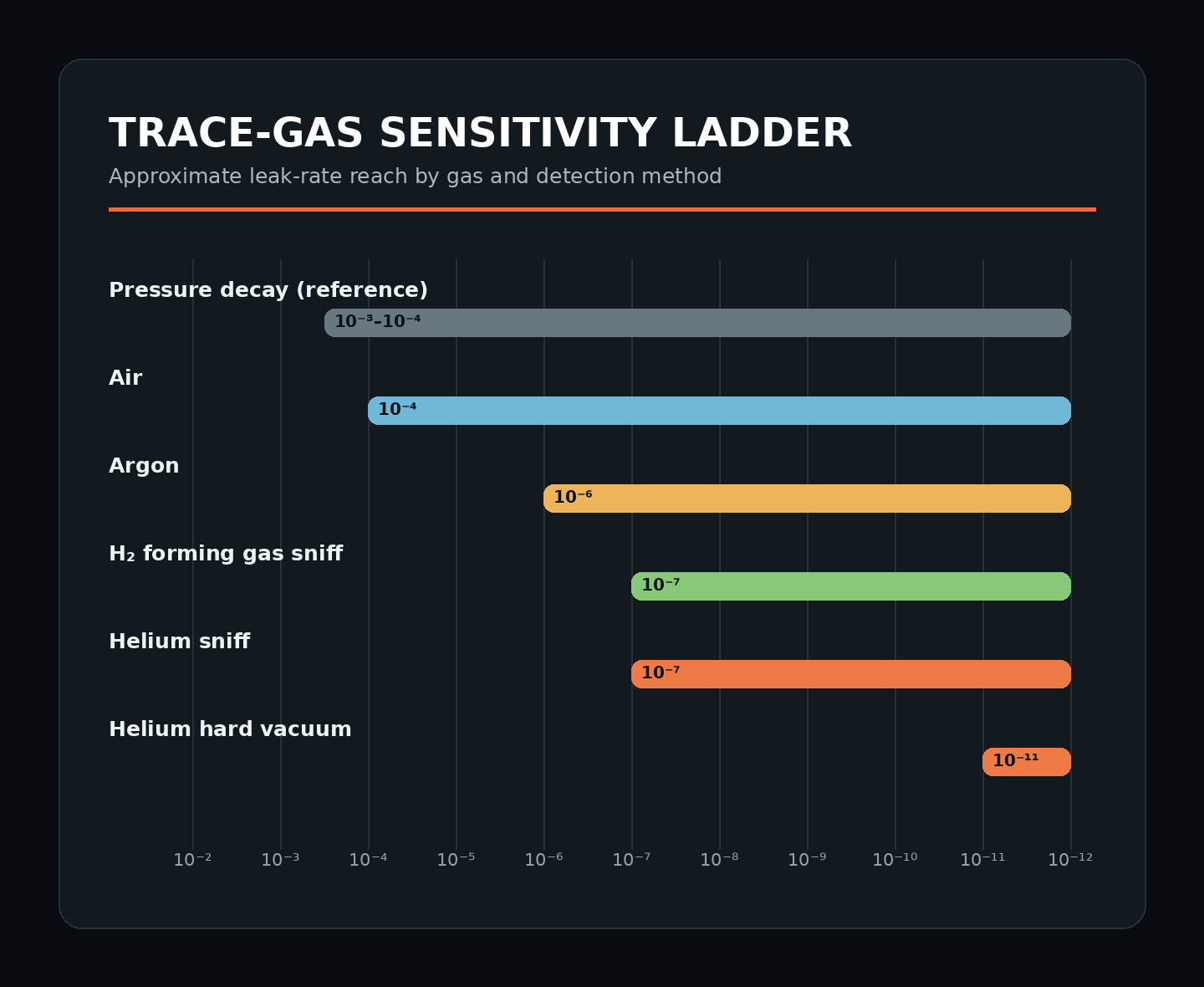
Helium — the industry benchmark. Helium is inert, non-toxic, non-flammable, and present in the atmosphere at only about 5 ppm, so background interference is minimal. Its small molecule slips through the tiniest leak paths. Helium hard vacuum systems resolve leaks into the 10-9 to 10-11 mbar·l/s range — the most sensitive production leak test available — and helium sniffing typically reaches about 10-7 mbar·l/s. The trade-off is cost: helium pricing and availability are volatile, so high-volume users add gas recovery or step down to a lower-cost gas where the spec allows.

Hydrogen (forming gas) — the high-throughput workhorse. Forming gas — 5% hydrogen in 95% nitrogen — is non-flammable, inexpensive, and widely available. Hydrogen is the smallest, fastest-diffusing molecule of all: it escapes leaks readily and then disperses instead of lingering around the test station, keeping background low and readings stable. Sniff detection typically reaches about 10-7 mbar·l/s at a fraction of helium’s operating cost.

Argon — the no-supply-risk alternative. Argon makes up nearly 1% of the atmosphere and is produced in bulk as a byproduct of air separation, so it is inexpensive and never supply-constrained. Modern argon-capable detectors reach roughly 10-6 mbar·l/s — sensitive enough for a large share of industrial leak specs, without a helium bill.

Air — as economical as pressure testing, as precise as tracer gas. The newest generation of trace gas instruments can use clean, dry compressed air — the same air already plumbed to your line — as the tracer. Air-based detection reaches roughly 10-4 mbar·l/s, comparable to a good pressure decay test, but with shorter cycle times, better repeatability, and far less sensitivity to temperature drift. No cylinders, no gas logistics, no supply risk — an attractive drop-in upgrade where pressure decay struggles with large, flexible, or temperature-sensitive parts.

Here’s how it works:

  1. Connect — the part is sealed to the test circuit with a fixture or trace-gas connector.
  2. Evacuate / purge — air and residual tracer background are removed from the part so the measurement starts clean.
  3. Charge — the part is filled with the trace gas to its specified test pressure.
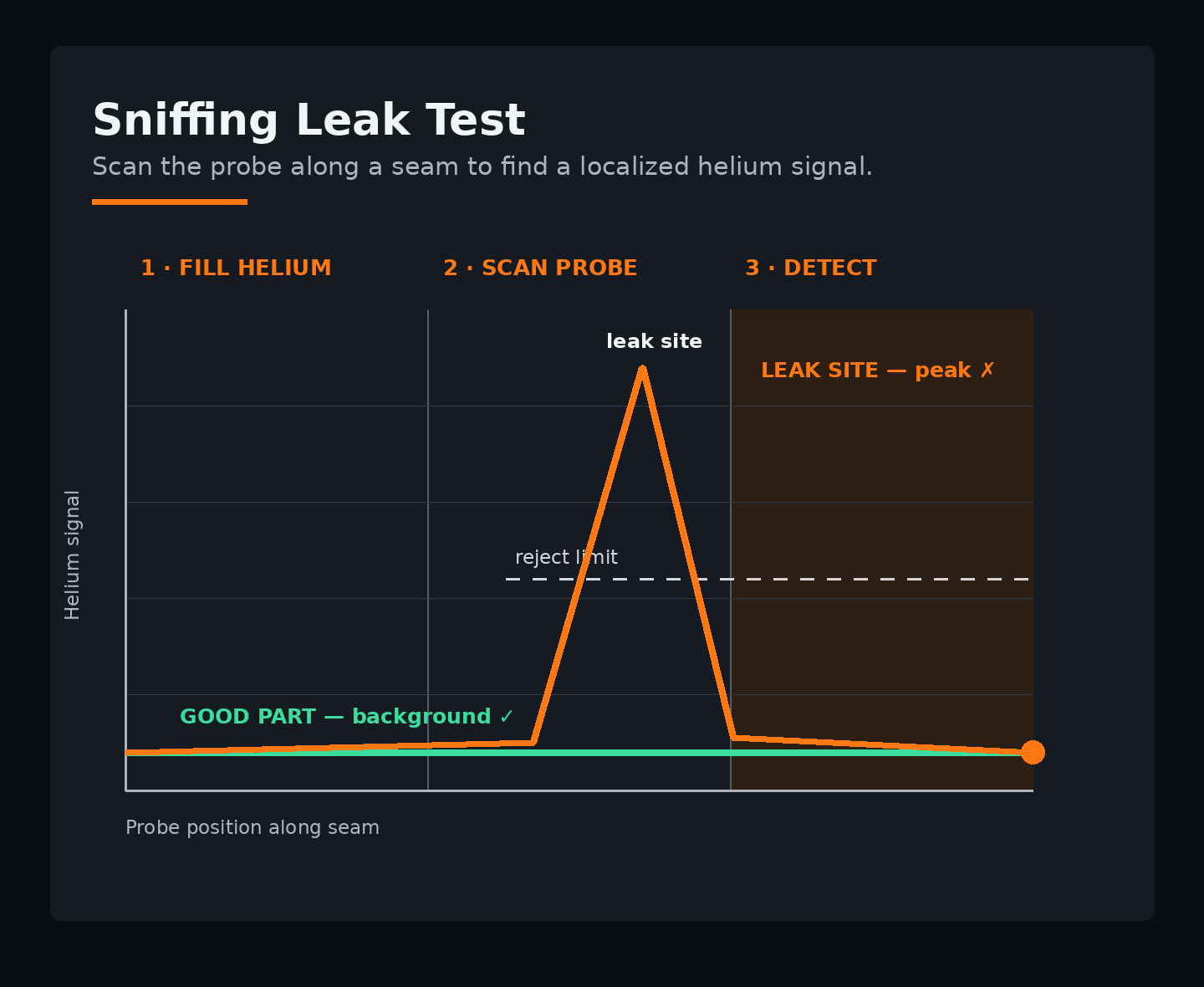
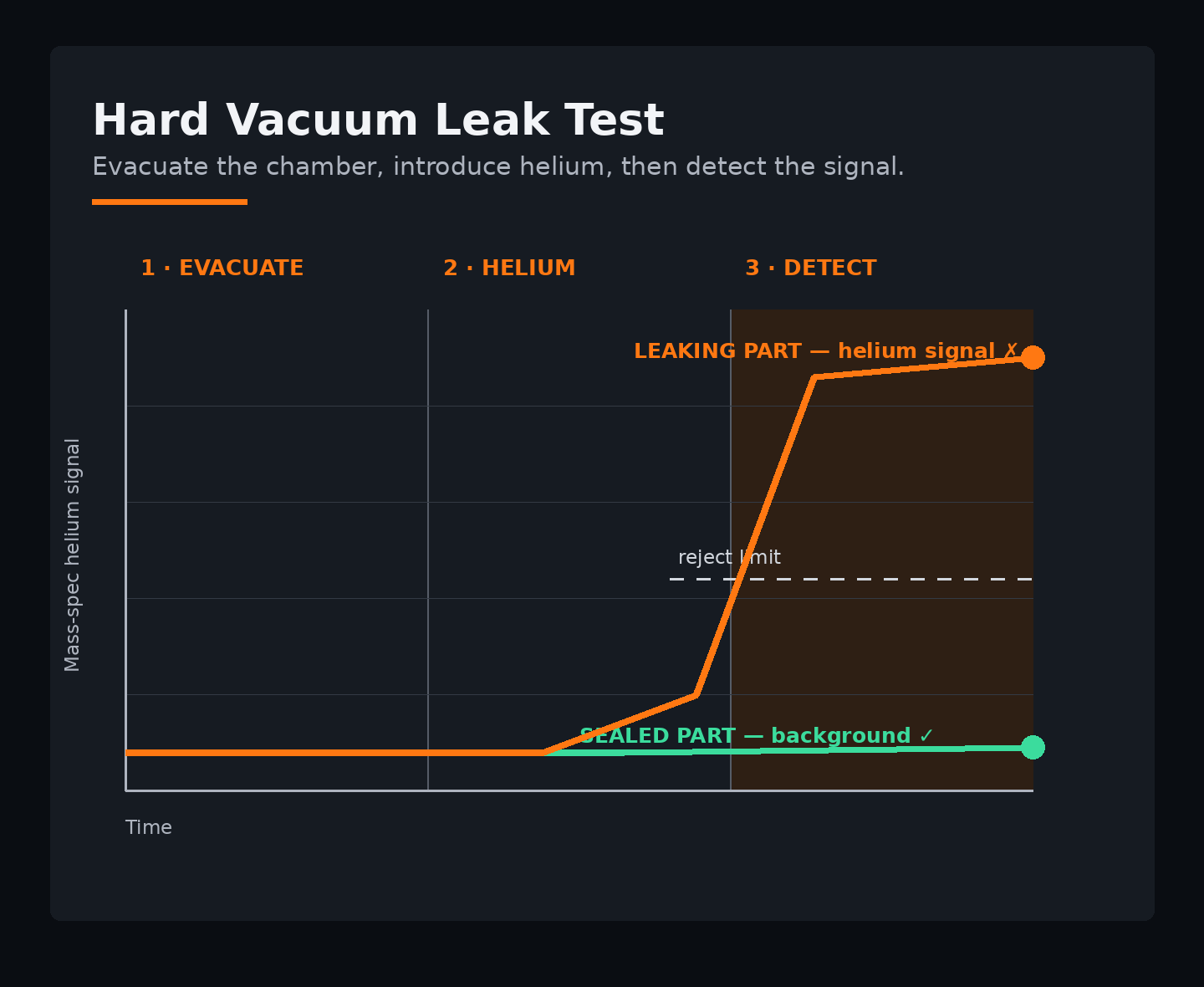
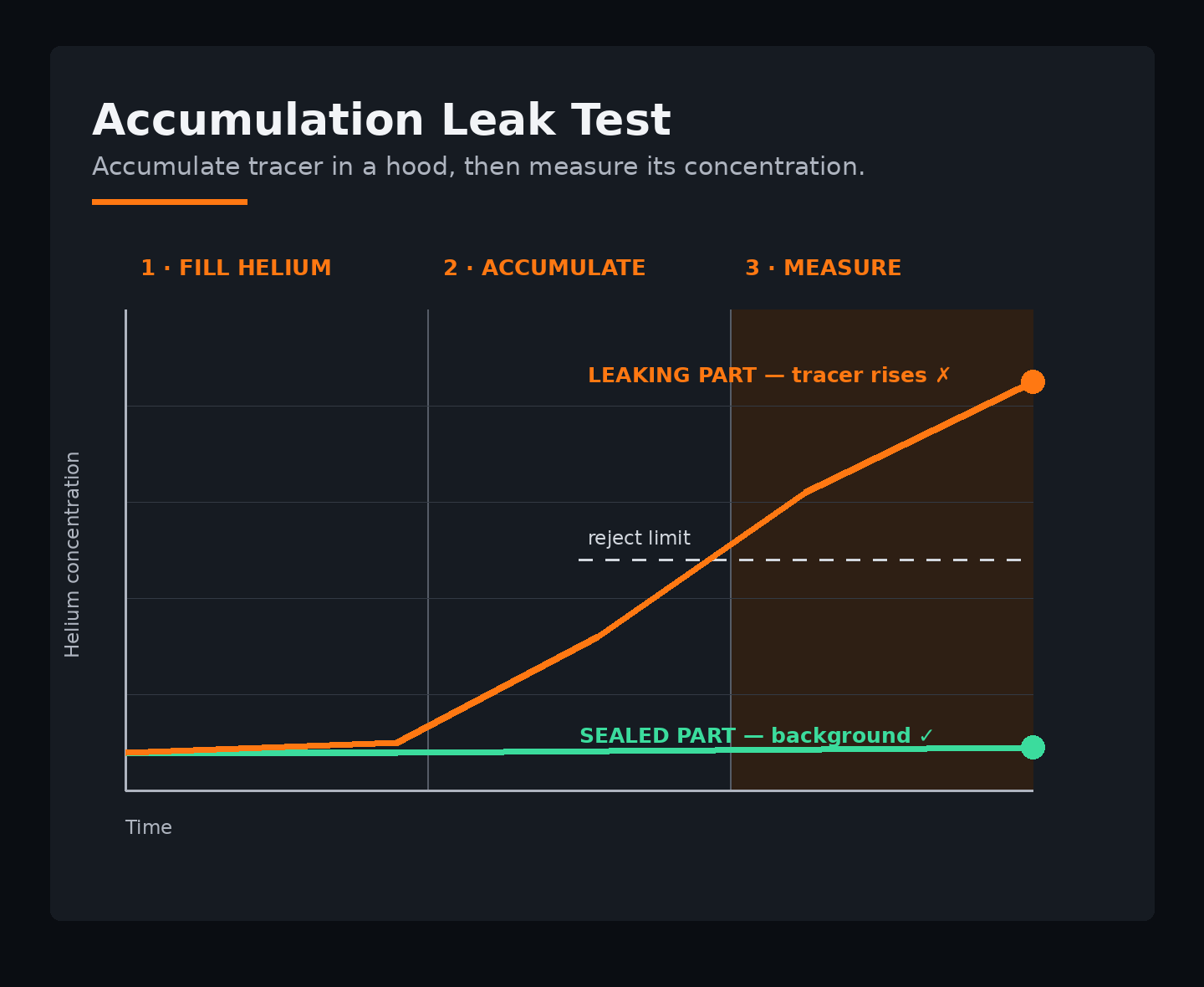
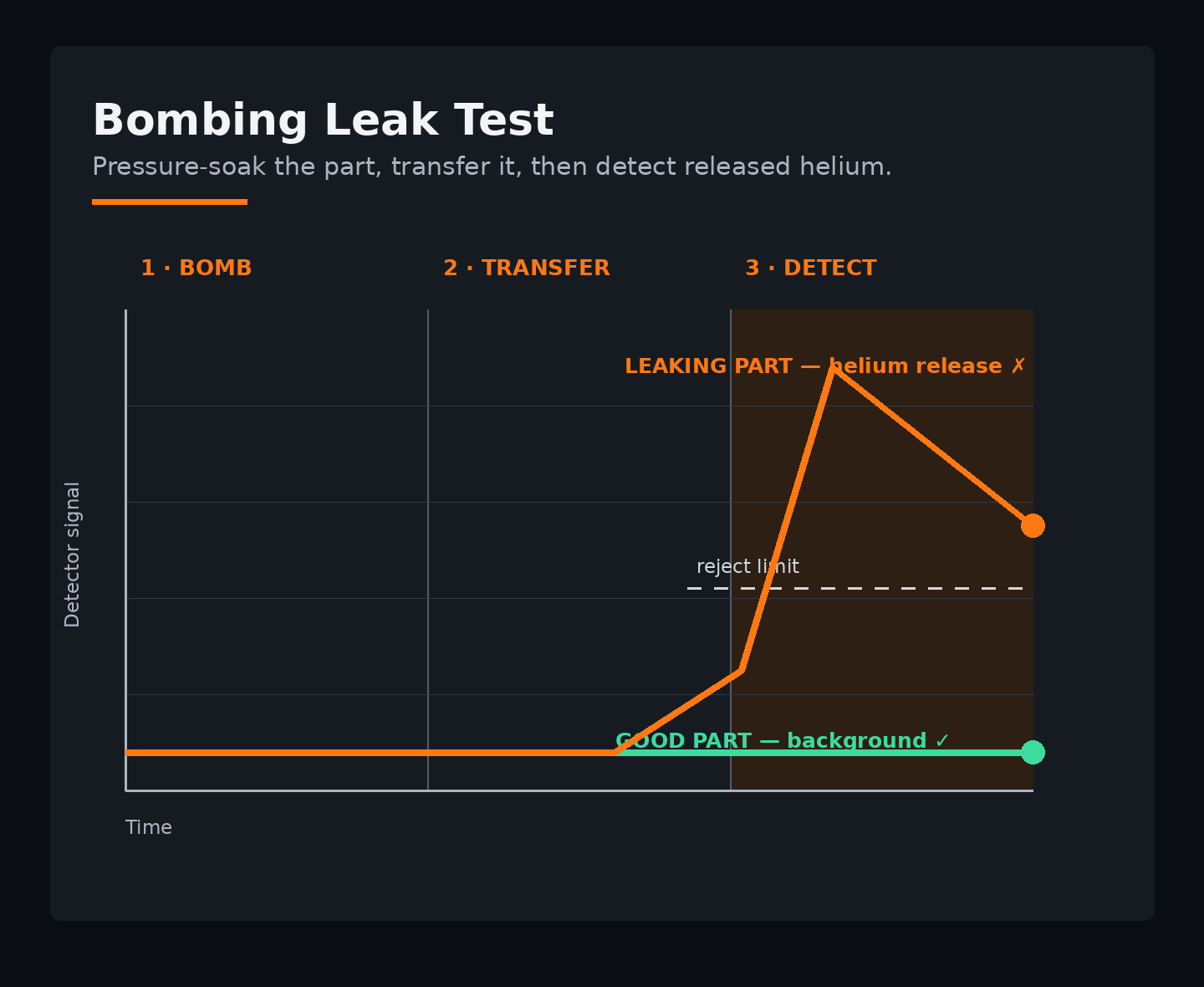
  4. Detect — a sniffer probe traces joints and seals to locate individual leaks, or the part sits in an accumulation chamber or hard vacuum chamber to measure its total leak rate.
  5. Judge & recover — the measured leak rate is compared to the reject limit for a definitive PASS/FAIL, then the gas is vented or reclaimed for reuse.

The result is quantitative: every part gets a numeric leak rate you can record, trend, and audit — not just a pass/fail guess. Zaxis trace gas leak test systems manage the entire sequence automatically.

Explore each detection method in depth: sniffing, hard vacuum, accumulation, and bombing leak testing.

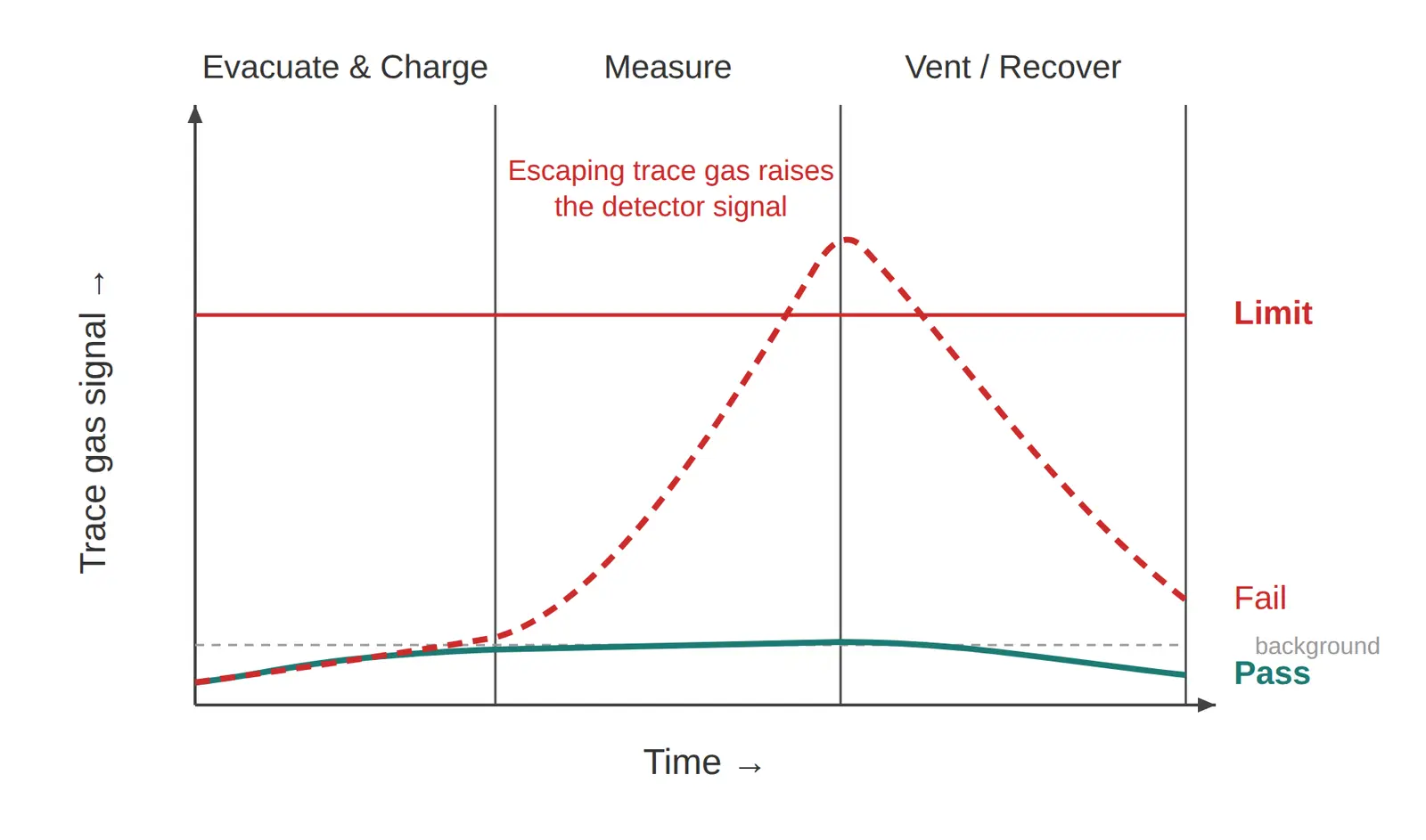
Trace gas leak test signal over time: passing part stays at background, leaking part rises above the reject limit

Sample Applications:

  • EV battery packs & cooling plates
  • HVAC/R coils & heat exchangers
  • Implantable medical devices
  • Refrigeration & A/C circuits
  • Fuel systems, rails & tanks
  • Hermetic electronics & sensors
  • Airbag inflators & safety devices
  • Sealed connectors & housings

Not sure which gas or method your reject limit calls for? Contact Zaxis — we’ll help you choose the least expensive test that reliably meets your spec.

Why Choose Trace Gas Leak Testing for Your Products

Trace gas testing closes the gap between what your quality spec demands and what pressure-based testing can prove. It delivers sensitivity, stability, and traceability that air-decay methods cannot match.

  • Sensitivity far beyond pressure-based testing — find leaks pressure decay can never see
  • A quantitative, recordable leak rate for every part — audit-ready data, not just pass/fail
  • Stable, repeatable results that shrug off temperature drift and part deformation
  • Scales with your spec — from economical air testing to ultra-fine helium hard vacuum
  • Locates individual leaks (sniffing) as well as measuring total leakage (accumulation / vacuum chamber)

Contact Zaxis Inc today to choose the right trace gas and test method for your product.

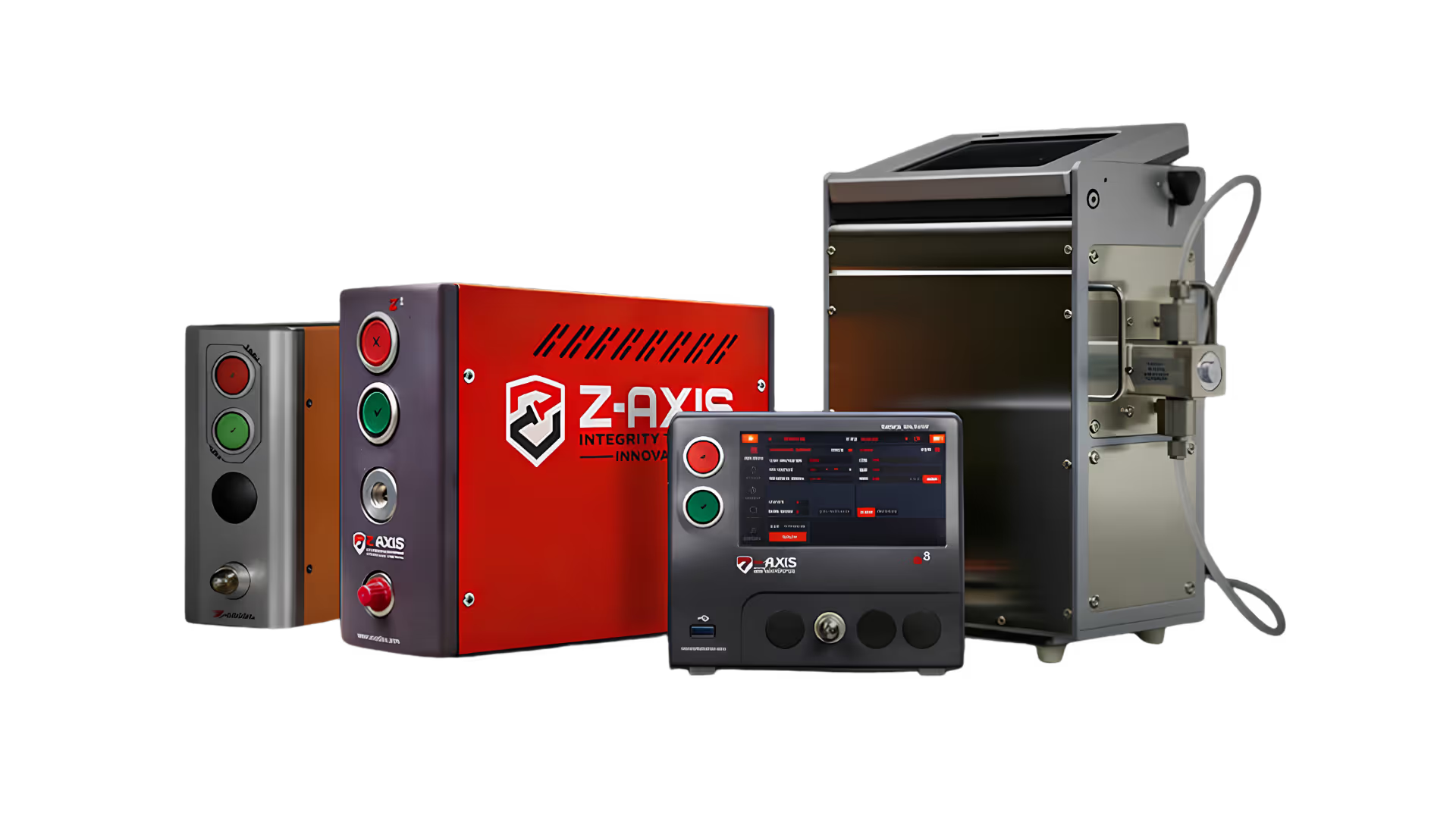
Suggested Leak Testers For Trace Gas Testing

Prepares and charges the part — evacuate, purge, charge — and runs the complete trace gas test sequence from one controller.

Helium leak detector for sniff and vacuum testing, engineered to work as one system with the Z-Charge.

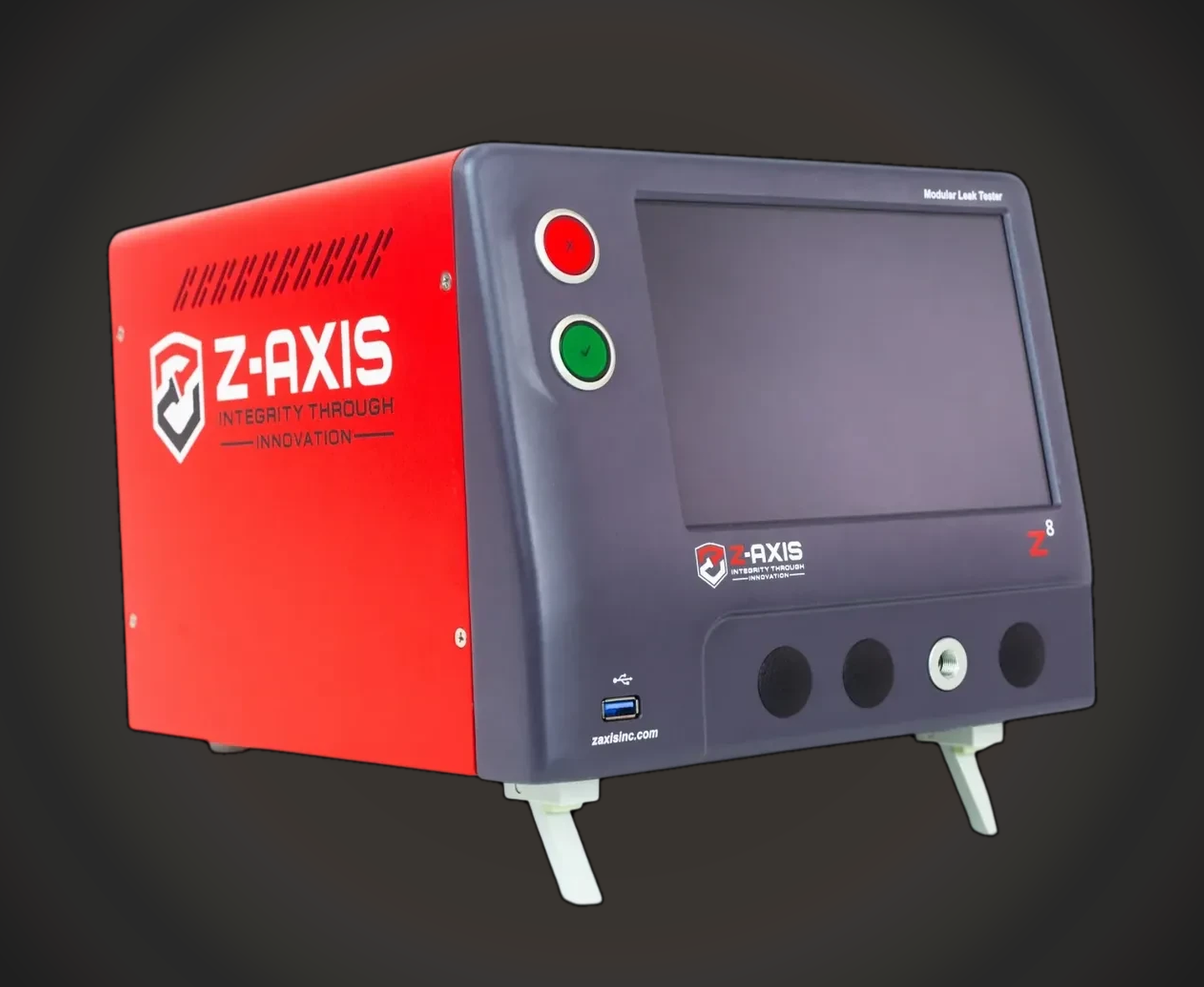
Z8

Zaxis Z8 air leak tester front view showing touchscreen and modular test ports for automated leak testing

The 8″ modular platform that manages sniff, hard vacuum, accumulation, and bombing test sequences alongside air-based methods.

Trace gas leak testing with helium, hydrogen forming gas, argon, or air gives manufacturers a sensitive, repeatable, and fully quantitative alternative to pressure-based testing. Zaxis pairs the Z-Charge charge and evacuation station with the Z-ION helium leak detector and 25+ years of leak test engineering to deliver complete trace gas test cells — from gas selection and fixturing through data collection and factory integration.

Scroll to Top