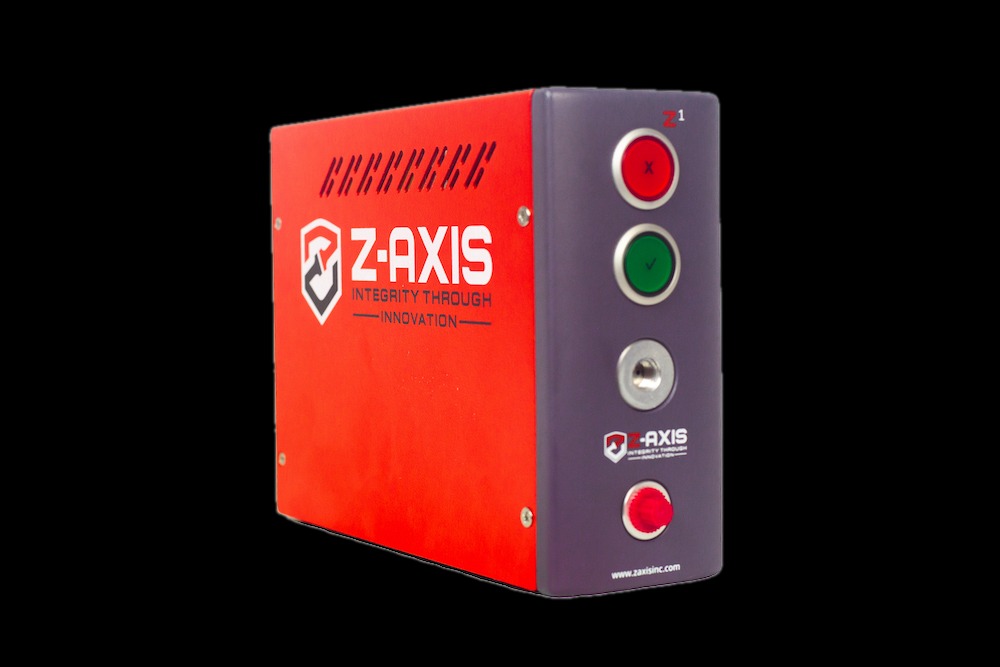
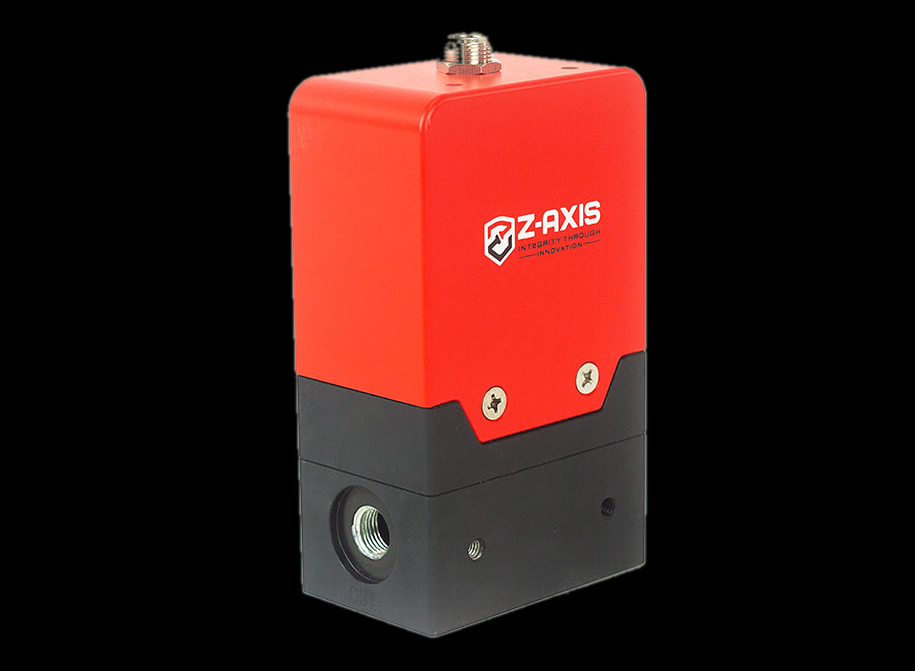
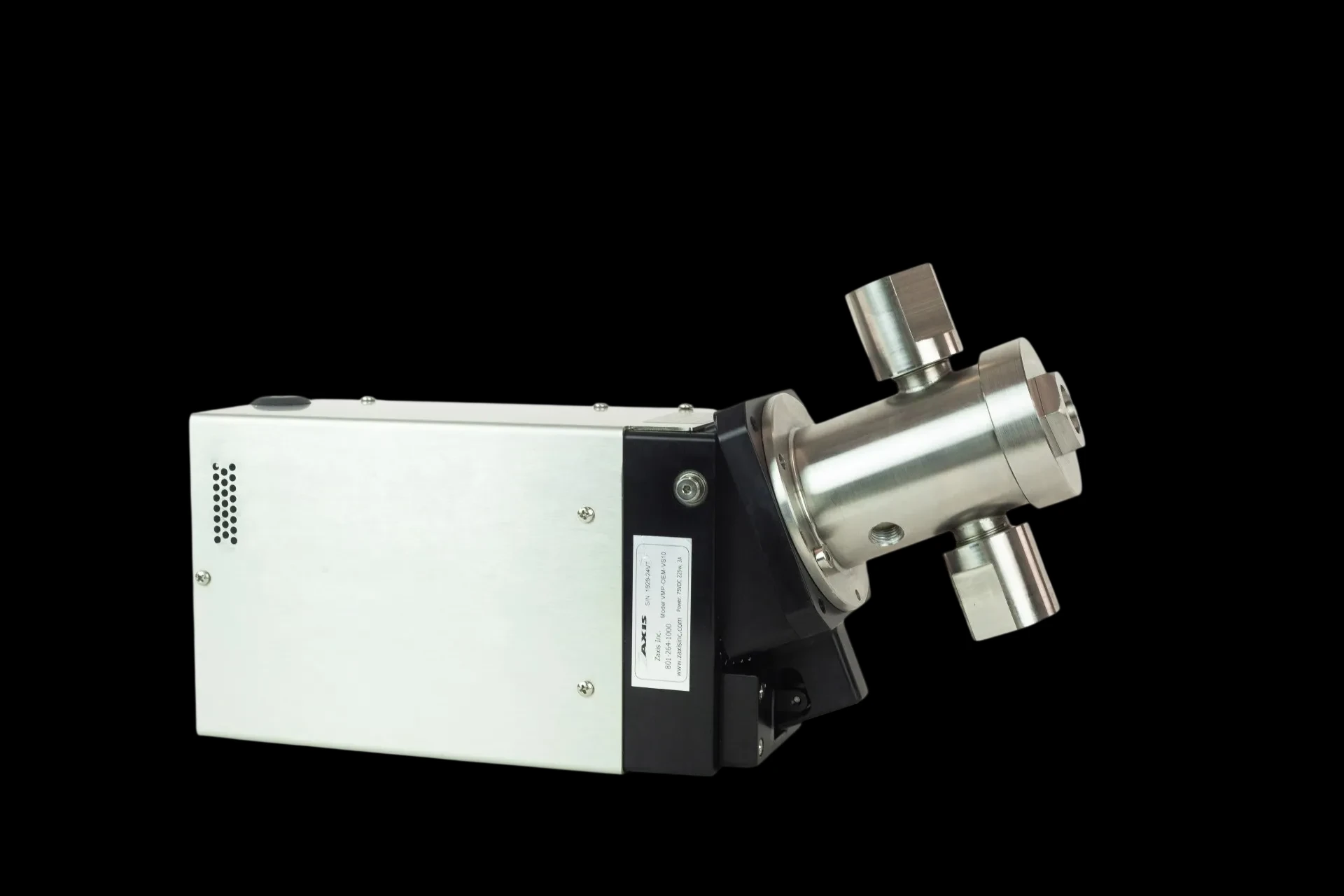
Stored Recipe
Connect, prepare, test and record through the same programmed sequence.

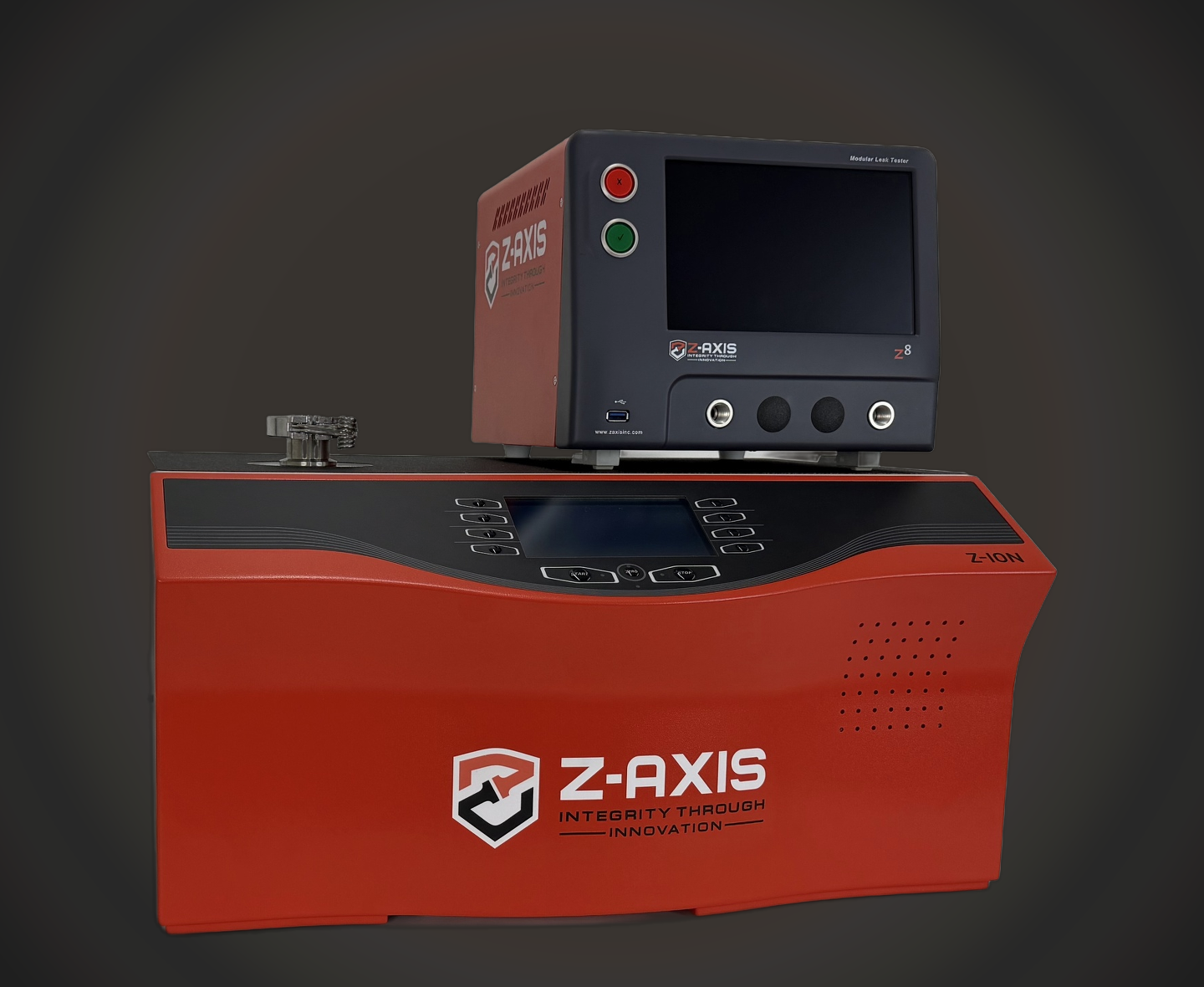
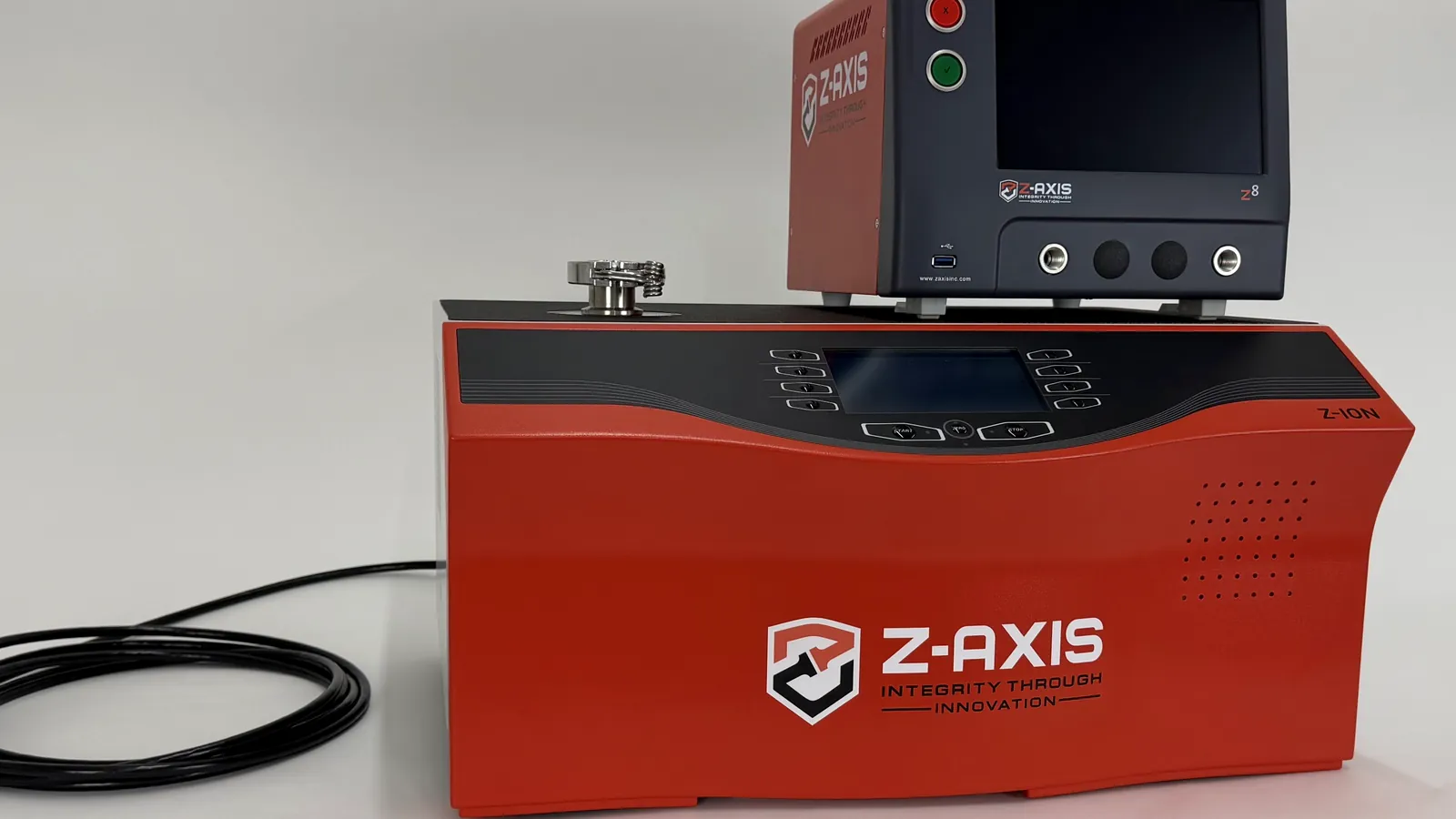
Helium Leak Test Cell
The Zaxis Z-Charge prepares the part — evacuate, purge and charge — then runs gross leak, pressure decay and vacuum decay testing. It commands the Z-Ion helium leak detector for sniff, hard-vacuum, accumulation and bomb testing from the same coordinated test cell.
Z-Charge is the preparation and air-test controller; Z-Ion is the helium mass-spectrometer detector. Together, they take the handoff between preparing a part and testing it out of the operator’s hands, so the same stored recipe can carry a part from connection through a recorded result.
One recipe, one connector and one accountable supplier give production teams a complete charge-to-result sequence rather than a detector surrounded by manual evacuation, purge, charge, timing and record-keeping steps. The system is right-sized between a manual bench and a bespoke automation cell.
Z-Charge manages the work that happens before a helium measurement: it connects the part, prepares the internal condition and performs the selected air-based screen before helium is used. Z-Ion provides the detector capability after that preparation, either under Z-Charge coordination or as a standalone helium detector where a production station needs dependable detection.
The test cell can begin with a gross-leak check to avoid using trace gas on a visibly defective part, or use pressure decay and vacuum decay when those air methods fit the part. When the recipe calls for trace gas, the same connected station moves to sniffing for localization, hard vacuum for maximum sensitivity, accumulation for a chamber measurement, or bomb testing for sealed devices without a direct connection.
Request a DemoA helium result depends on the preparation behind it. Zaxis brings the workflow together: the connector, evacuation and purge sequence, helium charge, air-based screening, detector command and result record are coordinated in one station rather than divided among separate components and manual decisions.
The system is intended to remove the points where false rejects, background contamination, wasted helium and hard-to-defend records can enter a manual process. Z-Charge prepares the part the same way every time and commands Z-Ion when the part is ready for the selected trace-gas method. The operator does not need to choose the detector moment by judgment: the recipe carries the connection, preparation and test method forward as one coordinated sequence.
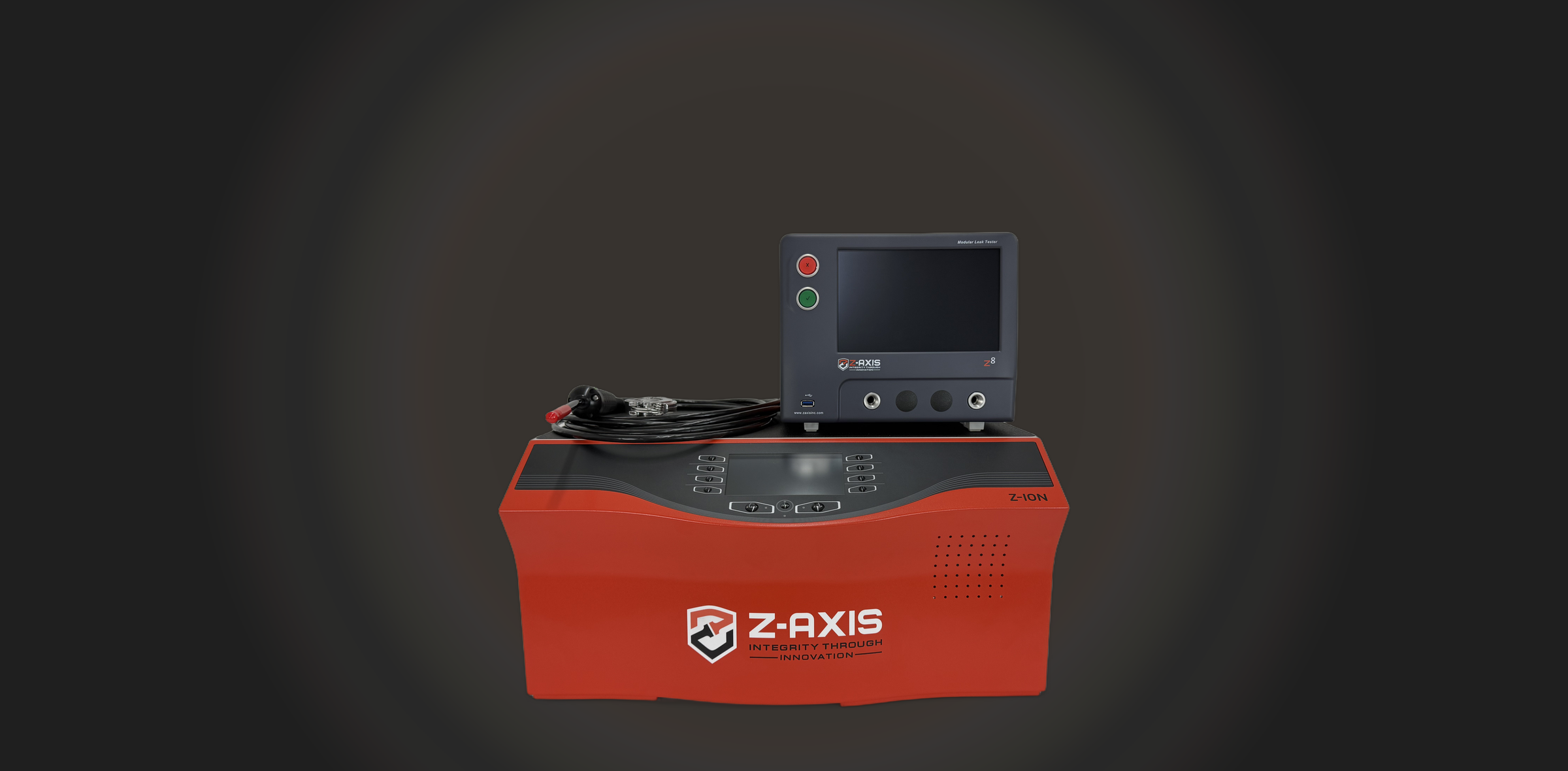
Connect, prepare, test and record through the same programmed sequence.
Screen gross leaks and decay before the trace-gas cycle, then run the selected helium method.
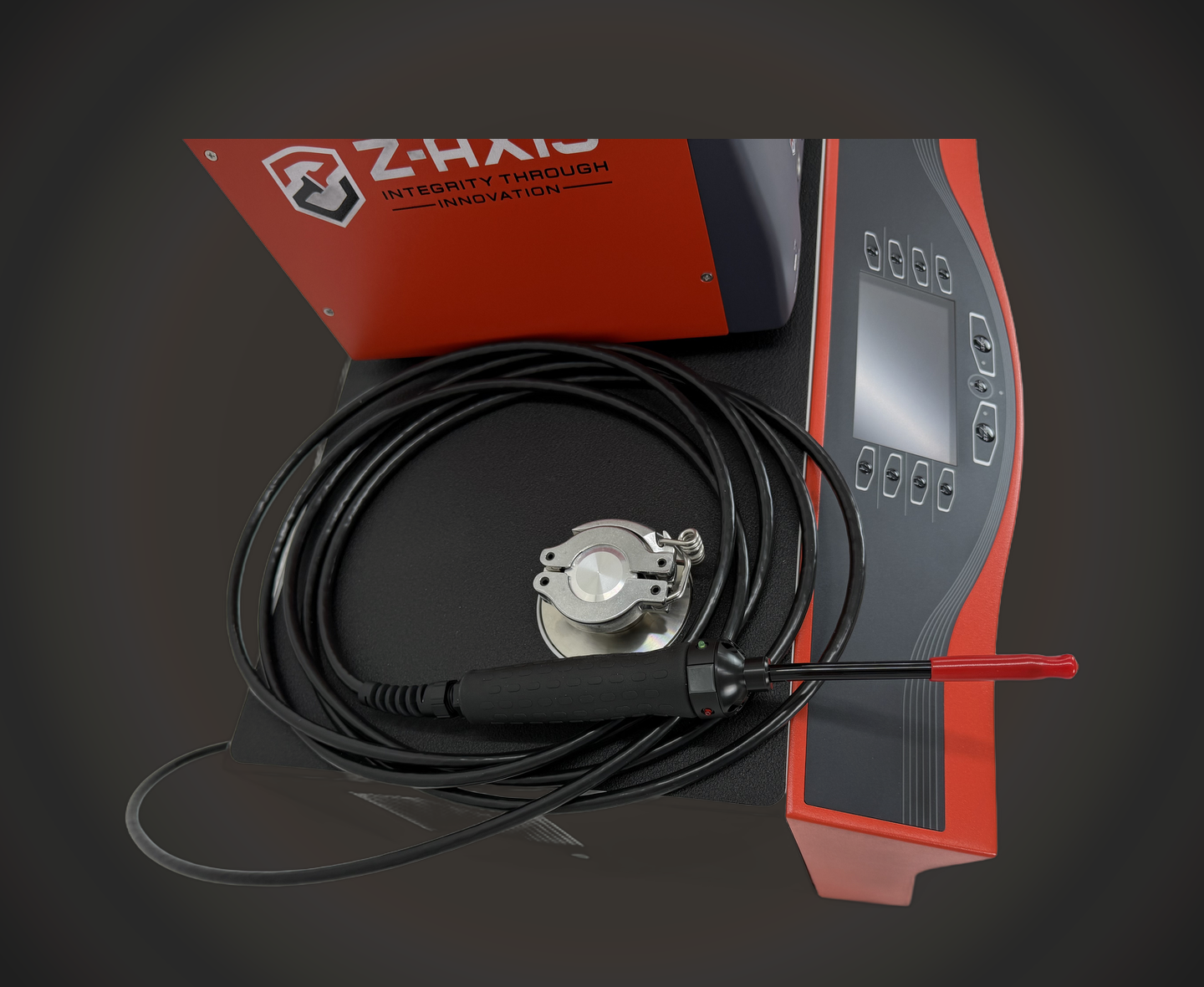
Seal the part to an engineered trace-gas connector before gas flows.
Zaxis supplies the preparation controller and the helium detector as a coordinated system.
Z-Ion vacuum-mode sensitivity is better than this level with helium.
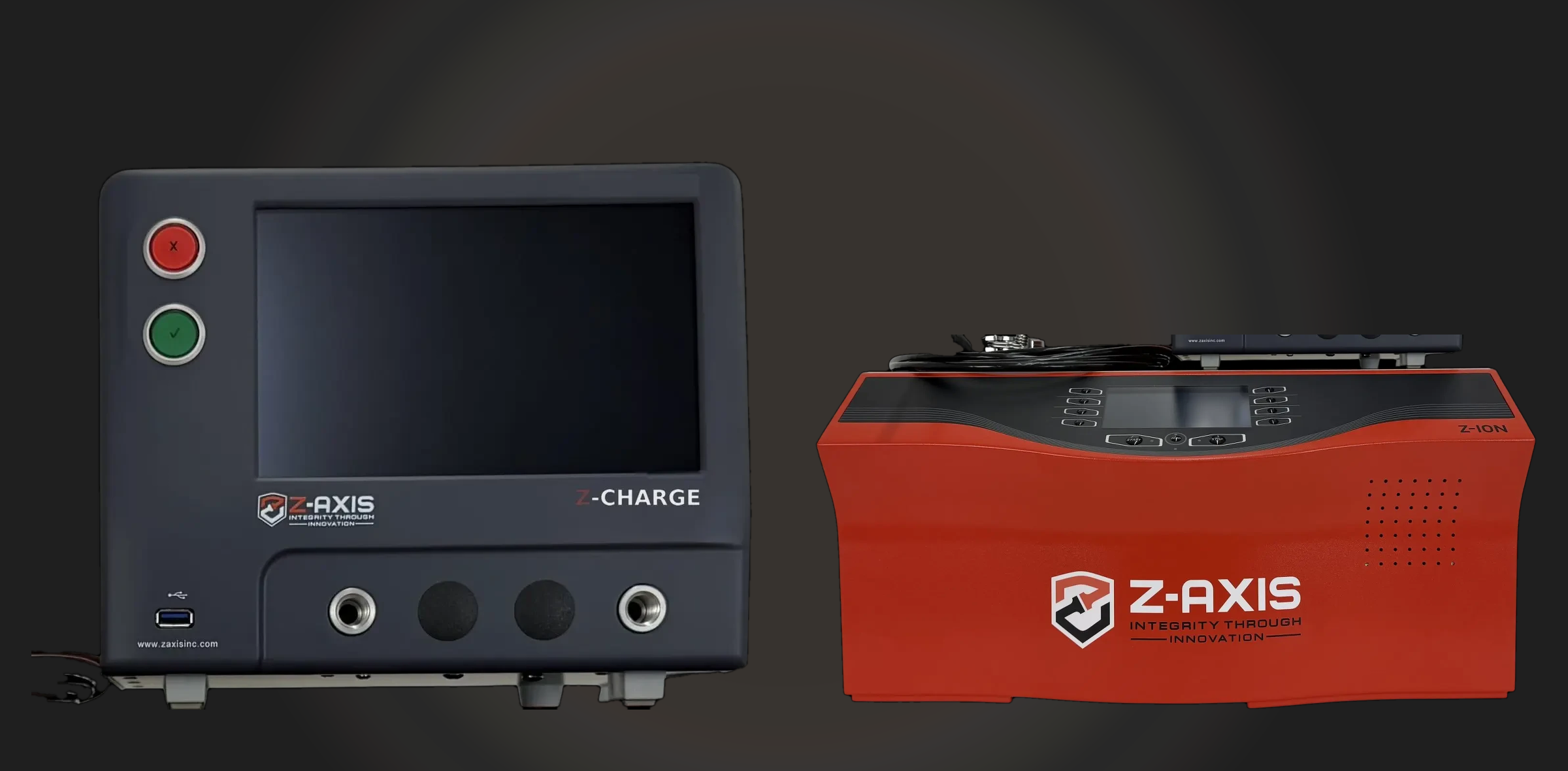
Z-Charge covers the air-based work built into the controller and directs the trace-gas sequence with Z-Ion. Select the method in the recipe for the part, reject limit and need to localize or quantify a leak.
Z-Charge runs the sequence from one stored recipe and hands the prepared part to Z-Ion at the required point in the cycle. The workflow preserves the staged connection, screening, preparation, trace-gas method and record keeping of the test cell.
Seal the part to the engineered trace-gas connector. Interlocks verify a sound connection before gas flows.
Optionally screen with gross leak, pressure decay or vacuum decay, then evacuate to the recipe vacuum and run controlled purge cycles to remove air and moisture that can mask real leaks. Z-Charge fills helium to the programmed pressure and concentration.
Z-Charge commands Z-Ion for the recipe’s sniff, hard-vacuum, accumulation or bomb method. It directs the detector and, for hard-vacuum work, the external vacuum source rather than leaving those sequence steps to operator judgment.
Capture pass/fail, recipe ID, charge parameters and detector result for every part. The preparation and detector result stay associated with the same recipe.
This sequence pairs economical air-based screening with trace-gas methods where sensitivity, localization or a documented result is required. It also keeps the evacuation, purge, charge and detector commands in the recipe instead of treating them as independent manual tasks. Z-Charge can direct the Z-Ion automatically as part of that single recipe.
Use helium testing when a pressure-decay reject limit, part geometry or liability exposure requires more than an air method can provide; it also supports leak localization and documented part-level results. The same station can first use gross leak, pressure decay or vacuum decay to screen parts before moving to the trace-gas cycle.
Implantables, sealed housings and fluid-path components where validation and traceability are non-negotiable.
Read more →Hermetic packages, sealed wearables and assemblies; bomb testing supports devices that cannot be connected directly.
Read more →Battery enclosures, thermal-management components and other sealed parts that require fine-leak verification.
Read more →Assemblies requiring fine-leak verification beyond what air methods can resolve.
Read more →These specifications distinguish the controller and the helium detector in the coordinated test cell. The exact method and sequence are set in the stored recipe for the part under test. Z-Charge supplies the preparation, air-test and trace-gas-control functions; Z-Ion supplies the helium mass-spectrometer measurement and its calibration routines.
Trace-gas work shows up wherever a seal has to hold under scrutiny: implantable and drug-delivery devices, battery and power electronics enclosures, and sealed automotive components. The same station covers the economical air screen and the sensitive helium measurement, so one cell can serve parts with very different leak limits.
Yes. Each is a complete standalone product. Together they form a coordinated trace-gas test cell that links part preparation and helium detection through the same recipe.
Z-Charge runs gross leak, pressure decay and vacuum decay natively. With Z-Ion, it manages sniff, hard-vacuum, accumulation and bomb testing, including external-vacuum-source control for hard-vacuum work.
Z-Charge initiates the test, monitors detector status and records the result as part of the recipe that prepared the part. It commands Z-Ion when the programmed preparation is complete.
Z-Ion has vacuum-mode sensitivity better than 5 × 10⁻¹² mbar·L/s and sniffing sensitivity of 5 × 10⁻⁸ mbar·L/s with helium.
Helium is appropriate when a reject limit, part geometry or liability exposure requires sensitivity that air methods cannot reach, when the leak must be located, or when every part needs a documented result. Z-Charge can screen with air methods before the trace-gas cycle.
Every cycle can record the recipe, charge parameters and pass/fail result. Ethernet/IP, TCP/IP, USB and serial communications are available for quality-system integration.
Z-Ion includes an internal calibrated leak with automatic calibration routines. Zaxis also supports verification with certified master leak standards and documented procedures for regulated environments.
The part is sealed to an engineered trace-gas connector before the cycle begins. Interlocks verify a sound connection before gas flows, so the programmed preparation sequence starts from that checked connection.

For over 25 years, Zaxis has built USA-made leak test equipment that is CE, ISO 9001, REACH, and RoHS compliant. Every Z-Charge and Z-Ion is backed by the same application engineering and support our Fortune 500 customers rely on. Send us a part — we’ll run the complete cycle: connect, screen, evacuate, purge, charge, test, record — and give you the data. Request a Demo or Request a Quote.