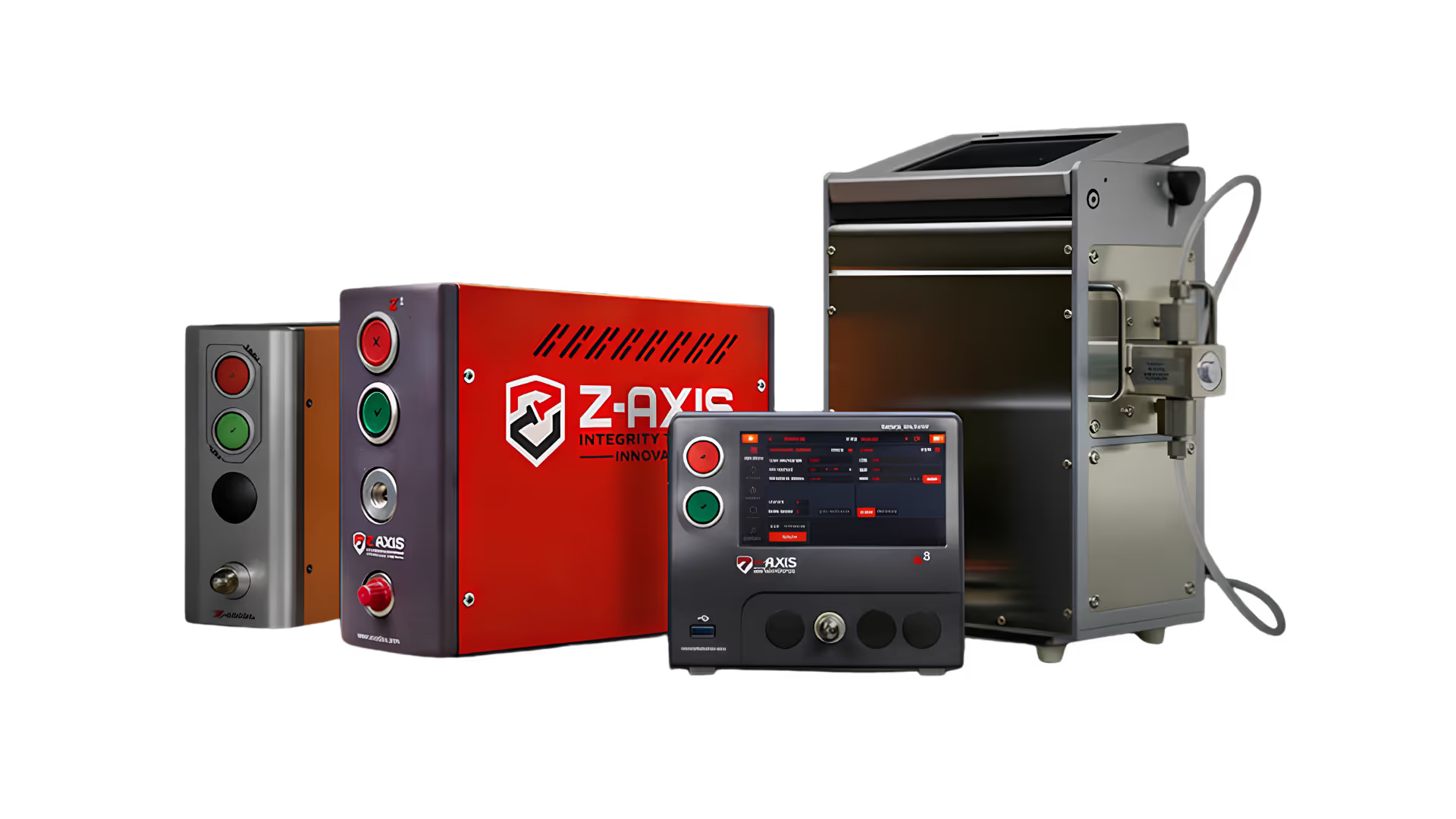

Chamber Leak Testing
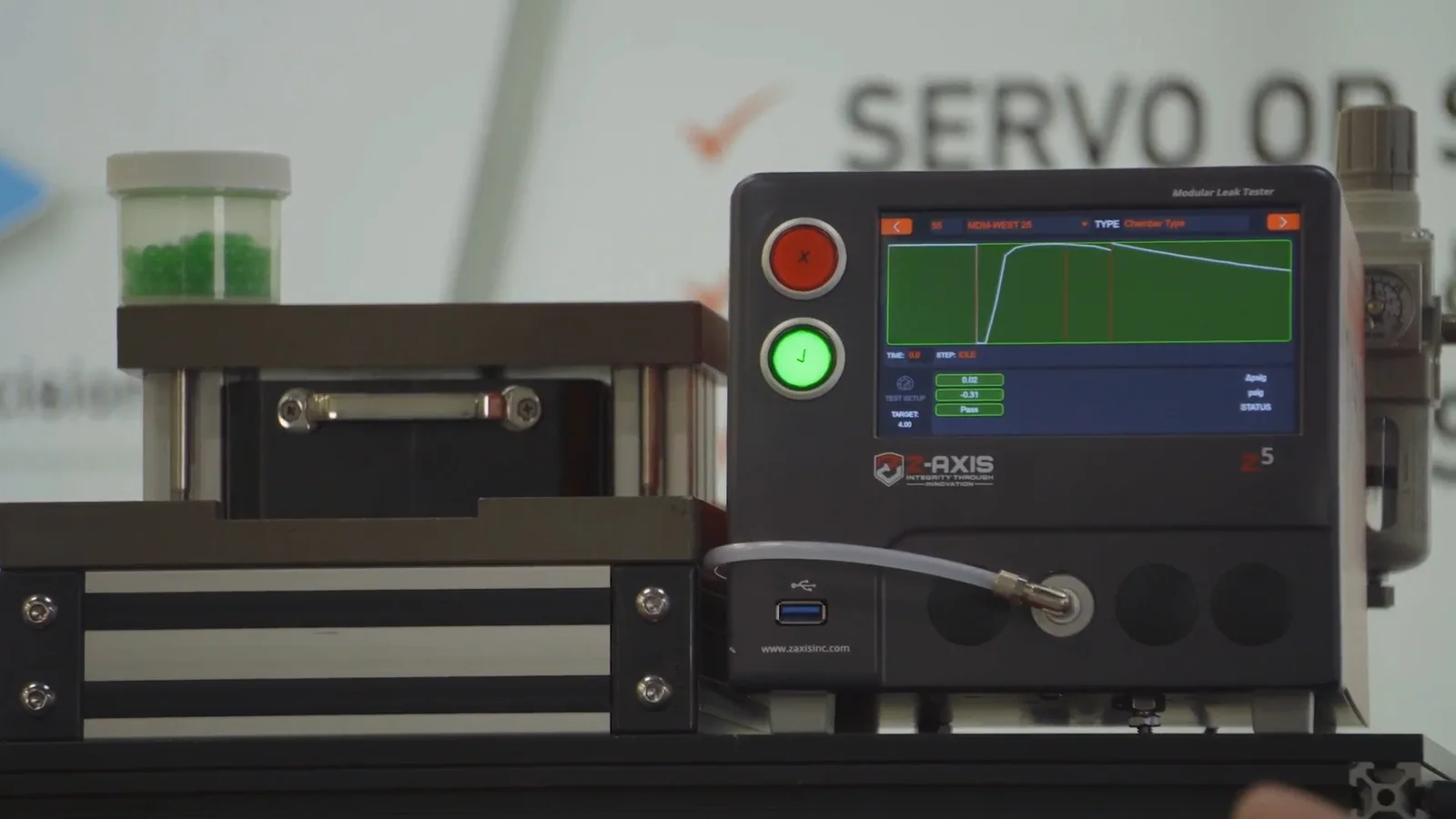
When it comes to leak testing, many products are simple to evaluate. If a product has a built-in port, you can inject air, apply pressure, and check for leaks. But what about sealed products with no easy access point? Food trays, pharmaceutical vials, electronic enclosures, and many other types of products can’t be opened or punctured just for testing. That’s where the chamber leak test comes in.
What is a Chamber Leak Test?
A chamber test allows you to test the integrity of a sealed product by placing it inside a specially designed chamber. Instead of injecting air directly into the part, the chamber itself becomes the controlled test environment. If the product has a leak, air finds its way inside, and the pressure change can be measured.
The innovation behind this method is called metered volume fill. While standard regulators can deliver pressure accurately, they cannot consistently measure volume. Metered volume fill, however, ensures the same volume of air is delivered every time. That consistency makes chamber testing highly reliable.
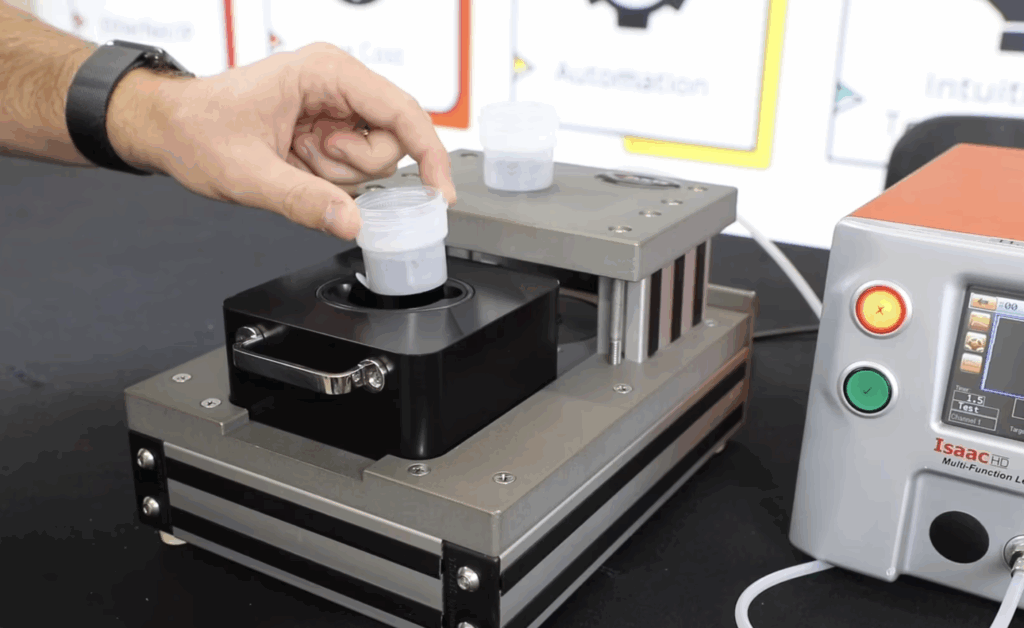
How the Chamber Test Works
Here’s how the process runs step by step:
- Reference Volume Prefill – A known air volume is pressurized.
- Fill Step – That volume of air is released into the chamber with the part.
- Settle Step – The system stabilizes at equilibrium pressure.
- Test Step – The tester monitors for pressure decay, signaling a leak if detected.
This approach is grounded in Boyle’s Law (P1V1 = P2V2): when two volumes of air meet, they equalize to a predictable pressure. If the part has a leak, extra volume is introduced, and the final test pressure drops below the expected range.
Each cycle can detect:
- Gross failures (large, obvious leaks)
- Gross leaks (medium-level leaks)
- Fine leaks (small, subtle leaks)
That means one test effectively covers multiple leak detection ranges.
The Role of Fixtures and Nests
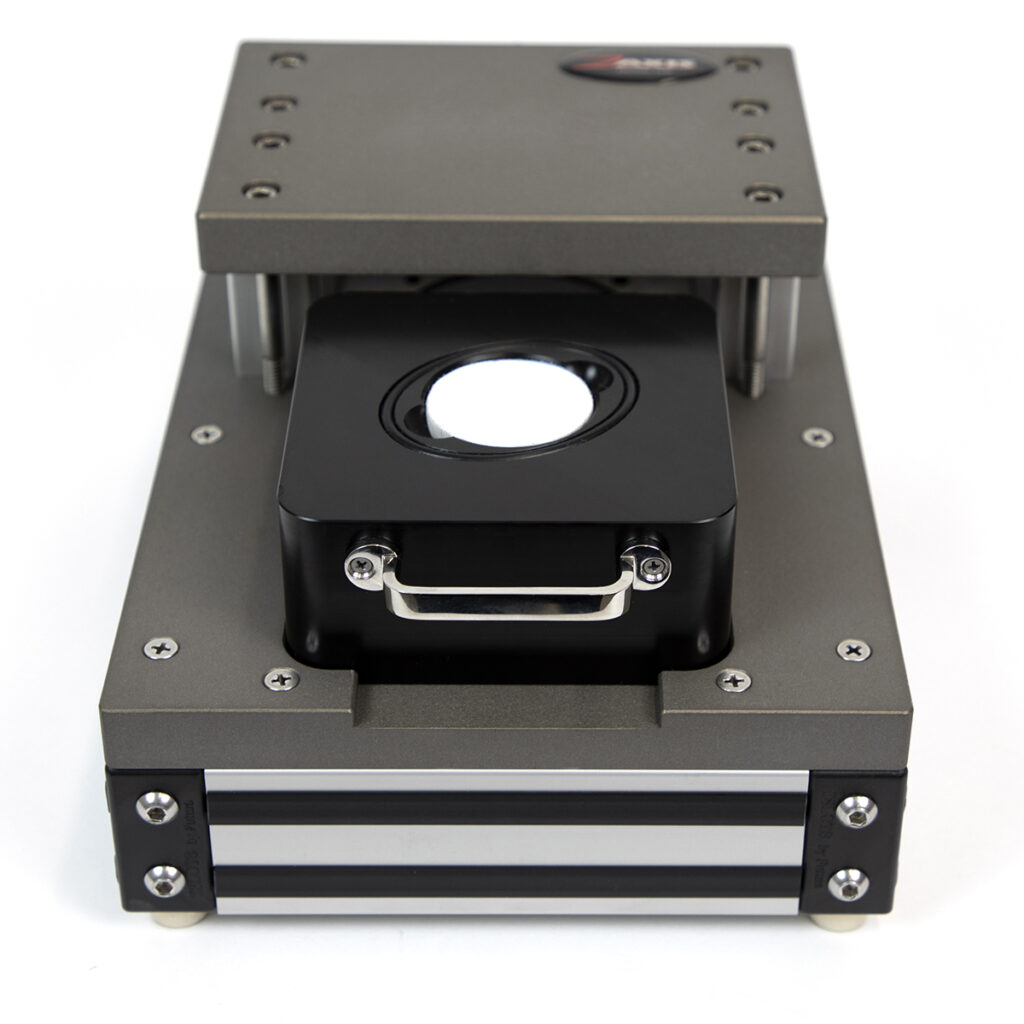
Tooling is essential for chamber testing. A nest is custom-shaped to hold the product securely, minimizing excess air volume around it. During testing, O-rings and clamp valves create a tight seal, turning the setup into a true test chamber.
The fixture design is flexible: one fixture can be used with multiple nests, allowing operators to test different products with the same system. Operators simply select the right test program, load the correct nest, and run production.
Benefits of the Chamber Test
- Works on sealed products with no ports for pressurization.
- Uses metered volume fill for consistent, repeatable results.
- Detects multiple leak sizes (gross to fine) in one cycle.
- Fixtures can be adapted to many part types.
- Systems support multiple stored programs for different products.
Getting Started with Chamber Testing
At Zaxis, we offer chamber fixtures in standard sizes and can create custom nests tailored to your parts. We are the world leaders in exact fit nests. Our team of engineers will model a perfect negative nest of your part in CAD and make a precision nest that will result in a faster, more accurate test. Contact us at sales@zaxisinc.com to learn more or request support.
Final Thoughts
Leak detection isn’t limited to parts with ports. With a chamber leak test, you can confidently test sealed products using a proven, repeatable method. Whether it’s keeping food fresh, safeguarding medicines, or protecting electronics, chamber testing ensures your products stay sealed and reliable.
Want to see it in action? We’ve created a step-by-step training video that walks through the process. Watch the video here.
Related posts
Talk with a leak testing specialist
Discuss the right test approach for your part and production requirements.
Request a Quote