
The Principles of Precise Dispensing
In industries where precision is critical, whether you’re filling a gel cap, dosing a reagent, or applying a lubricant, accurate fluid dispensing is essential. The ability to deliver an exact volume consistently improves product quality, reduces waste, and increases process efficiency.
So what makes a dispensing system truly precise? Let’s explore the underlying principles of precision dispensing, how fluid properties affect performance, and the role of modern metering pump technologies.
What is Precise Dispensing?
At its core, precise dispensing involves transferring a controlled, repeatable volume of fluid into a process or product. This is typically achieved with positive displacement pumps, which physically move a known amount of fluid with each cycle, making them ideal for high-accuracy applications.
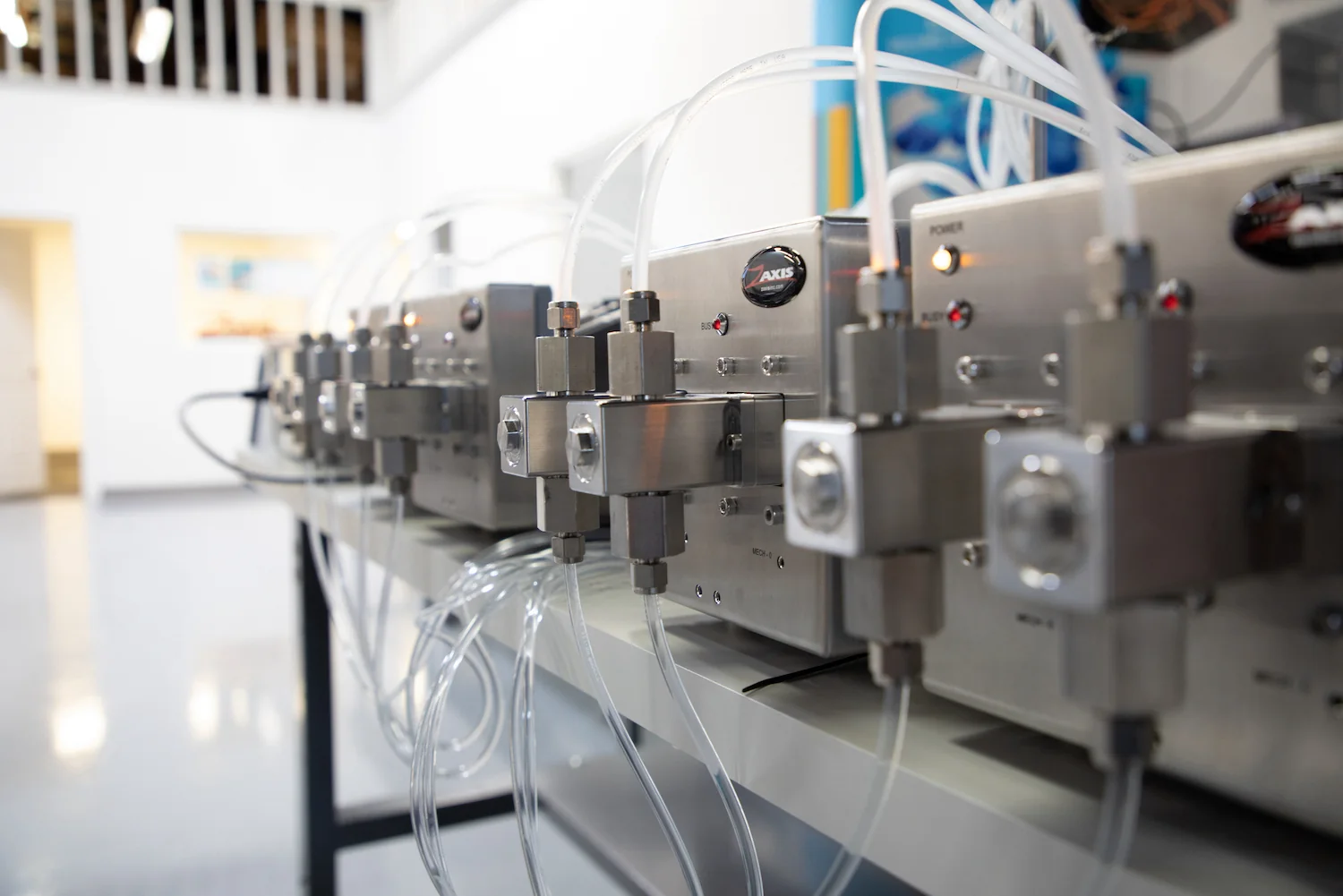
Whether you’re delivering microliters or milliliters, a precision system uses a reciprocating or rotating mechanism to dispense fluid at a controlled rate into a product line, container, or automated assembly system. Zaxis pumps, for example, achieve accuracy within 1% full scale and 0.5% CV.
Why Choose Positive Displacement Pumps?
Positive displacement pumps stand out in precision applications because they maintain consistent flow and volume regardless of fluid viscosity or pressure changes. Their principle is simple yet powerful: Liquid in = Liquid out.
Unlike centrifugal or other dynamic pump types, the volume delivered by positive displacement pumps is directly tied to the movement of internal components—often reciprocating pistons or rotating gears.
Let’s compare positive displacement to non-positive displacement (dynamic) pumps:
Factor | Positive Displacement | Non-Positive Displacement |
Efficiency | Increases with pressure | Peaks at an optimal point, drops outside it |
Viscosity | Accuracy unaffected by viscosity | Accuracy drops with high-viscosity fluids |
Pressure Changes | Flow rate and dispense volume remain constant with pressure changes | Flow rate and dispense volume vary with pressure changes |
Maintenance | Valveless design | Uses complicated valves requiring maintenance |
This consistency is why metering pumps with valveless designs are preferred in precision dosing systems, especially when dealing with difficult or abrasive fluids.
The Impact of Fluid Properties
Dispensing systems must adapt to a wide range of fluid characteristics, especially viscosity and abrasiveness.
Viscosity Matters:
- Low viscosity, self-leveling fluids (like water or alcohol) are easy to handle at room temperature.
- High-viscosity fluids, such as gels or oils, may require heating to reduce flow resistance. Specialized equipment can accommodate these conditions with stronger drive systems and temperature controls.
Abrasive Fluids:
- Abrasive materials (such as slurries, filled compounds, or chemical reagents) can wear seals and reduce piston tolerances over time. This impacts long-term accuracy and system durability.
- These materials may also induce cavitation, where vapor bubbles form and collapse inside the pump, damaging internal components and reducing lifespan. The Zaxis valveless design withstands abrasive materials to a much higher degree than other designs using valves.
Where Precision Dispensing Matters Most
Medical & Pharmaceutical:
- Reagent kits & diagnostics: micro-dosing for accuracy
- Device assembly: sealing, bonding, lubricating
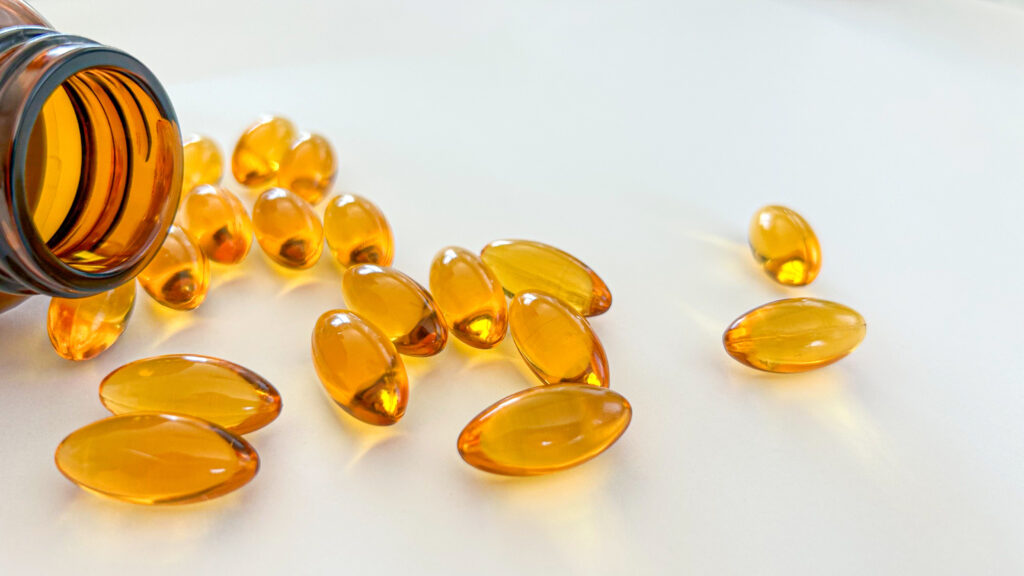
- Pre-filled syringes, gel caps, hydrogels, and CBD oil: sterile, repeatable fills
Food & Beverage:
- Form-Fill-Seal systems: exact fills for sauces, creams, or liquids
- Additives & colorings: consistent dosing for compliance and taste
- Surface coatings: even coverage with no waste

Automotive:
- Lubricants, coatings, conditioners: critical for performance and part longevity
- Audio and electronic systems: potting compounds and adhesives
Other Applications:
- Cosmetics: creams, serums, and foundations require volumetric precision
- Water treatment: chemical dosing for pH and mineral control
- Robotic lubrication: keeps automation systems running efficiently
- Toy manufacturing: adhesives, paints, and assembly components
Final Thoughts
Precise dispensing isn’t just about automation—it’s about control and reliability. Whether you’re working with a reciprocating piston pump or a rotating gear system, the best precision systems are built on positive displacement principles.
With options like valveless metering pumps, industries can achieve accurate, repeatable dosing while minimizing maintenance and downtime. Understanding your fluid properties and process needs ensures your dispensing system stays precise, even under pressure.
Related posts
Talk with a leak testing specialist
Discuss the right test approach for your part and production requirements.
Request a Quote